In 1861, early days in the botanical exploration of Streptocarpus, Streptocarpus saundersii was described by W.J. Hooker, curator of Kew Botanical Garden, London. Seed had been sent from the new English colony of Natal (now KwaZulu Natal Province of South Africa) in 1860 to Mr. W. W. Saunders of Reigate, Surrey, England, and it was grown at Kew where the charming little plant immediately attracted horticultural attention (see a botanical print). Although used to produce hybrids then, these did not end up in subsequent hybridization programs. With its attractive corolla colour and yellow throat markings, this is a species that should be re-introduced into hybridization programs followed by careful selection.
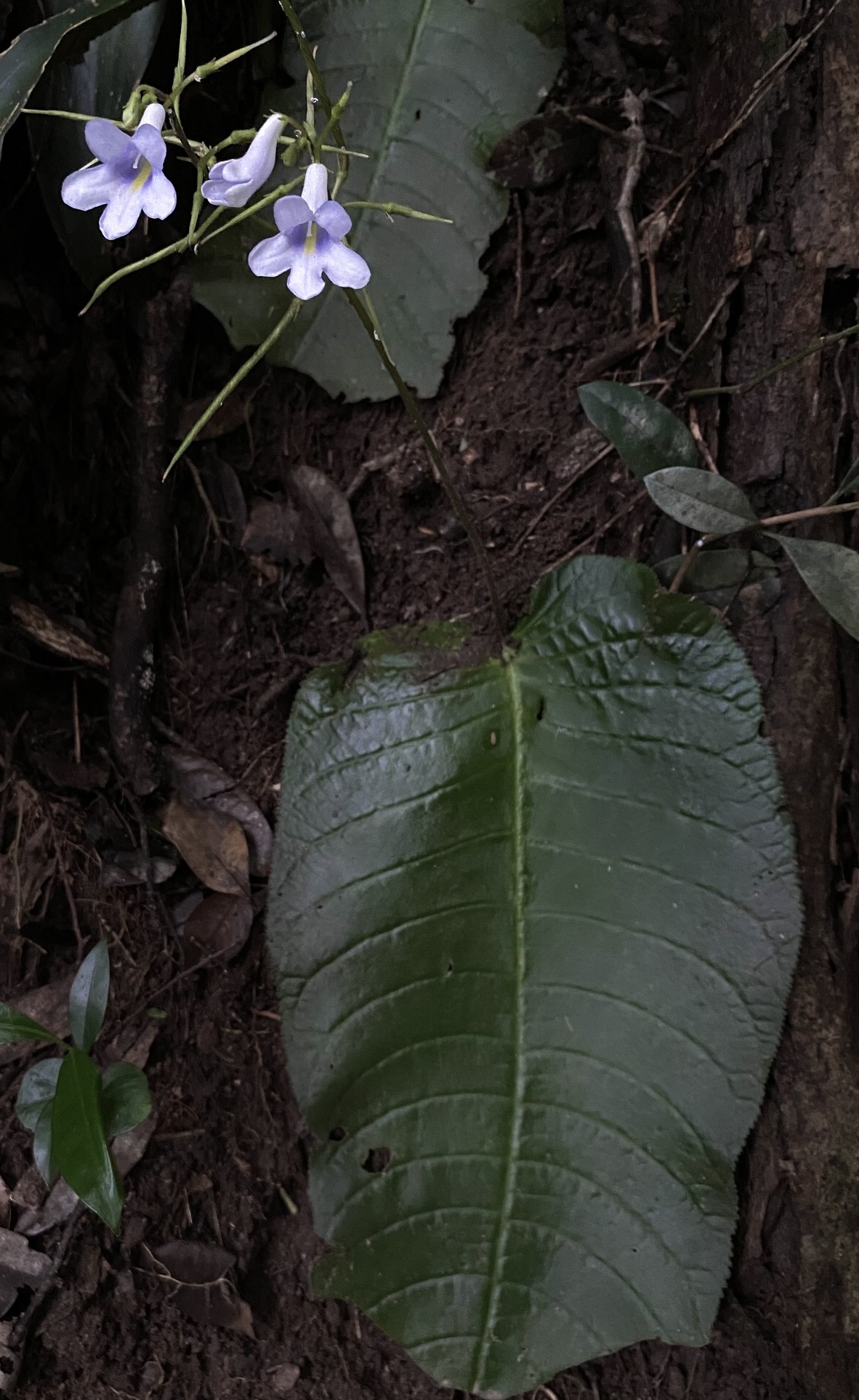
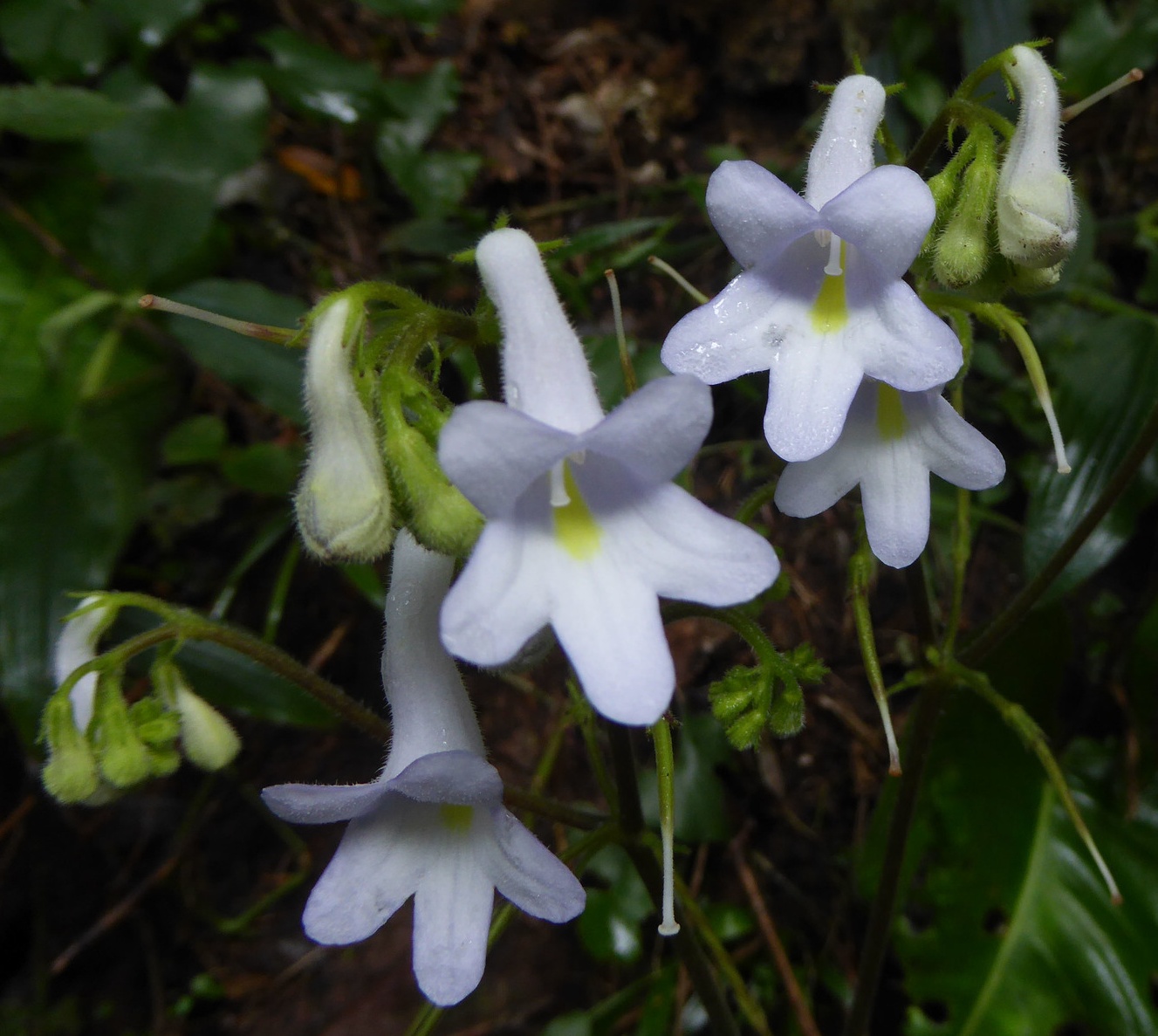
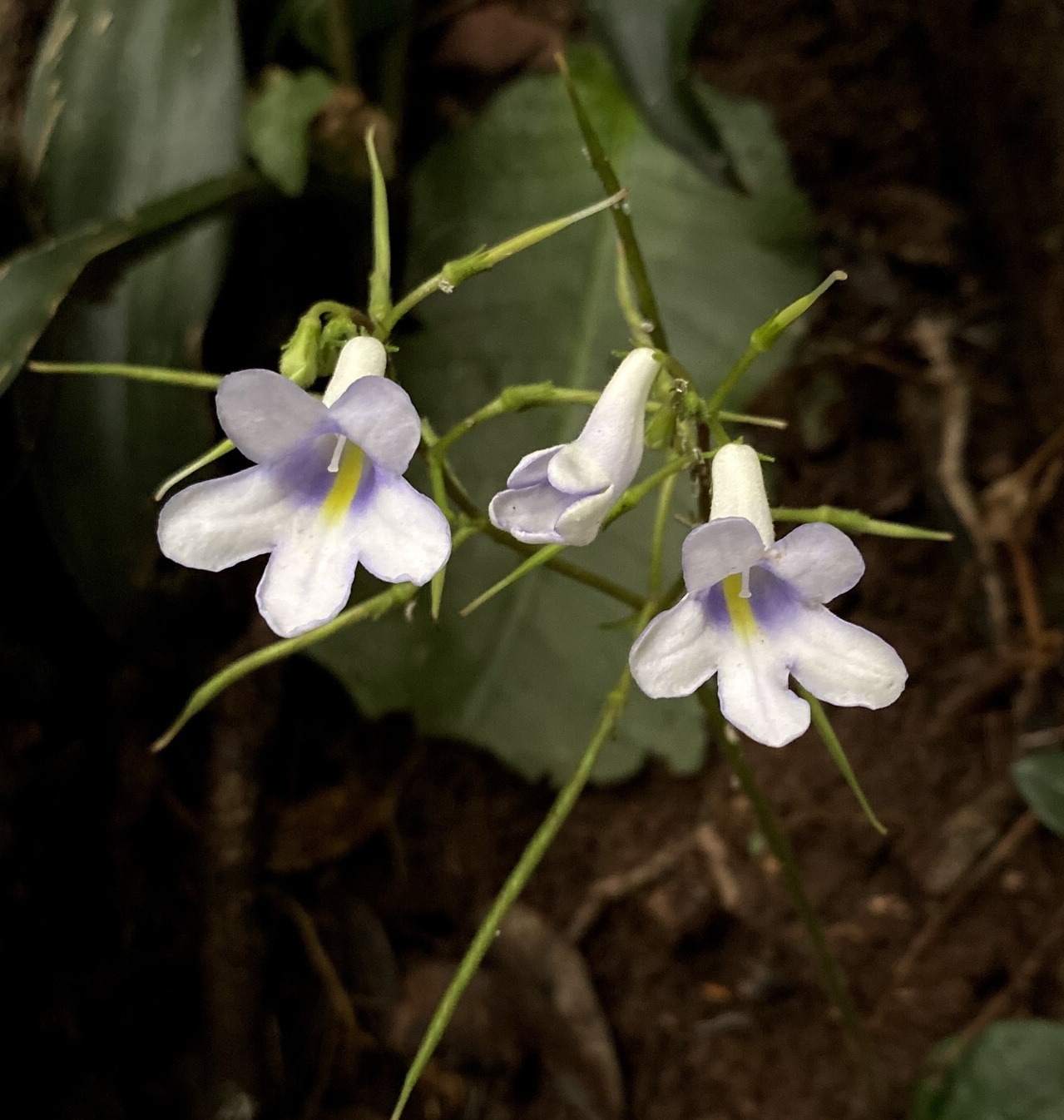
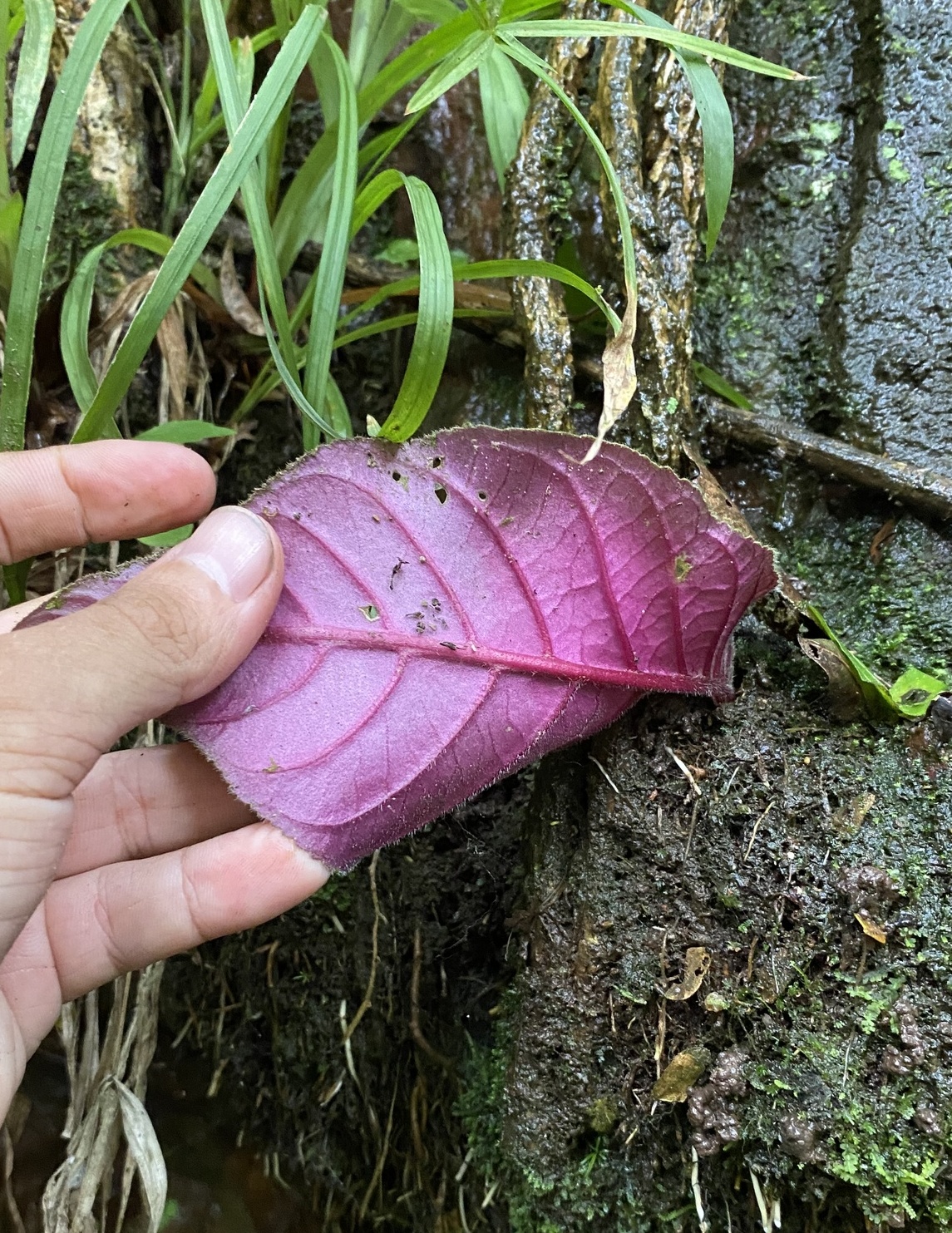
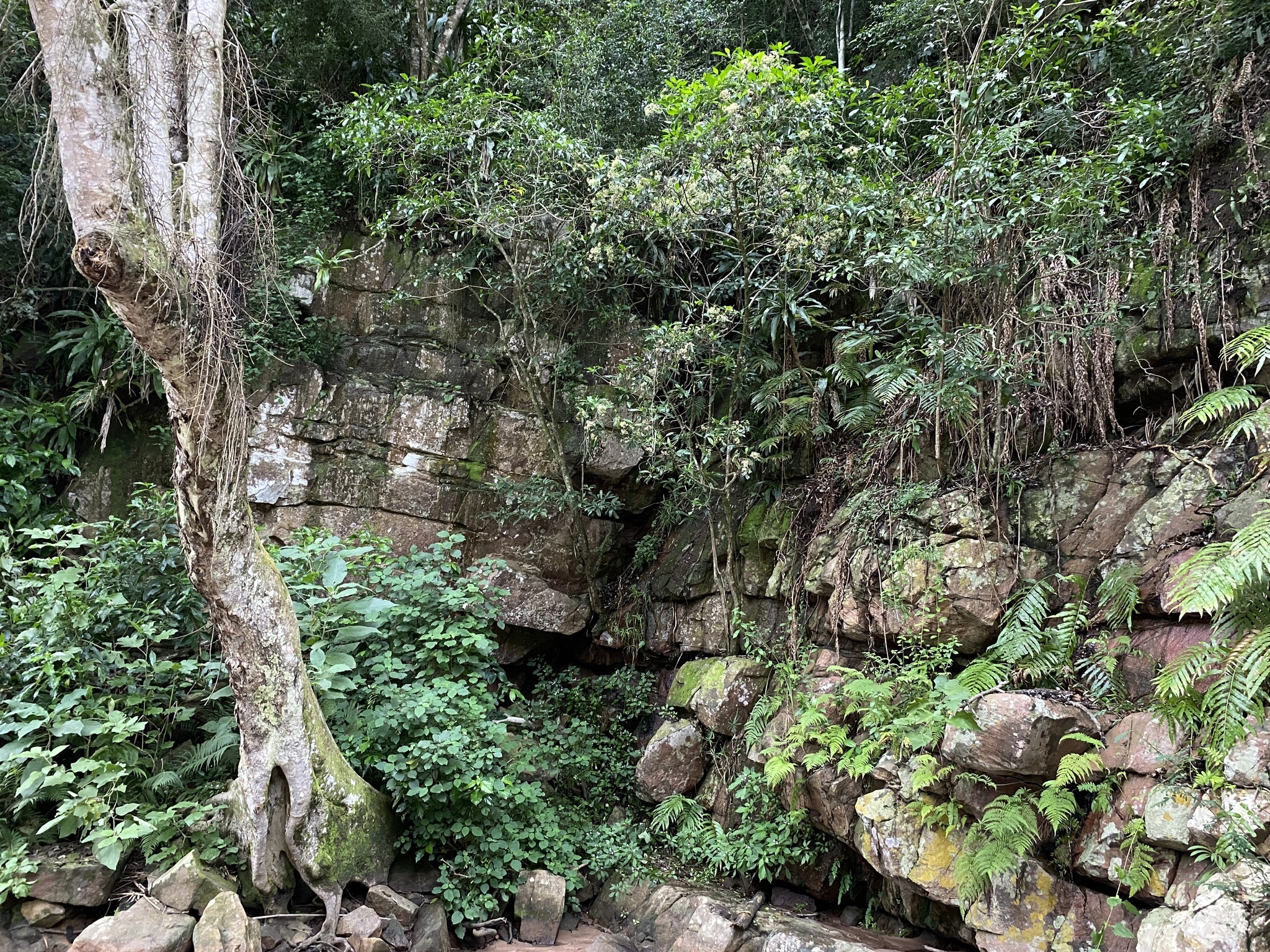
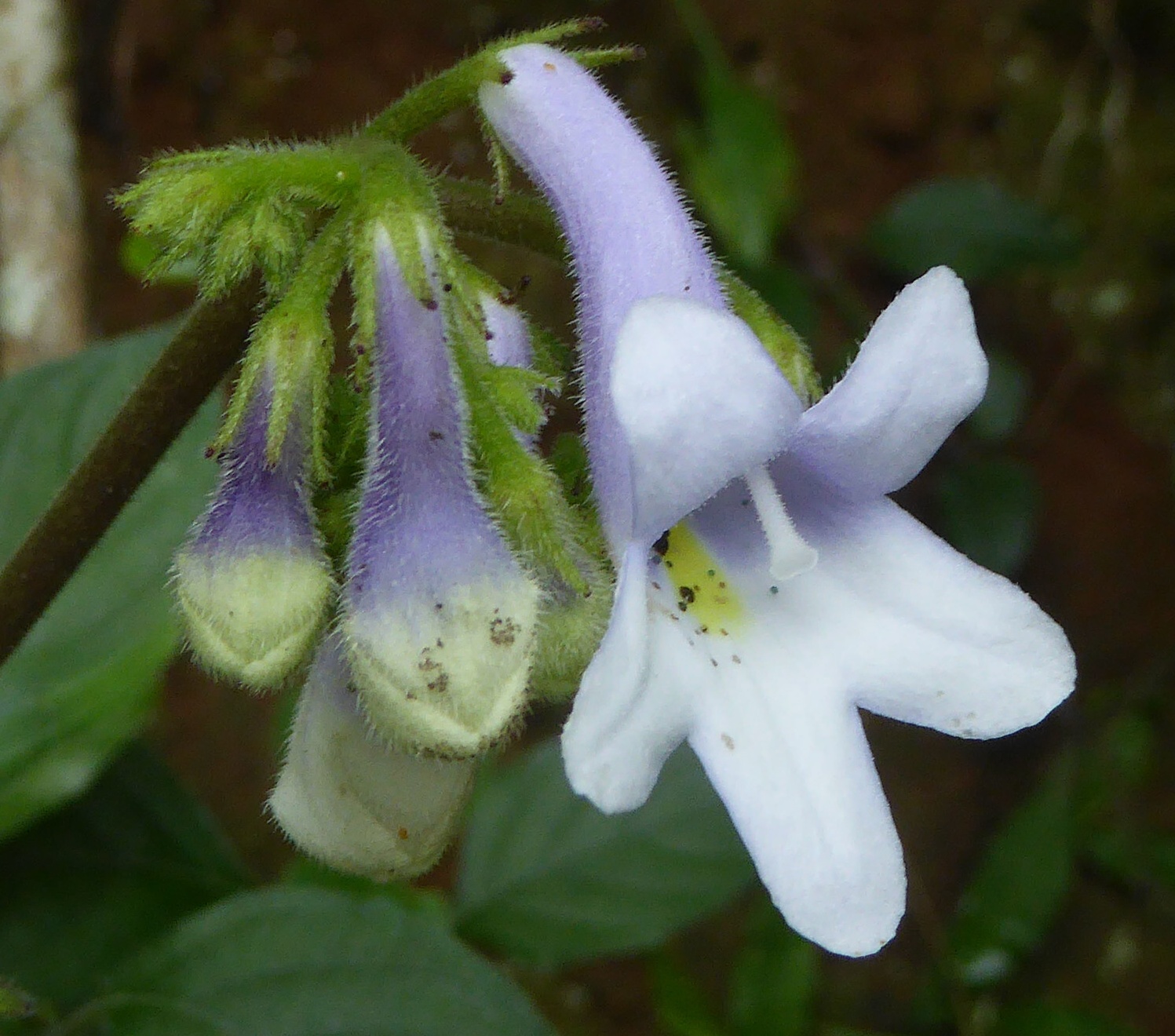
Streptocarpus saundersii is a monocarpic unifoliate with a fairly large (370 x 260 mm), dark green leaf, underside often beetroot red. It produces numerous flowers, many opening at the same time to give an attractive floral display. The flowers are tube shaped, variable in length (26 – 40 mm), and colour (white to pale violet) with darker violet on the bottom of the corolla floor with a long conspicuous yellow stripe. It grows on moss covered rocks or steep embankments in forest, from Inanda inland from the coastal city of Durban towards Pietermaritzburg to Nkandla in the north (KwaZulu Natal Province, South Africa).