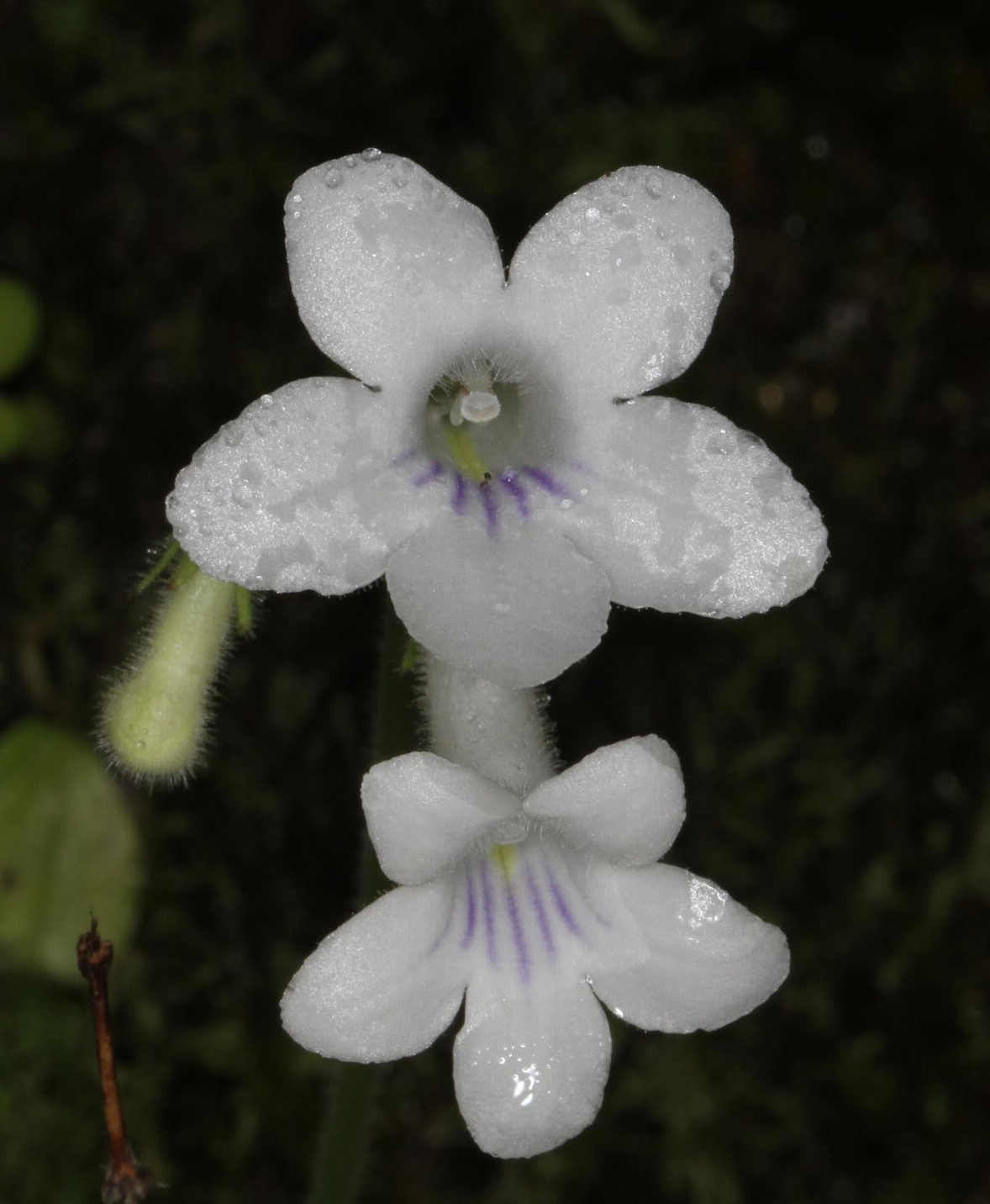
Streptocarpus actinoflorus was split off the Streptocarpus cyaneus group and described in 2004, based on its flowers of which the corolla lobes are almost evenly arranged in a circle (Edwards et al., 2004). Botanically this is referred to as an actinomorphic flower, which is very uncommon in Streptocarpus, where almost all species have flowers have strong bilateral symmetry with two upper lobes and three lower lobes, referred to botanically as being zygomorphic.
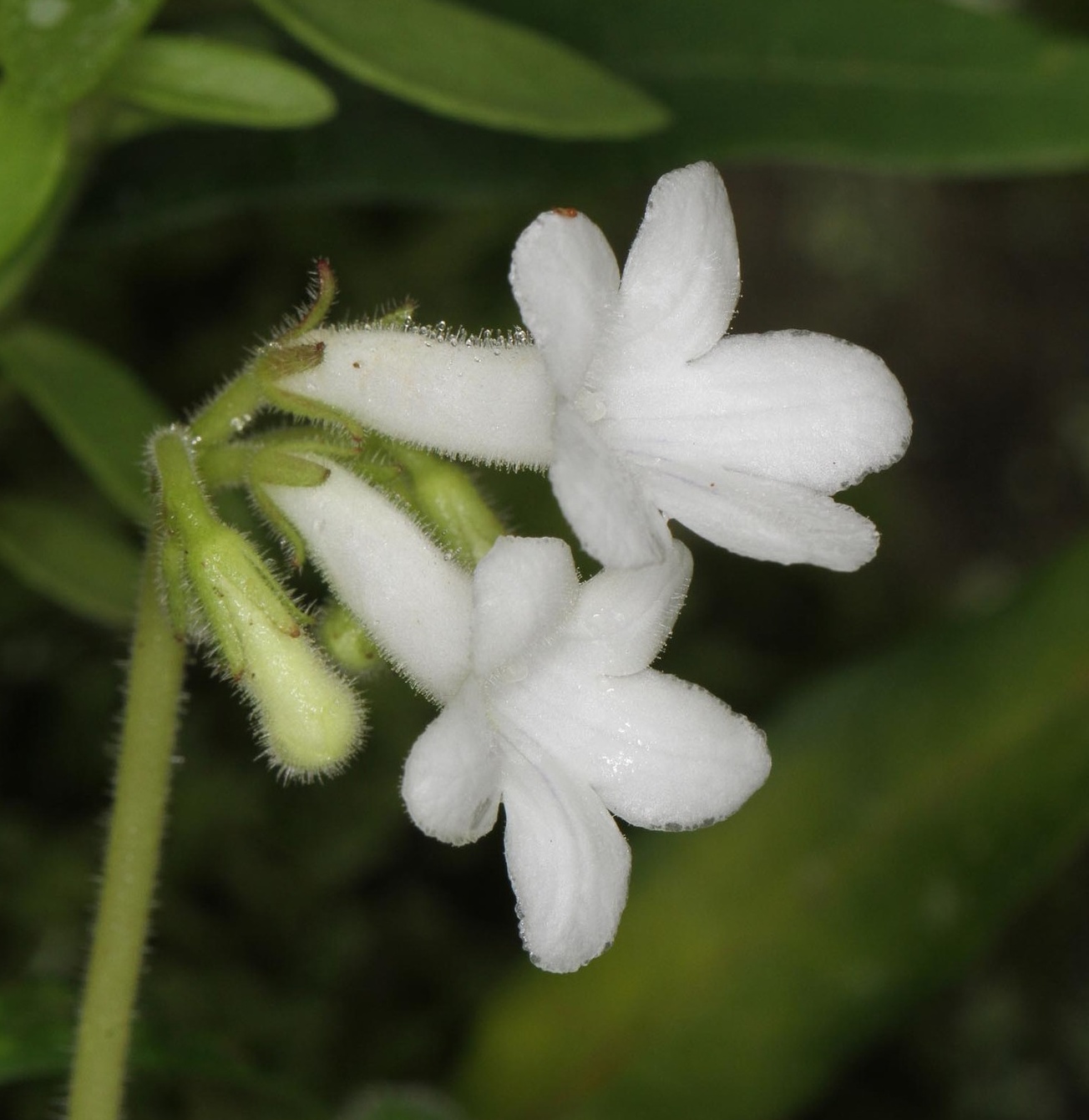
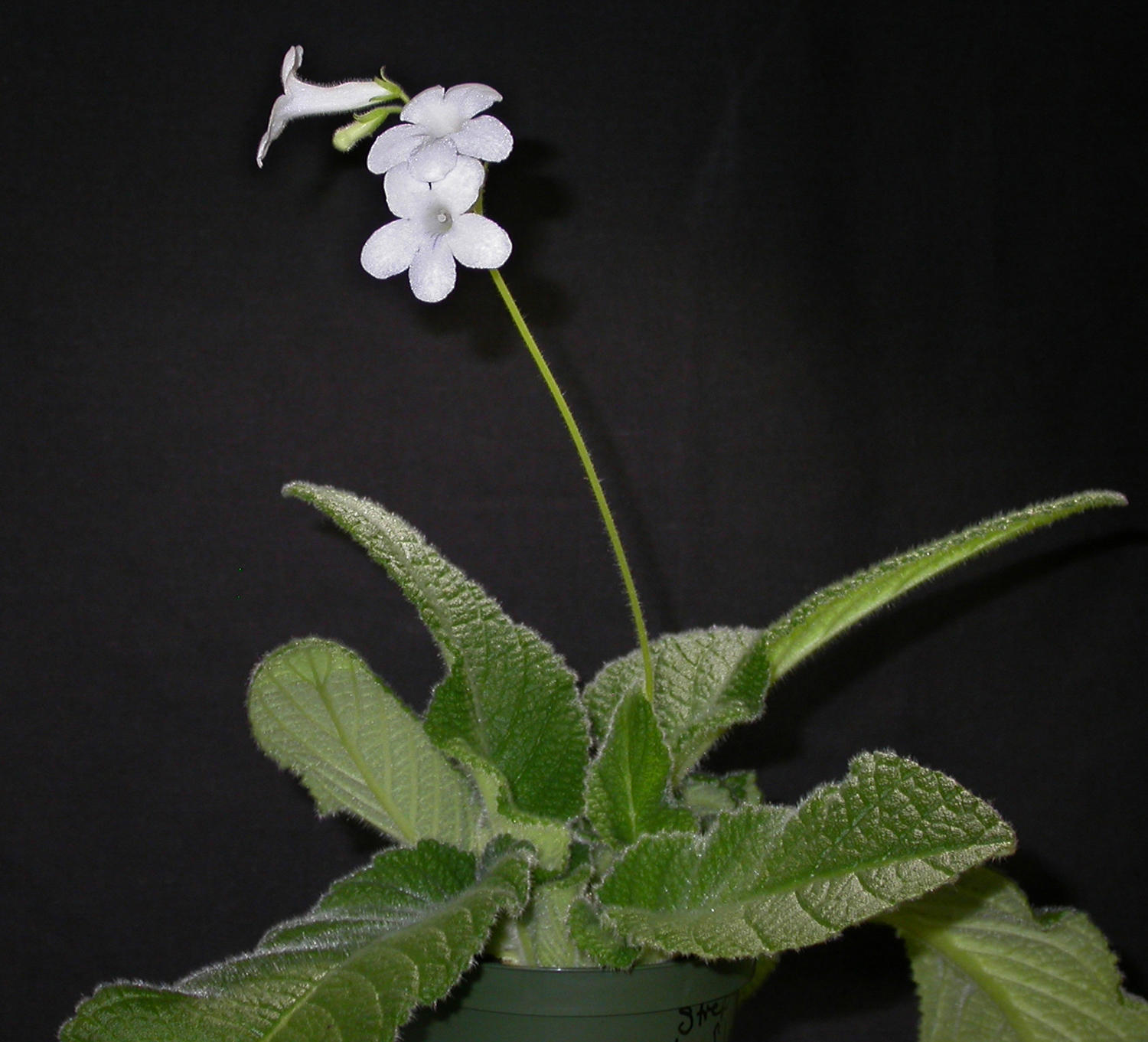
The placement of the corolla lobes of Streptocarpus actinoflorus are not entirely actinomorphic; while the lobes are usually quite similar in size and shape, they are arranged in a somewhat zygomorphic fashion. The relative symmetry and rounded form of the overall flower nonetheless led to the species’ name. Streptocarpus actinoflorus corolla lobes are white, sometimes with a lavender tinge or pale purplish lines in the throat. The plant has a typical rosulate form with medium sized leaves (250 x 50 mm).
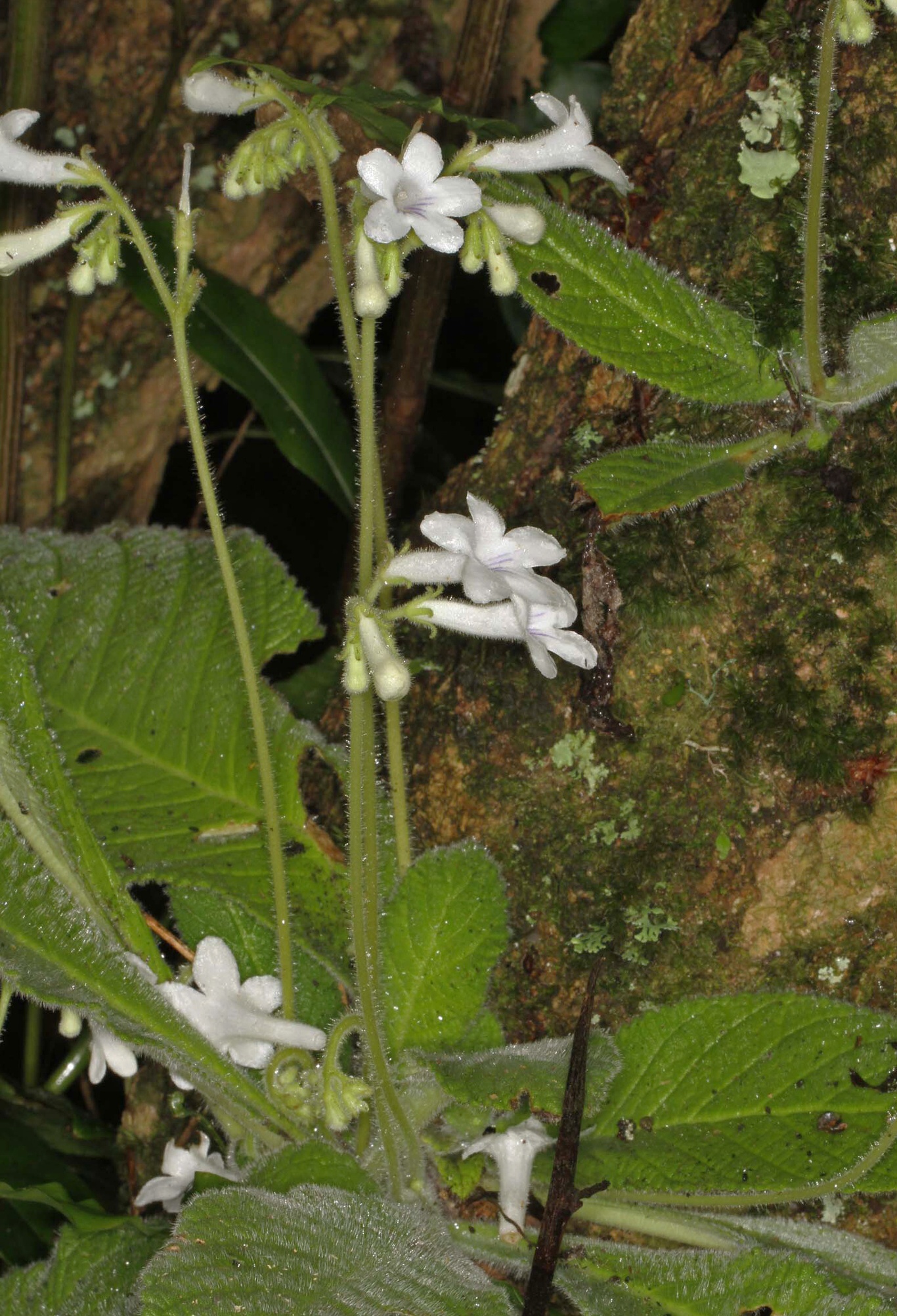
Streptocarpus actinoflorus occurs in only a few localities, always heavily shaded, on the highveld escarpment in Mpumalanga Province in the Mariepskop vicinity. In different localities there can be significant differences in the size of the flowers, 10 – 12 mm in the flowers of the Goedgeloof form to 18-25 mm in the Erasmushoop form. A form from Mariepskop of intermediate size has flowers with a subtle lavender colour which are particularly attractive.
-
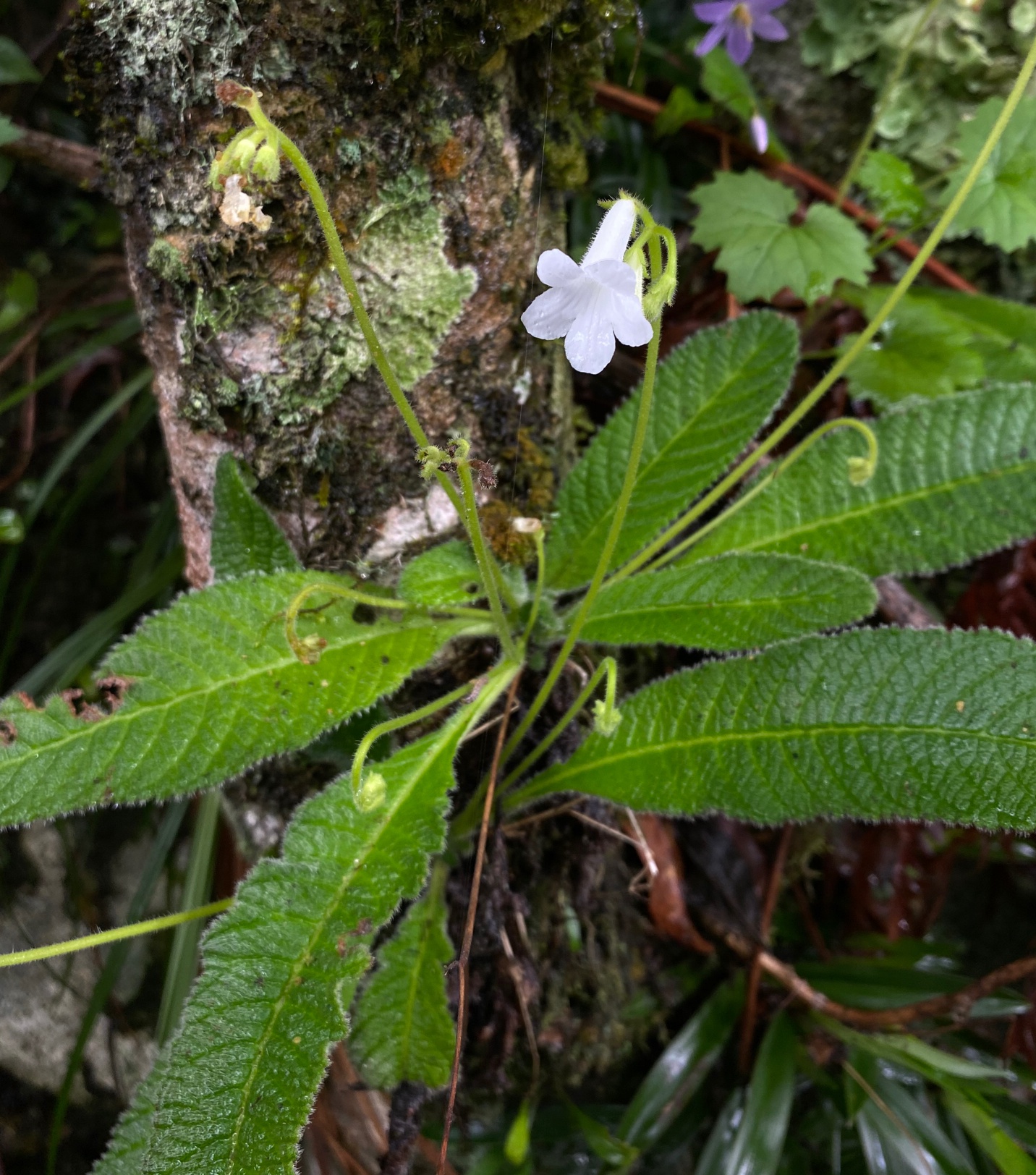
- A plant growing on a tree trunk
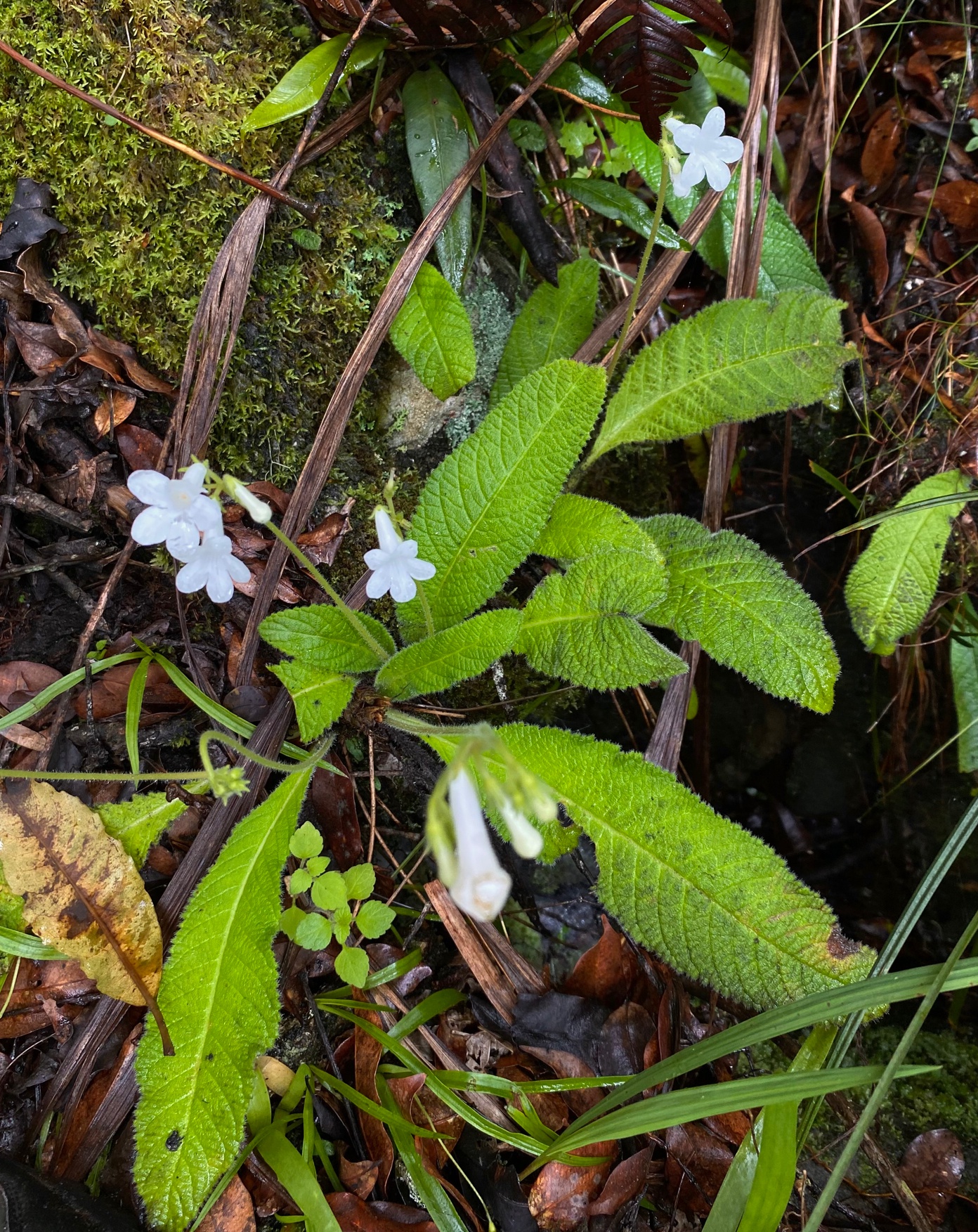
- Another plant growing in moss and forest litter
- A plant growing in the company of begonias, a frequent companion for gesneriads growing in the tropics
- A close view of clean white flowers
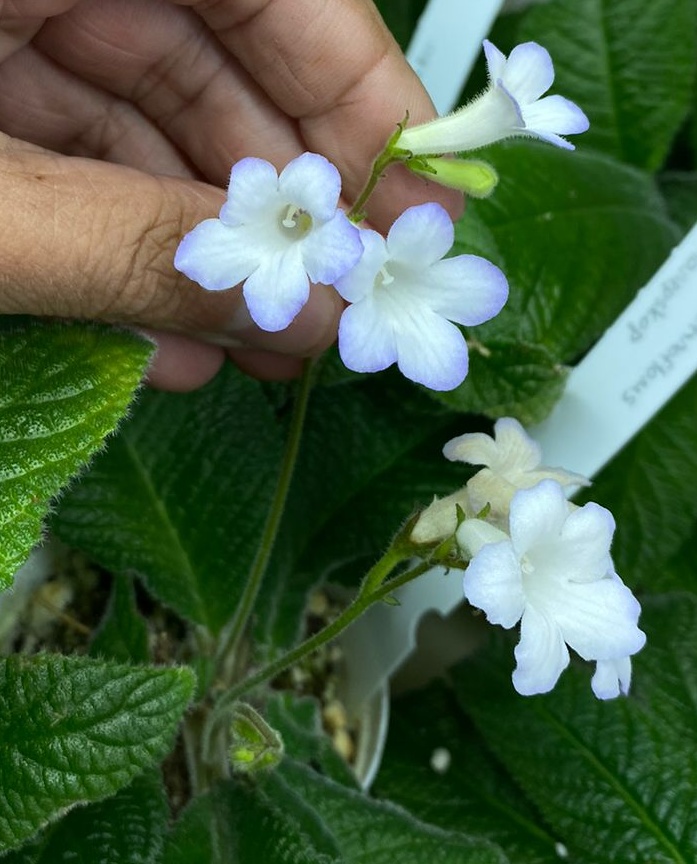
- Flowers tinged with lavender
- White flowers with purple markings
- A cultivated plant