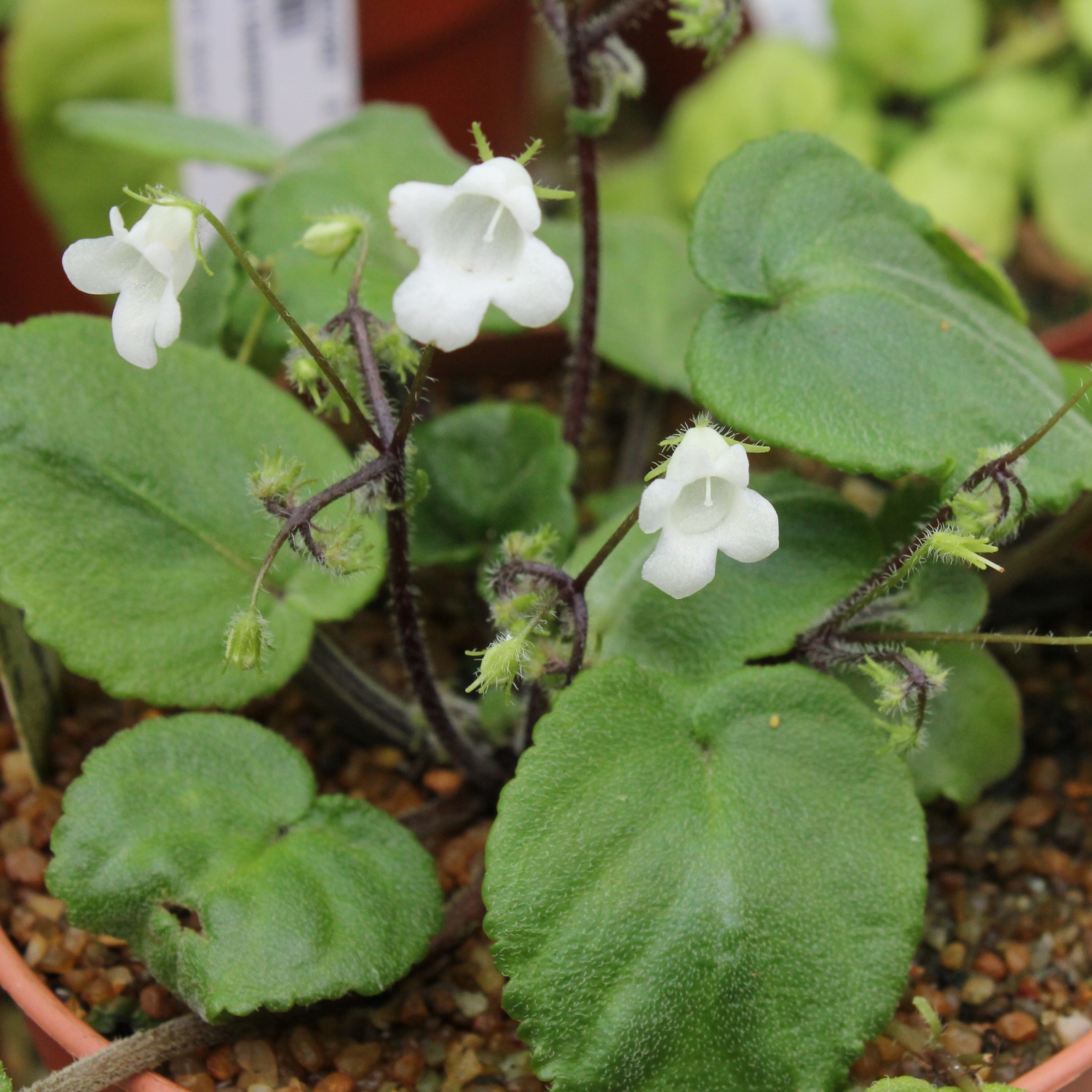
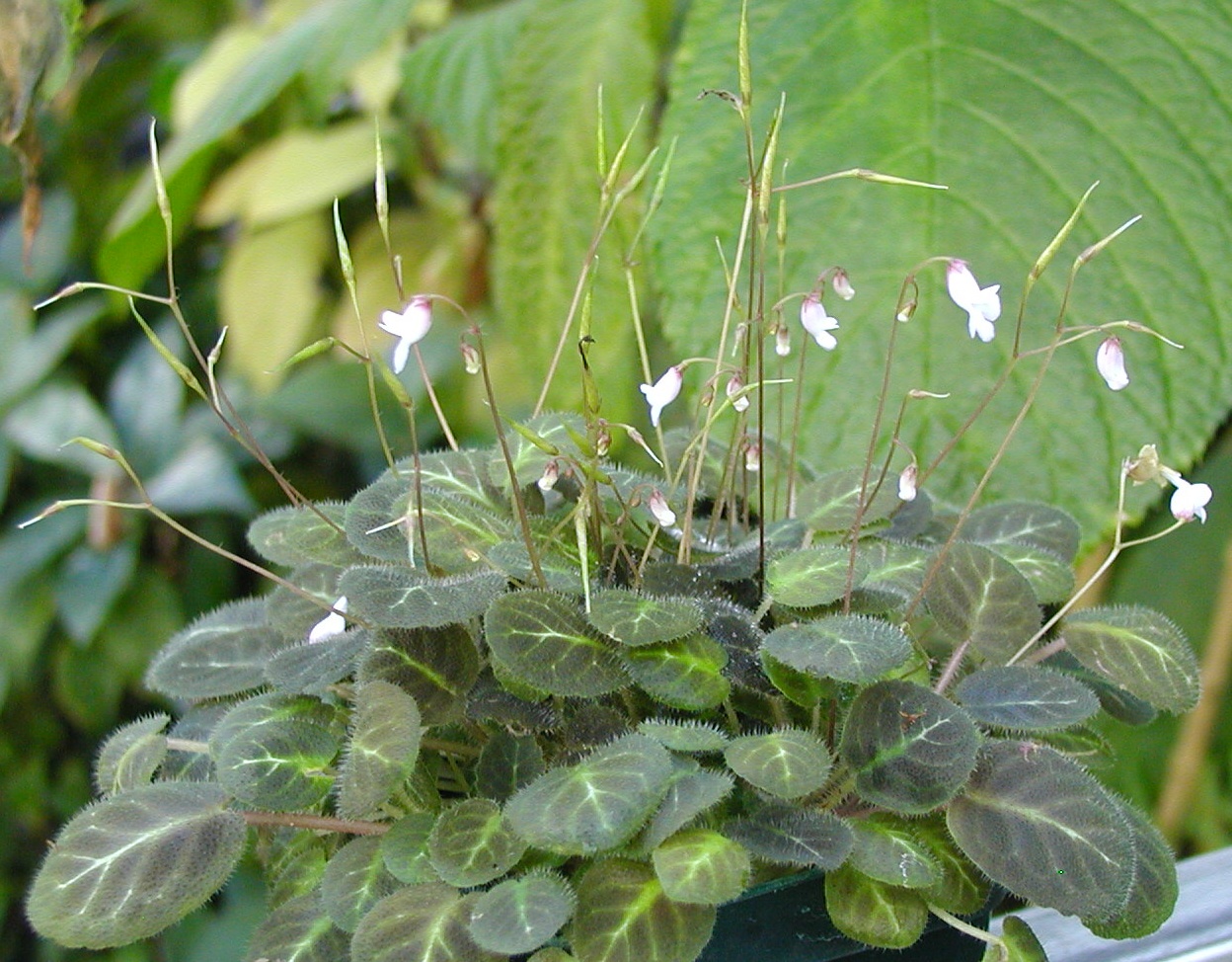
Streptocarpus beampingaratrensis is one of the Streptocarpus from Madagascar that Hilliard and Burtt in the classic work Streptocarpus: An African Plant Study refer to as “saintpaulia-like”. Indeed the habit of S. beampingaratrensis and S. andohahelensis along with the leaves with a long petiole suggest Saintpaulia much more than either of the traditional caulescent or acaulescent Streptocarpus. In the revision of the genus proposed by Nishii et al in 2015 the Saintpaulia group was moved into Streptocarpus as a Section after genetic studies confirmed the group’s close relationship to Streptocarpus – just as Hilliard and Burtt surmised.
The species currently has three accepted subspecies, Streptocarpus beampingaratrensis ssp. beampingaratrensis, Streptocarpus beampingaratrensis subsp. antankarana and S. beampingaratrensis ssp. antambolorum. Current research suggests that these might best be understood as separate species, but we retain the single species with three subspecies here, pending publication of a split.
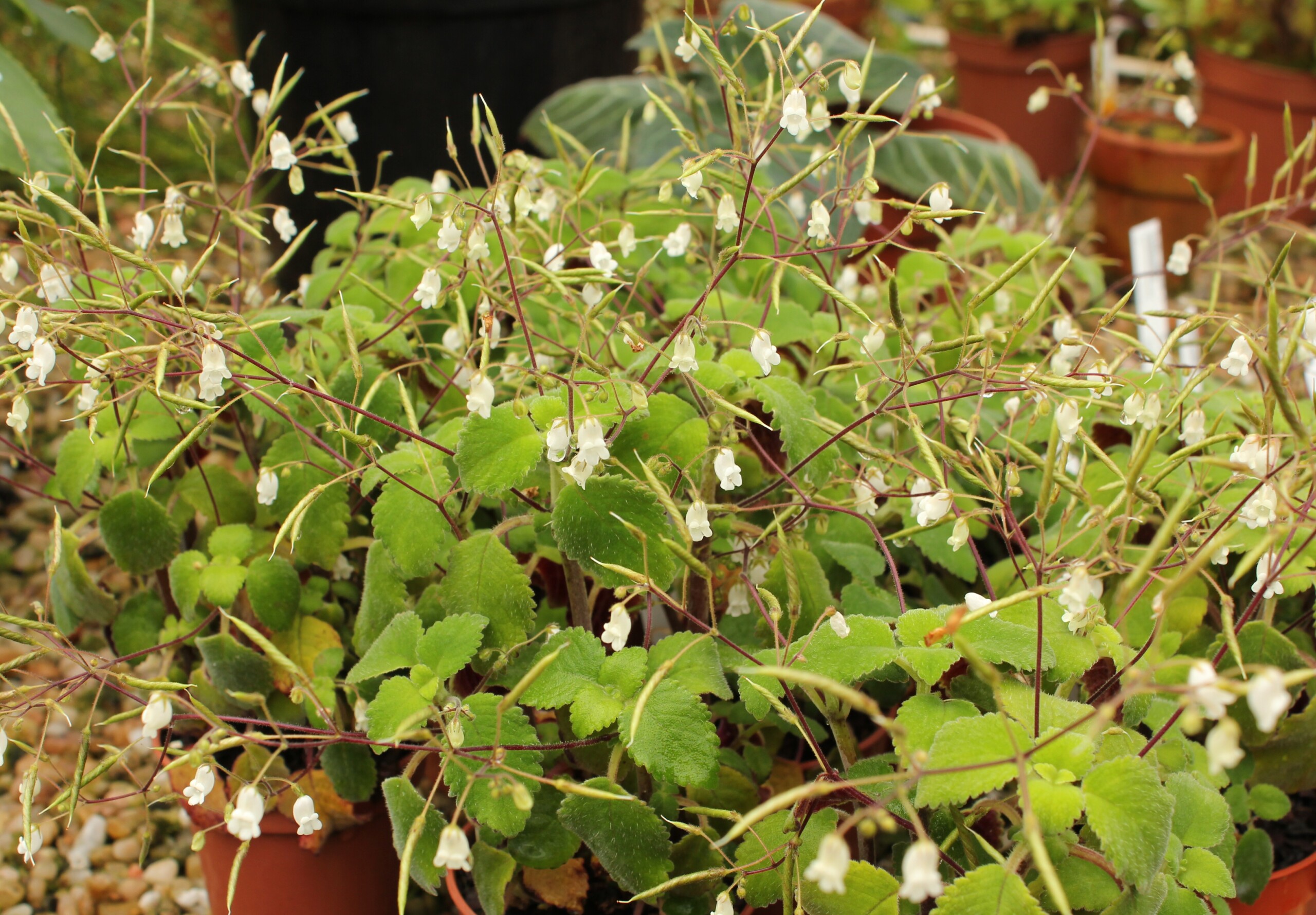
S. beampingaratrensis ssp. beampingaratrensis, featured above, has smallish leaves reminiscent of some trailing species and cultivars of subgenus Saintpaulia. The small white flowers are produced in abundance.
- Plants growing in a rocky cleft in Madagascar
- Another cluster of plants in Madagascar
- Plants in cultivation at the Royal Botanic Garden, Edinburgh
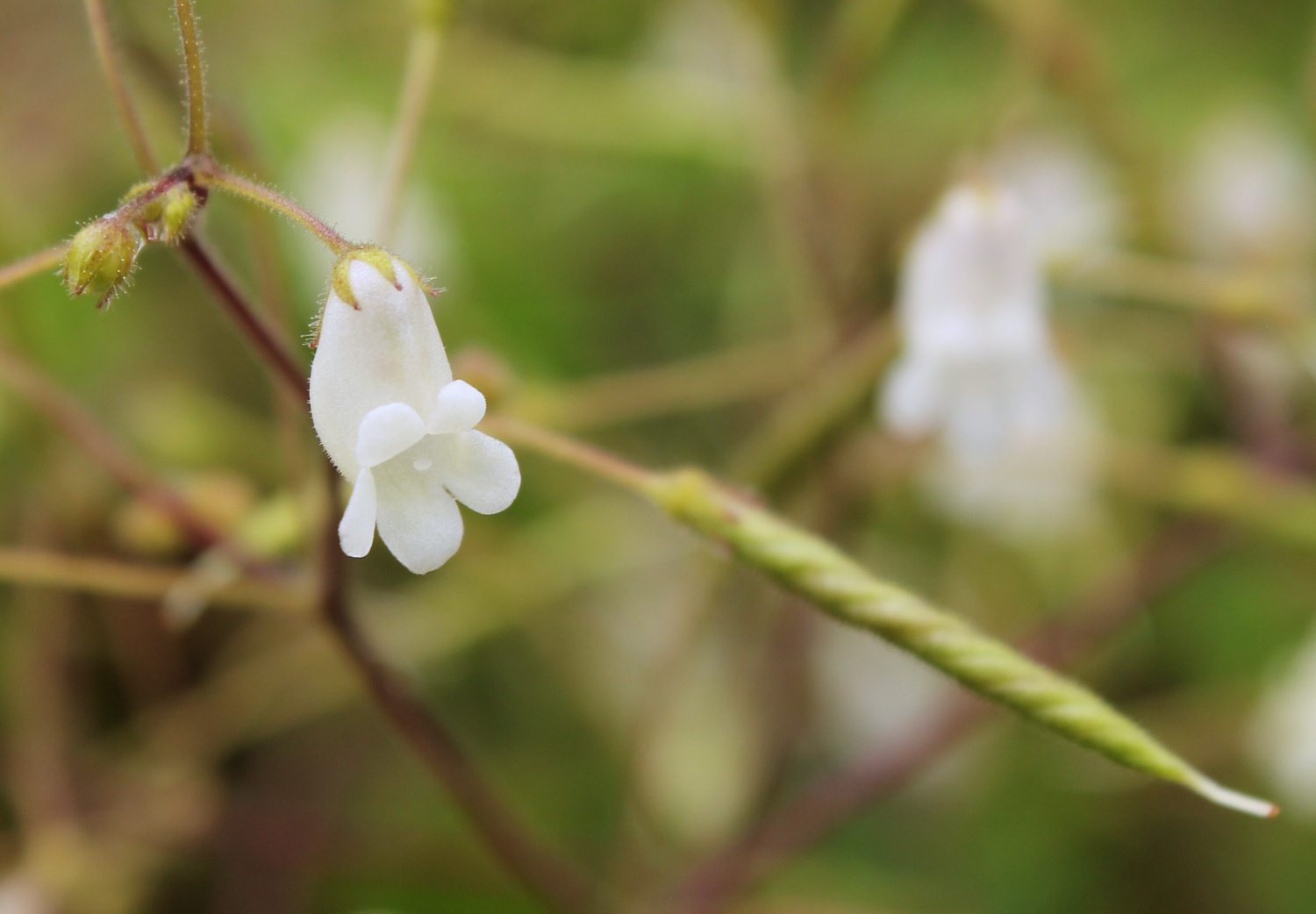
- A close view of a flower and seed pod
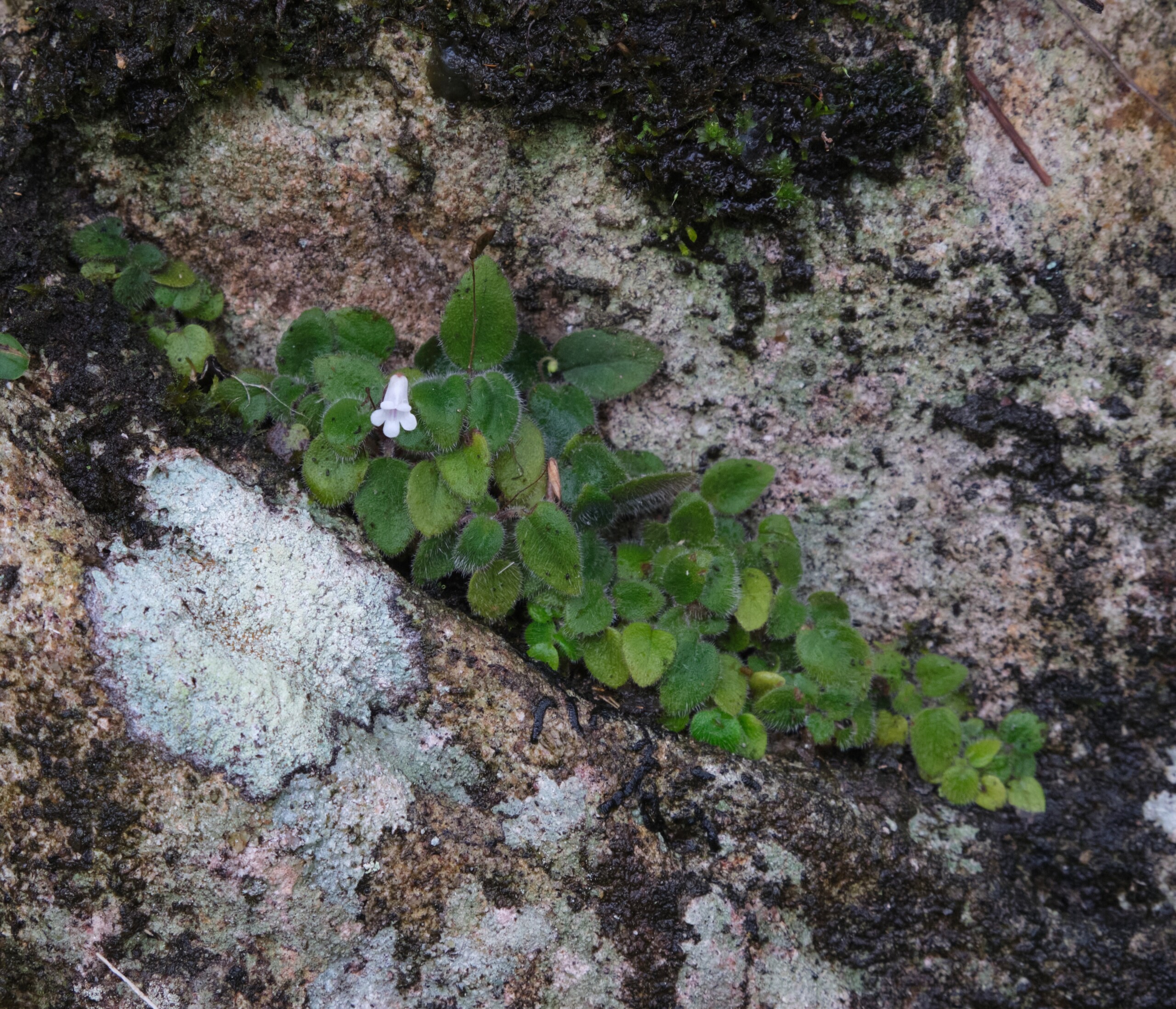
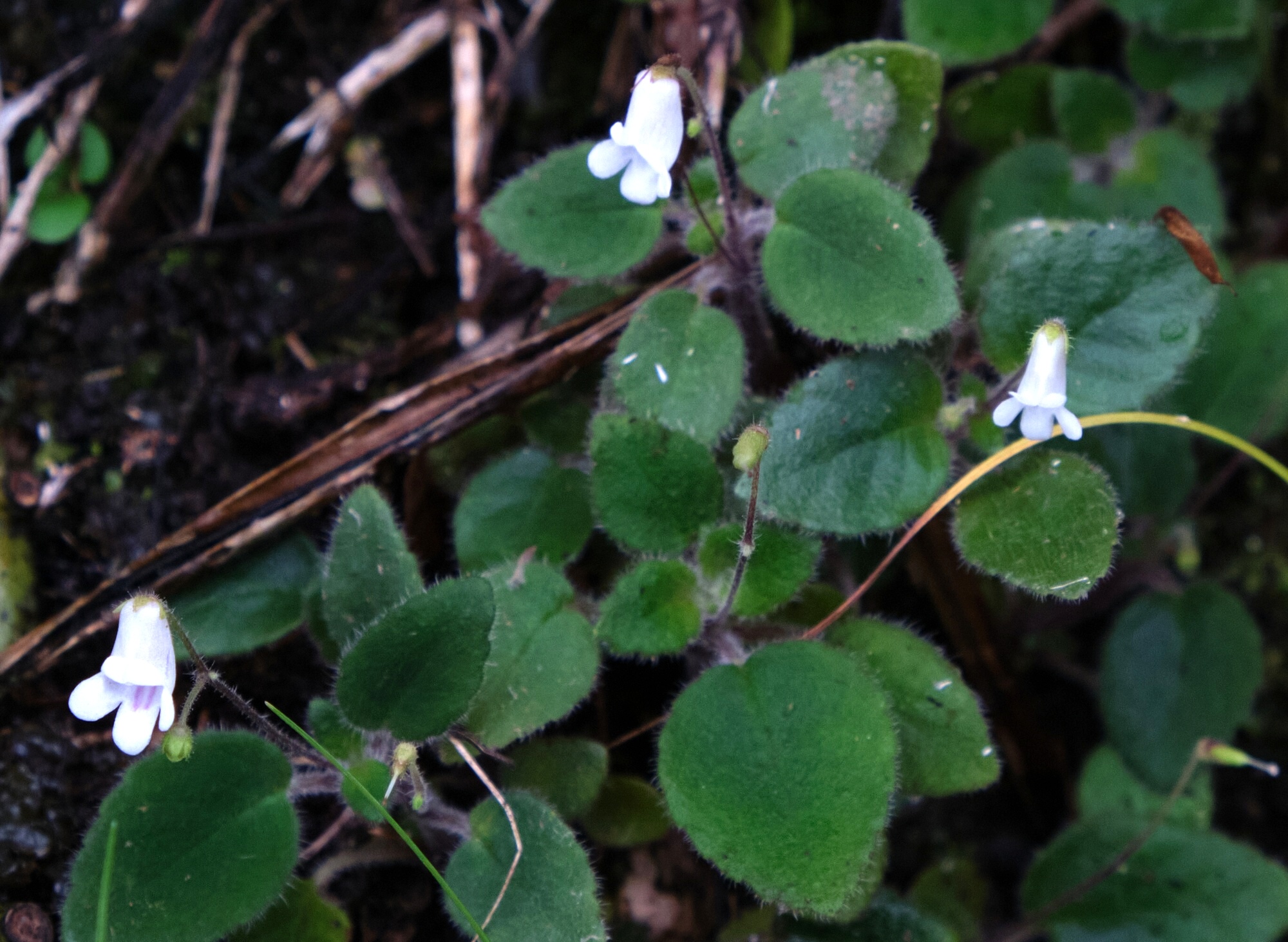
Streptocarpus beampingaratrensis ssp. antambolorum is perhaps the most Saintpaulia-like of Section Parasaintpaulia. The long-petioled leaves, in particular, are very reminiscent of some species in Section Saintpaulia. The flowers are relatively large (they are often tiny in other members of Section Parasaintpaulia) and this species could prove to be a good horticultural subject.