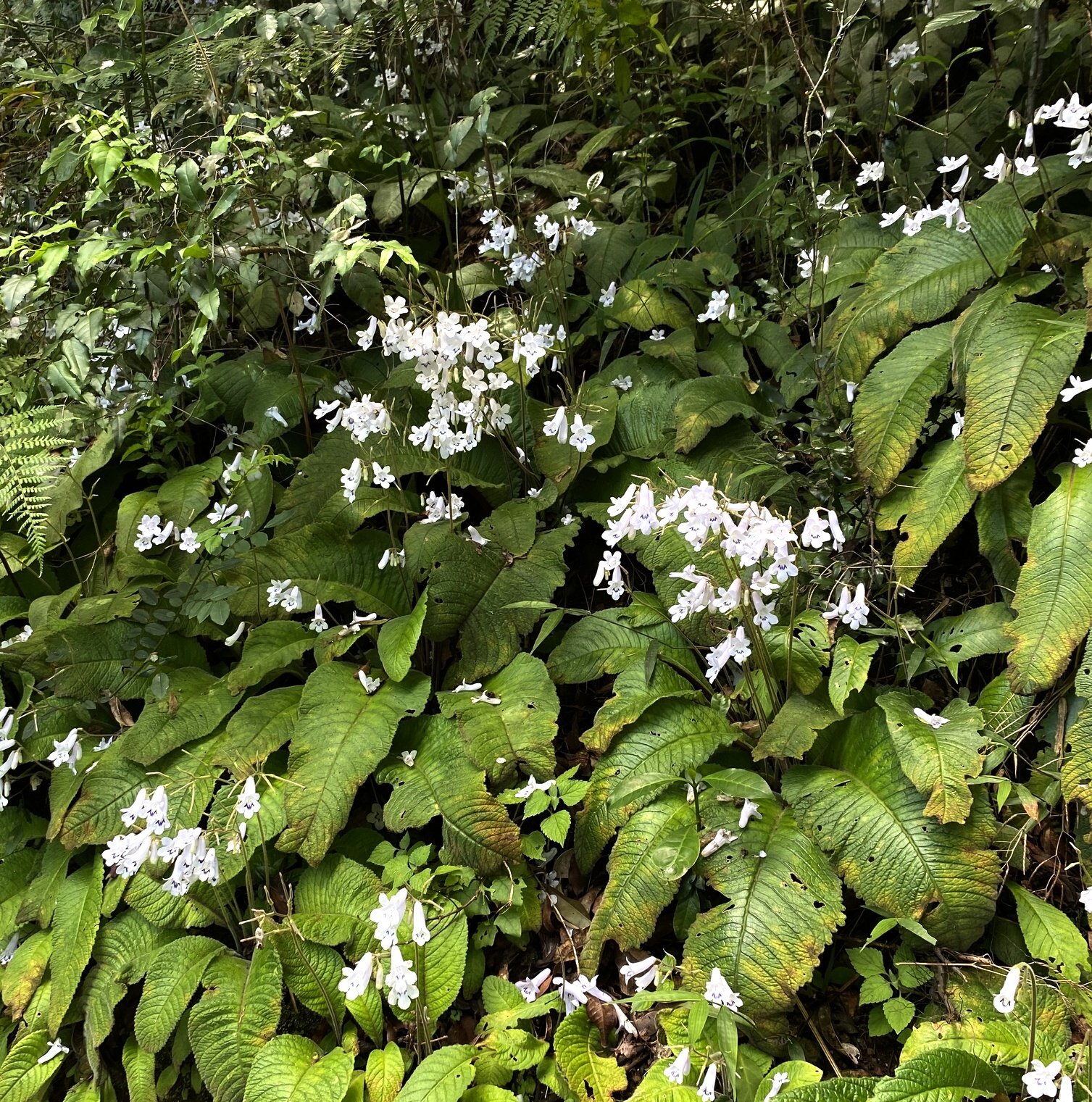
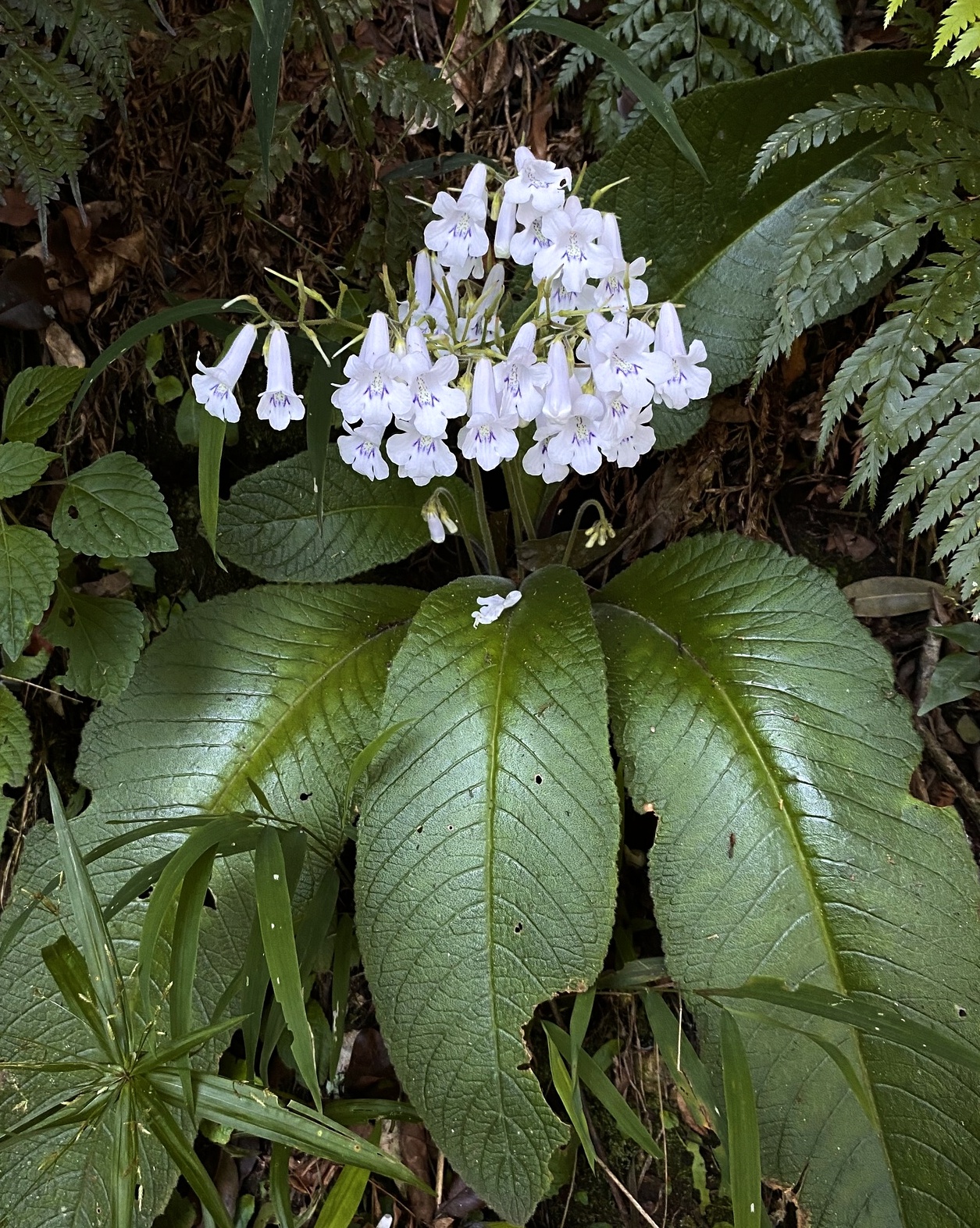
Streptocarpus candidus is a very distinctive species and is not easily confused with others. It occurs in a limited geographical range in northern KwaZulu-Natal Province, South Africa, in an area which forms an equilateral triangle some 60 km long between the town of Vryheid to the east and the Ngome Forest Reserve to the west and south to Nhlazatshe Mountain between 1000 and 1200 m above sea level. It grows in shaded forest habitats on rocks, embankments and even epiphytically on tree trunks and requires high levels of moisture, sometimes extending to shaded areas on forest margins.
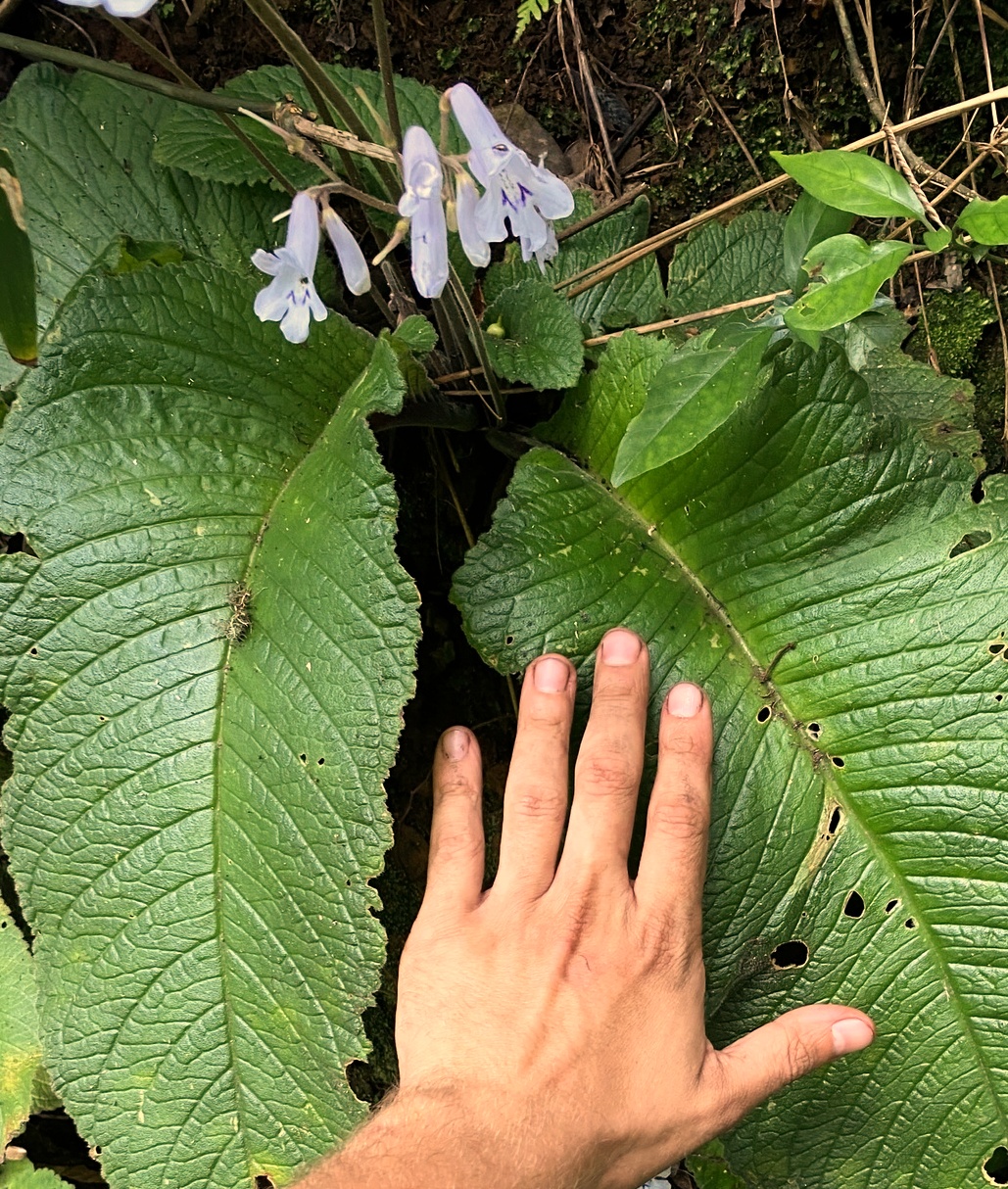
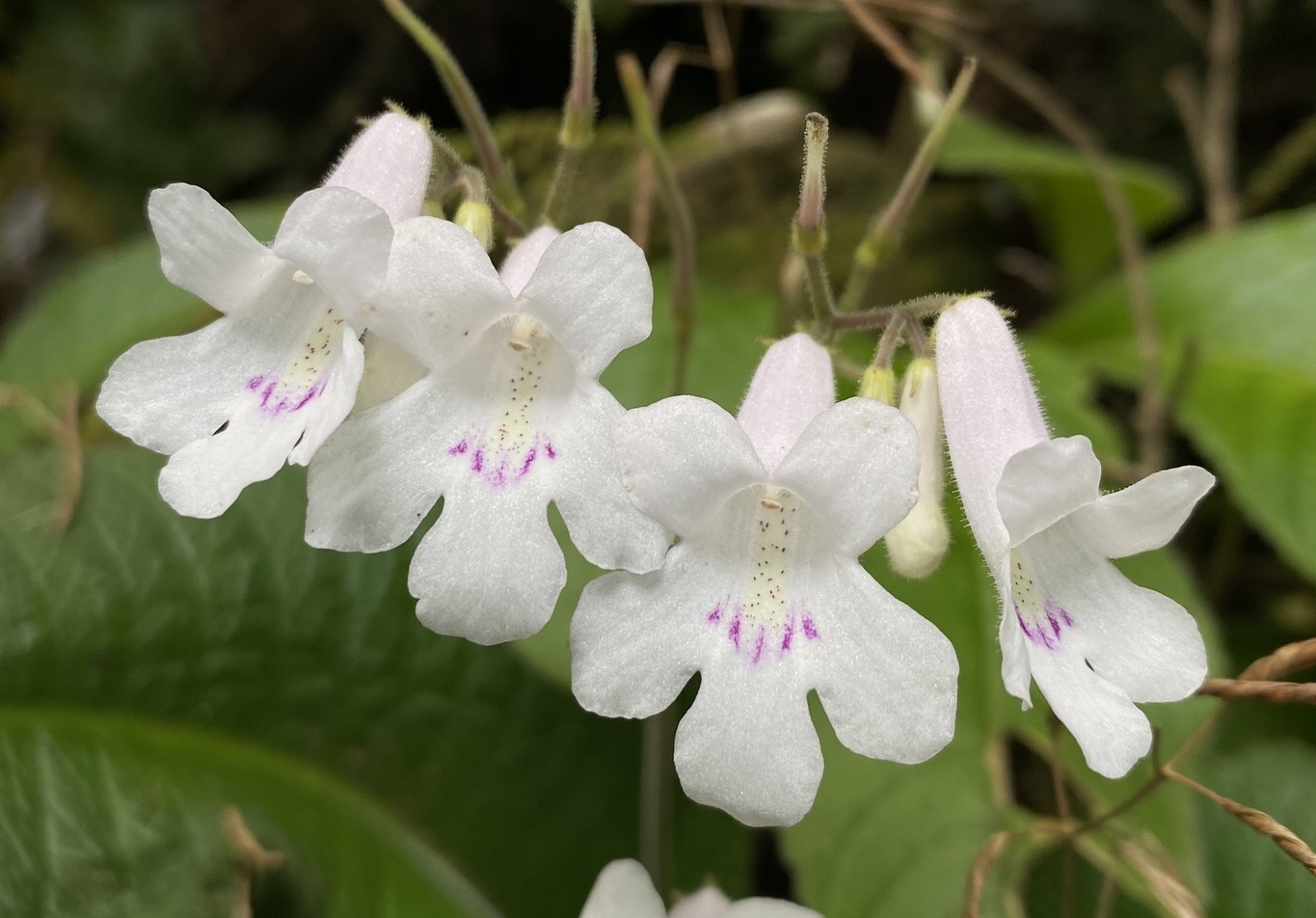
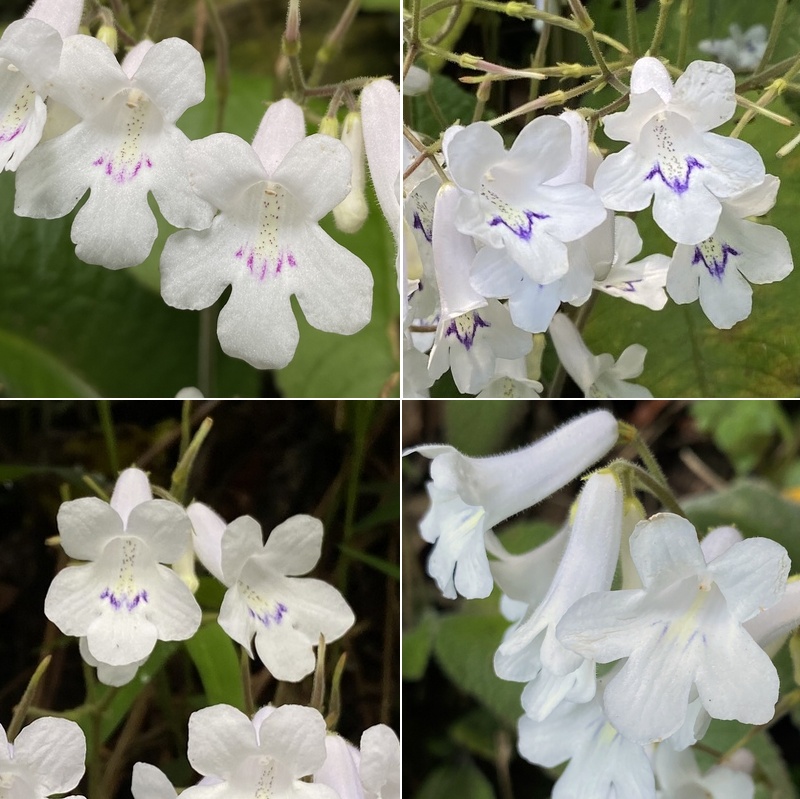
It is a typical rosulate species with leaves which can grow very large in years with consistent summer rainfall or near waterfalls (750 x 270 mm). The species is especially floriferous with many flowers open at the same time. The flowers do not flare so much at the opening as in many close relatives of Streptocarpus rexii, but rather have long almost tube shaped flowers (40 mm long). The beautiful white flowers have pale yellow markings with violet spots and a distinctive pair of bluish-purple chevrons on the lower corolla which vary in intensity from plant to plant, even within populations, some almost completely pale, others strongly marked. Some individual plants may have slight blueish shading, and the color of the chevrons can vary. The flowers have a honey-like scent.
The white and scented flowers probably indicate that the species is night-pollinated by moths, which is similar to Streptocarpus vandeleurii, the only other pale flowered, scented Streptocarpus. The scent character may be transmitted to hybrids, which together with the fact that this species is so floriferous, make it an ideal candidate for inclusion in hybridization programs.
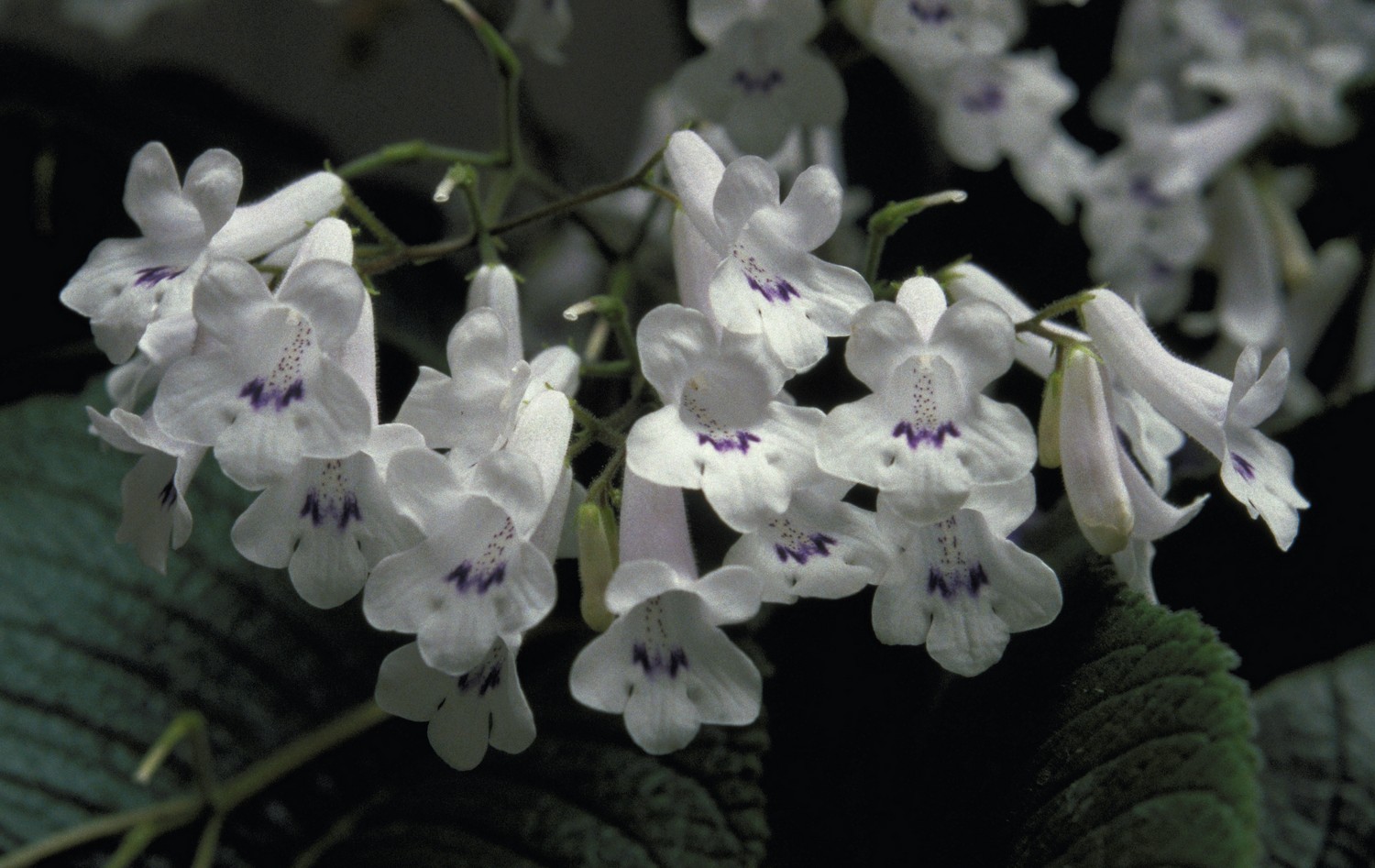
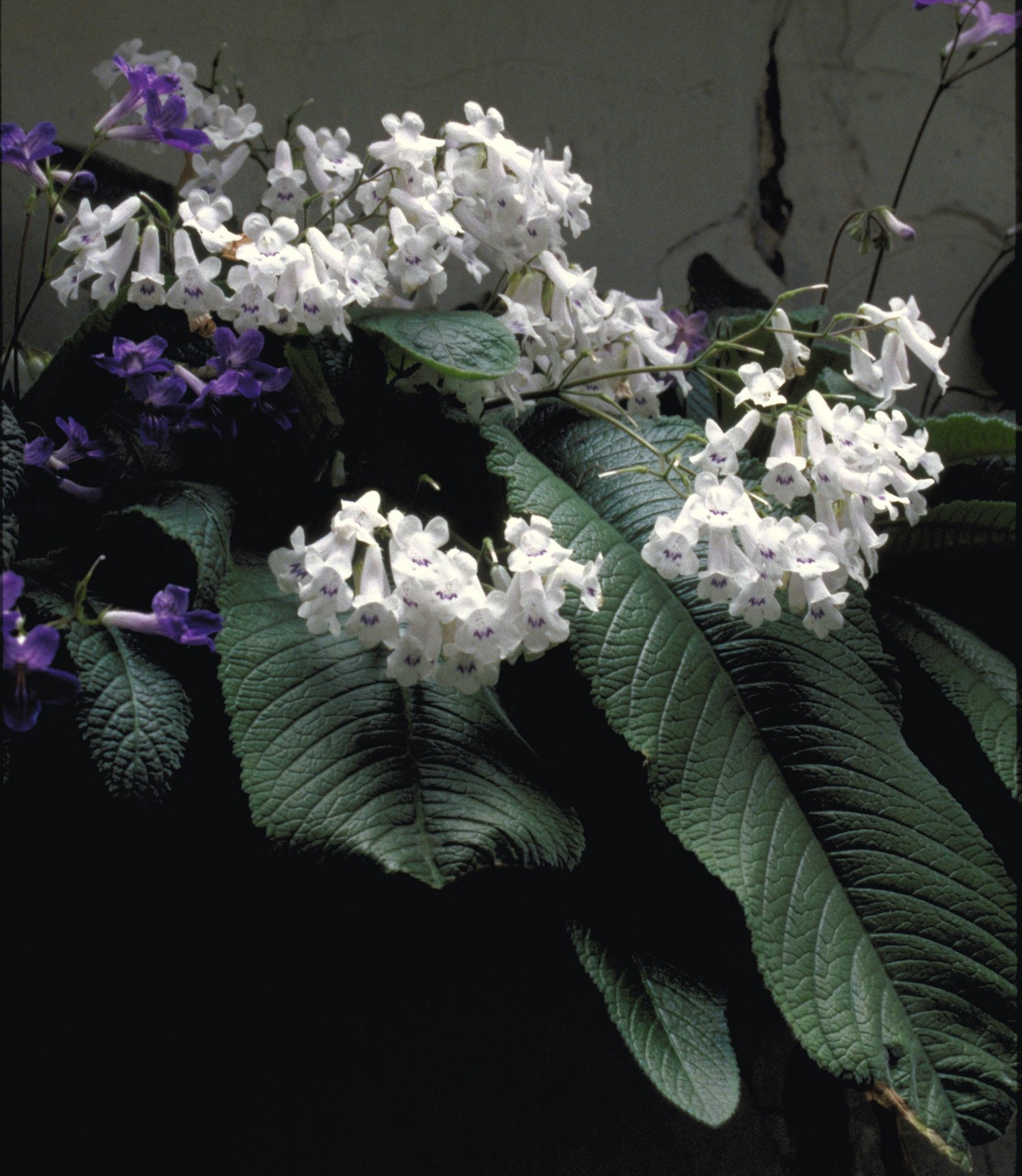
The plant has been grown horticulturally over many years, with a clone from Dibley’s nurseries in Wales being widely distributed. This clone has particularly prominent purplish markings in a chevron or “W” shape at the base of the lower corolla lobes. This feature has become associated with the species, although it varies substantially in natural populations.
- One or more plants with a hand for scale
- A colony of the species growing on a steep bank
- A cluster of the flowers of the “Dibley’s” clone in cultivation, with prominent chevron markings
- A cluster of flowers with different shaped and colored markings
- Several cultivated plants, making a gorgeous show
- A composite photo, illustrating different patterns of markings on the lower corolla lobes