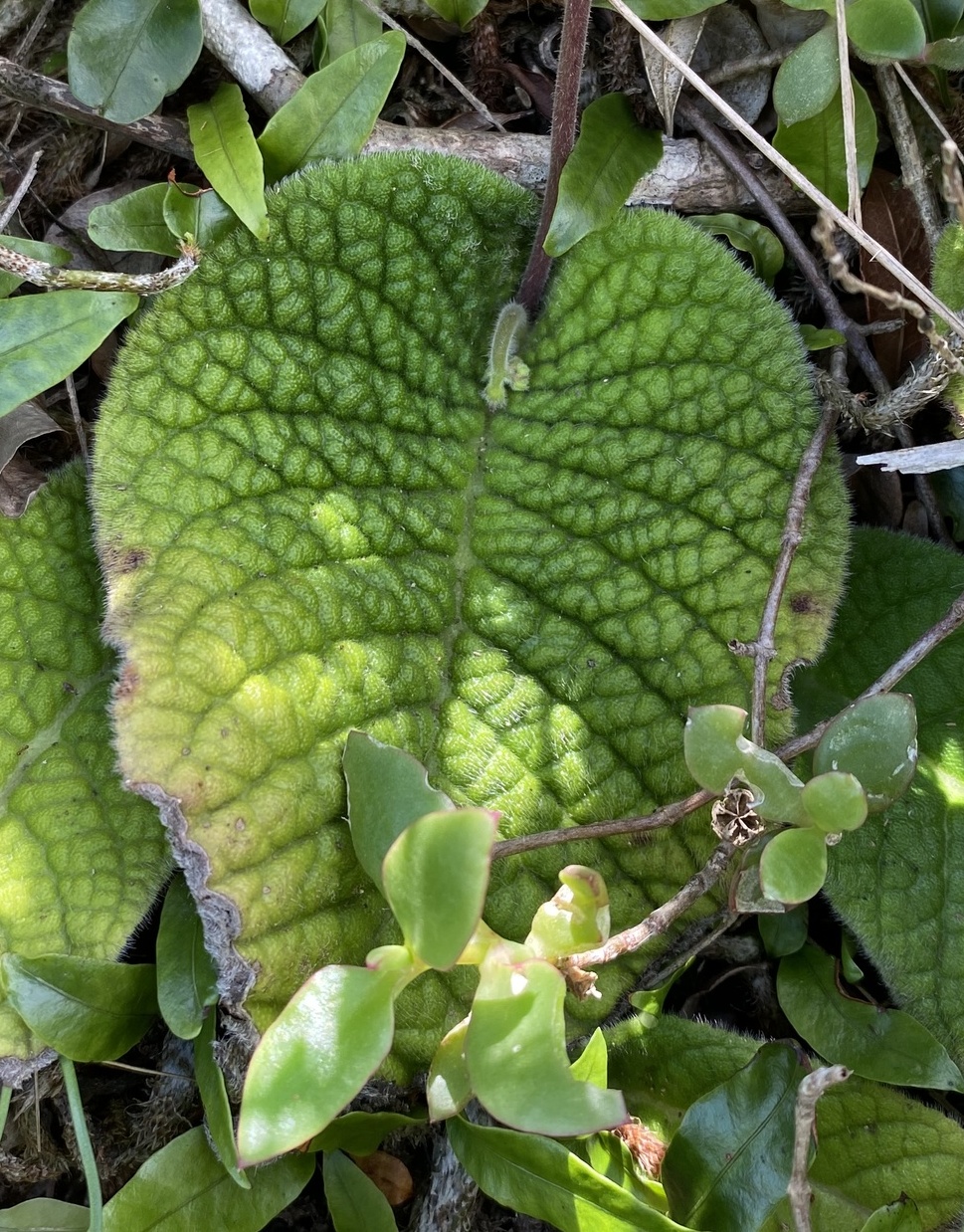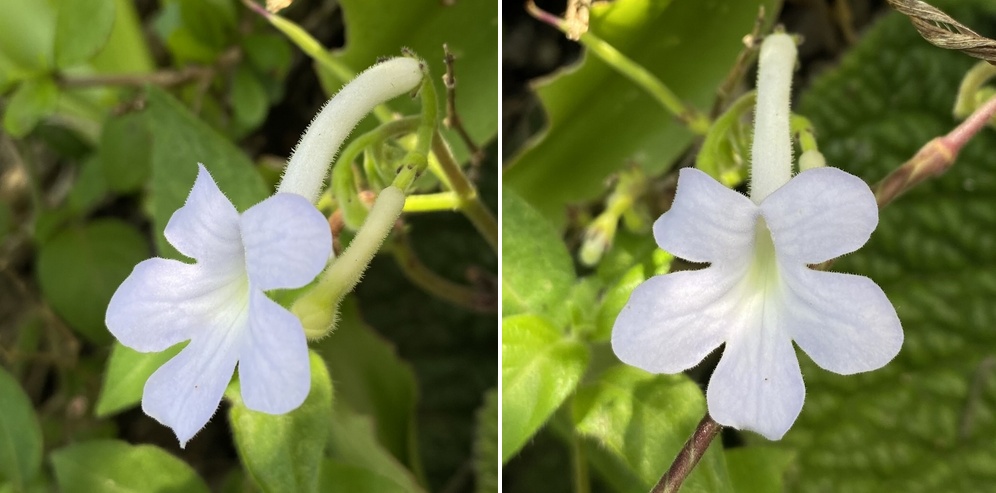
Streptocarpus confusus was originally described by Olive Hilliard in 1966 in an effort to separate it from Streptocarpus haygarthii to which it is closely related, hence also its name referring to the confusion between the two species. The characteristic divaricate lobes of the upper corolla lip and the very narrow opening between the upper and lower lips are distinctive for Streptocarpus confusus. In 1968, Hilliard and Burtt described Streptocarpus confusus ssp. lebomboensis to separate a long flowered form from the originally described short flowered form of the species. Both subspecies are apparently more drought resistant, and therefore able to occupy habitats that other Streptocarpus species cannot grow in. Both subspecies of Streptocarpus confusus are monocarpic and unifoliate with leaf dimensions up to 300 x 170 mm.
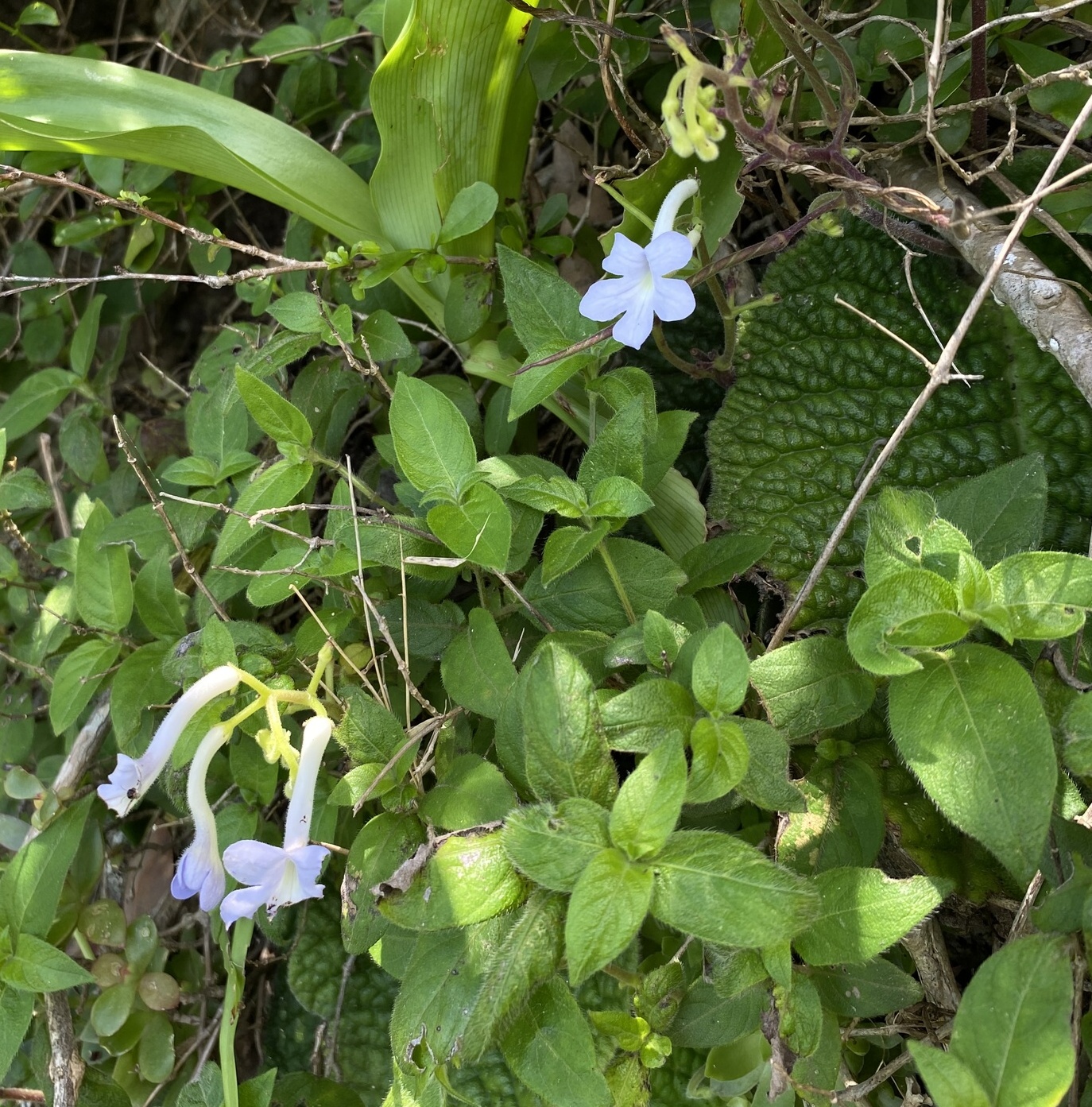
The range of Streptocarpus confusus ssp. lebomboensis is different than that of S. confusus ssp. confusus, and it occurs more easterly from northern KwaZulu Natal Province, South Africa, into Eswatini and Mozambique. The name of the subspecies derives from the Lebombo Mountains where is grows in semi-shade often on very exposed cliffs and rock faces, which are covered in otherwise succulent vegetation. Streptocarpus confusus ssp. lebomboensis has larger pale mauve keyhole shaped flowers (c. 35 – 55 mm long) and has a forked stigma. This form of the species is usually seen with very bullate leaves, as can be seen in the photos.