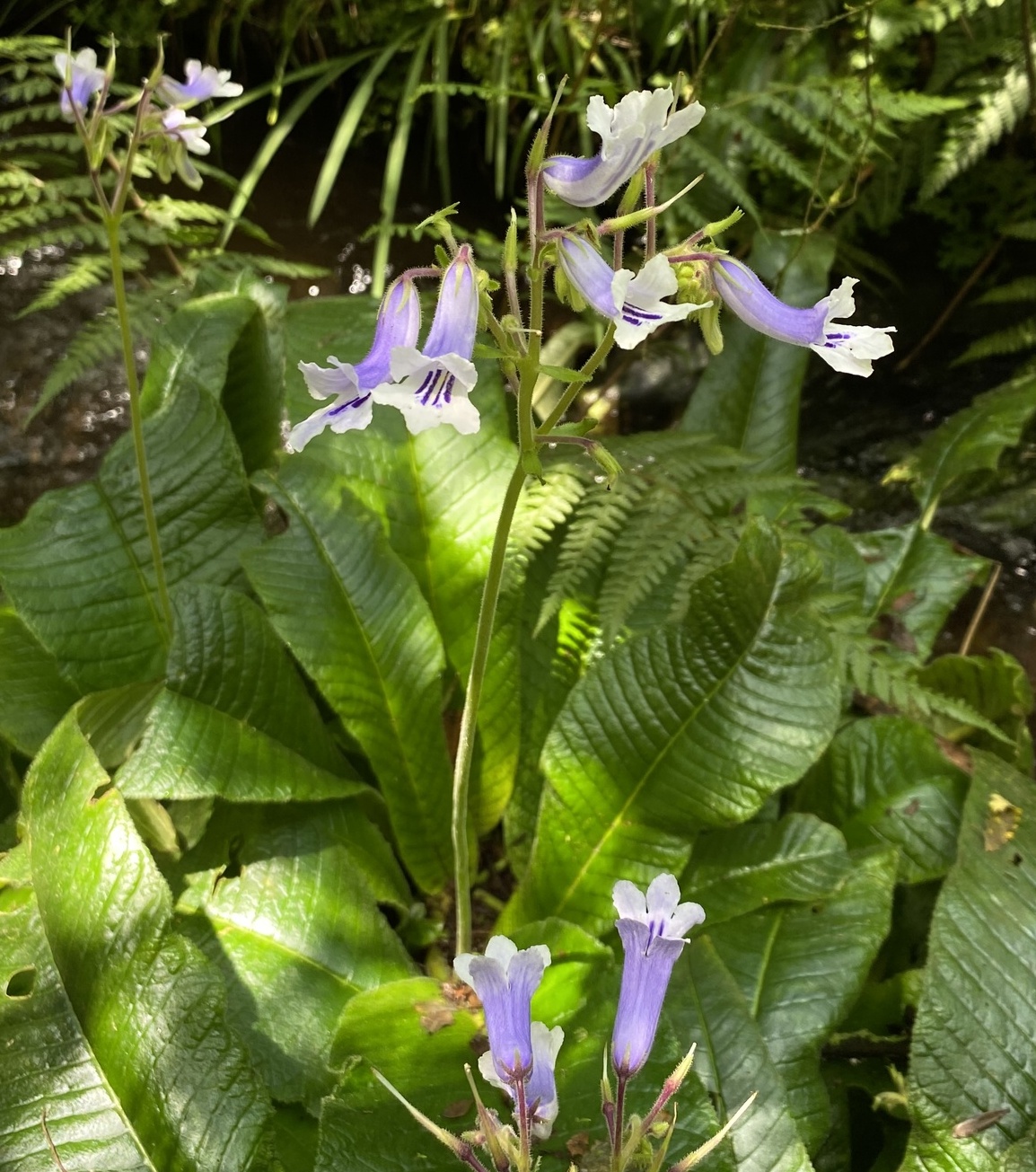
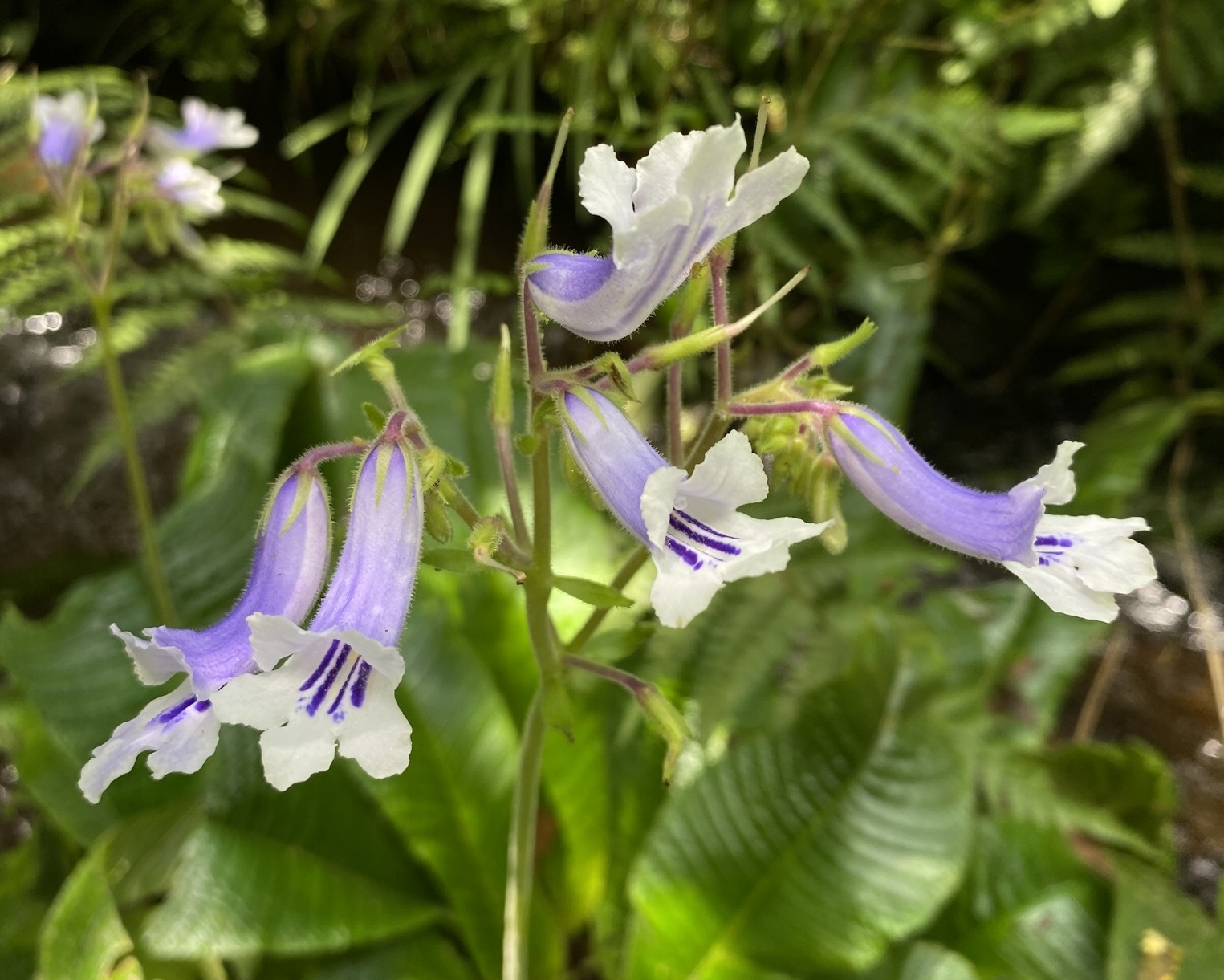
In comparison to other Streptocarpus species, Streptocarpus fanniniae is extraordinary in a number of ways. It always grows in areas which have high moisture levels, its drought tolerance in comparison to other species is very low. It occurs almost exclusively in forest or on sheltered cliffs from Ixopo in the south to Ngome Forest in the north, in the KwaZulu Natal Province of South Africa. It always grows on wet embankments or directly next to streams or on rocks in streams and can therefore almost be called rheophilic, the pictures illustrate this very well.
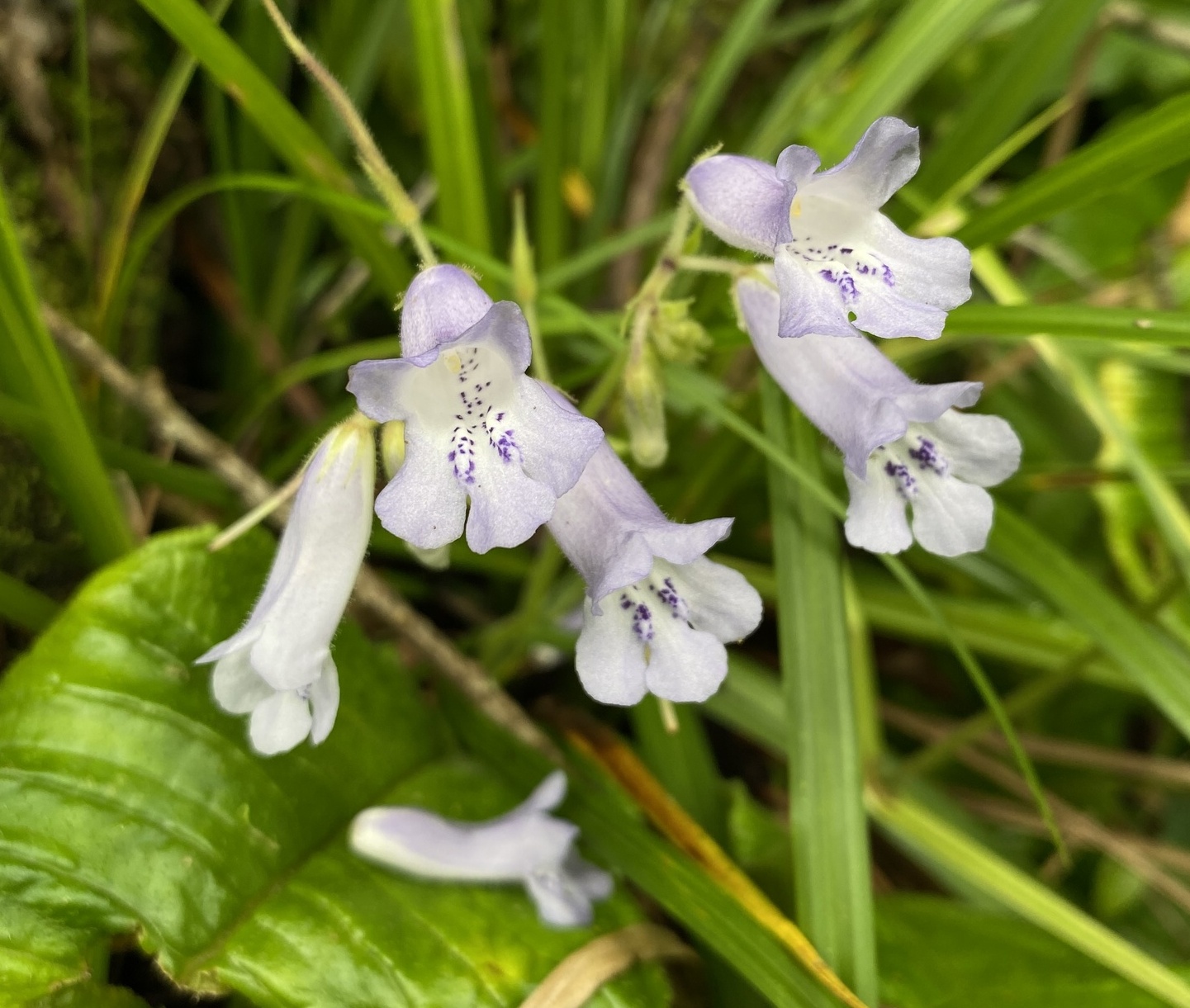
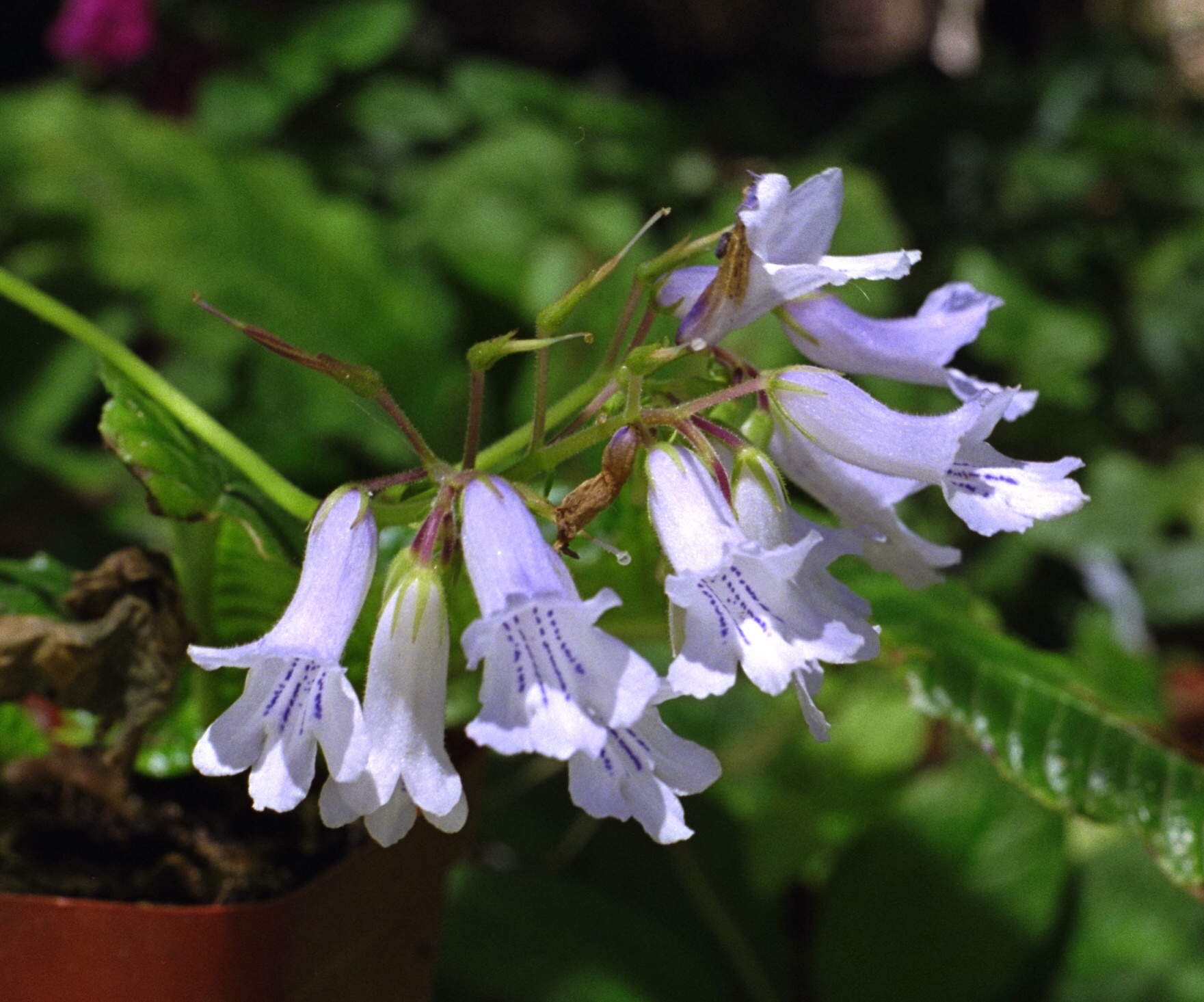
It possesses so-called rooting petiolodes that serve as a creeping rhizome through which it firstly propagates itself very effectively, and secondly this allows a very firm attachment to the rocks and logs lying in streams. It has large, strap-shaped, smooth, shiny leaves (220 x 90 mm) with prominent veins on the underside and bears many honey-scented, pale blue to white, tube shaped flowers (28 – 40 mm long) which have two raised keels on the floor of the flower tube with extended, rounded lobes. Populations differ in the intensity of the violet stripes and yellow markings in the corolla throats, some are almost completely white.
A beautiful species, but challenging to grow due to its moisture requirements.
- The whole plant with the flowers featured above
- A flower cluster from another plant with purple spots rather than lines
- A flower cluster on a cultivated plant
- A composite photo, showing a range of flower patterns
- A cluster of plants growing in very moist soil
- The petiolodes (rhizomes) of a plant growing on moist rock
- Typical streamside habitat for the species