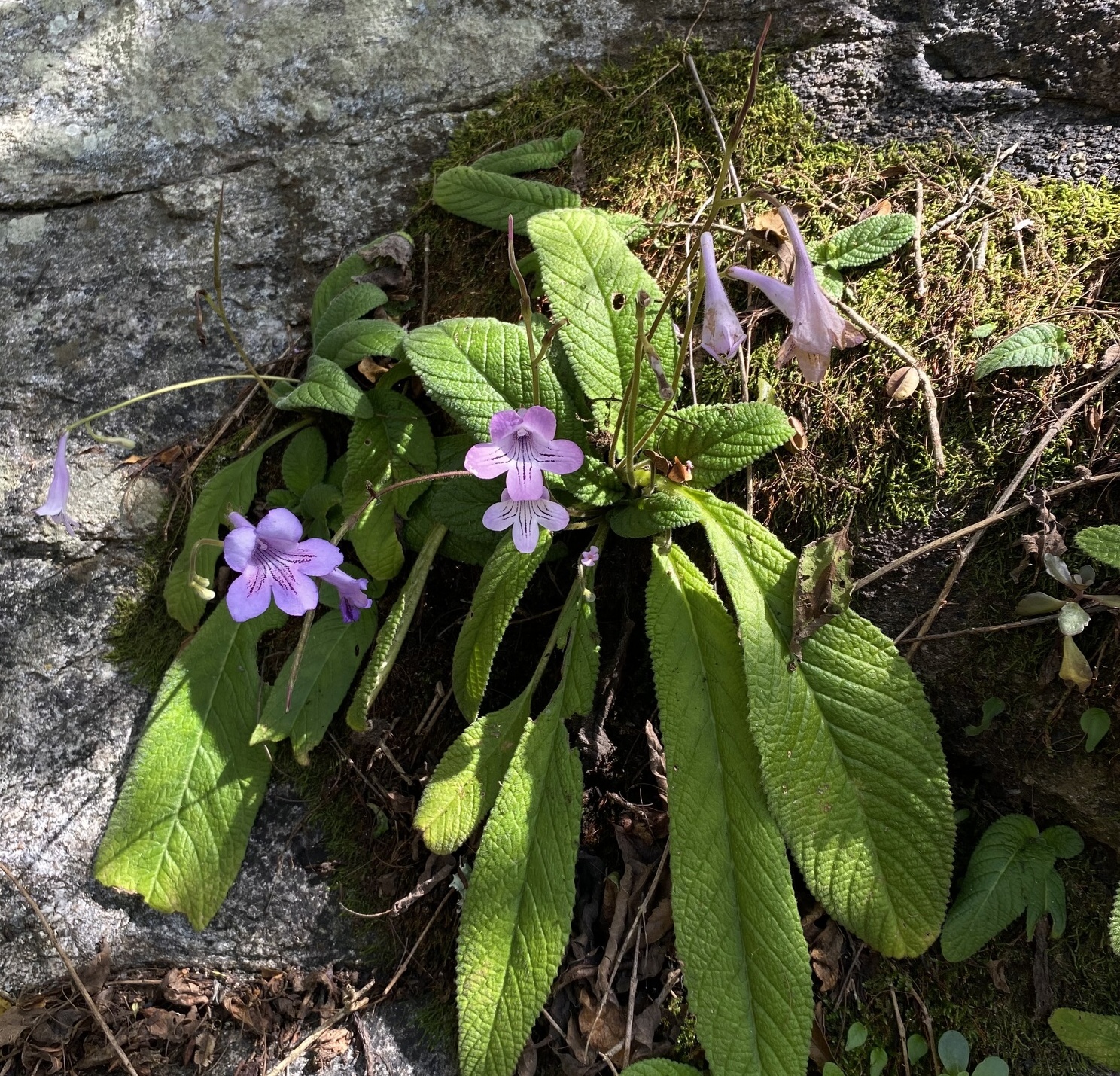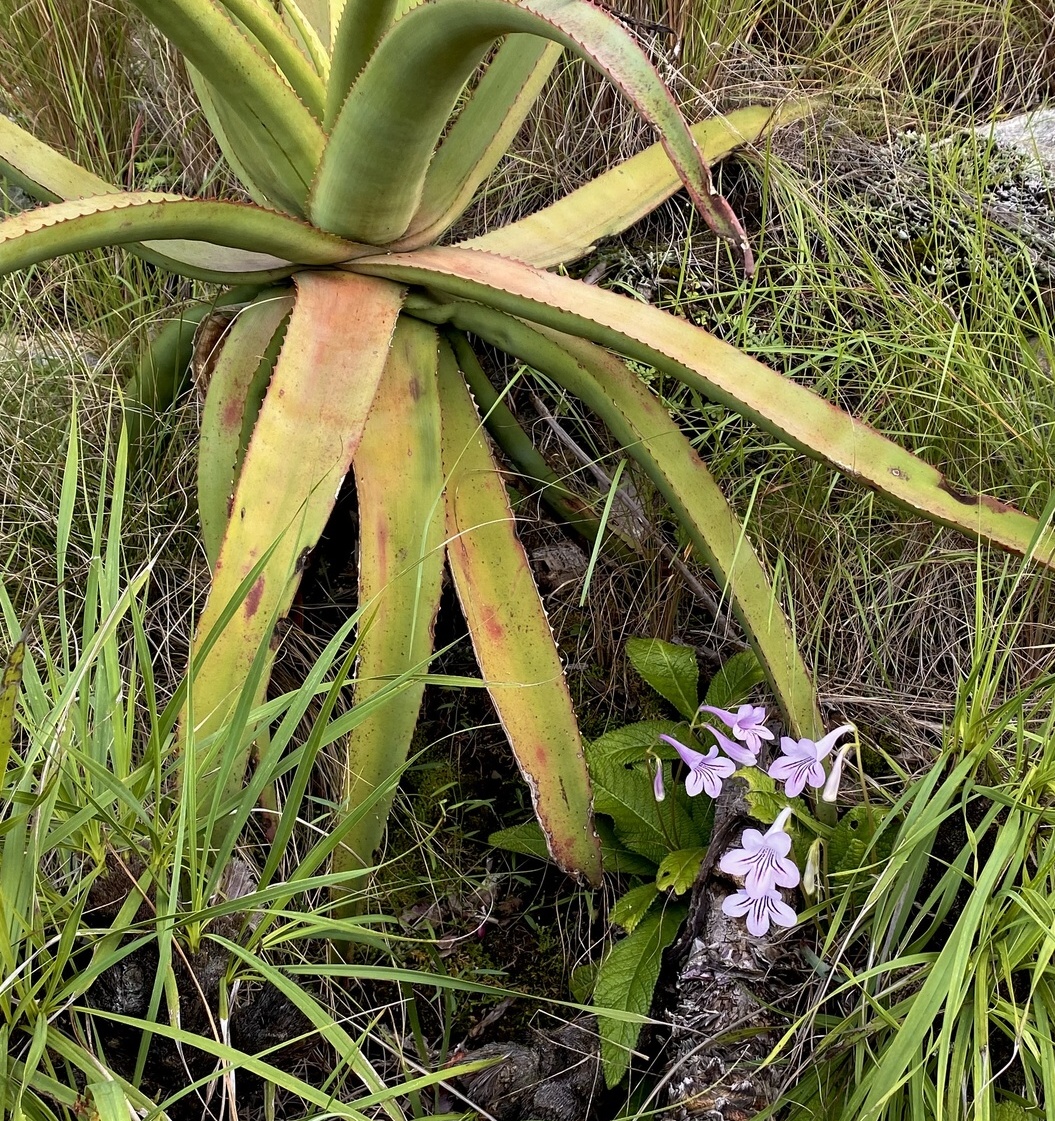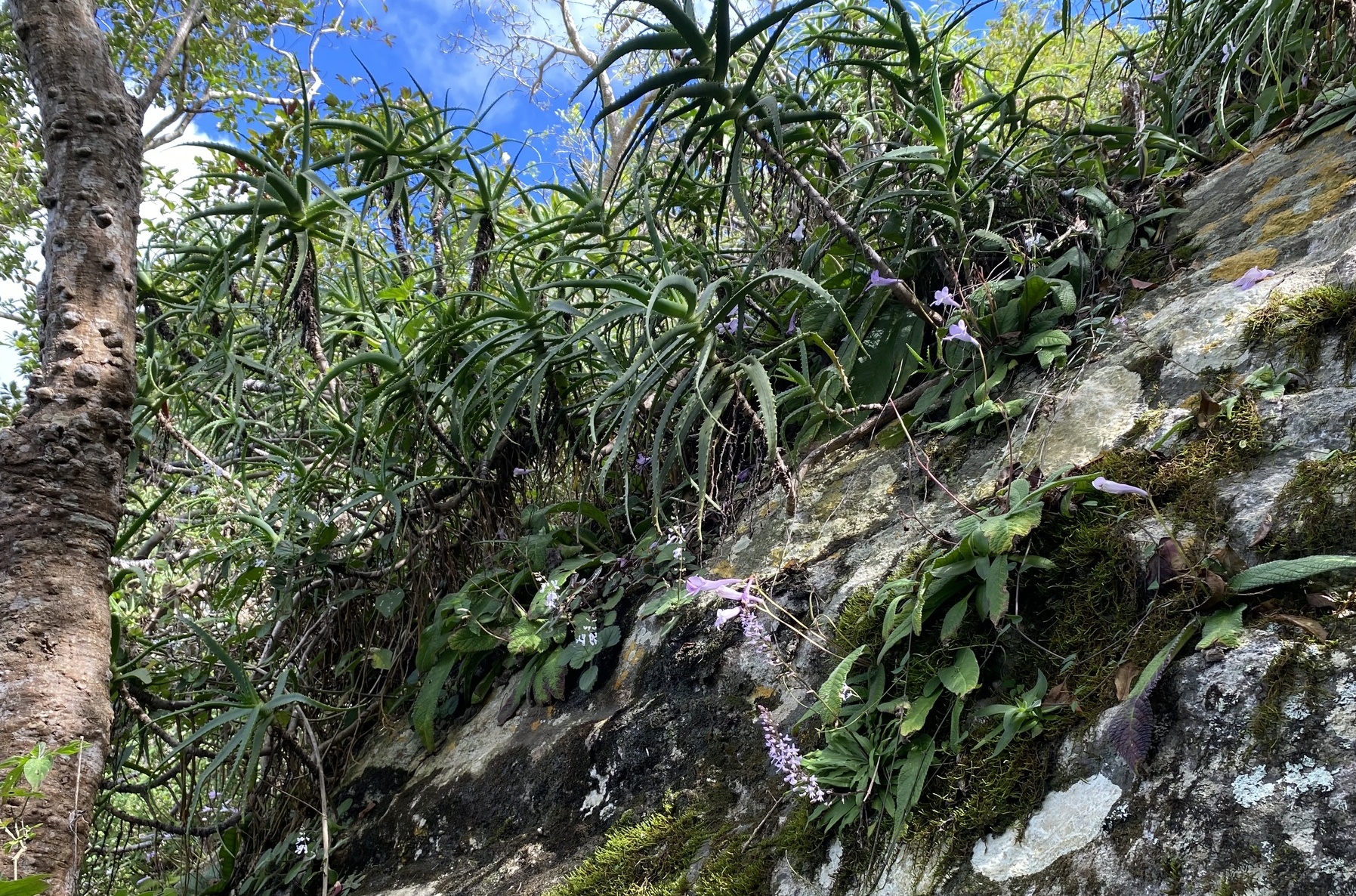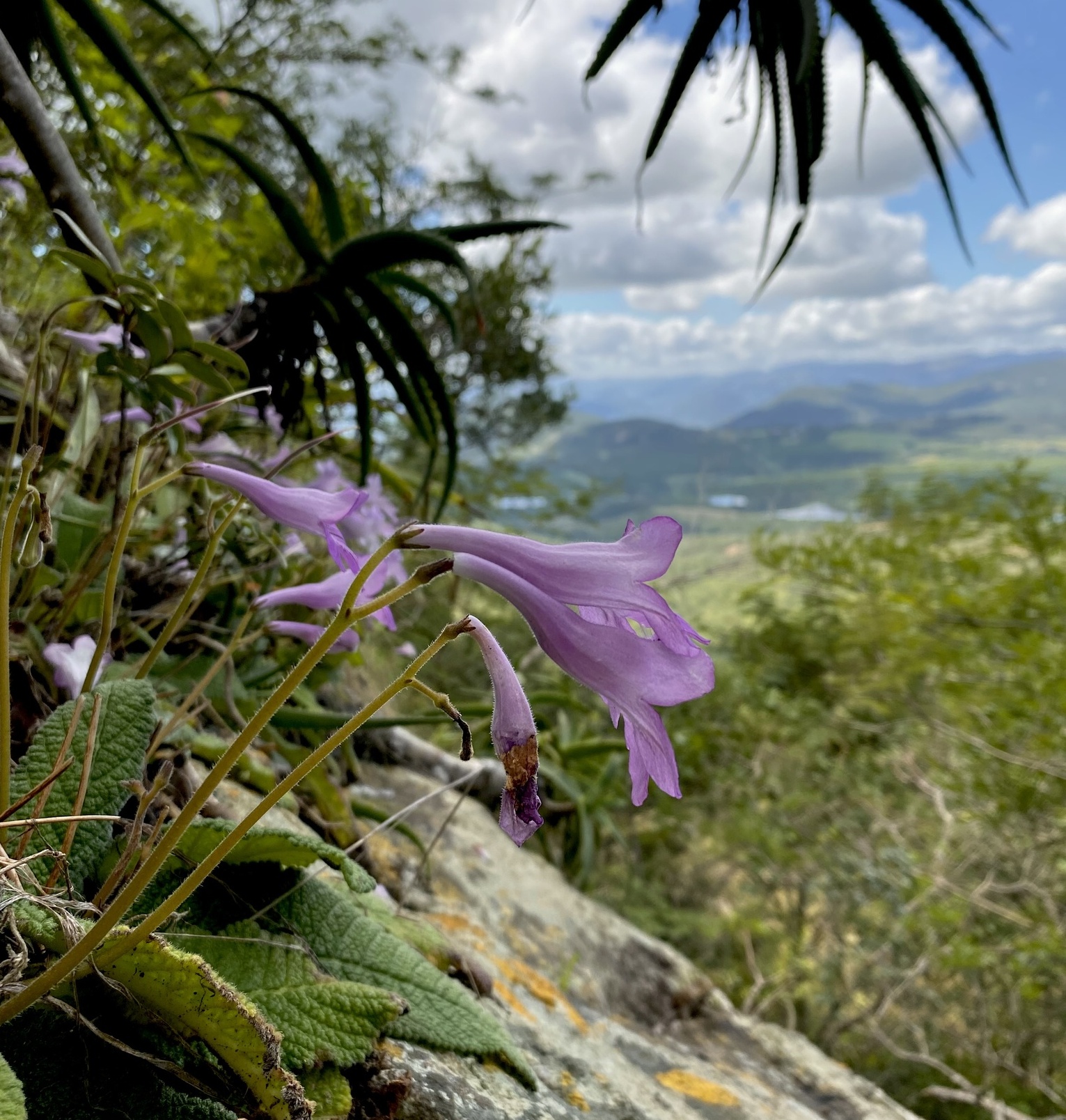
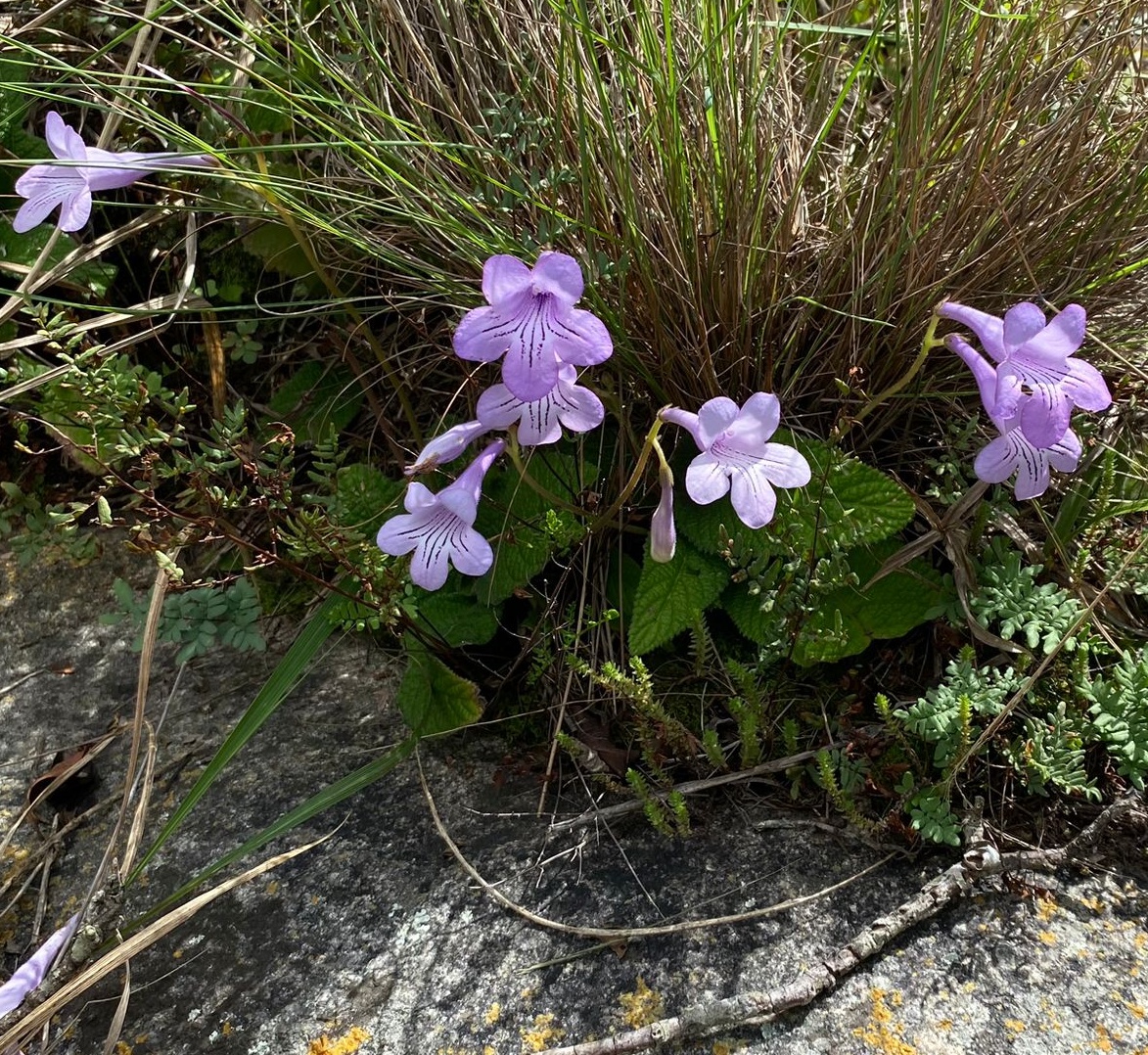
Streptocarpus fasciatus has a very distinctive flower and is therefore not easily confused with other species. It occurs in a very limited geographical range in Mpumalanga Province, South Africa, in the very hot (up to 40°C) gorge of the Crocodile River a few kilometres south west of the southern Kruger National Park boundary. It grows under conditions that are much drier than the more moderate shaded forest habitats in which most Streptocarpus grow. They grow in moisture retaining mossy pockets in the rock cracks of large granitic boulders, often in full sunlight, together with succulent plants such as Aloe sp. and often accompanied by Plectranthus species and an orchid called Stenoglottis fimbriata, both of which have densely packed small flowers on a small inflorescence. The species therefore tolerates much lower levels of moisture, which is of importance when cultivating it.
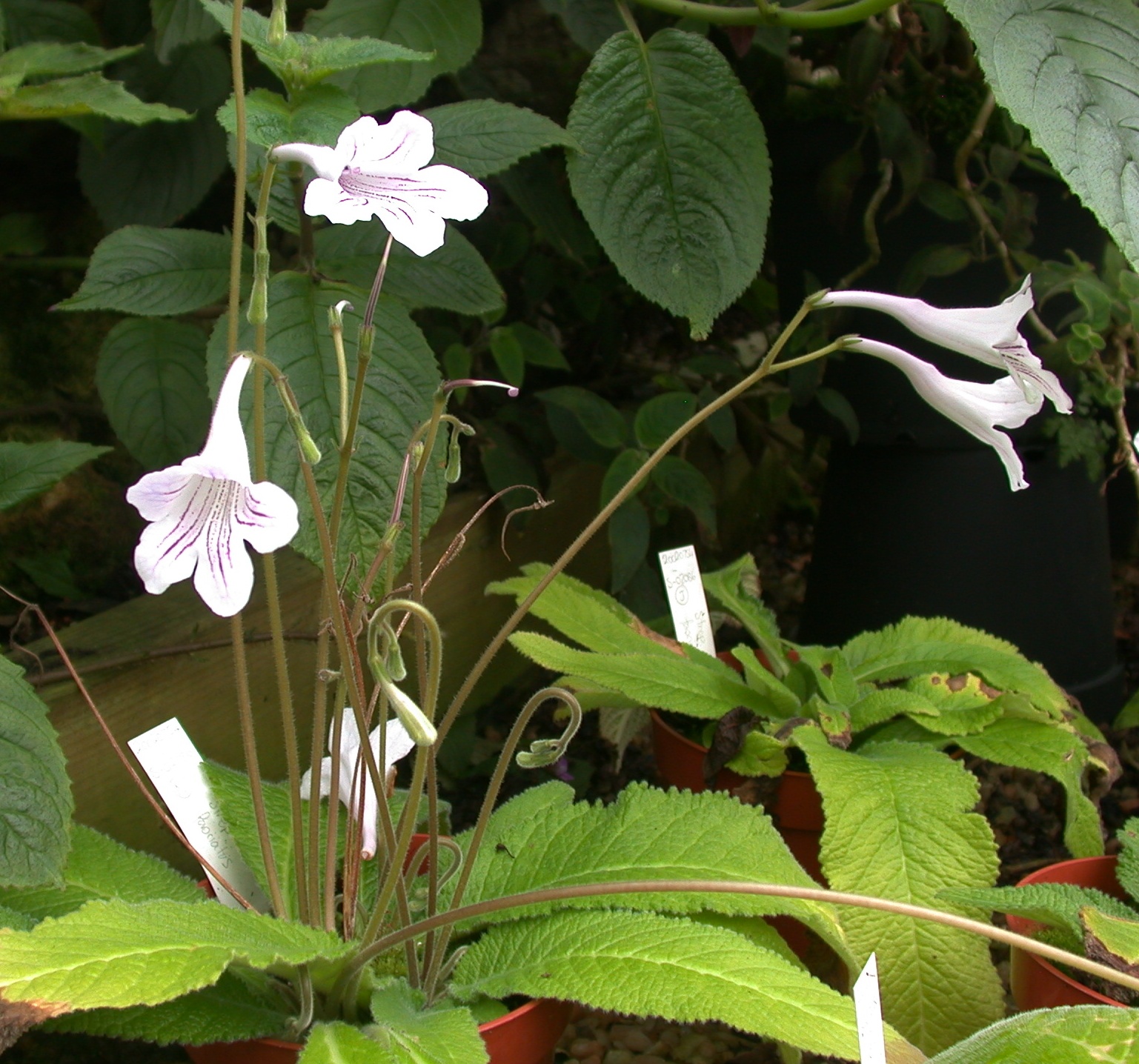
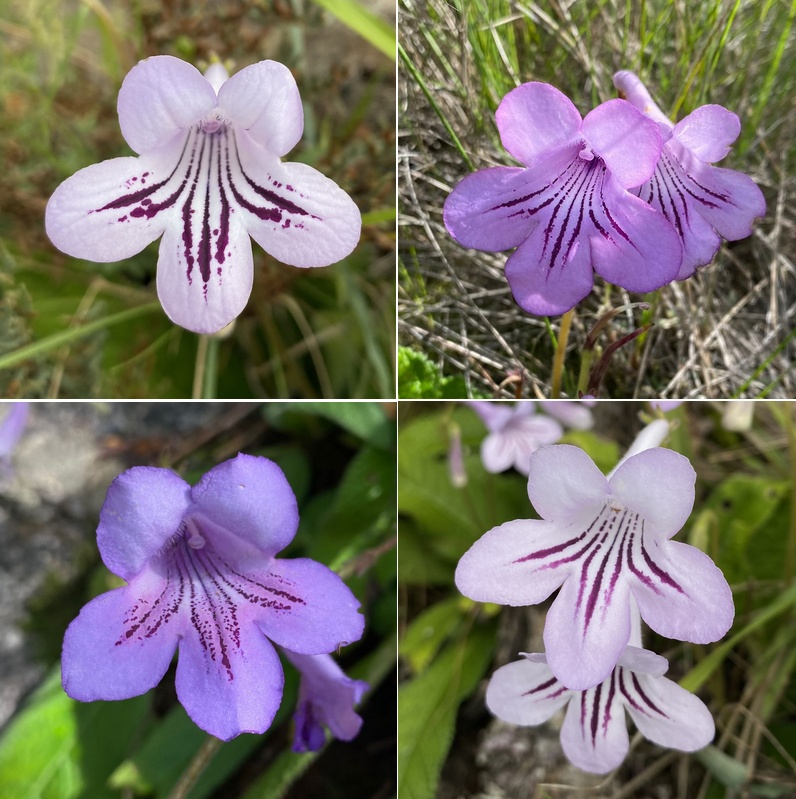
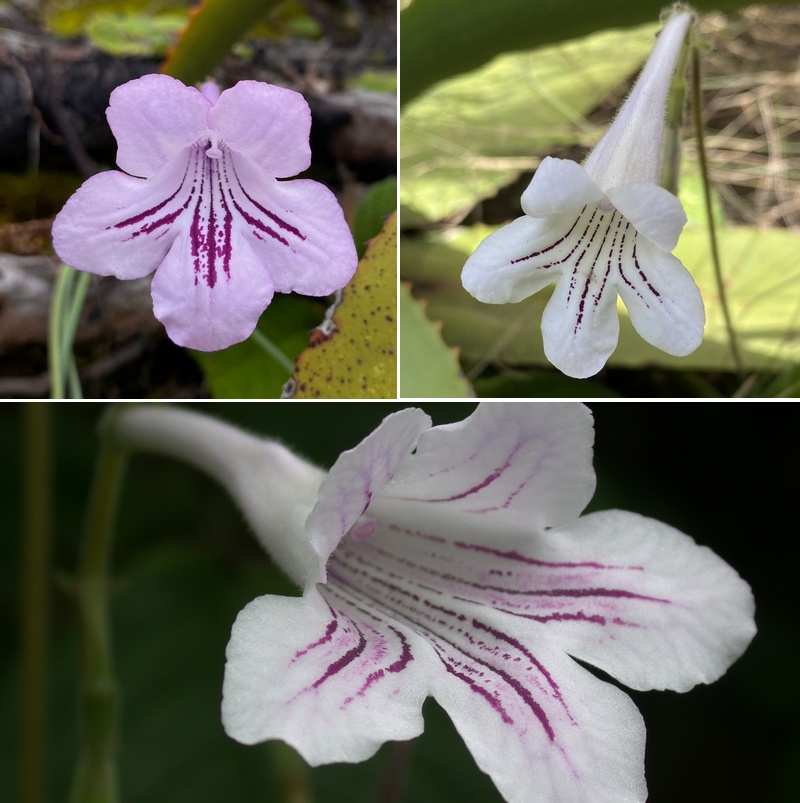
It is a typical rosulate species with leaves which can grow quite large in years with consistent summer rainfall (290 x 100 mm) but in dry years, the plant will grow much more compactly, with many leaf tips showing abscission and dieback. The species is floriferous with up to 12 flowers open at the same time. The flowers are tube-shaped, quite long (70 – 76 mm long), and somewhat flattened dorsoventrally. The white to light mauve flowers have seven distinct deep violet lines on the floor of the corolla that are either solid or stippled. These lines extend into the three lower corolla lobes (±15 x 15 mm) where the intensity varies. In flowers in which the corolla colour is white, there may be light mauve patches between the violet lines. There may also be paler lines on the inside of the upper corolla and a single line extends into the two upper corolla lobes (±12 x 15 mm). Although it is quite distinctive, it is a member of the Streptocarpus cyaneus group..
The plant was discovered by Chris Kunhardt in 1991 (Gloxinian 41: 7-9) and was formally published in 1992 by Trevor Edwards and Chris Kunhardt. The first plants to be discovered had white corollas, but recently, plants with pale to deeper mauve corollas have been discovered. It has not been commonly grown horticulturally, perhaps because the plants in cultivation only had white corollas, but the discovery of plants with mauve coloured corollas showing the distinctive lines, should increase its popularity.
- Another plant growing on rocks among moss
- Growing adjacent to a large Aloe plant
- The typical dry rocky habitat for the species
- A plant appreciating the gorgeous view
- Growing in cultivation at Royal Botanic Garden Edinburgh; this white form was what was originally described and in cultivation
- A set of four flowers illustrating different colors and patterns
- Another set of three flowers