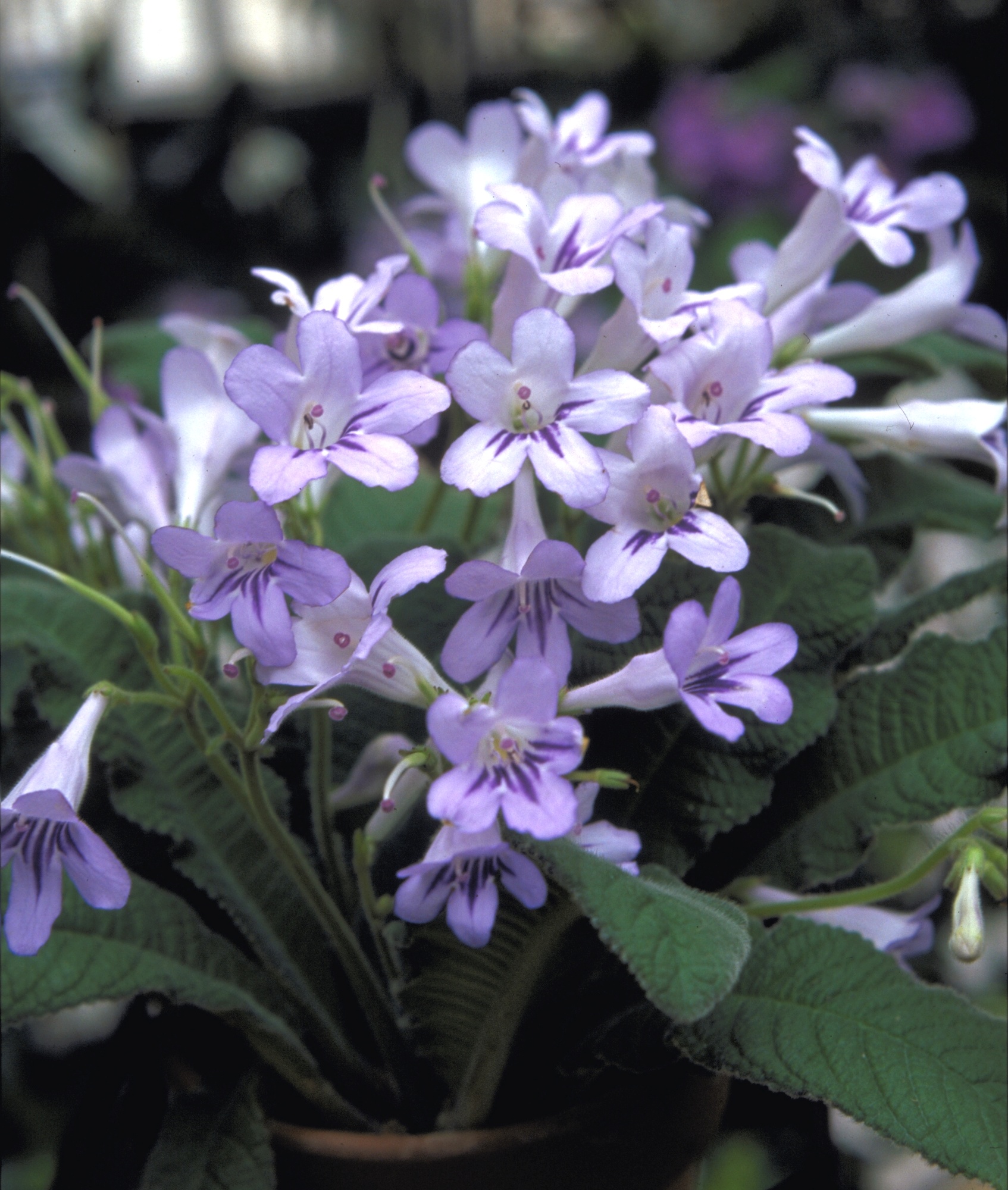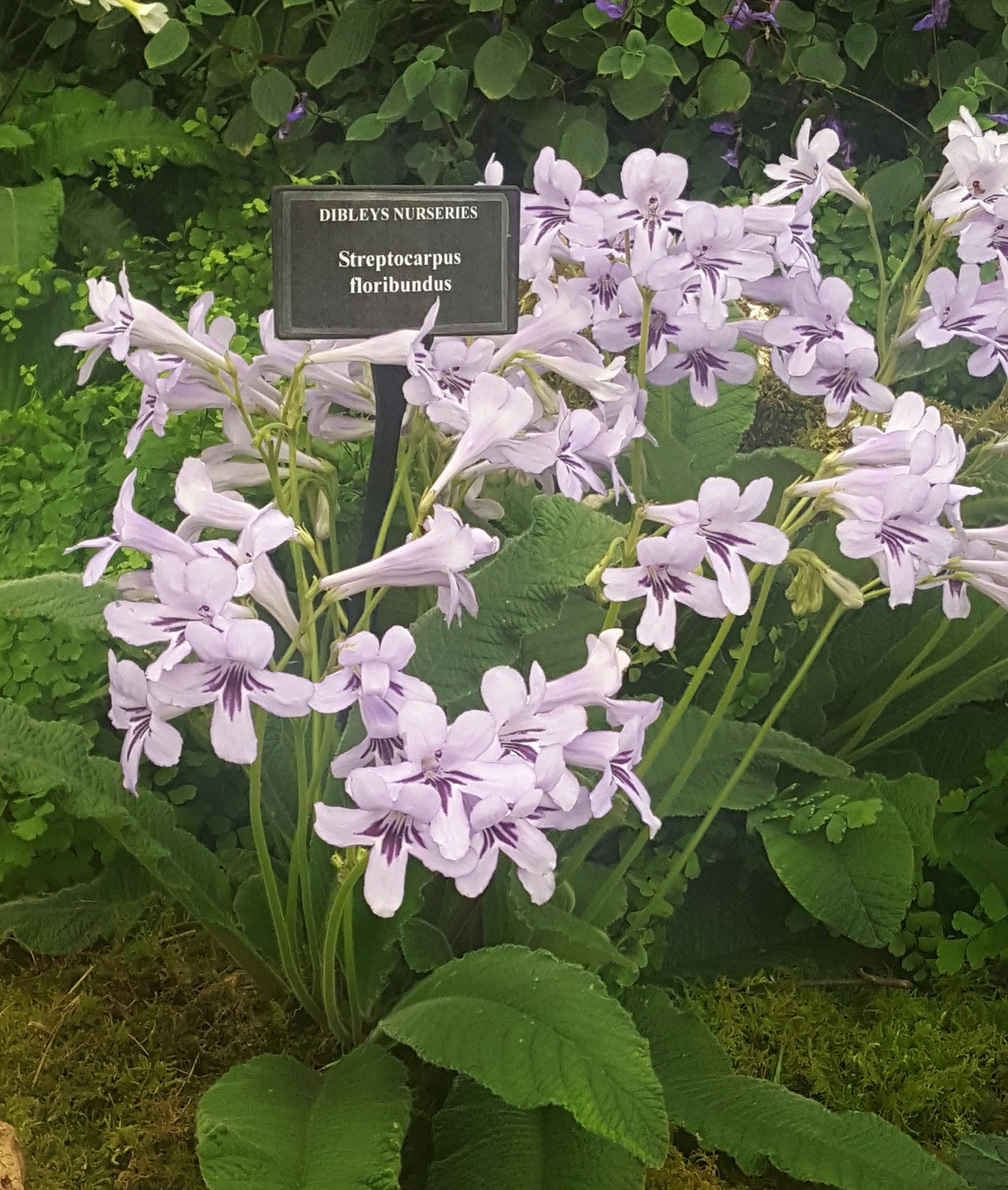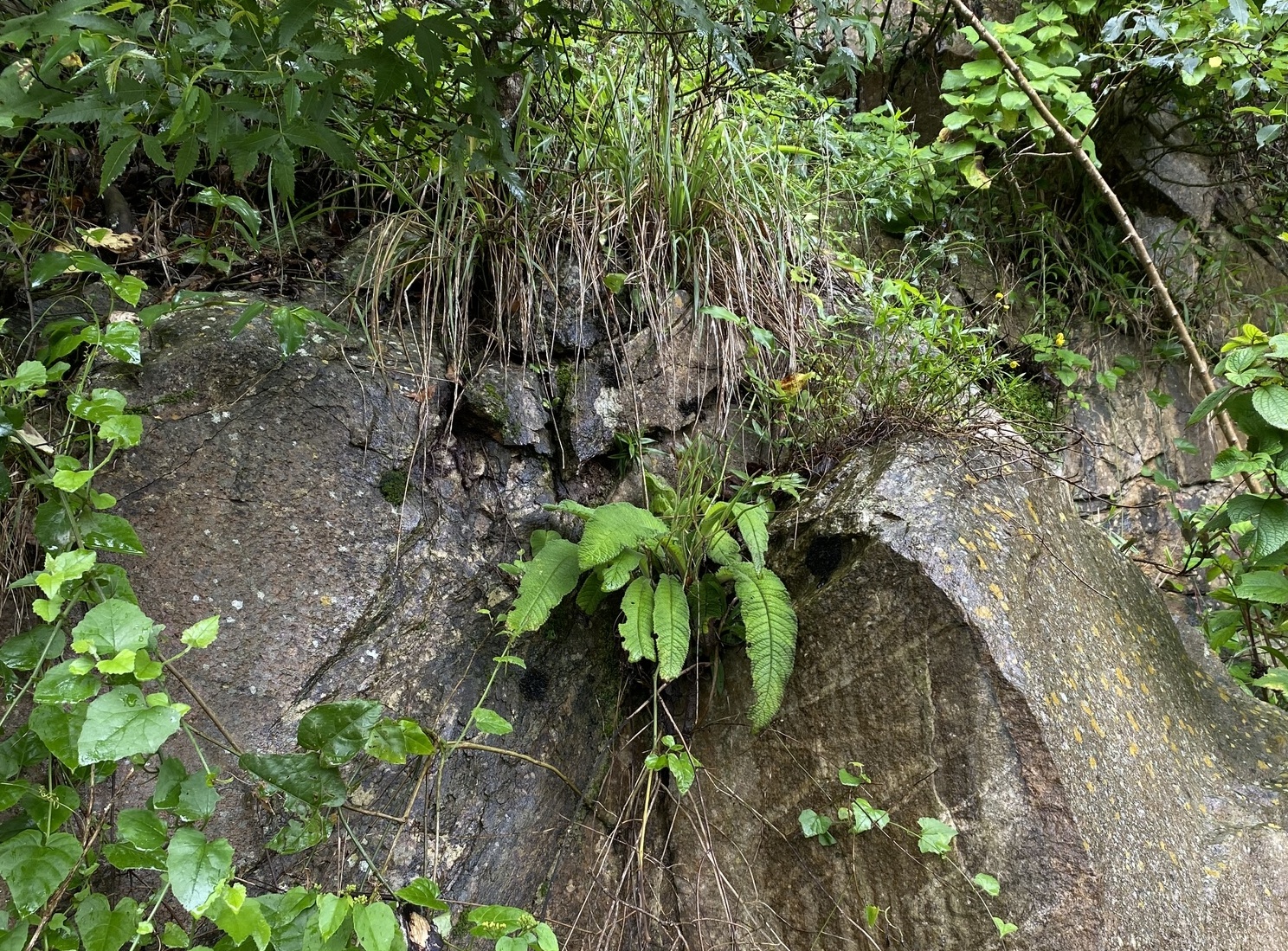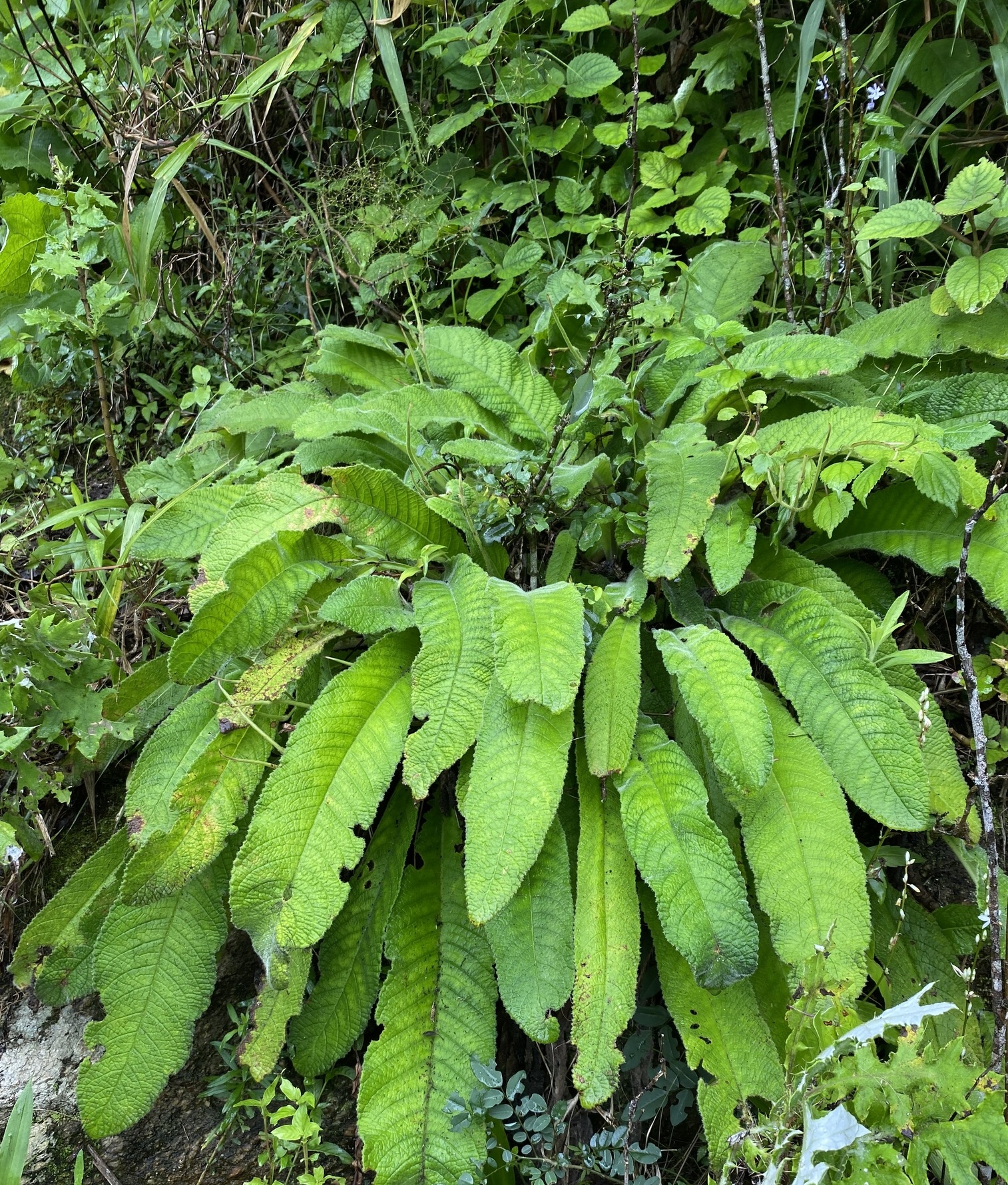
Streptocarpus floribundus has been named because of its particularly floriferous nature; it is a heavy bloomer. It occurs in a very limited geographical range on the Ntunjambili Mountain, known for its legends by the local Zulu nation, in northern KwaZulu Natal Province, South Africa. The mountain is also known as Kranskop, which means “cliff head” in Afrikaans. The mountain has sharp cliffs close to the summit where the species grows under somewhat drier conditions in shaded forest habitats but also in more exposed situations on rocks. The species survives because the peak gets regular mists and rainfall.
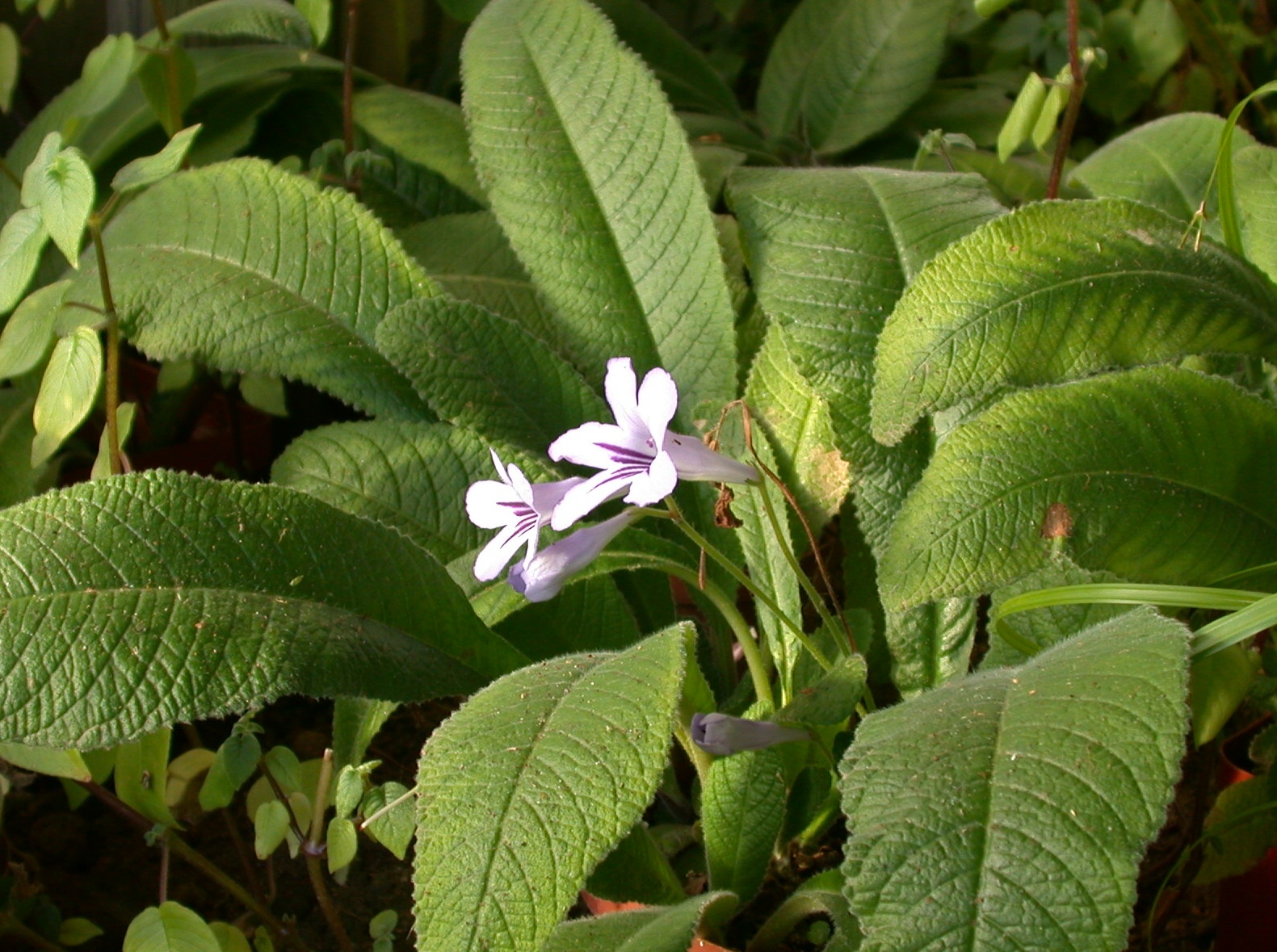
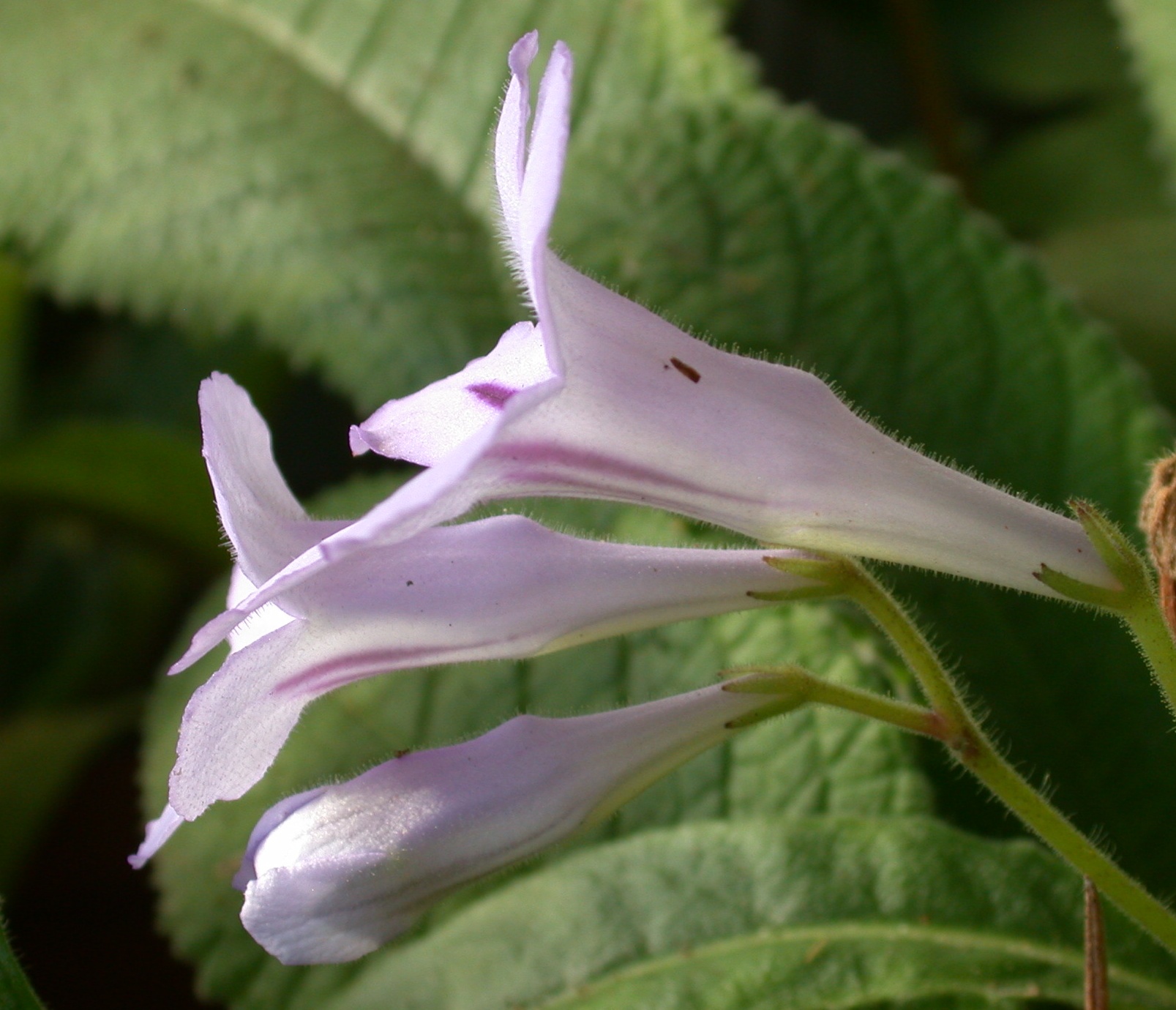
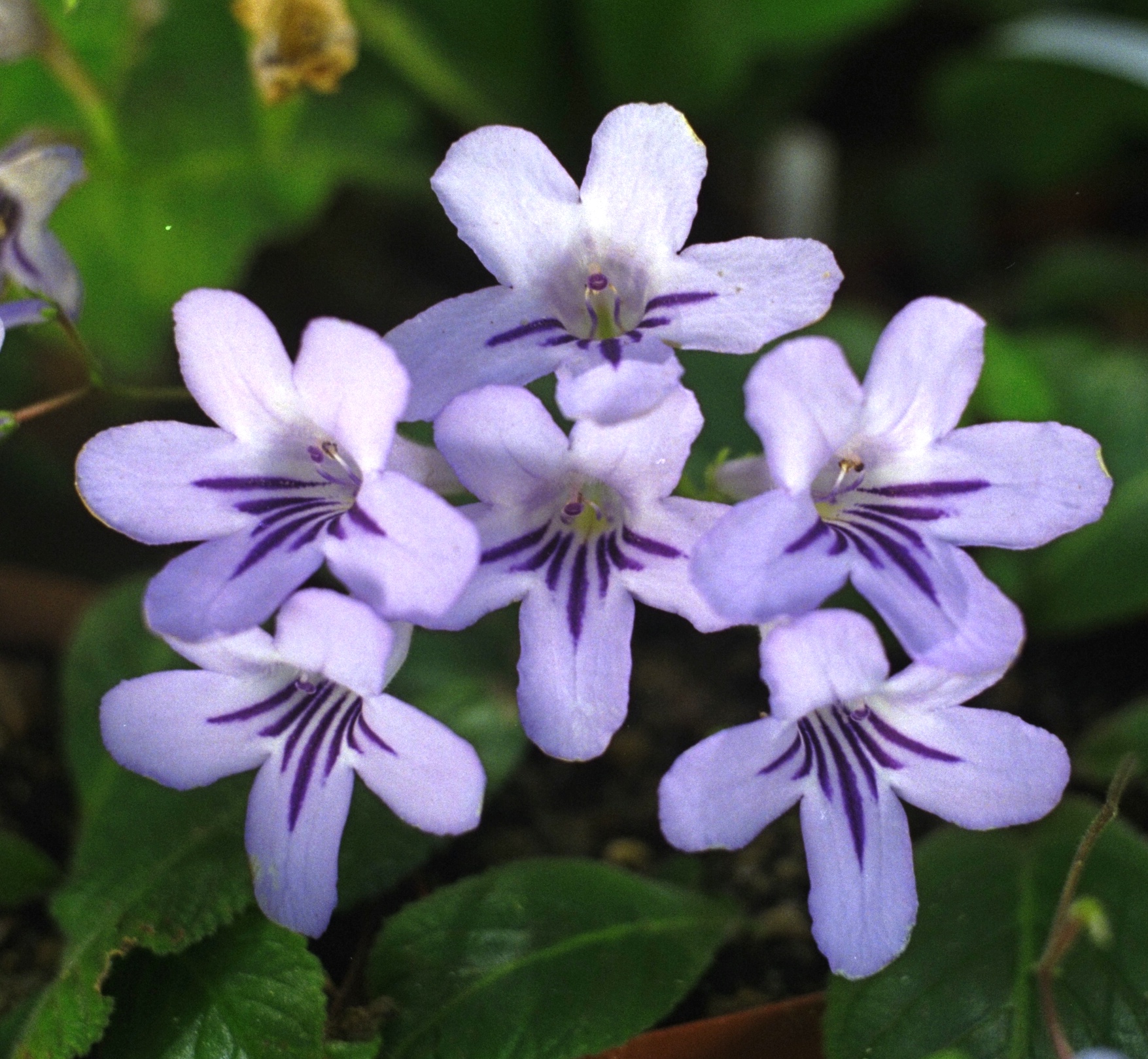
It is a typical rosulate species of which the leaves which can grow typically to 250- 300 x 45-60 mm and up to 500 x 100 mm with adequate rainfall. The species is floriferous with up to 20 flowers open at the same time. The flowers are funnel-shaped, 50 – 65 mm long, white to light mauve with seven solid deep violet lines on the floor of the corolla which extend into the three lower corolla lobes which are narrow and oblong (14-17 x 10 mm), never overlapping, so that the flower lobes are clearly separated. The floor deep inside the corolla is distinctively pale yellow and the stigma is dark purple as opposed to the usual white.
Originally this species was considered the northernmost outlier of Streptocarpus primulifolius, but due to its distinctive flower and hairy leaf undersides was raised to full species rank in 1994. Hilliard and Burtt (1971) debated whether this species was not the southernmost member of the Streptocarpus cyaneus complex due to the yellow markings in its throat, which are not typical of Streptocarpus primulifolius. More research into how these species are related is required to give clear answers to these questions. It has not been commonly grown horticulturally, but because the plants are so floriferous it could be bred into hybrids to increase the numbers of flowers.