Streptocarpus gardenii was described in 1855 by W. J. Hooker, the director of Royal Botanic Gardens Kew at the time. He named the species after its collector, Lieutenant Robert Jones Garden, who is well known for his botanical exploration of the British colony of Natal, now the province of KwaZulu-Natal in the modern South Africa. The colony of Natal became known as the “Garden Colony” because of the significant number of plants from there that are now in international horticulture such as Clivia, Gladiolus, Rhodohypoxis and Streptocarpus, and many more lesser known genera.
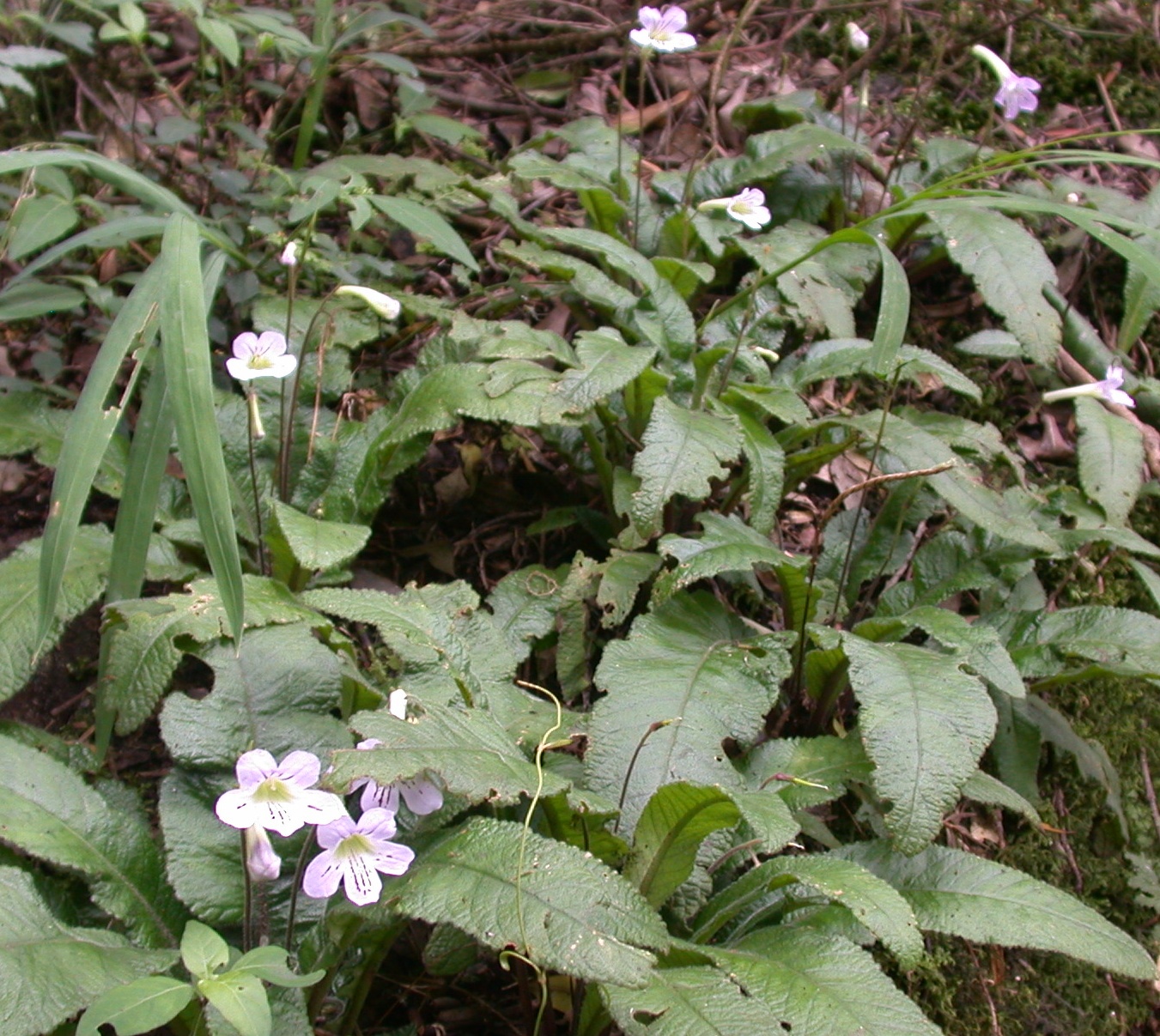
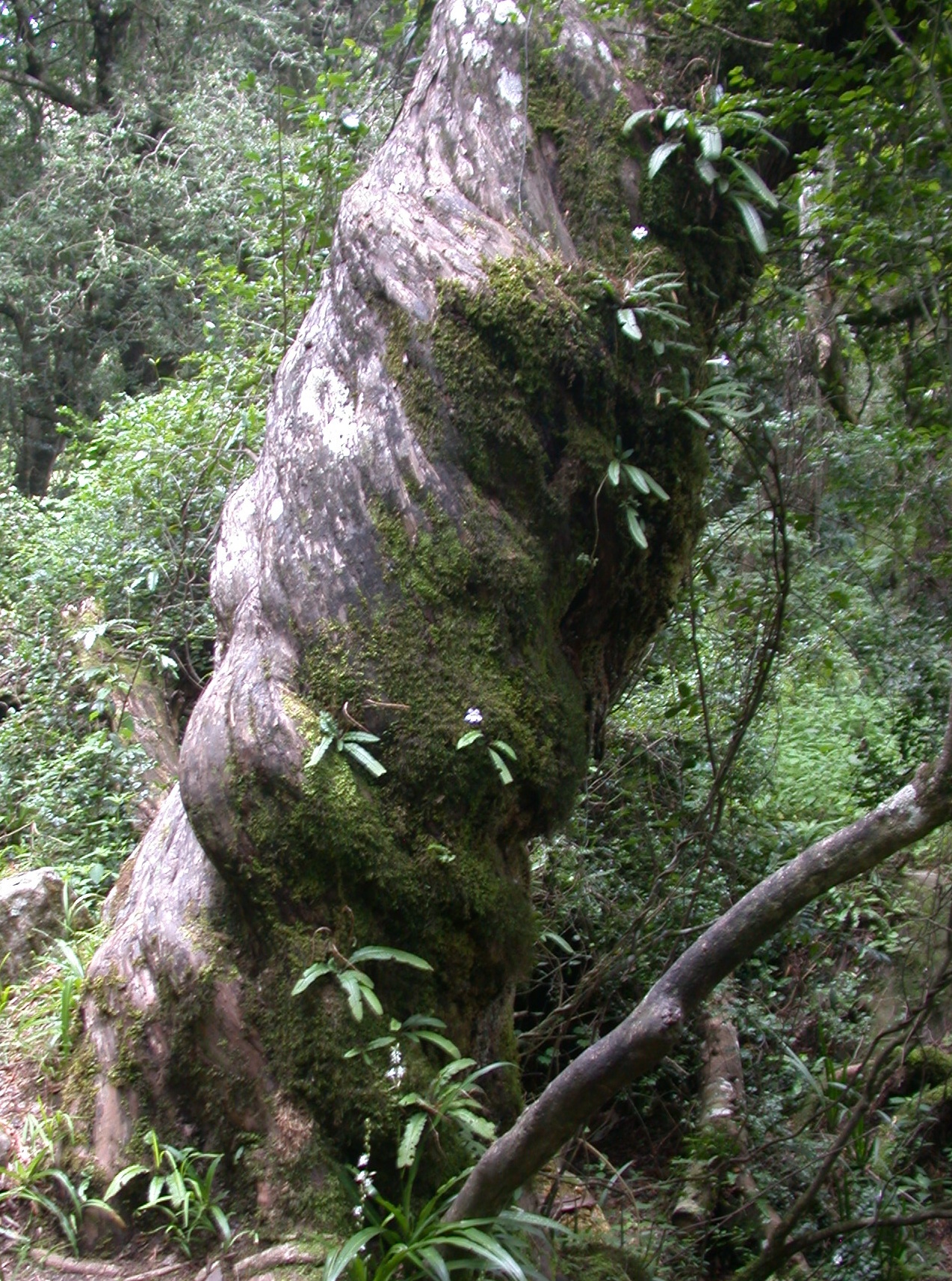
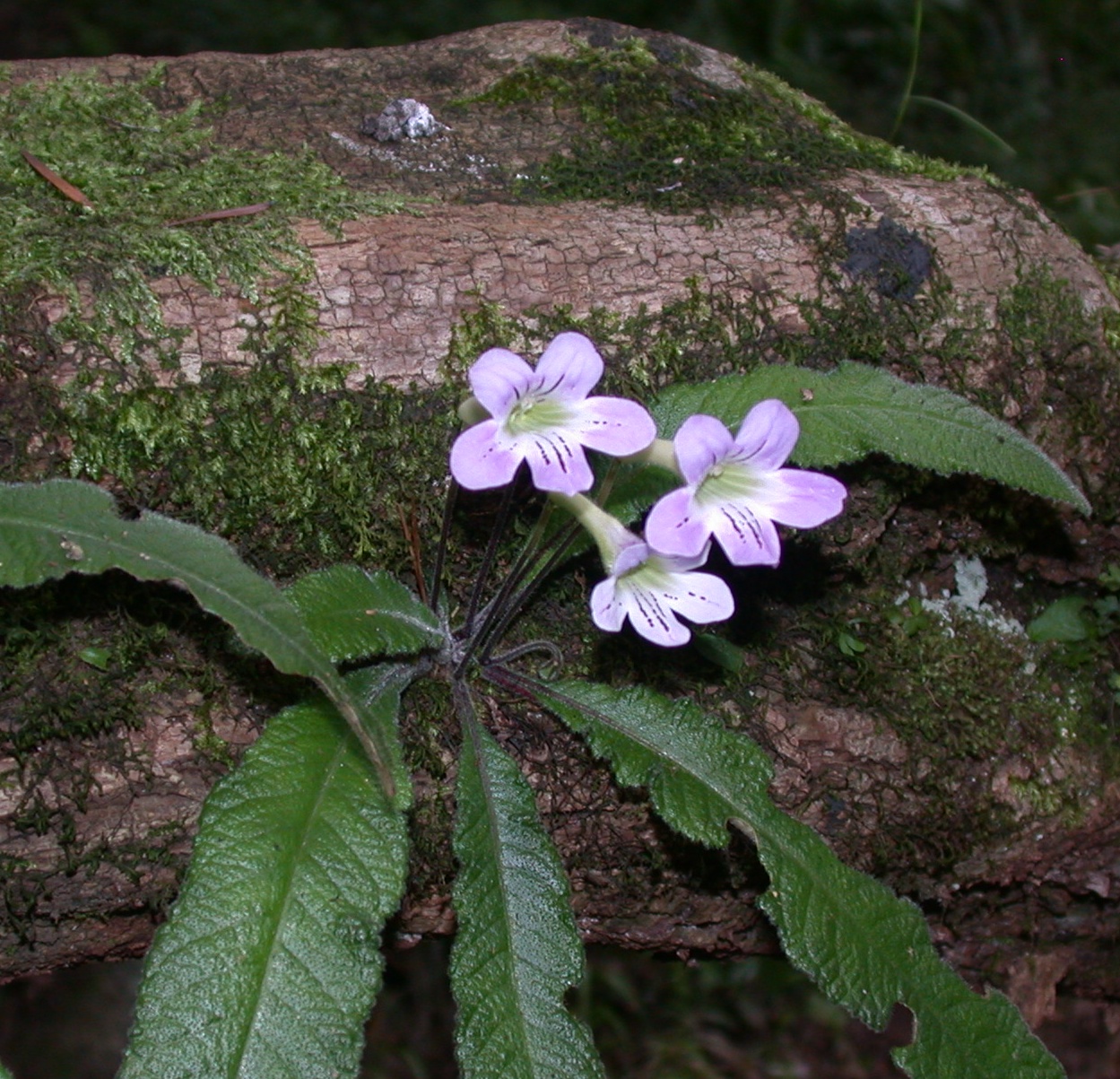
Streptocarpus gardenii has a large distribution area mainly in the higher altitudes of the interior of KwaZulu-Natal, but also extending southwards into the high altitudes of the Eastern Cape Province where it is one of the commonest species of Streptocarpus. It occurs in most forest patches in the high Drakensberg (highest altitude 3450 m) but also in an area of intermediate altitude, the so-called Midlands area, which is dotted with forest patches in grassland. Streptocarpus gardenii is a generalist, growing on earth embankments, epiphytically on rocks and on trees. As long as there is shade and the medium is well drained, this species is likely to occur. One of the mechanisms which allow it to survive is self-pollination or autogamy and without pollination it still sets seed on every flower, thereby ensuring its survival.
Streptocarpus gardenii cannot stand up against its more colourful cousins in terms of showiness, it is a rather drab species. Consequently, it is unlikely that it will be sought after for hybridization purposes. That said, it is obviously highly successful in surviving the harsh climate that it often has to endure. In winter, the high altitude area of KwaZulu Natal reaches temperatures well below freezing at night for as much as three months of the year.
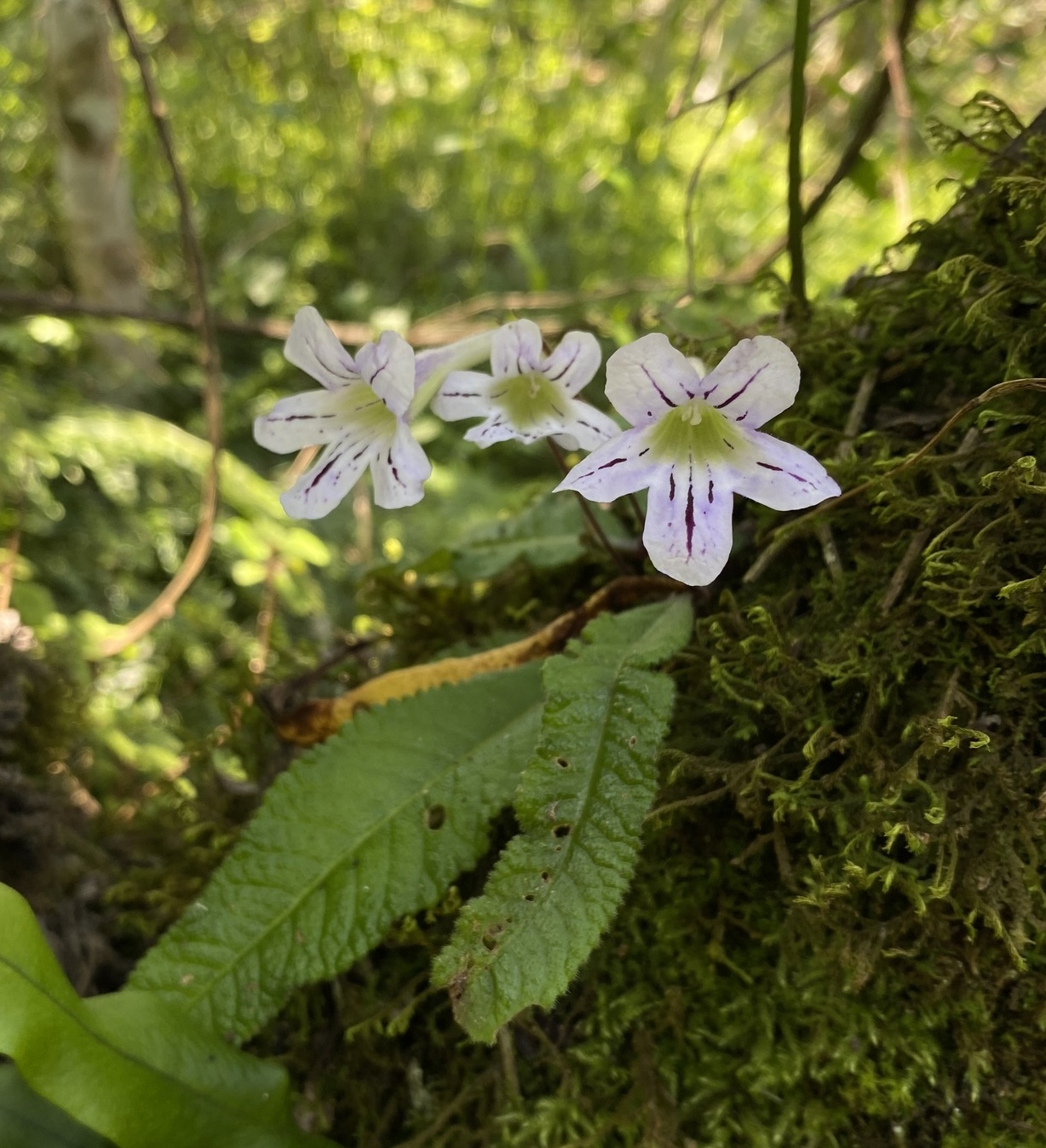
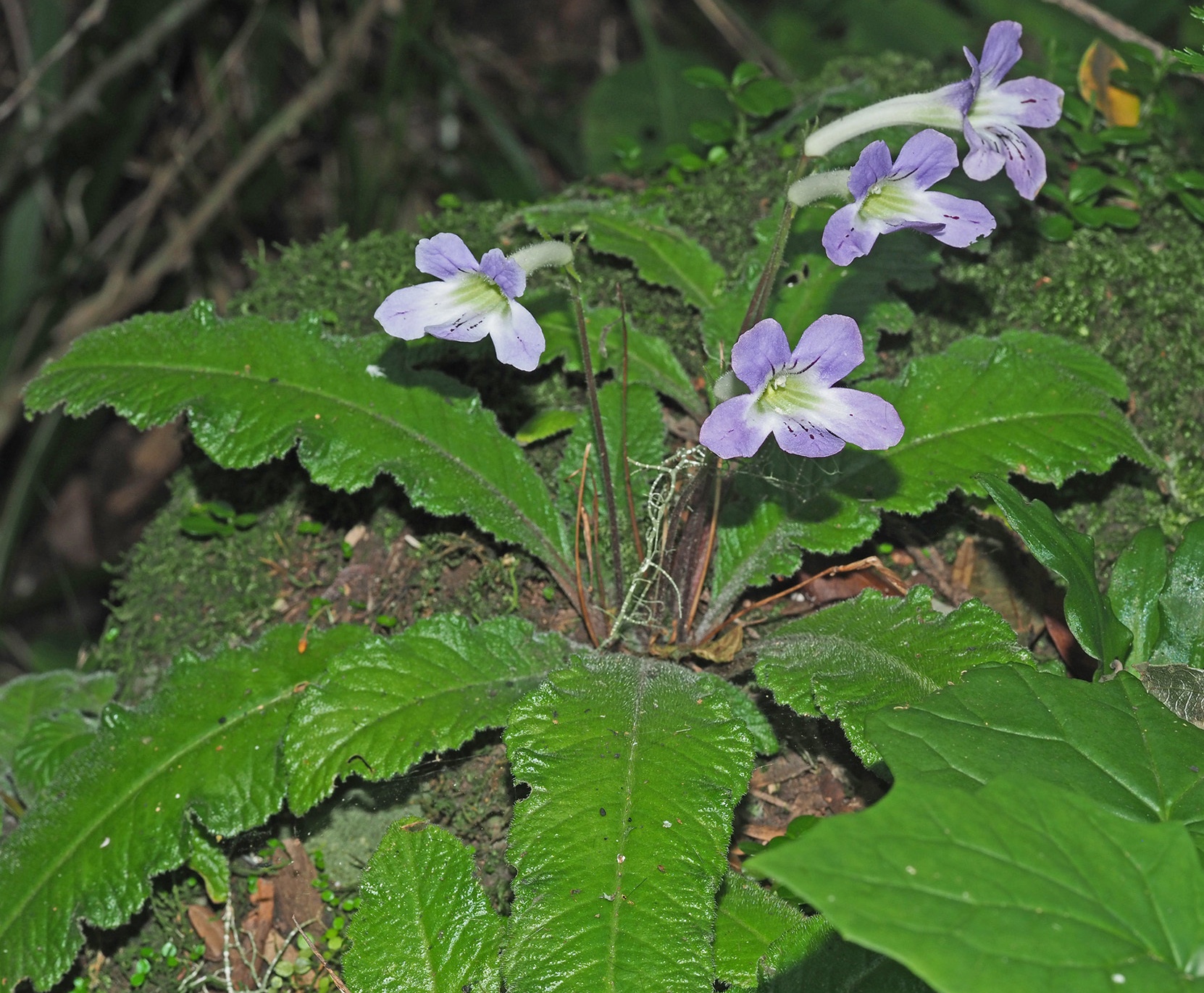
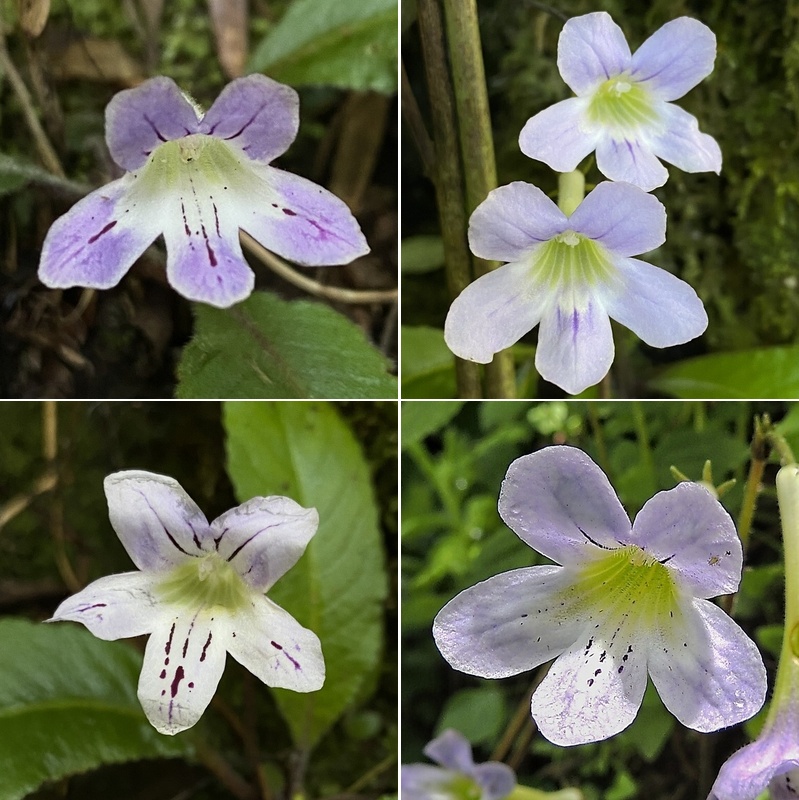
It is a typical rosulate species with leaves which are smaller (up to 300 x 70 mm) mostly due to moisture and nutrient restriction. When it gets colder, the leaves abscise and die back. Up to 6 flowers are produced per petiolode, usually only 1 – 2. Its flower is pale greenish white, sometimes light mauve, up to 50 mm long, and the tube is dorsoventrally compressed. The flowers are funnel-shaped (up to 50 mm long), the corolla floor shows violet lines, sometimes broken, extending into the corolla lobes. A feature of this species is its ability to hybridize much more commonly than in other species. Natural hybrids with the following species have been documented: S. candidus, S. cooperi, S. fanniniae, S. grandis, S. johannis and S. rexii (Hilliard & Burtt, 1971). In some instances this leads to hybrid swarms showing variation from one parent to the other, whilst in other instances much more homogenous hybrid populations have been formed.