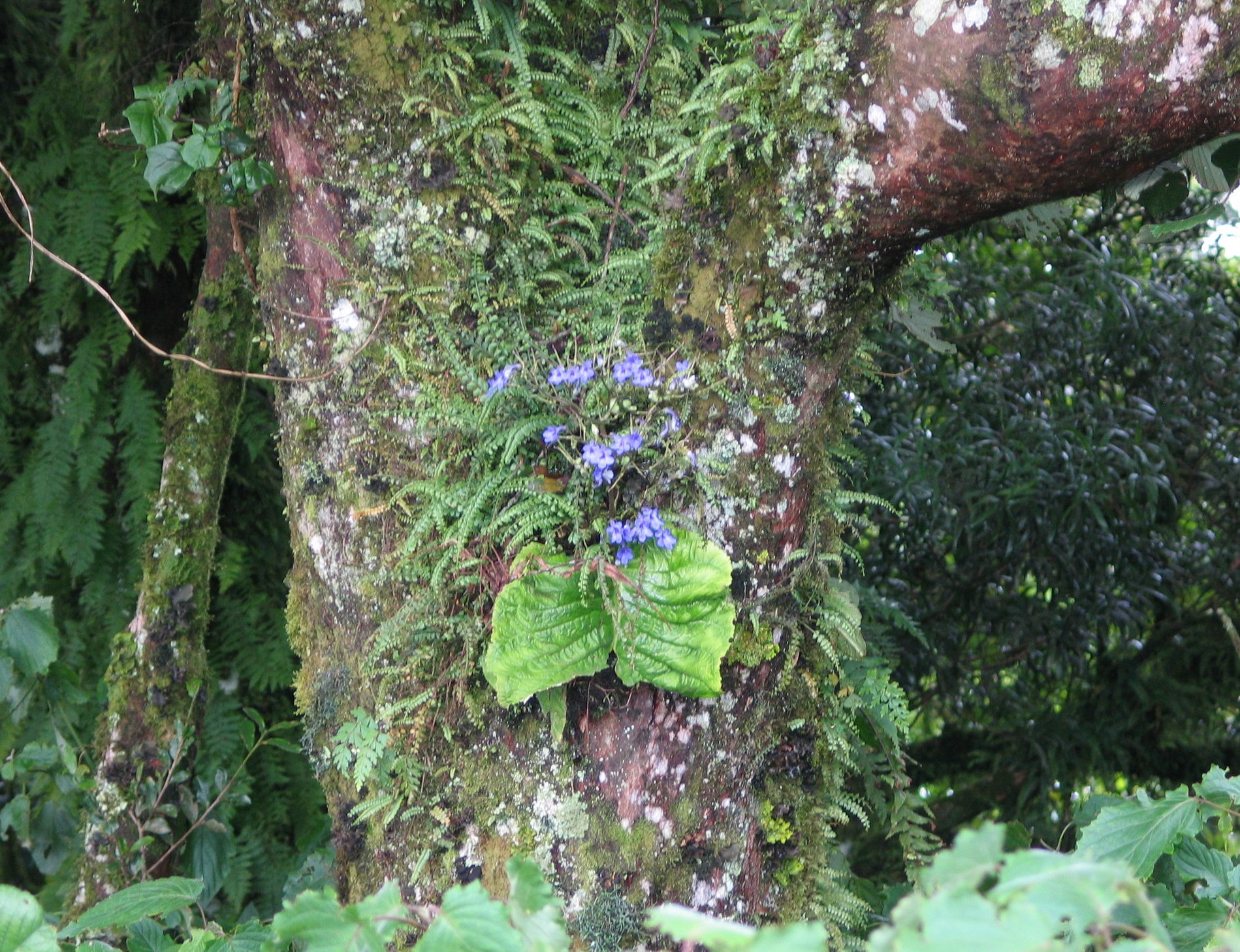
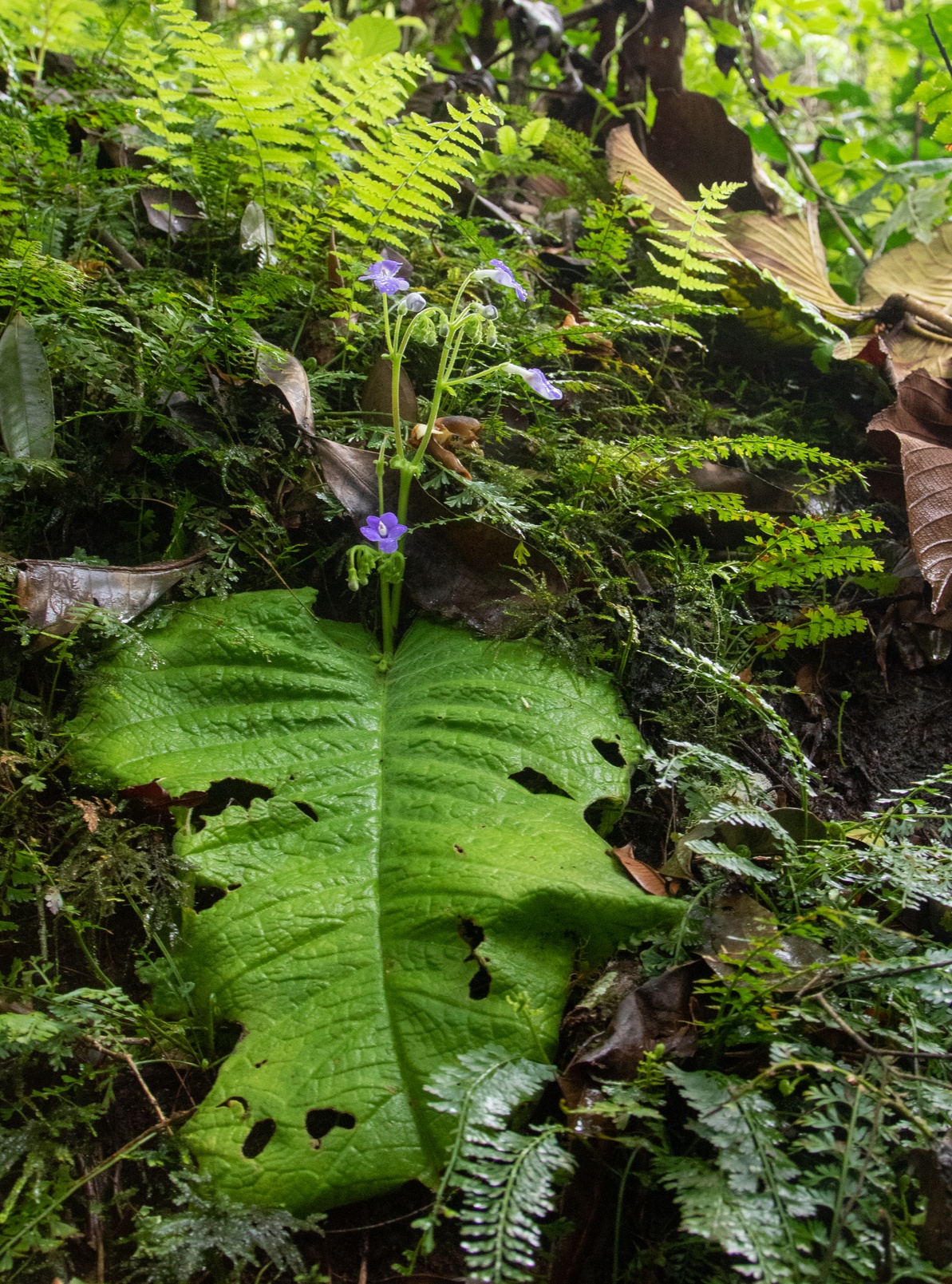
Streptocarpus goetzei was described in 1901 when Tanzania was still part of the German colony called Tanganyika. It was described by the famous German botanist Engler, who laid the cornerstone of modern botanical taxonomy. He named the species after Walter Goetze (1872-1899) an indefatigable plant collector after whom an extraordinarily number of plant species that grow in Tanzania were named.
S. goetzei has an unusual distribution, it was originally described from Tanzania (the Livingstone Mountains to the northeast of Lake Malawi), but is also recorded from the Shire Highlands, Mount Mulanje, and Cholo in southern Malawi as well as many of the high and isolated peaks to the south east of these localities in Mozambique in Gurue, Riabue and Murrumbala. This almost disjunct distribution possibly indicates that Streptocarpus goetzei may be a species complex rather than a single species. It is very clear that much more fieldwork is required to precisely define this species.
S. goetzei is a typical monocarpic, unifoliate species (leaf up to 250 x 65 mm) and is probably an inhabitant of forest patches and protected cliffs. The corolla (25-35 mm long) is pale violet with a V-shaped darker violet marking on the floor of the mouth. It carries the fertilized capsules, 40-60 mm in length, facing straight up, which is apparently typical of the species.