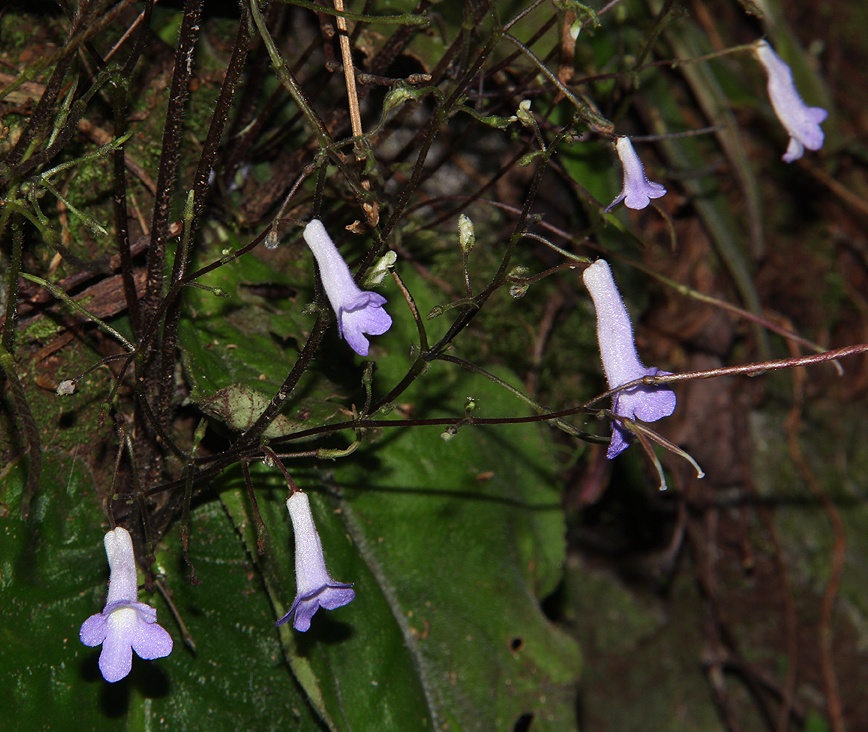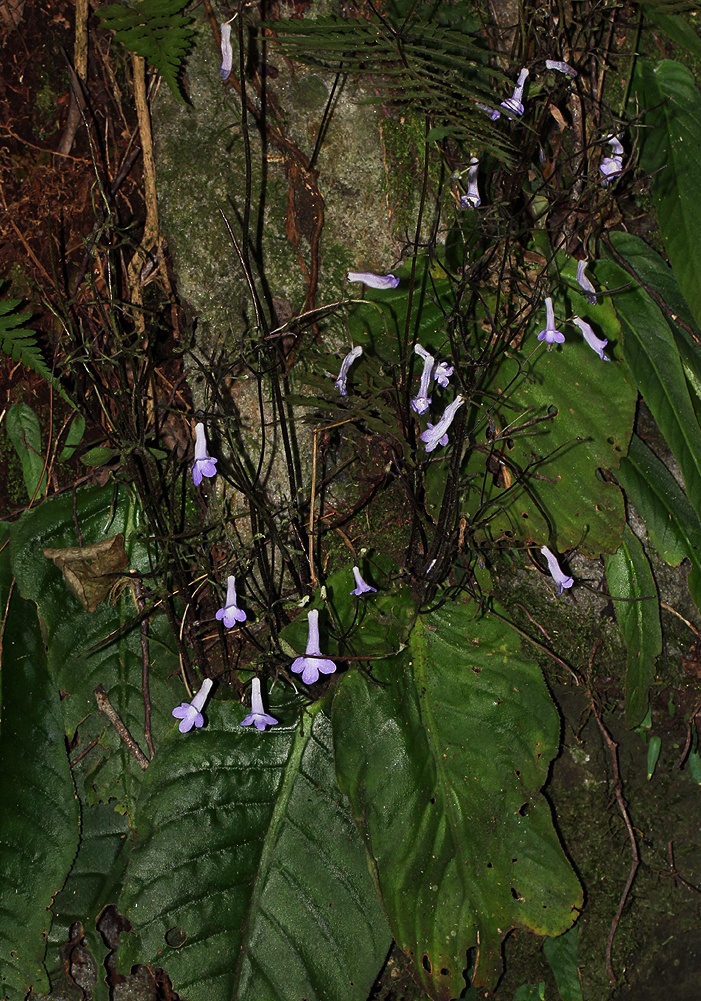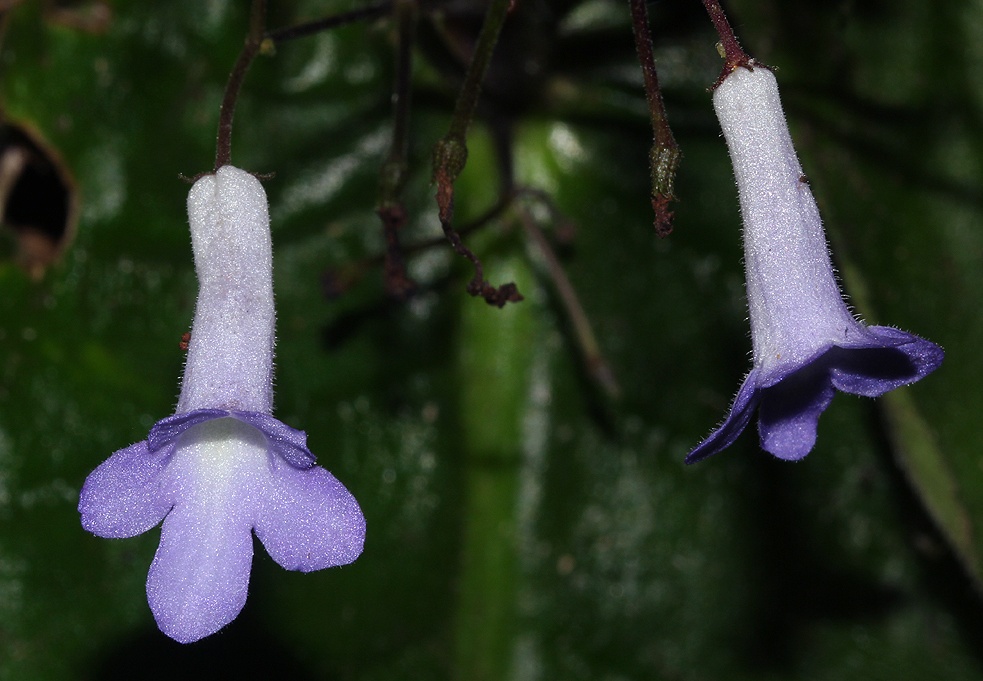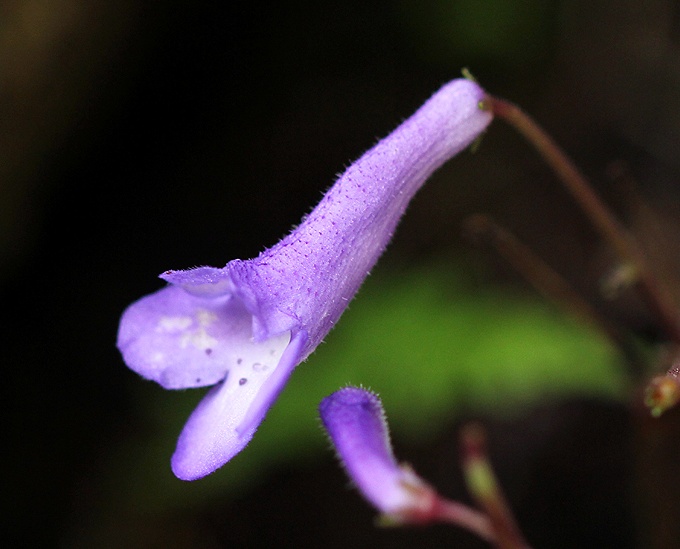
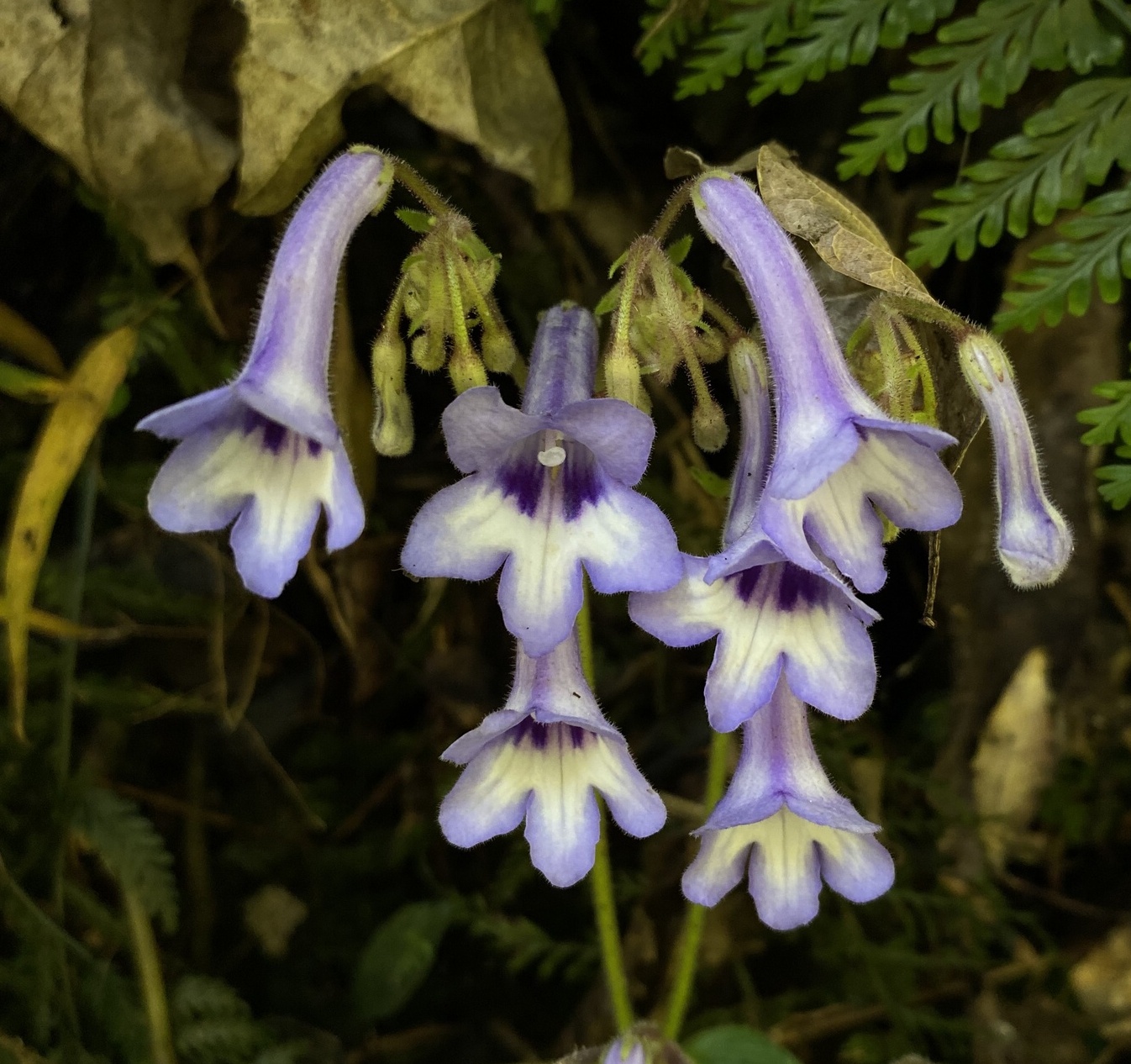
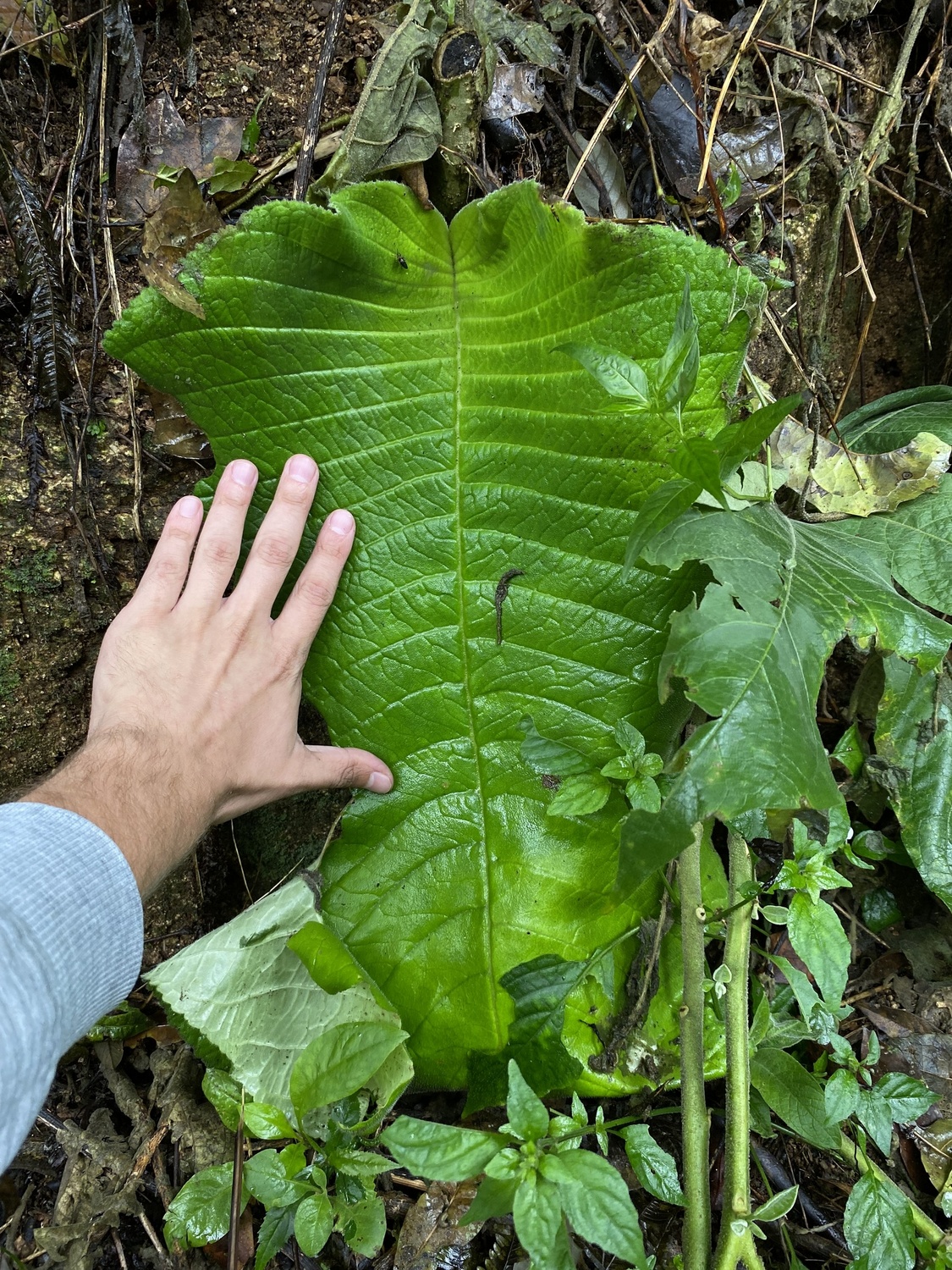
Streptocarpus grandis has historically contained two subspecies, S. grandis ssp. grandis and S. grandis ssp. septentrionalis. They differ morphologically and natural populations are separated by a large distance. It is possible that they will eventually be defined as separate species. Both subspecies are characterized by large leaves, up to 500 x 350 mm in ssp. grandis, while the flowers differ significantly.
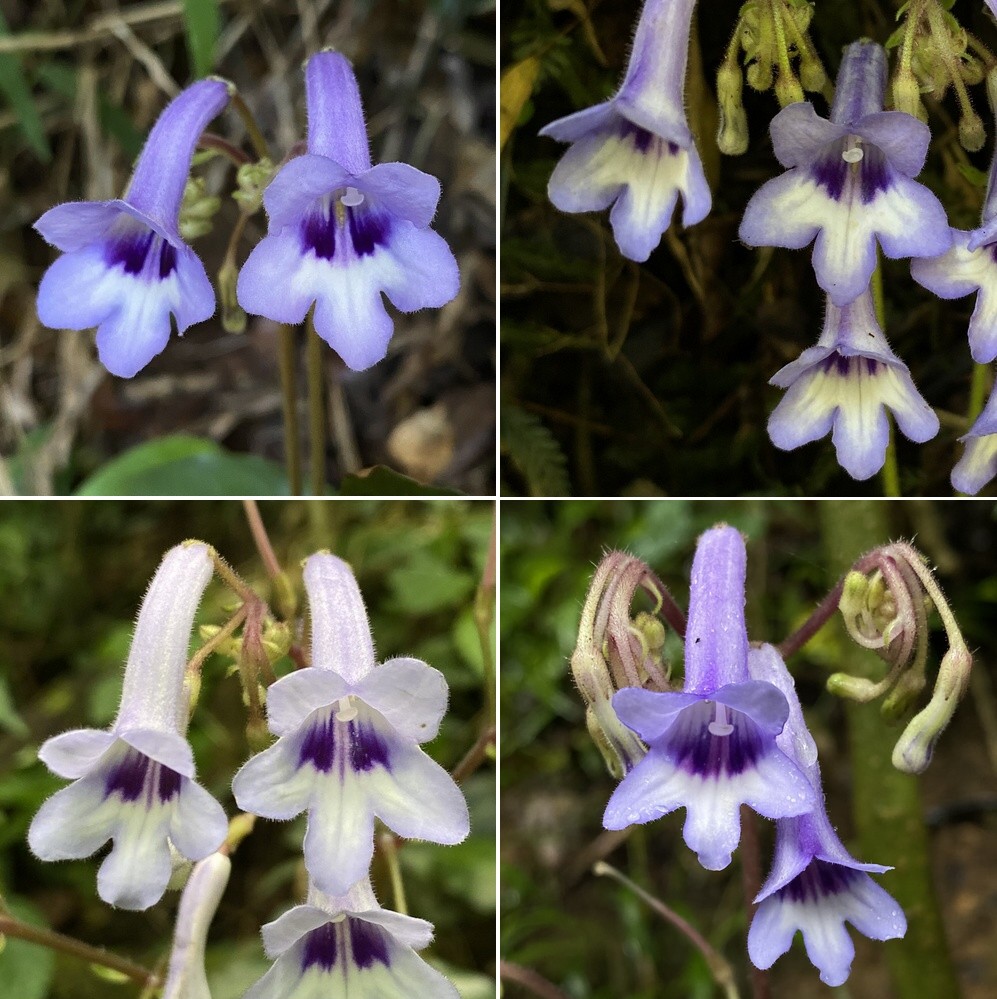
Streptocarpus grandis ssp. grandis has relatively small flowers in abundance, and these are pale violet to white, relatively small, tube shaped flower with a long narrow corolla tube (25-45 mm) and a darker violet throat with white wedges, sometimes with yellow lines.
It grows on rocks in moss and earth embankments, always in forest patches in deep shade, in central and northern KwaZulu Natal Province of South Africa. Its impressive leaf requires inventive ways to support it if cultivated.
- A plant growing on a steep bank with the leaf hanging down the bank
- Another plant growing in similar circumstances
- A colony of plants
- A mid-sized plant with a hand for scale
- A collage of flowers, illustrating some of the range of color and pattern in the species
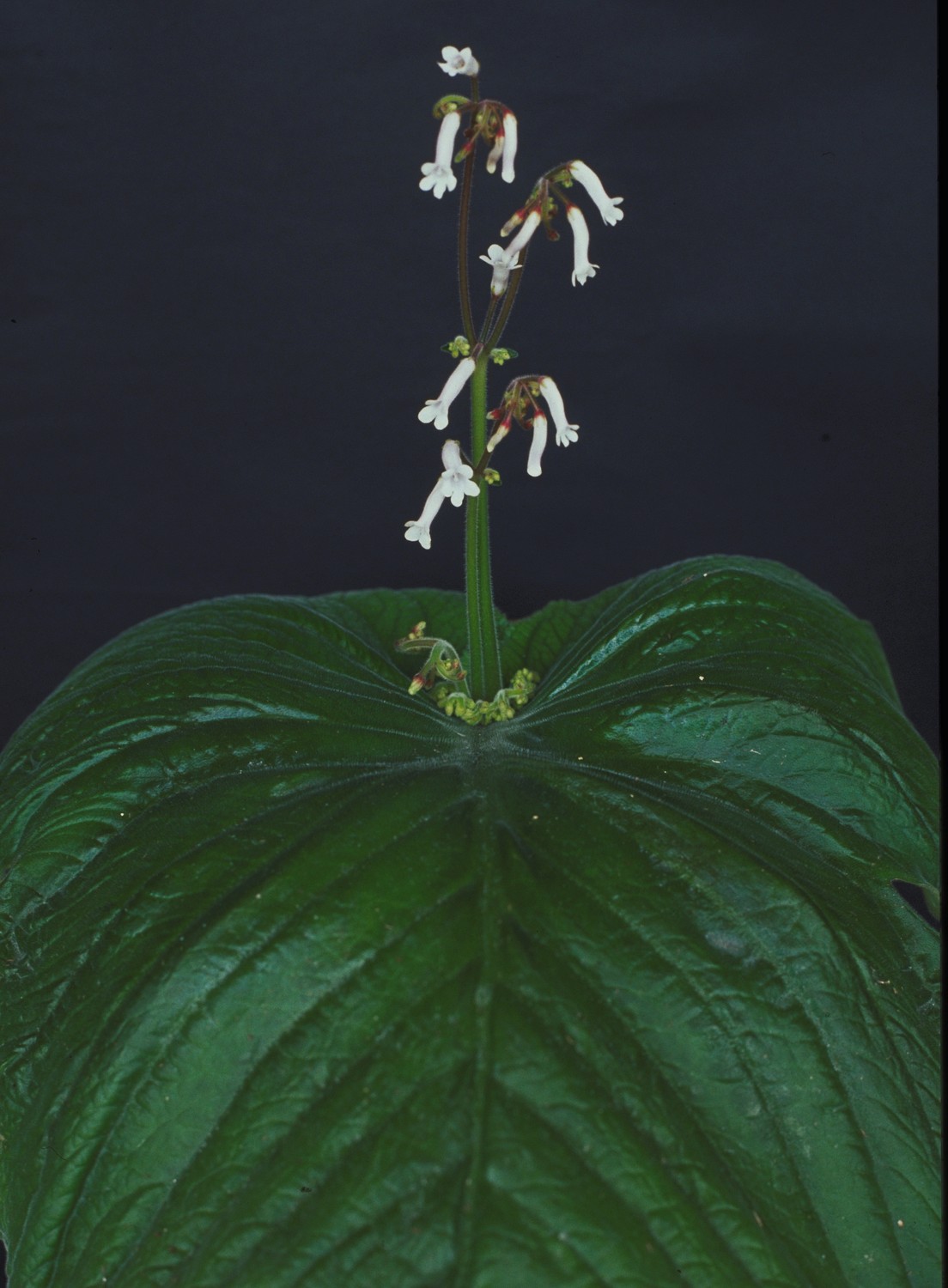
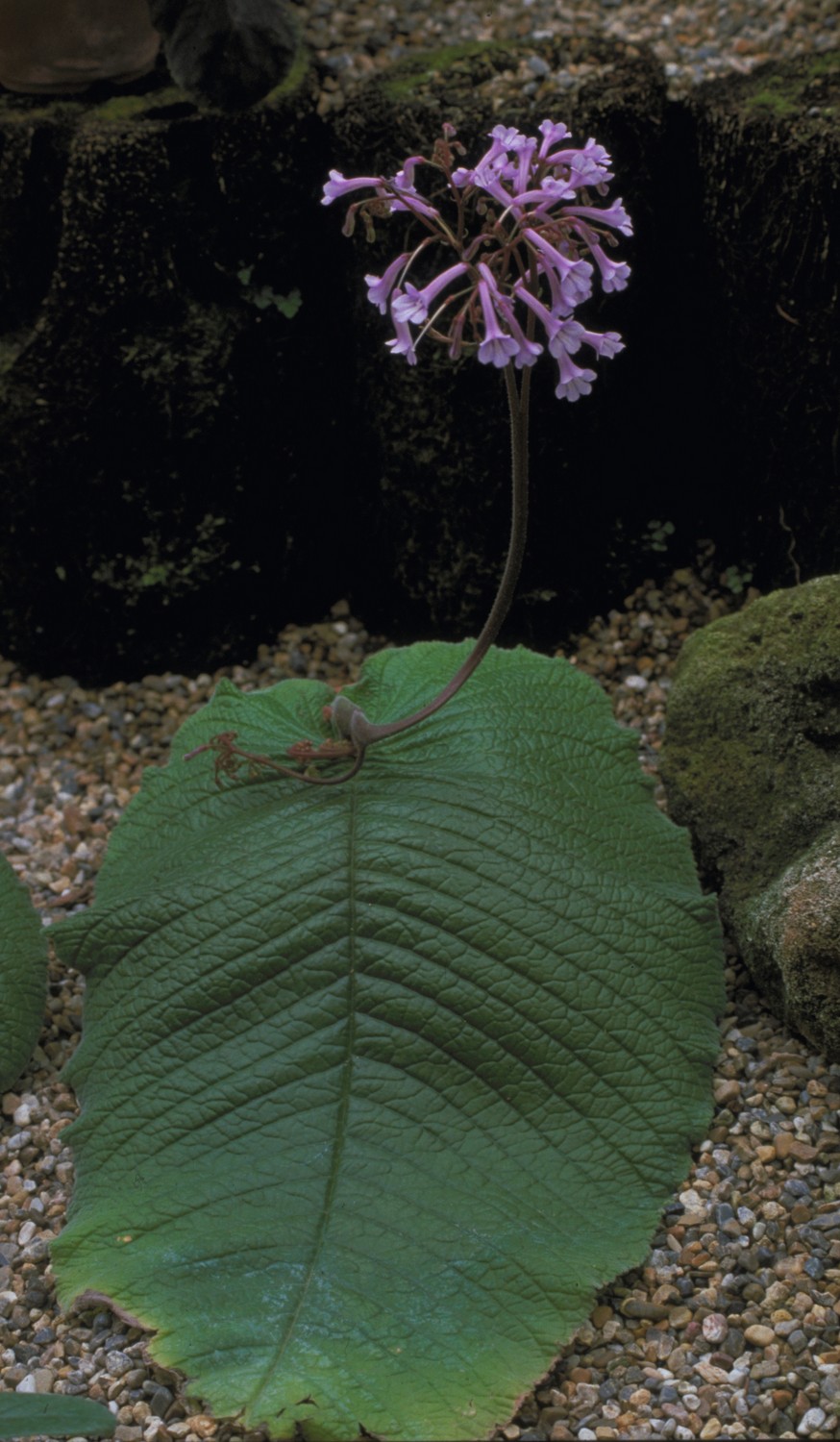
- A cultivated plant grown many years ago from seed fund seed
- Another cultivated plant from the same grower, grown from the same batch of seed
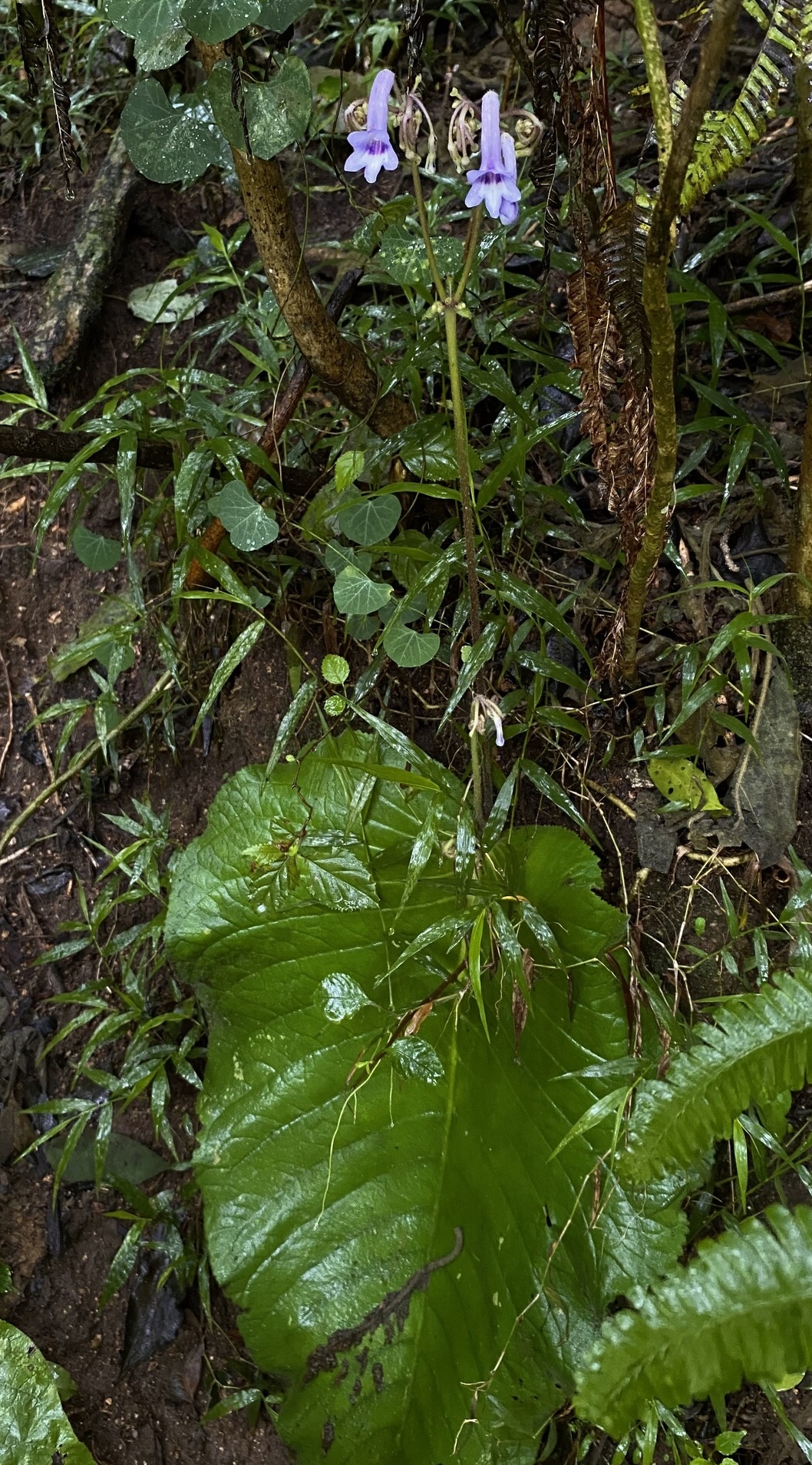
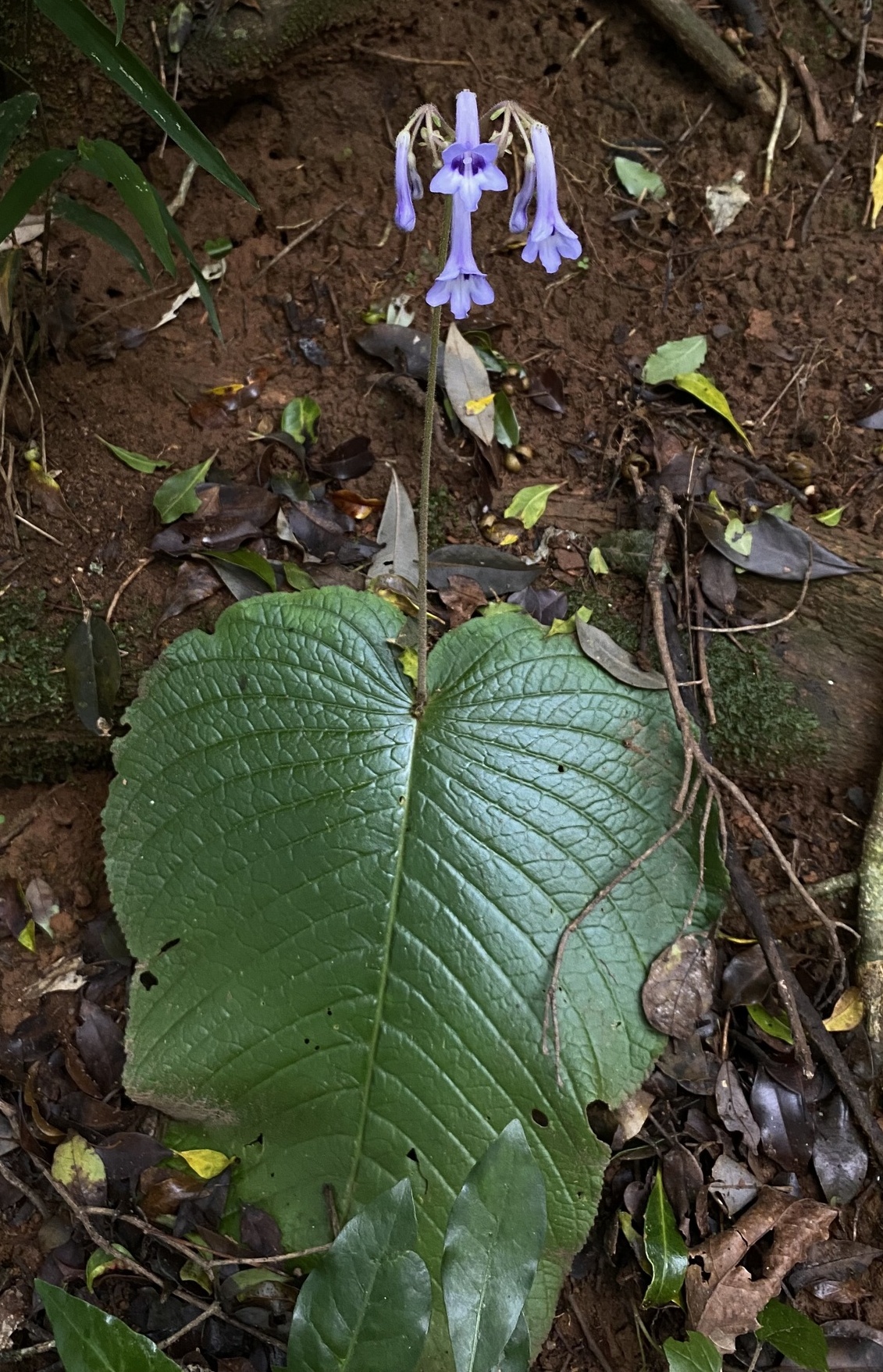
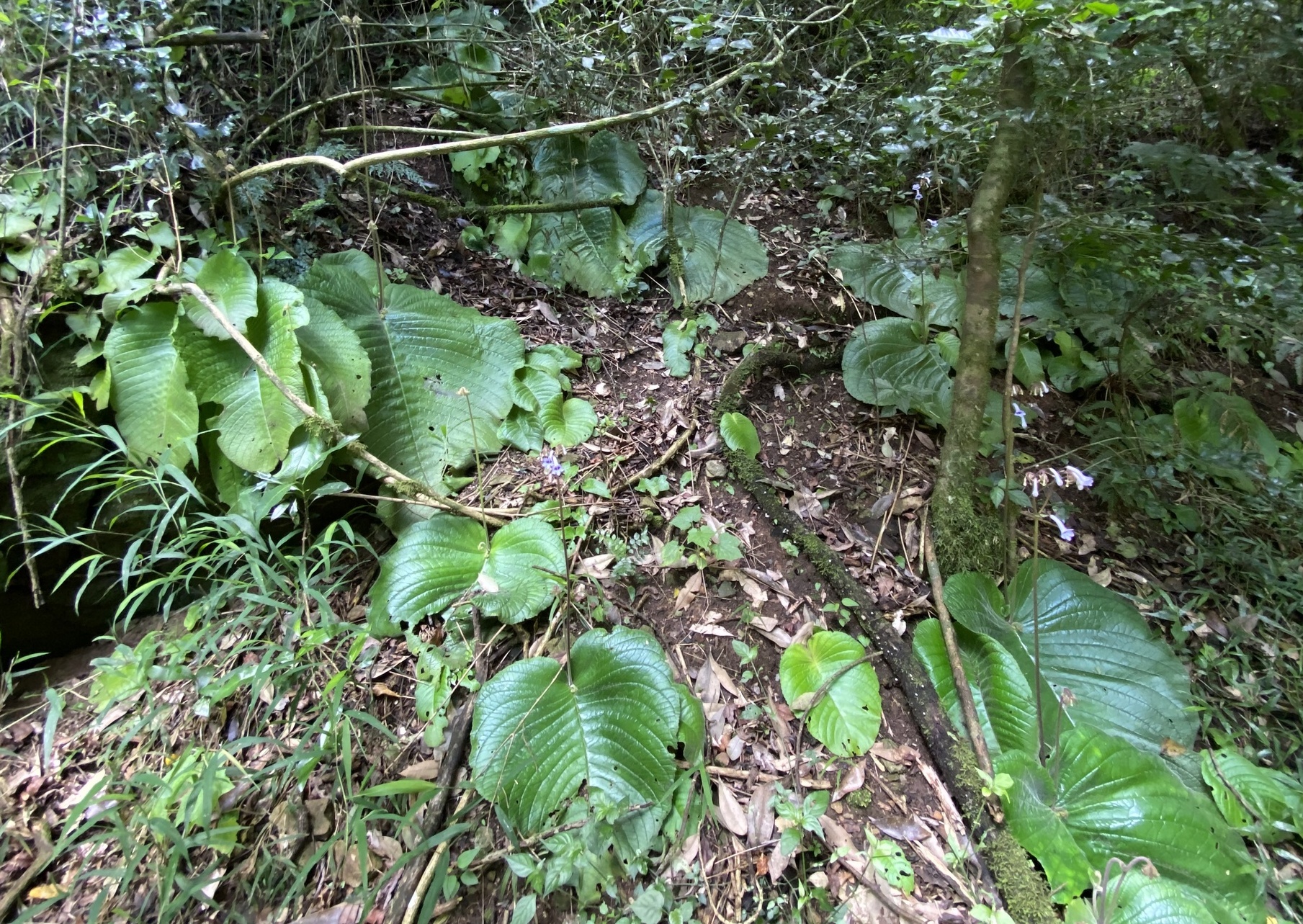
Streptocarpus grandis ssp. septentrionalis was originally described from the Chimanimani District, in the eastern Manica Highlands of Zimbabwe but also occurs in Mozambique. It differs from its sister subspecies, Streptocarpus grandis ssp. grandis, by differences in the hairs on the ovary and in having fewer glandular hairs on the inflorescence, has a pale violet to almost white corolla with no throat markings and overall has smaller leaves and flowers.
It occurs some 1000 km away from its sister subspecies. DNA analysis has not been performed on this subspecies (as indicated by the * in the Section species listing) and further comparisons of the two subspecies’ morphology and DNA may indicate that it is a separate species and not only a subspecies.