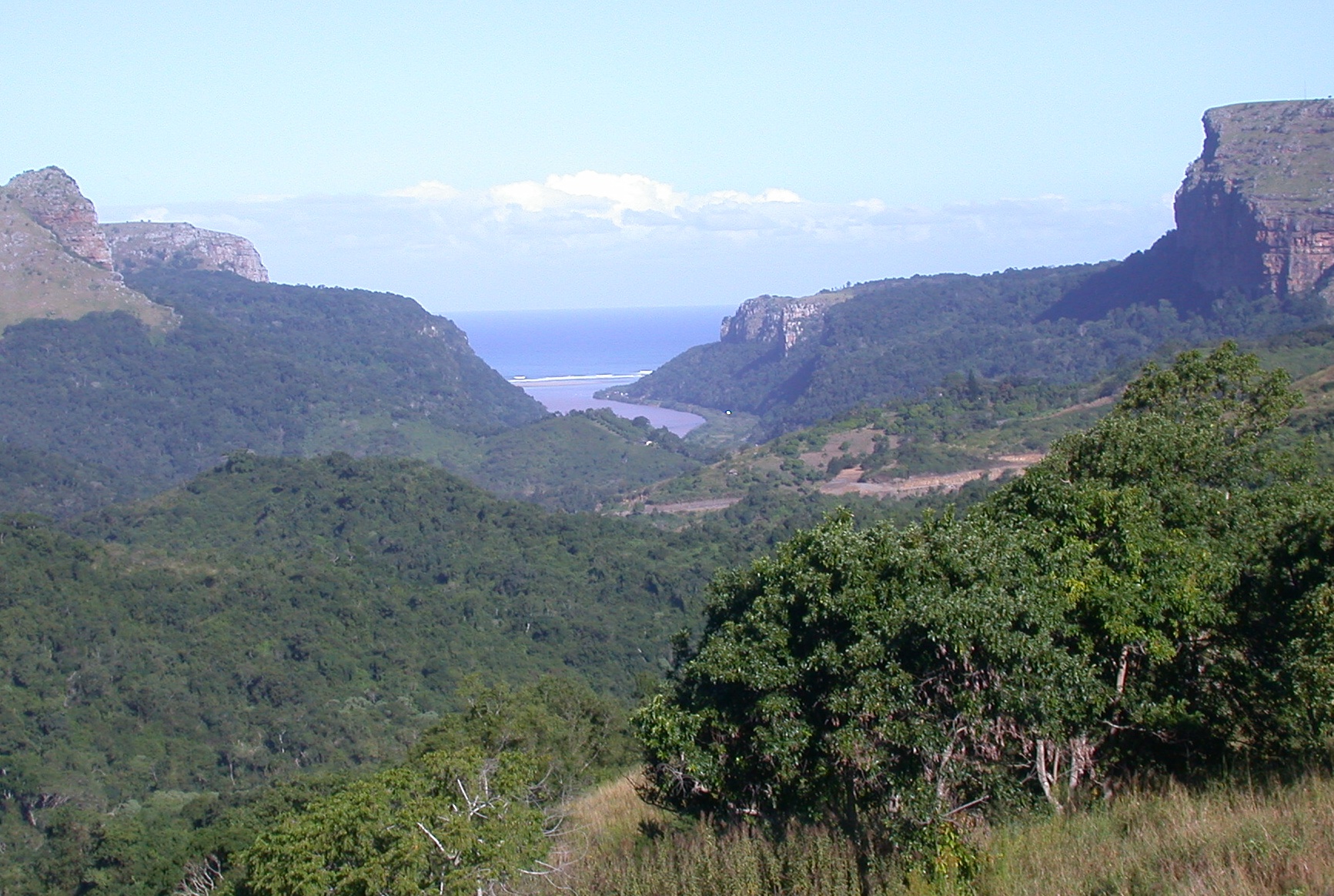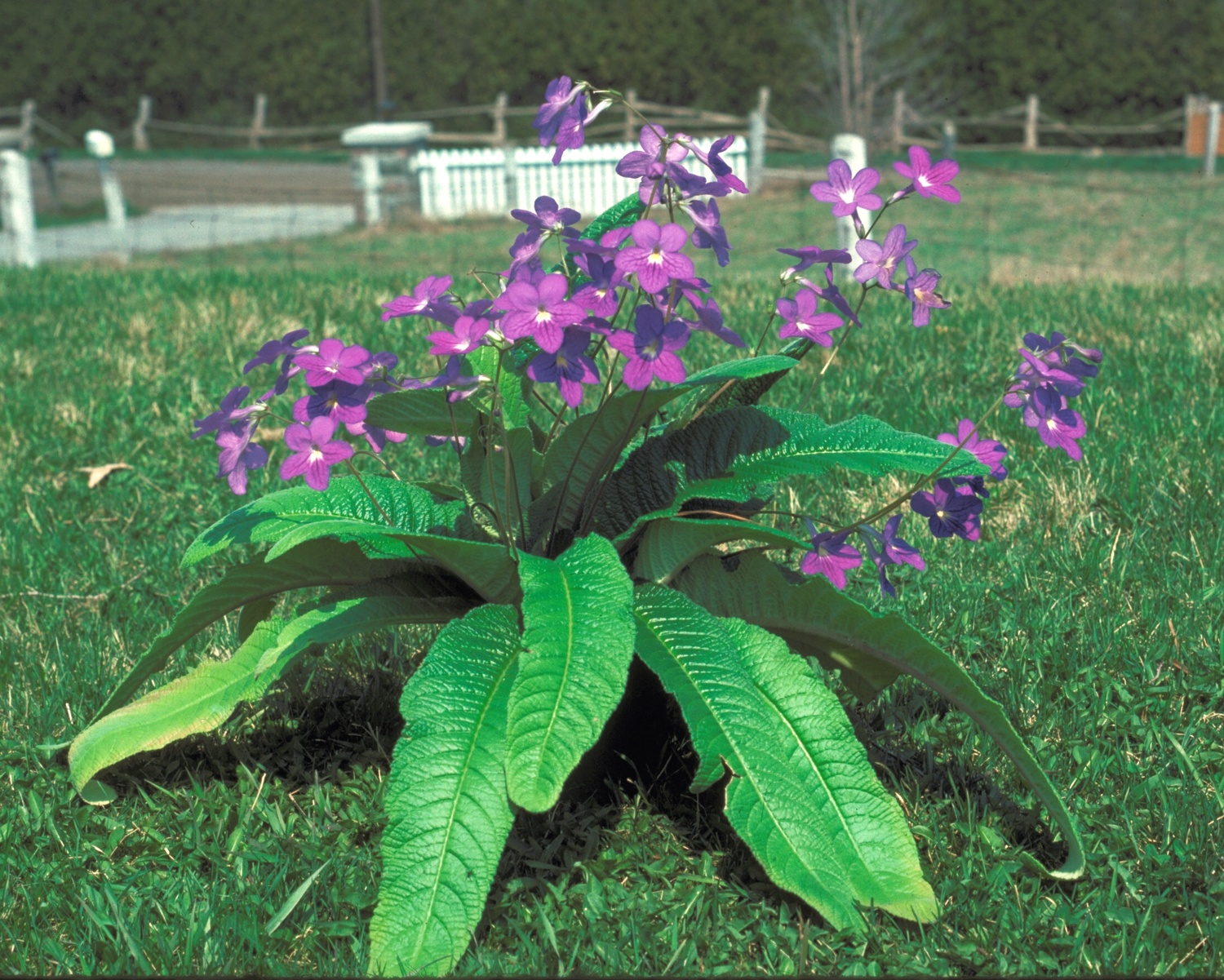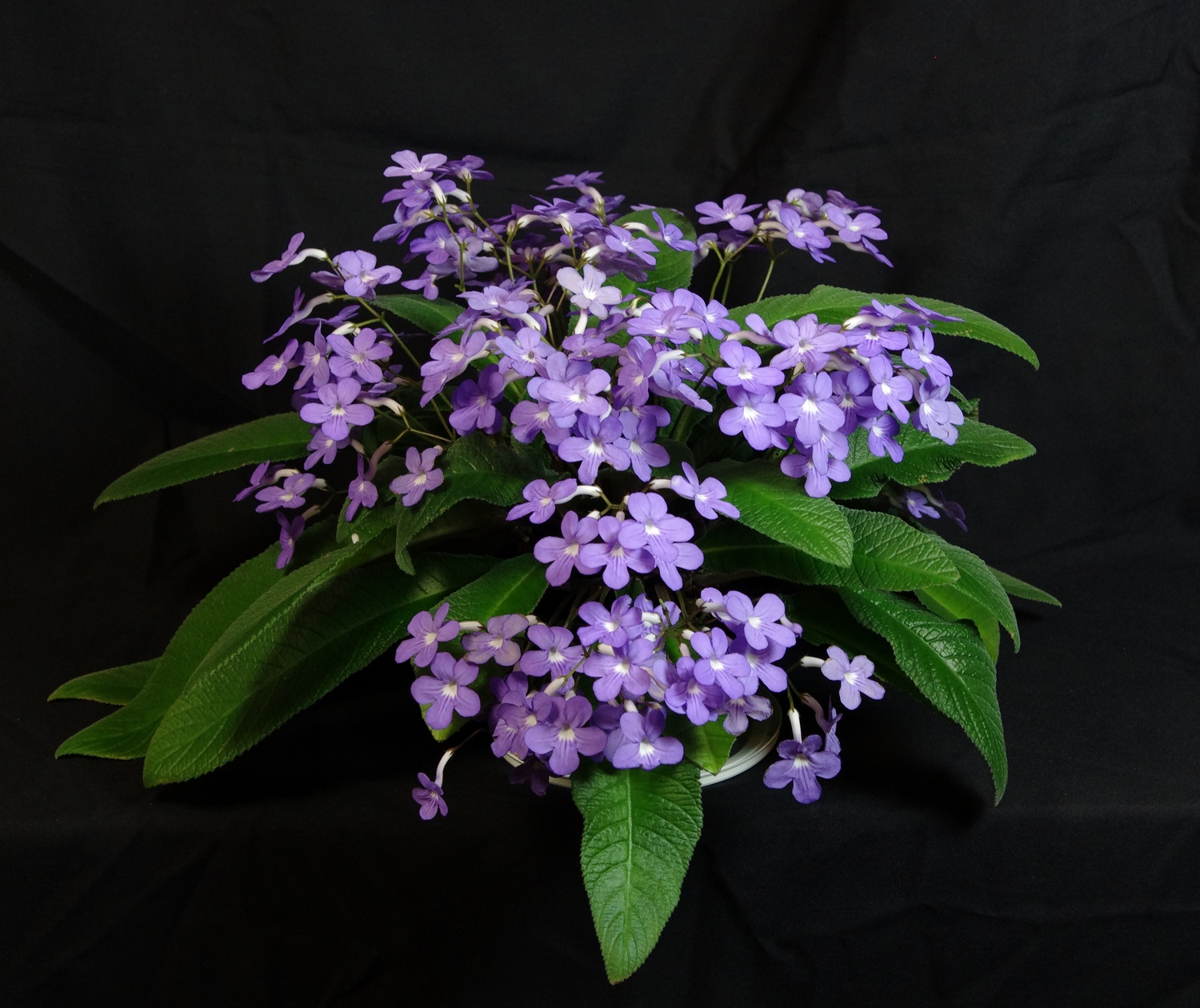
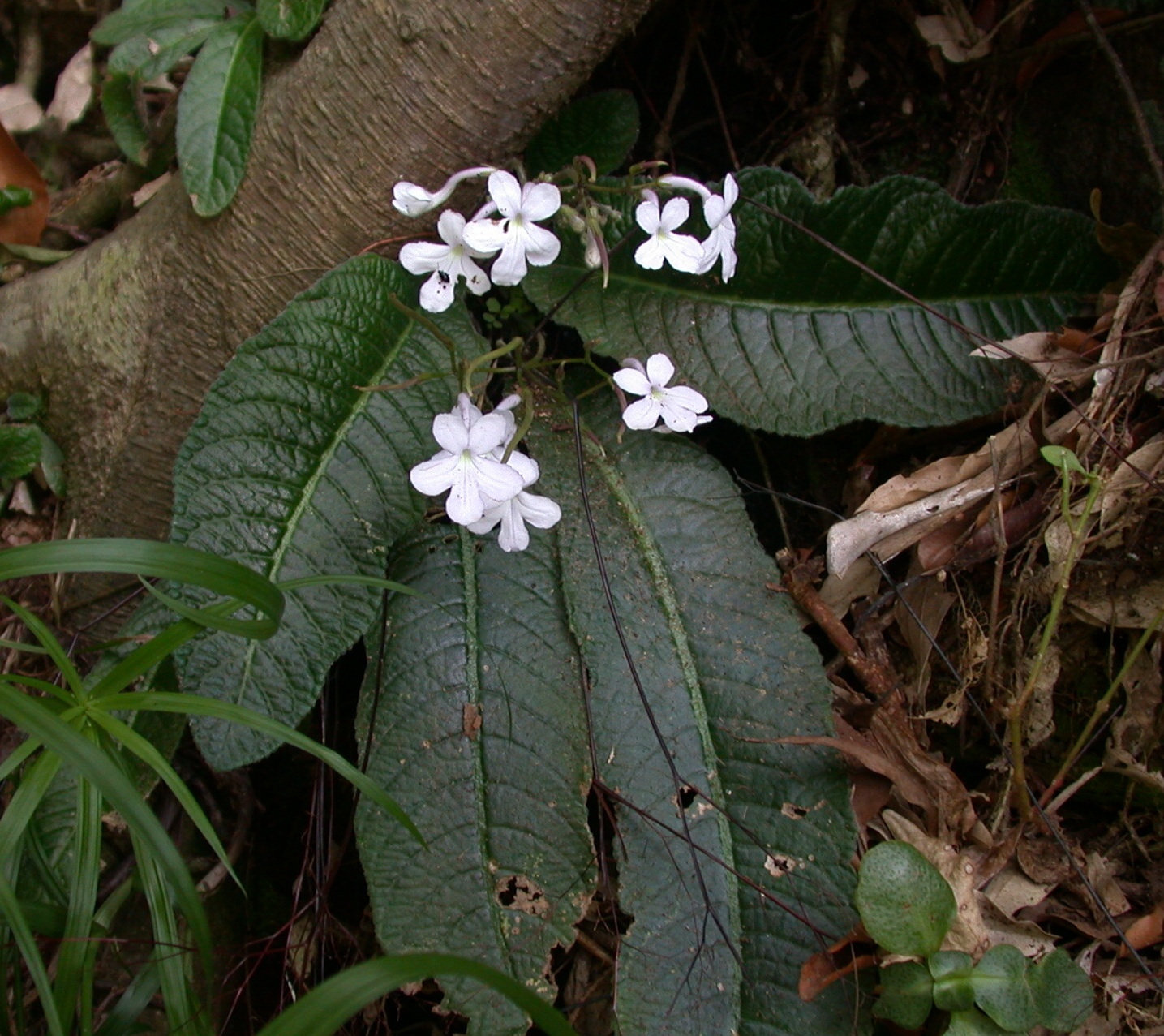
Streptocarpus johannis gets its name from the quaint coastal town of Port Saint Johns on the south-eastern coast of South Africa, in an area known as Pondoland, in the Eastern Cape Province. This is where it was originally collected and where it occurs on the lower slopes of Mount Sullivan and in the gorges up to 20 km north, such as the Myokane Gorge and the Fraser Falls and Magwa Falls gorges. These original populations are referred to here as “southern”; other populations with somewhat different morphologies occur to the north (see below).
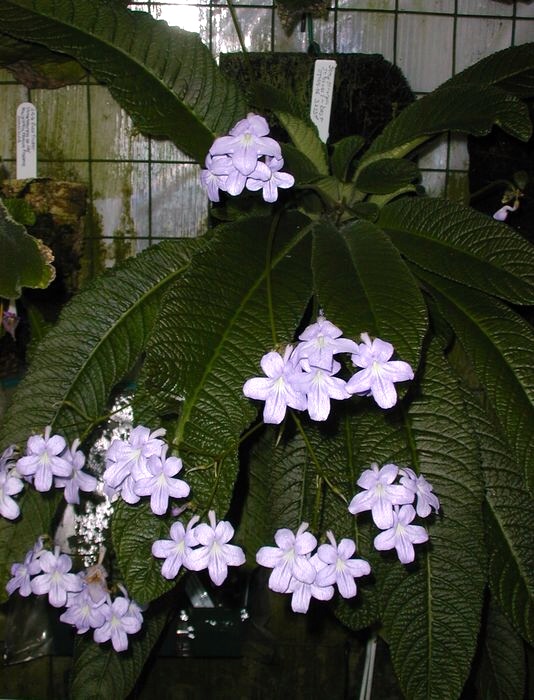
Streptocarpus johannis is a very important species in the development of the popularity of the genus. It was a contributor to some of the earliest widely-grown hybrids, such as S. ‘Constant Nymph’, and features in the background of many hybrids. The species can be very floriferous both in the wild and in cultivation, although typically can be found with more modest floral displays.
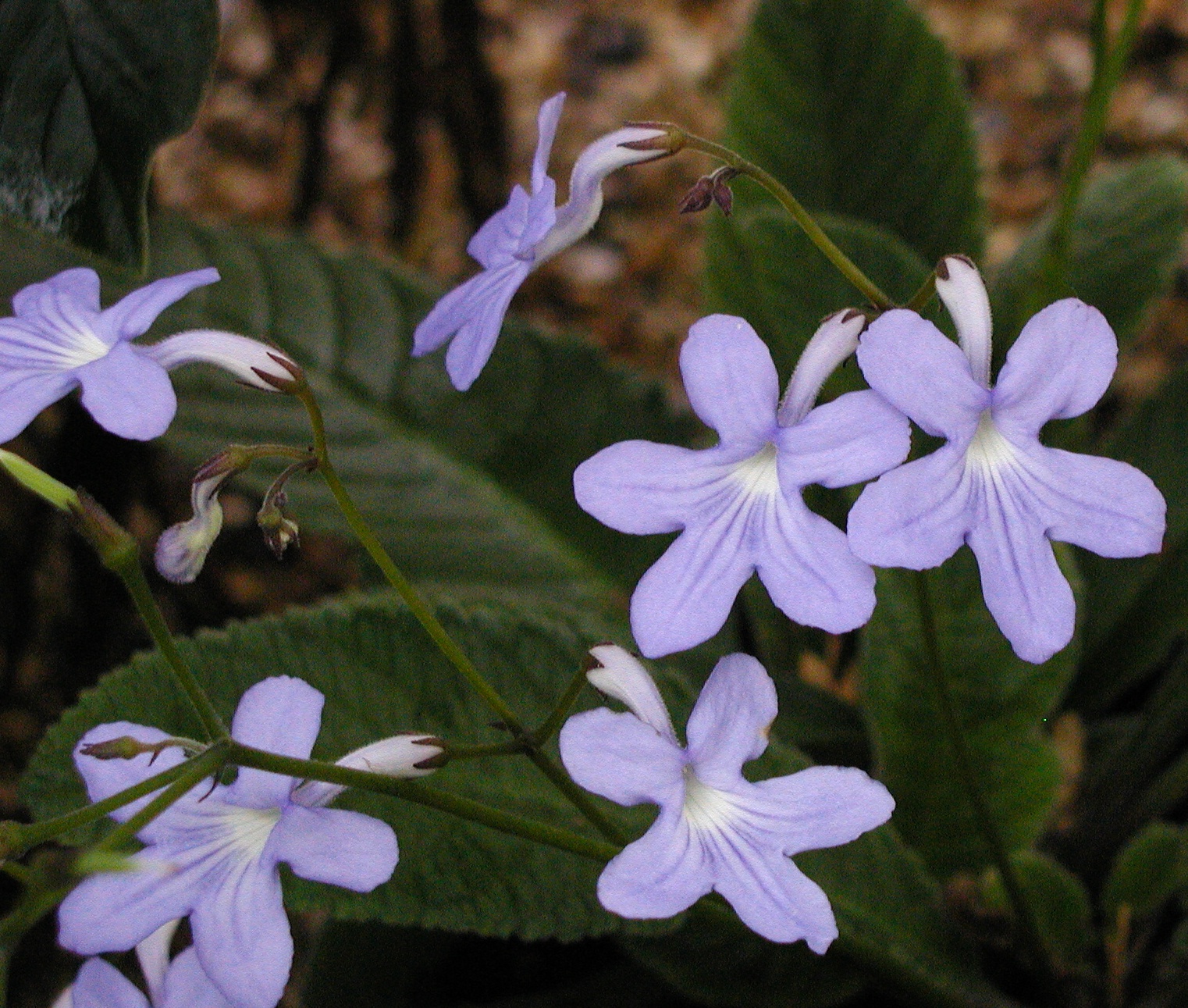
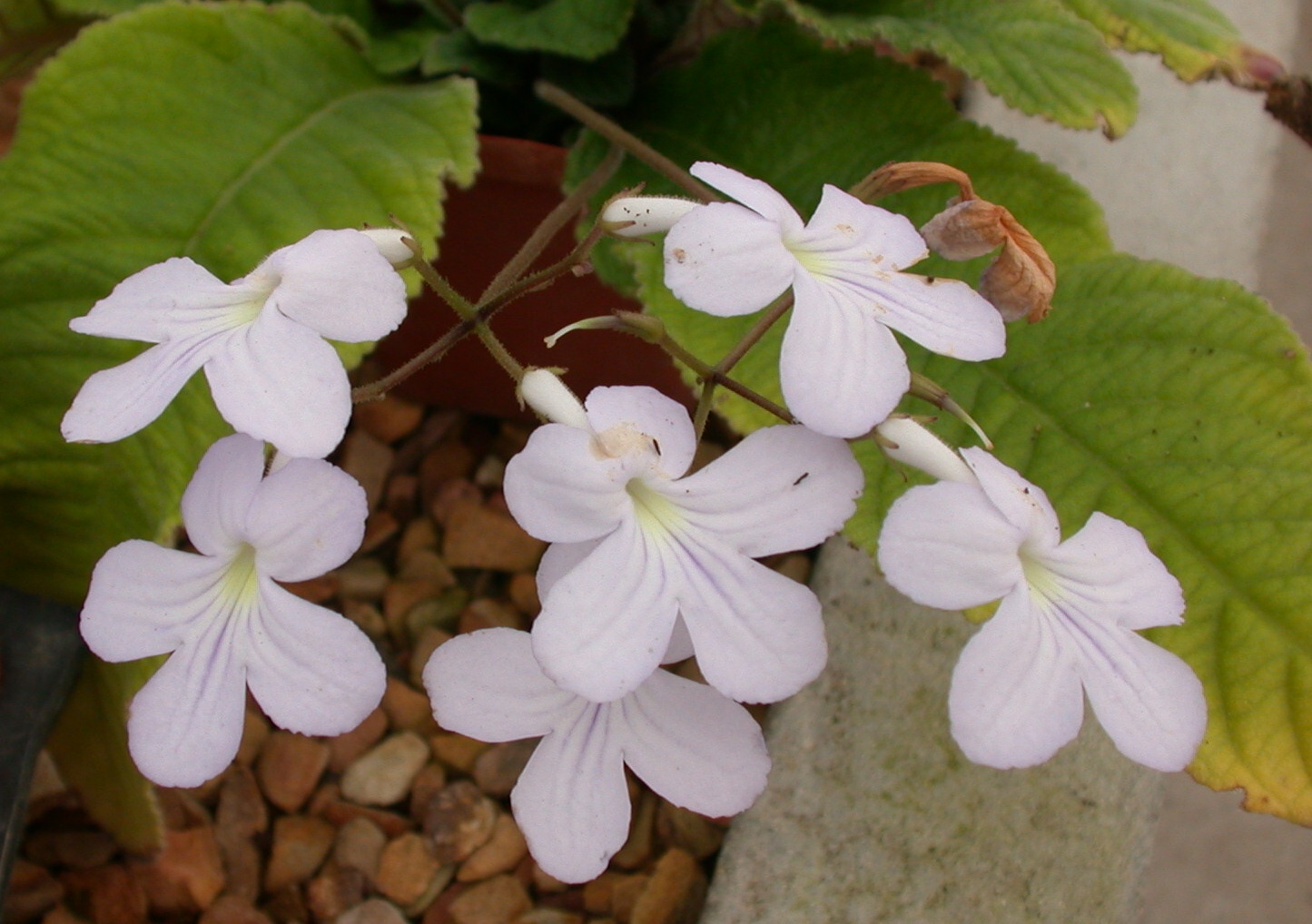
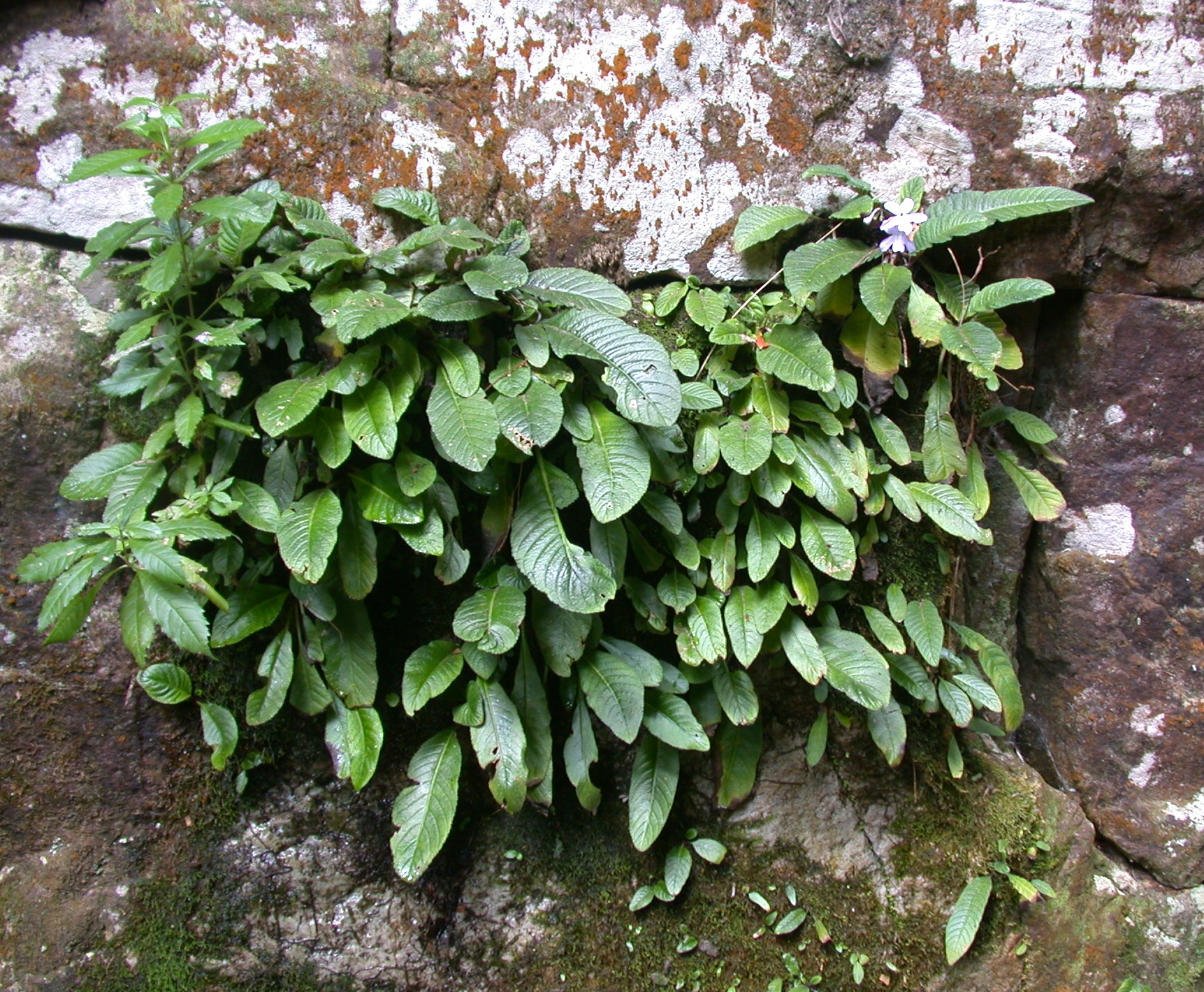
Each of the southern localities have distinctive forms but they are known to be larger plants with larger and wider petalled flowers, white or pale mauve, sometimes with yellow in the throat. All forms (southern or northern) of Streptocarpus johannis have the characteristic keyhole shaped flower but there is considerable variation within and between populations. The measurements of the southern forms are: Leaves up to 350 x 100 mm, corollas vary between 35 – 45 mm long, the actual S- shaped tube up to 25 mm long, the upper rounded lobes, up to 15 x 15 mm, the broad lower lobes up to 15 mm long and 13 mm wide.
Quite distinct from the southern populations around Port Saint Johns are the forms which grow on the northern slopes of Mt. Ngeli and the escarpment some 100 km to the north, in KwaZulu-Natal Province. These latter locations include a farm called Hebron, and Nsekeni in the Umzimkulu area to the north. These forms all grow smaller and are more petite. Their corollas are smaller and the corolla lobes are narrower. Although intensively botanized, no localities further to the north have been found. Some of these forms have distinct lines on the corolla lobes, others are pale to deep blue.
The Nsekeni form is a dwarf with huge potential for breeding smaller hybrids. It’s leaves are not longer than 120 x 30 mm with corolla dimension not longer than 25 mm with upper and lower corolla lobes not longer than 12 mm and wider than 5 mm.
The Ngeli and Hebron forms have leaves up to 250 x 60 mm, corollas not more than 30 mm, the S-shaped tube not longer than 15 mm and more strap shaped upper lobes with rounded ends, 12 x 6 mm, with similar strap shaped lower lobes with rounded ends up to 15 mm long by 6 mm wide.
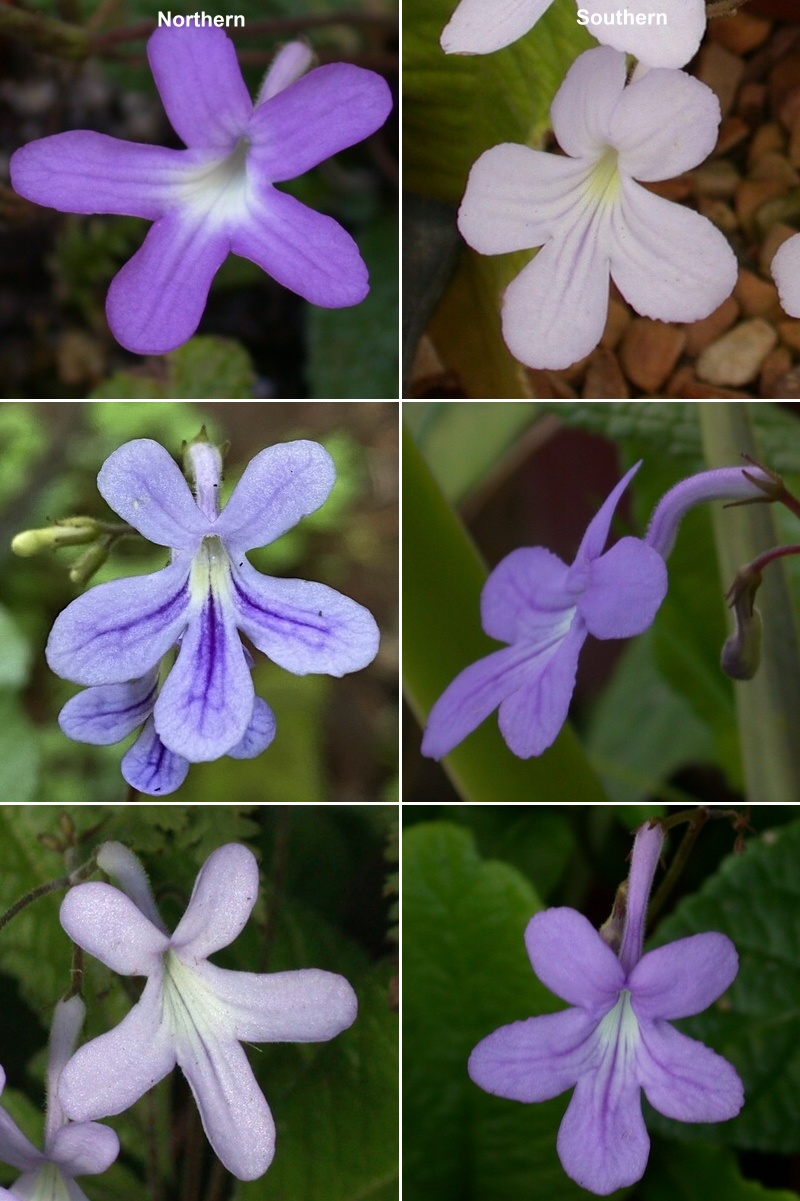
The morphological differences between the southern and northern forms are significant which has been supported by the DNA analyses performed thus far (De Villiers, 2008) and future research may indicate that they should be recognized as separate species.
- What appears to be a southern form, growing at Wisley RHS Gardens in the UK
- A southern form grown at Kirstenbosch National Botanical Gardens in South Africa
- A specimen of the southern form, growing mounted on tree fern
- A cluster of plants of the southern form, growing on a cliff
- A view of the cliffs near Port St. Johns, near where the original collection of the species was made
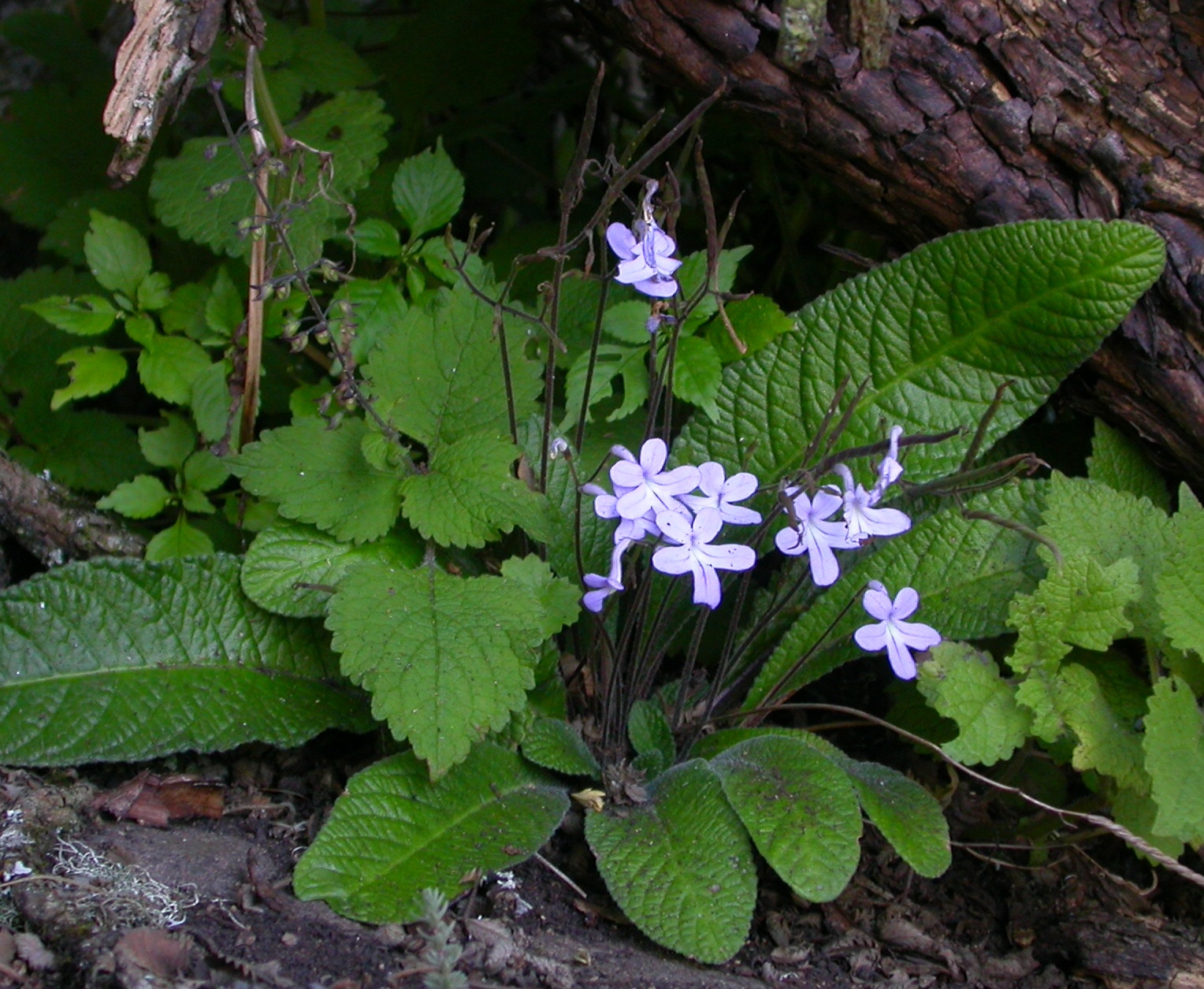
- A plant of the northern form, growing in KwaZulu-Natal, South Africa
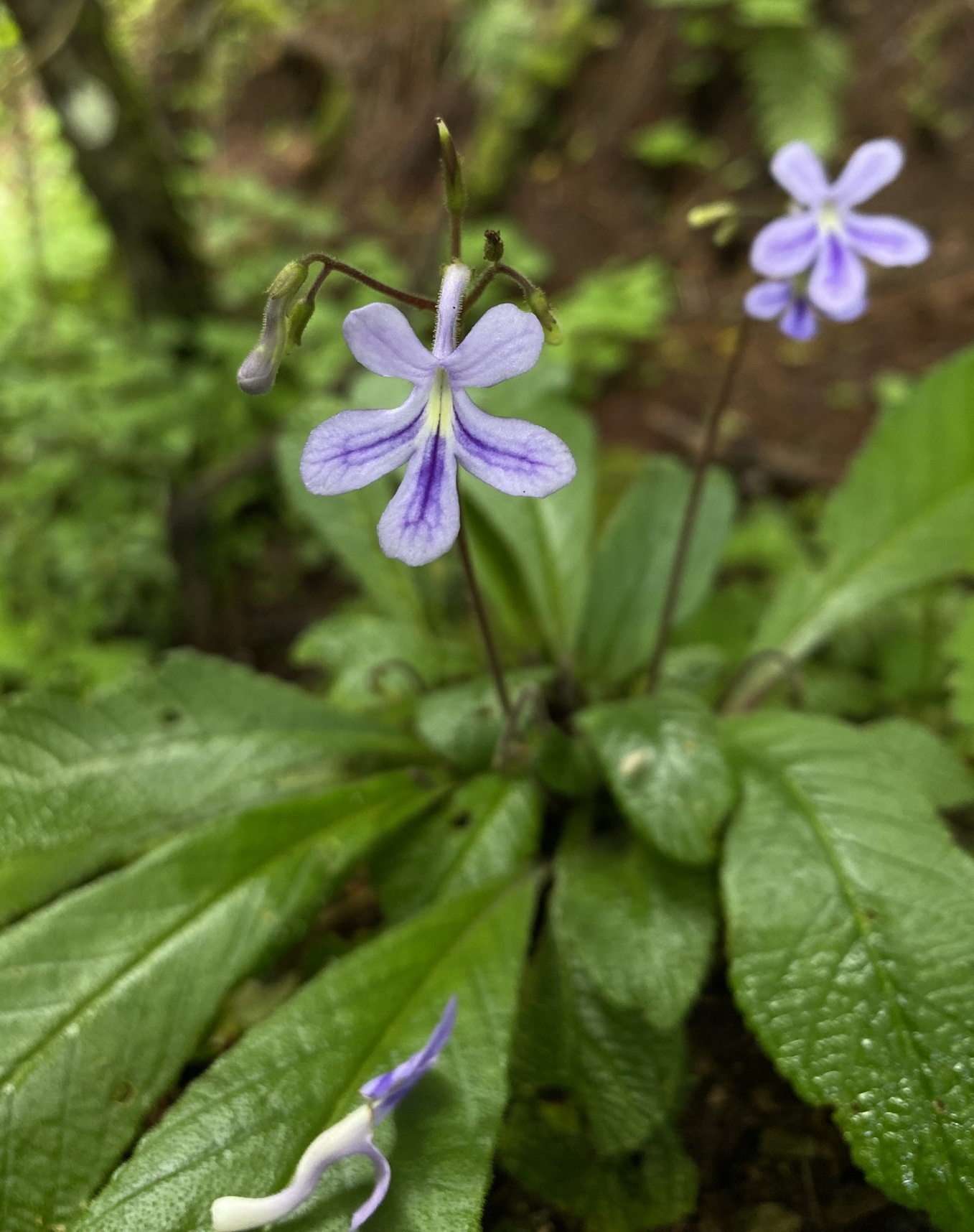
- A close view of the flower and plant of a northern form, growing near Sisonke, KwaZulu-Natal, South Africa
- A photo composite, showing variation in flower forms of the species, and illustrating the characteristic difference in shapes of the northern and southern forms
- Streptocarpus ‘Constant Nymph’, an early and spectacularly successful hybrid involving S. johannis
- Streptocarpus ‘Falling Stars’, a spontaneous sport of S. johannis found on the propagation benches of Dibley’s Nursery in Wales; this cultivar can grow very large and sport hundreds of flowers at once