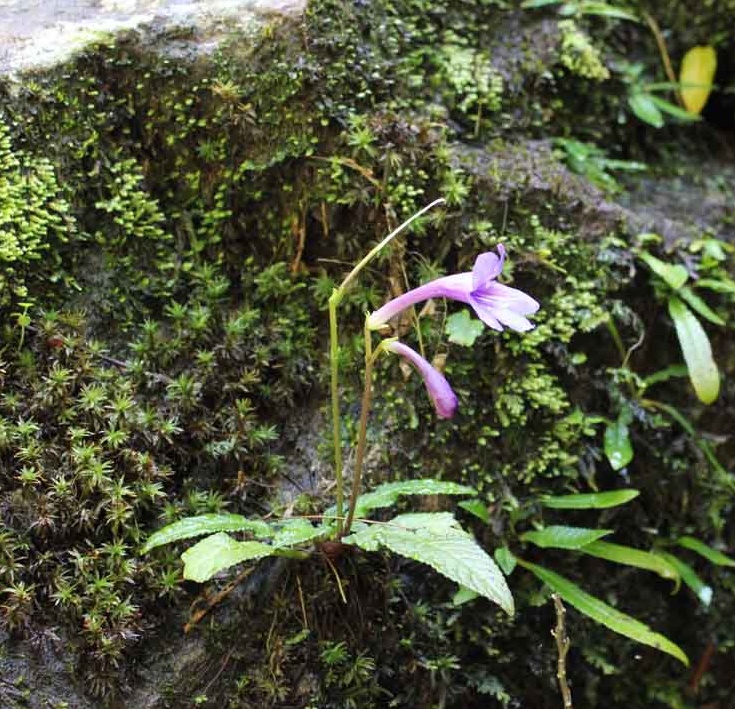
Streptocarpus lilliputana has been named because of its diminutive size (lilliputian) and the gorge (Lupatana gorge) along the Pondoland coast where it was discovered for the first time. This was during a 2000 expedition of horticulturists from Kirstenbosch Botanical Gardens in Cape Town including Liesl van der Walt, curator of the Streptocarpus collection there for many years, along with Ernst van Jaarsveld, intrepid plant collector, and Stellenbosch University biologist Dirk Bellstedt. Its name was the brainwave of Liesl van der Walt!
Streptocarpus lilliputana is one of the many endemic plant species that occur on the Pondoland Coast. This is a special area for Streptocarpus with no less than 6 endemic species with very distinctive morphological characteristics that have evolved there. Streptocarpus lilliputana only occurs in three Pondoland gorges: Lupatana, Fraser and Myokane, all within 30 km of each other, so it is a true endemic and specialist species.
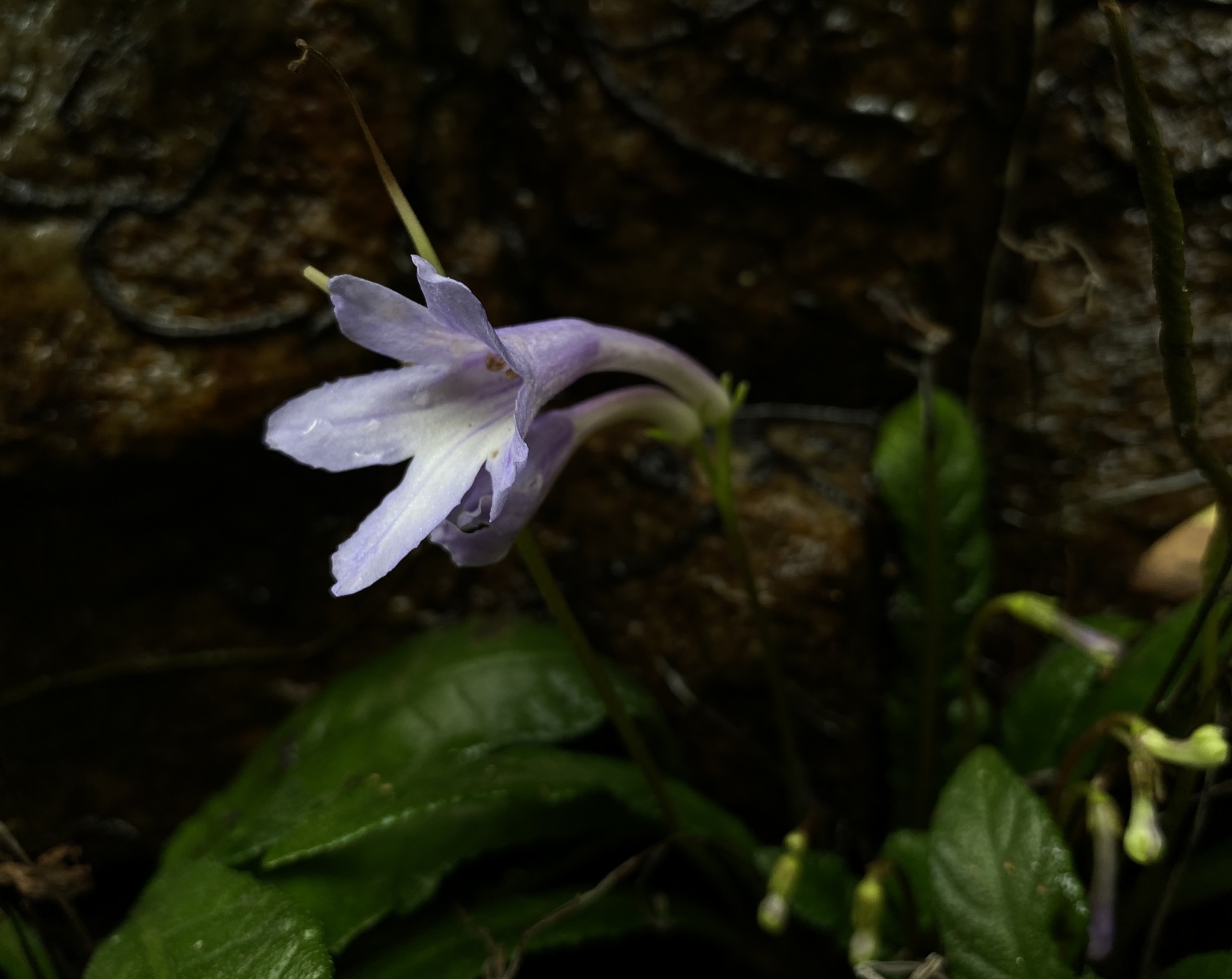
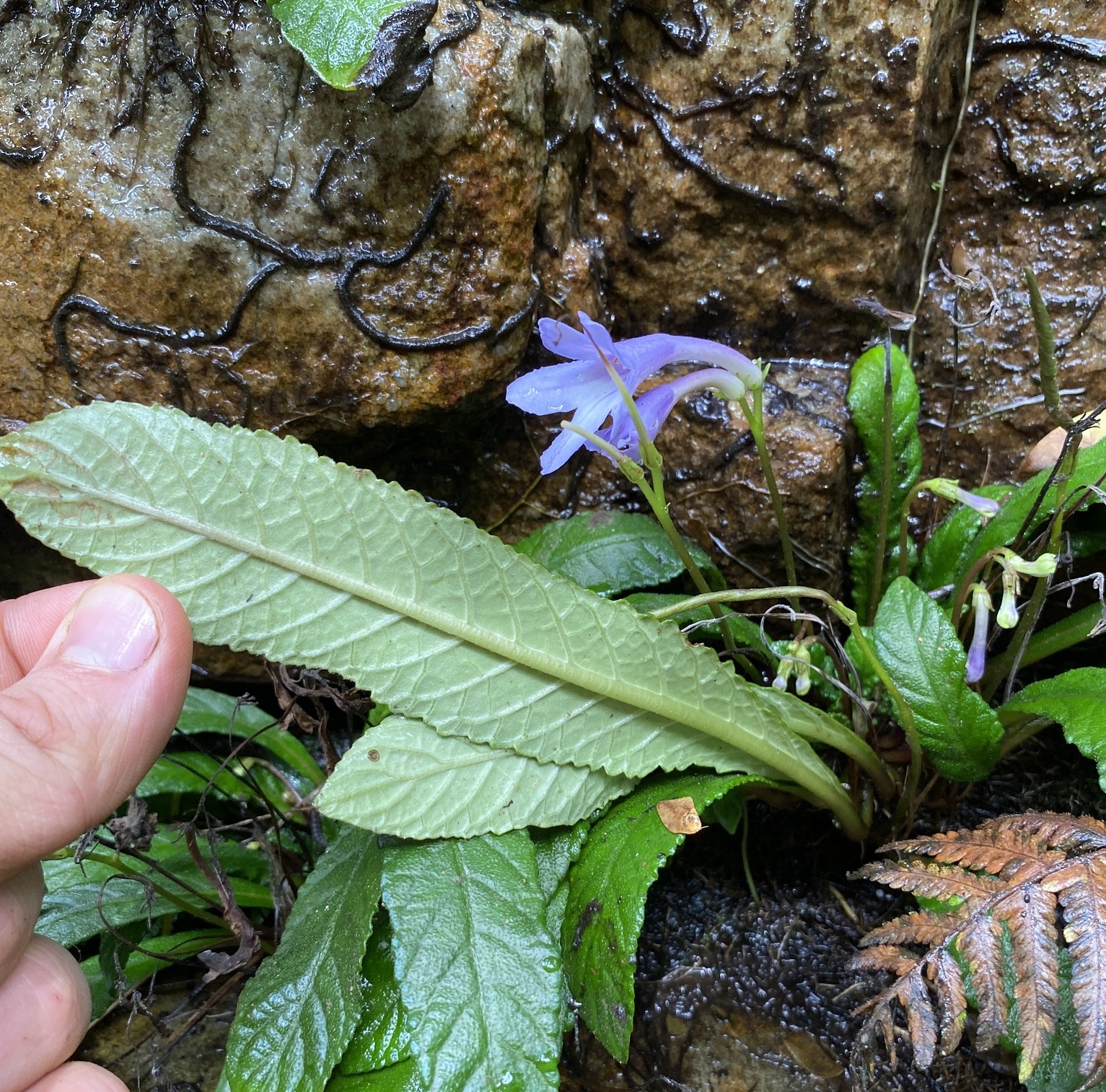
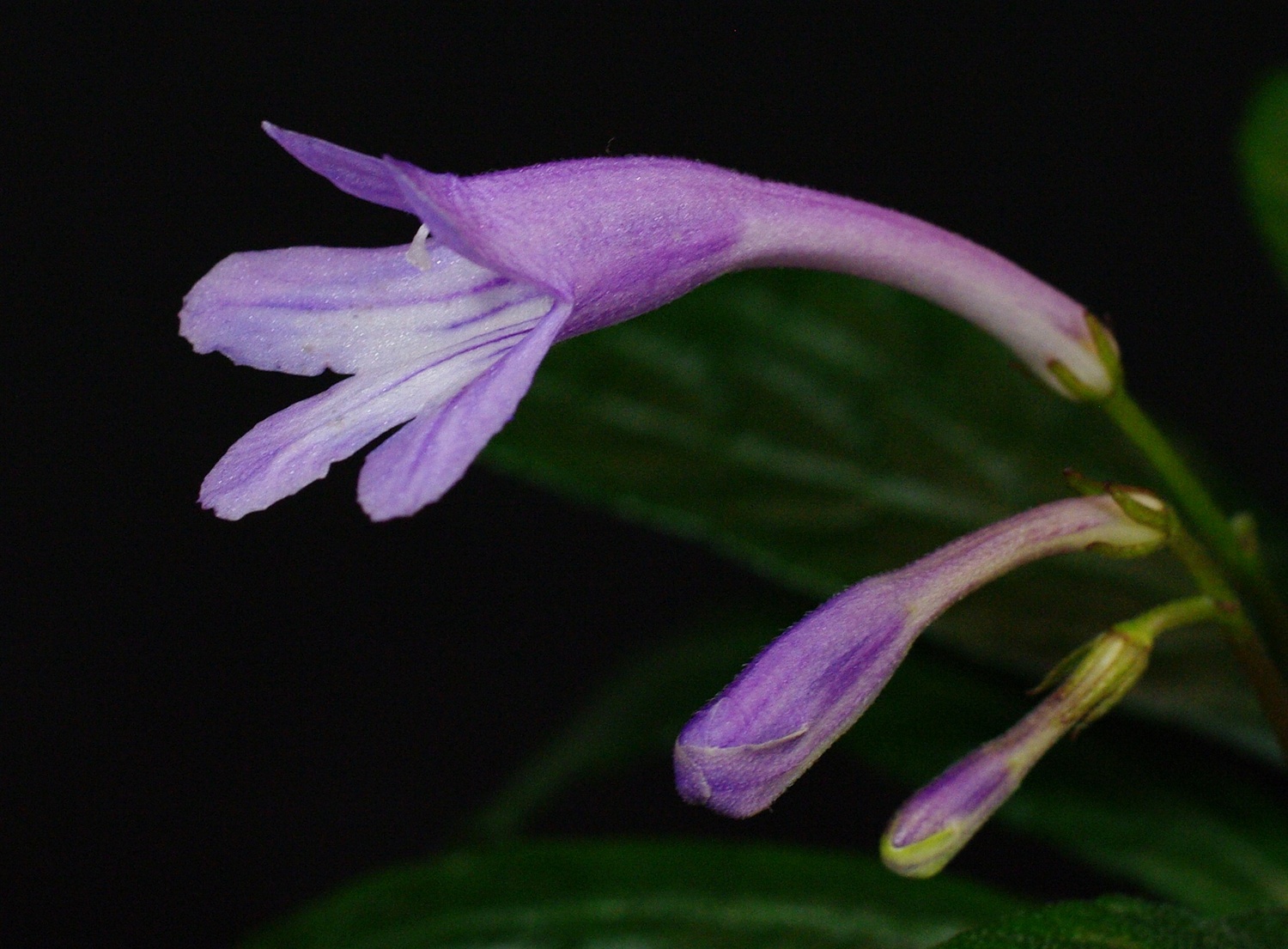
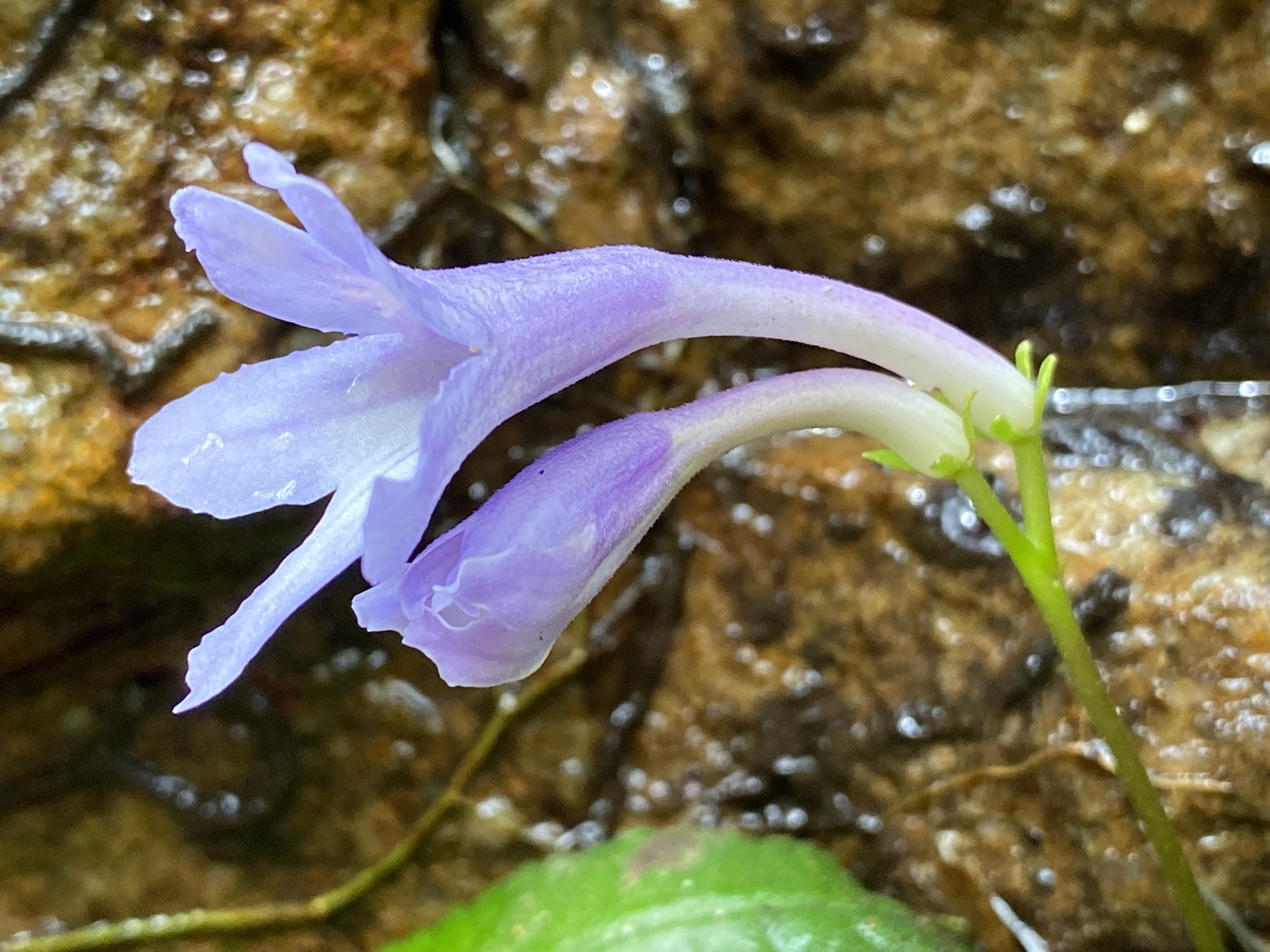
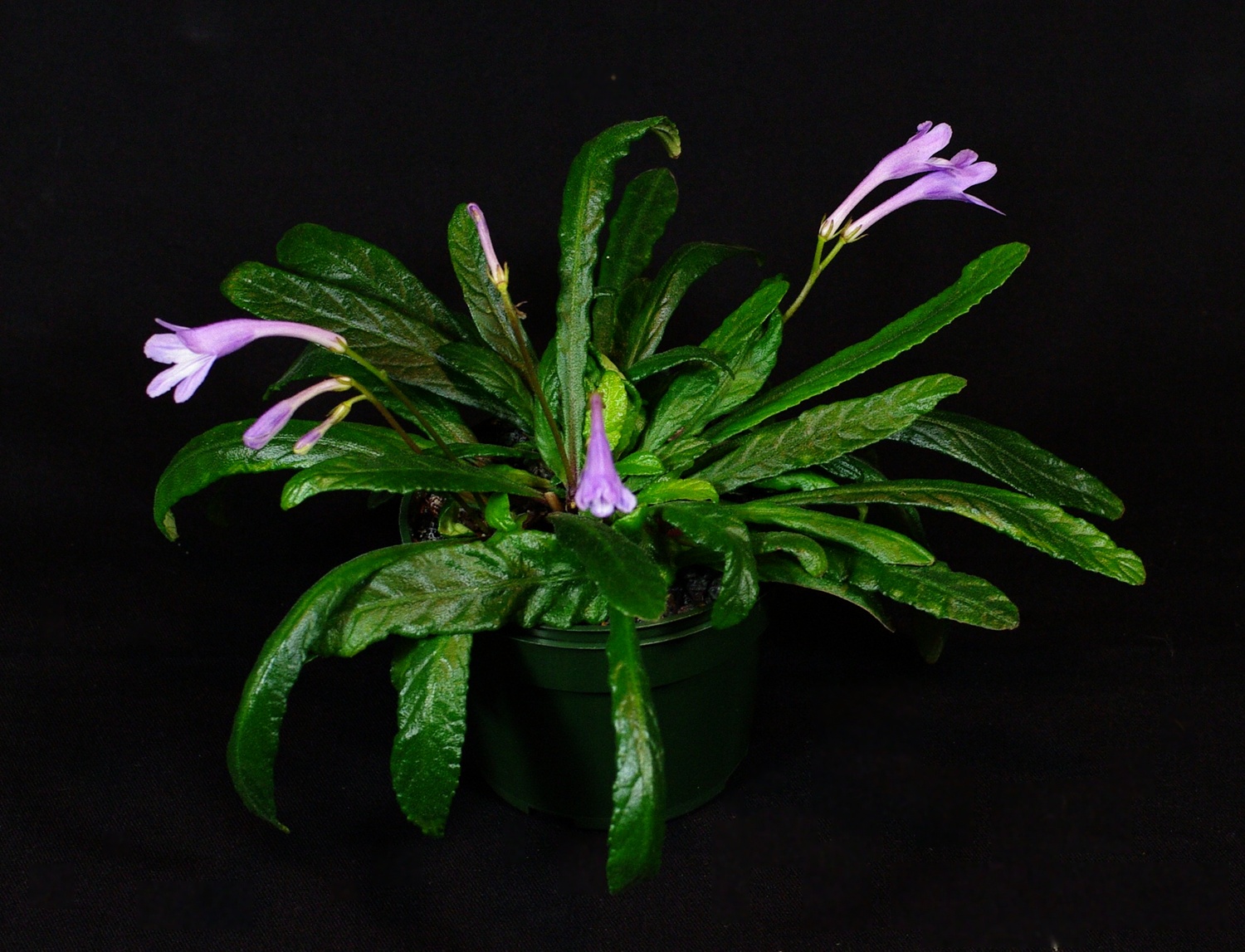
Streptocarpus lilliputana is a typical rosulate species that produces numerous narrow, leathery, strap shaped leaves which do not grow very large (50–90 x 15–20 mm) with a distinct petiolode (12 x 1.5 mm). Other than this, the species is known for its unique characteristics. The flowers are quite differently shaped to other Streptocarpus in what is called an “acanth” shape similar to members of the family Acanthaceae which occur in the same area. This curved downward shaped corolla is possibly an adaptation to bird or moth pollinators which has not been established yet.
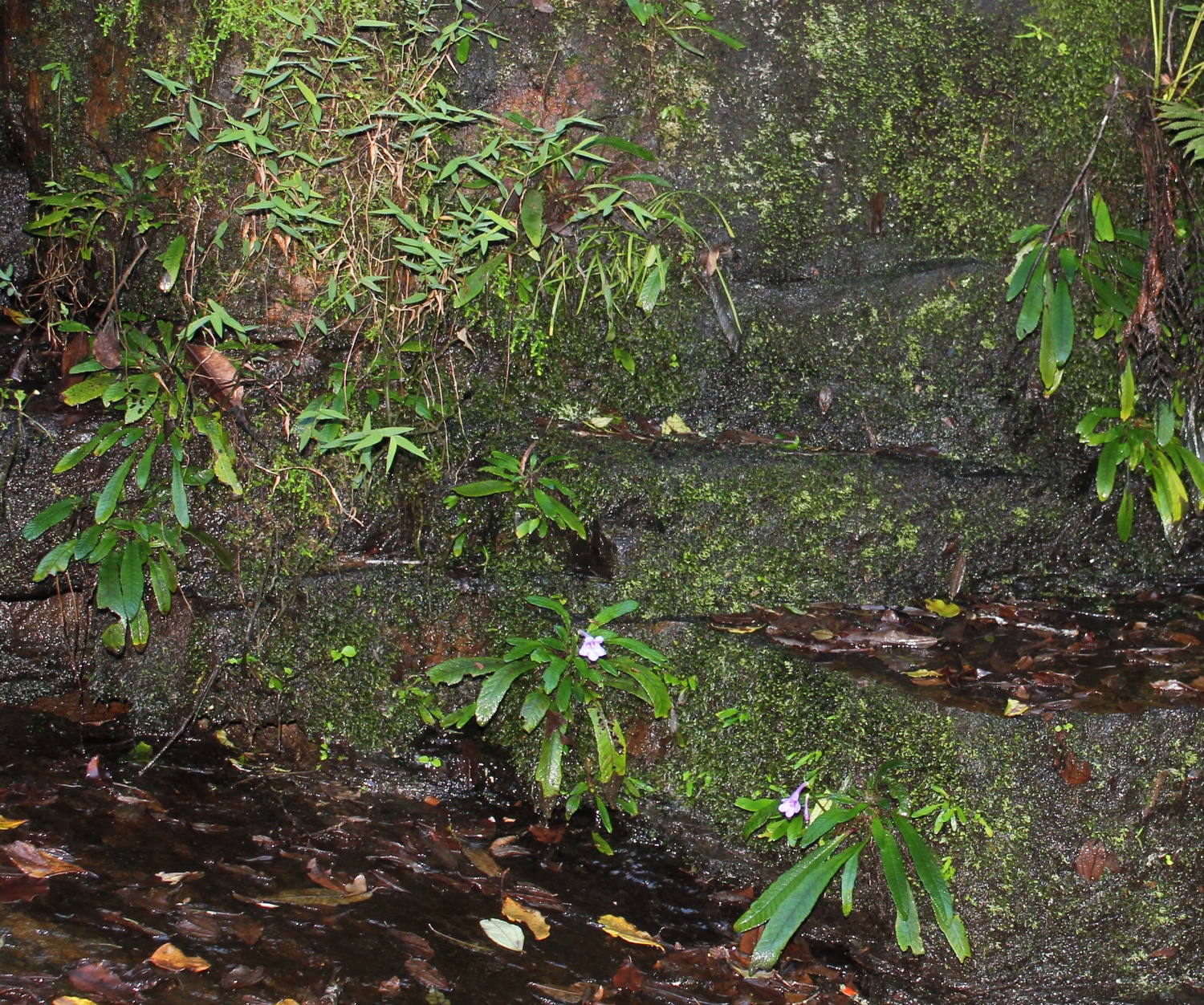
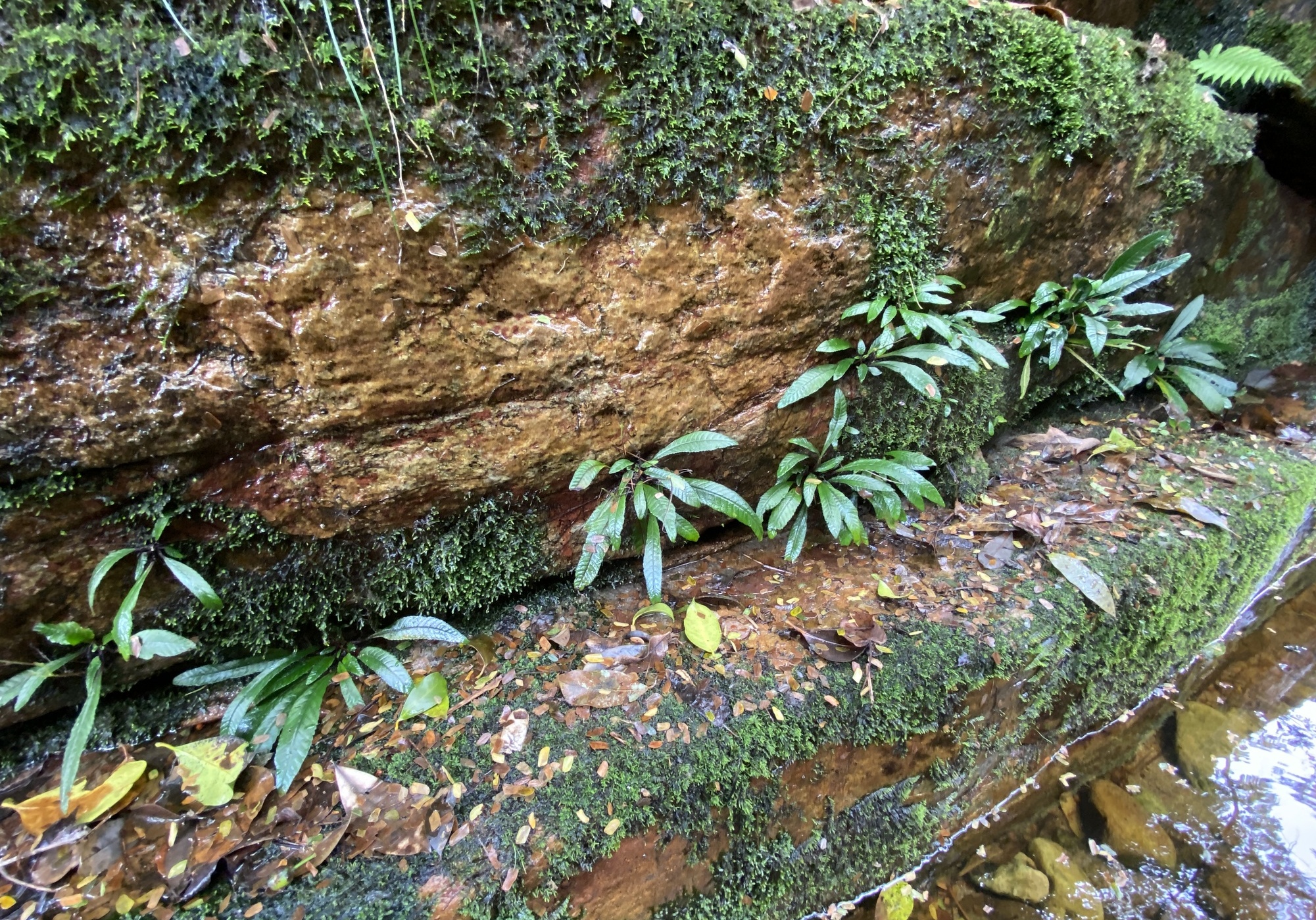
The species can be described as rheophilic, unique in Streptocarpus, which means that it can grow under water for shorter periods. It is specifically adapted to this by clinging directly to rocks through its extremely tough roots without any medium other than mosses that grow with it. The species exhibits a third unique characteristic which is advantageous for hybridization. Probably due to the mild and moist subtropical climate and the microclimate created by the gorges in which it occurs, it does not abscise its leaves, which occurs in most Streptocarpus. The resulting unattractive and ragged leaves are typically trimmed in cultivation to maintain an acceptable appearance.
S. lilliputana is very compact, and a boon to hybridizing. Several attractive hybrids have been created using the species, including S. ‘Dale’s Starry Night’, S. ‘Little Kan’ and S. ‘Heartland’s Baby Kisses’.
- A close view of a flower and plant
- Flowering plants growing on a mossy vertical rock face
- Another view of plants on a moist rock face
- A plant in a damp crevice, with fingers for scale
- A close view of a flower in profile, illustrating the characteristic tube shape
- Another close view of a flower in profile, with a somewhat different color
- A cultivated show plant
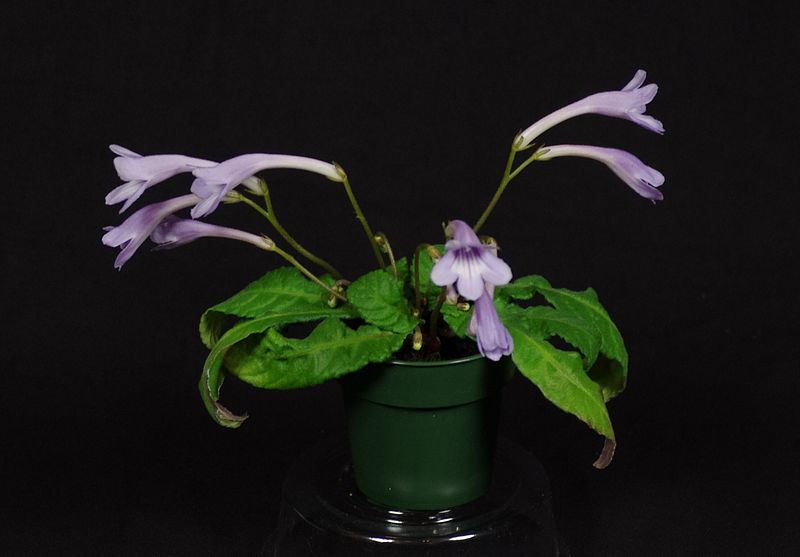
- Another cultivated show plant