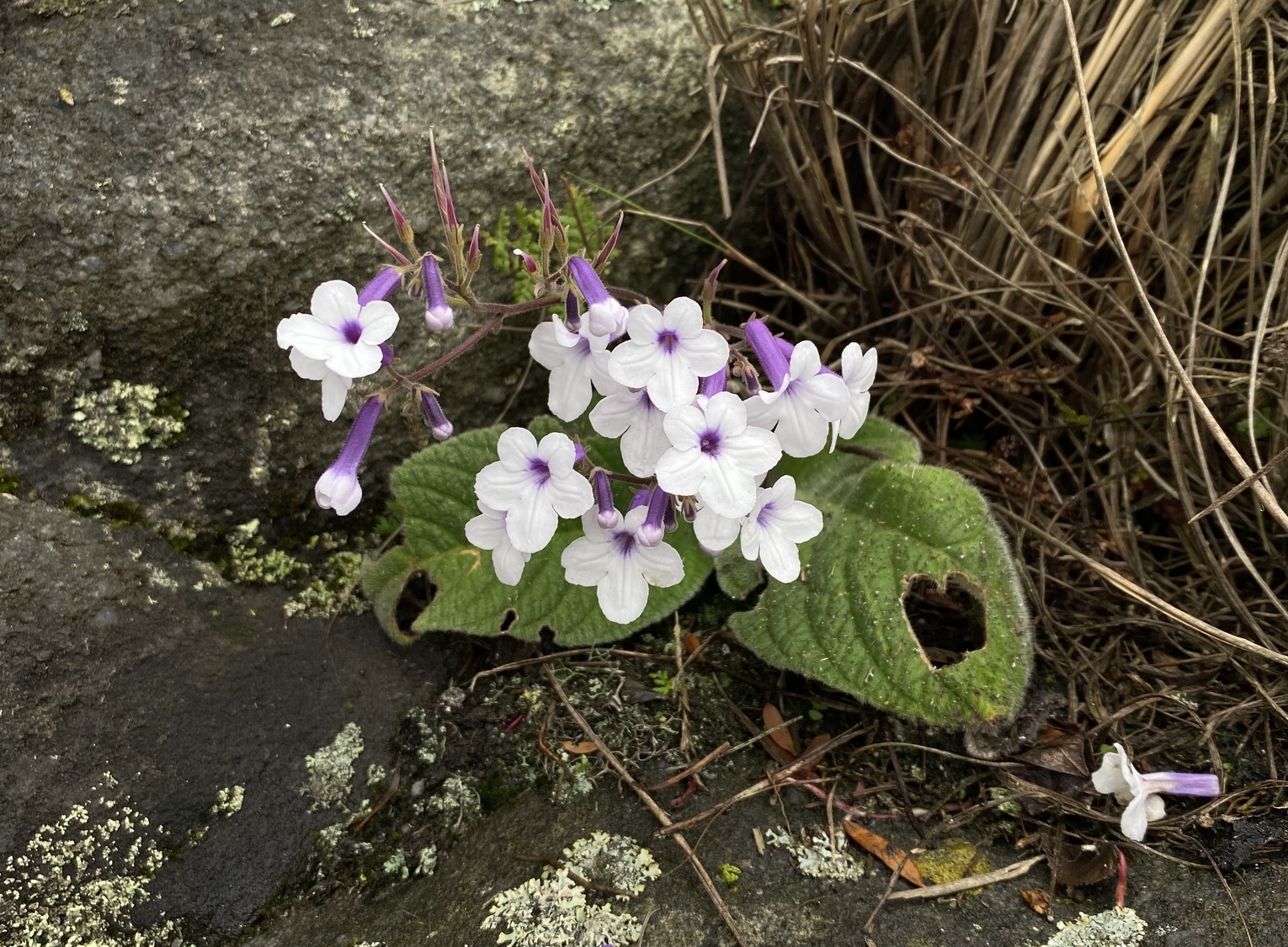
Streptocarpus meyeri was described in 1939 by Bill Burtt from a collection made by Harry Bolus, a professor of botany at the University of Cape Town. It was discovered in the most unlikely of places, on a high mountain in the semi-desert inland area of South Africa, called the Karoo, better known for its dinosaur fossils than tender Streptocarpus. The locality is called “The Valley of Desolation”, a high elevation lookout point in the Camdeboo National Park above the town of Graaff Reinet also known as Robert Sobukwe.
Its range is however much greater, from about 80 km even further west to some 400 km to the east near Ugie, and then further south to within 50 km of the coast to the high cliffs above the Kei River and again to the west to the Baviaanskloof and Suurberg inland of the city of Gqeberha (formerly Port Elizabeth). The species then has a second completely disjunct northerly distribution, some 800 km to the north, in the high mountains of the Mpumalanga Province escarpment on the Hebronberg and Mariepskop.
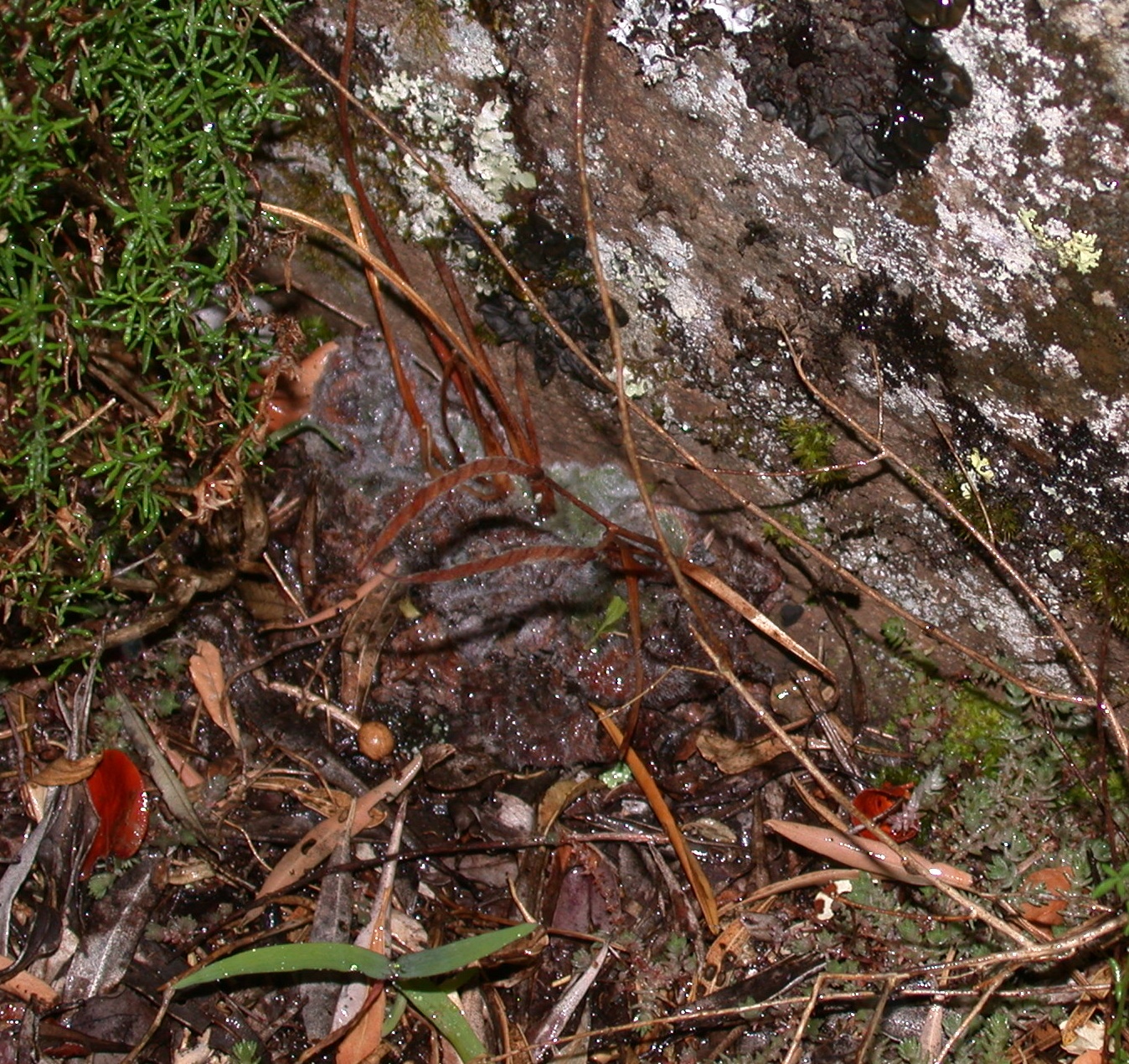
The species grows in the shade of low shrubs and in near vertical cracks in the shade of rocks. An adaptation of the southern populations to drought is that plants can completely abscise all above ground leaves to their underground bases, only to resprout after receiving rainfall again.
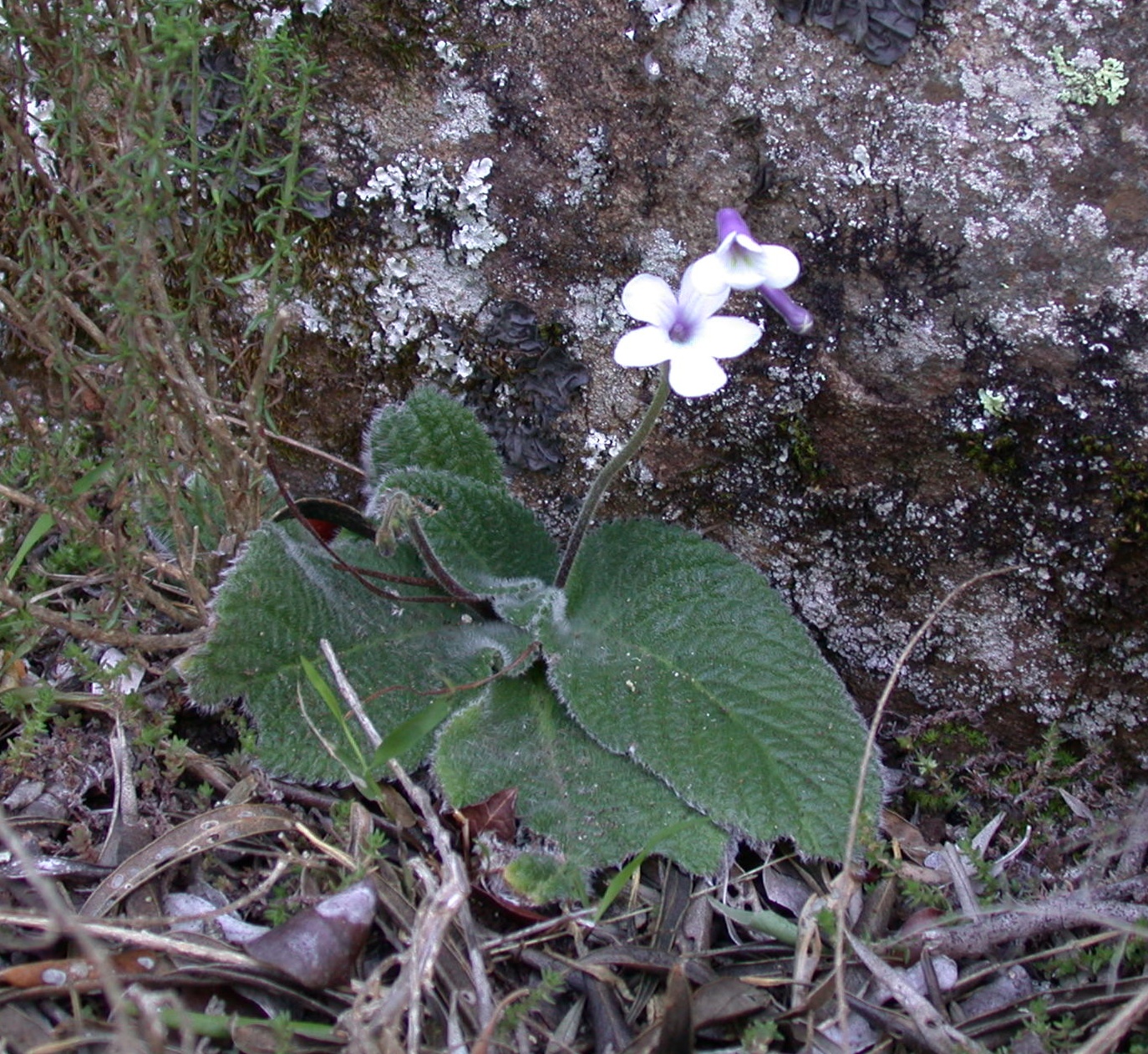
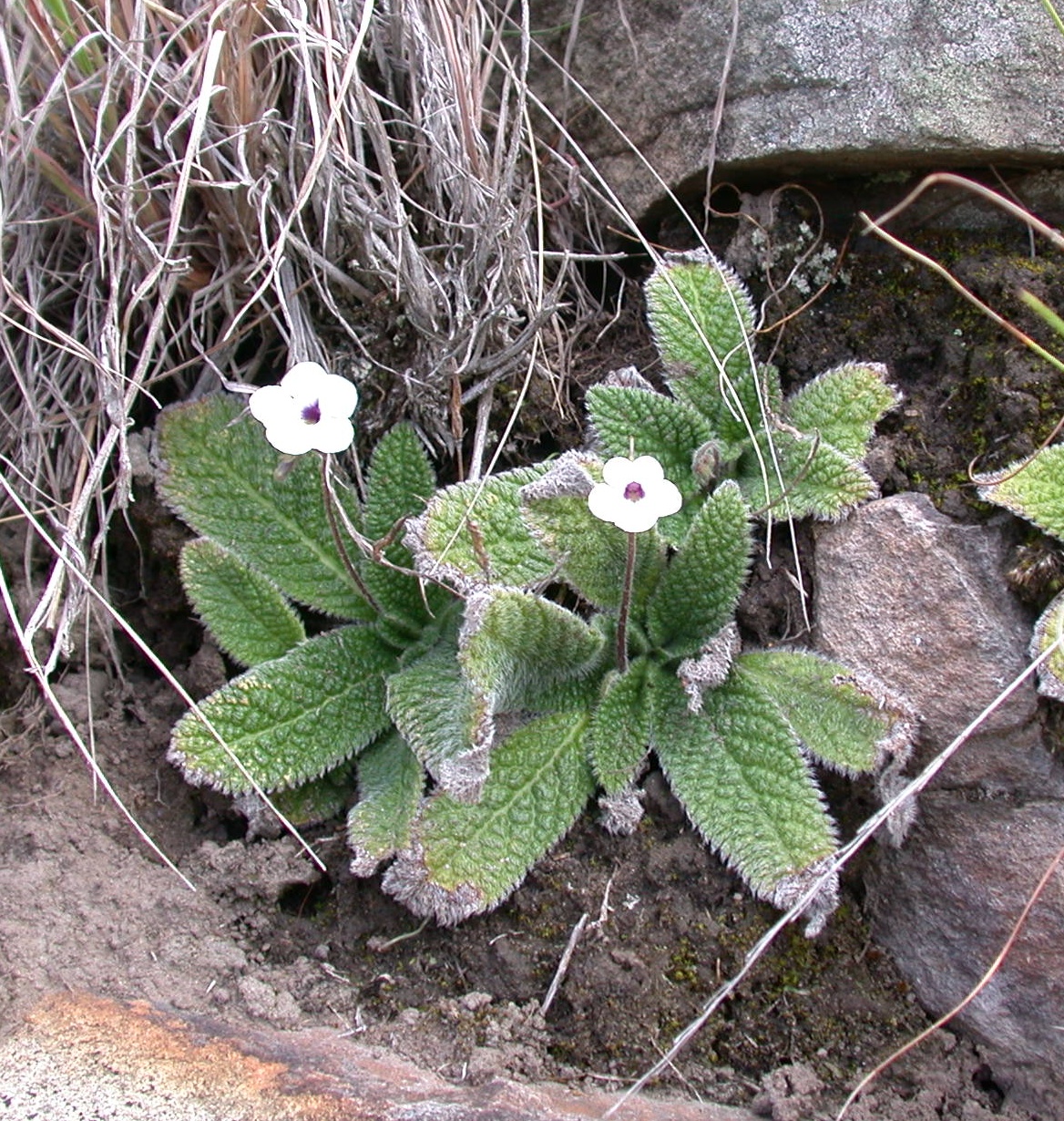
Streptocarpus meyeri is a rosulate species of which the broadly elliptic leaves, often as many as ten per plant, lie flat, some partially overlapping, on the ground in a tight rosette in the southern populations. In the northern populations the leaves are fewer, are more ovate and grow off the medium in a more upright position. The leaves do not grow very large (maximally 200 x 75 m) sometimes with a short stalk (petiolode). Each leaf produces an inflorescence with 2-3 flowers on short, sturdy stalks with between 2 to 12 flowers open at a time in the southern populations.
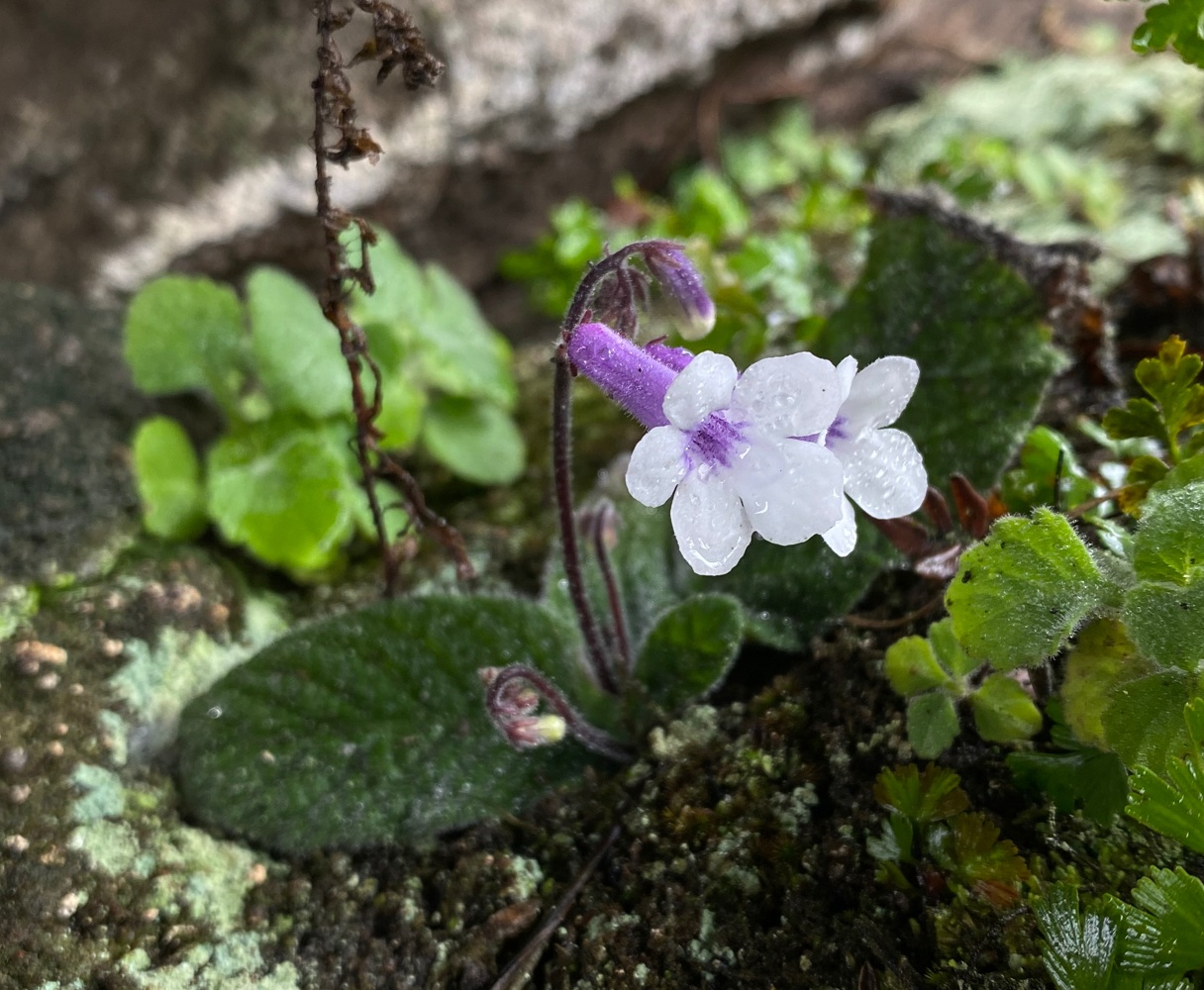
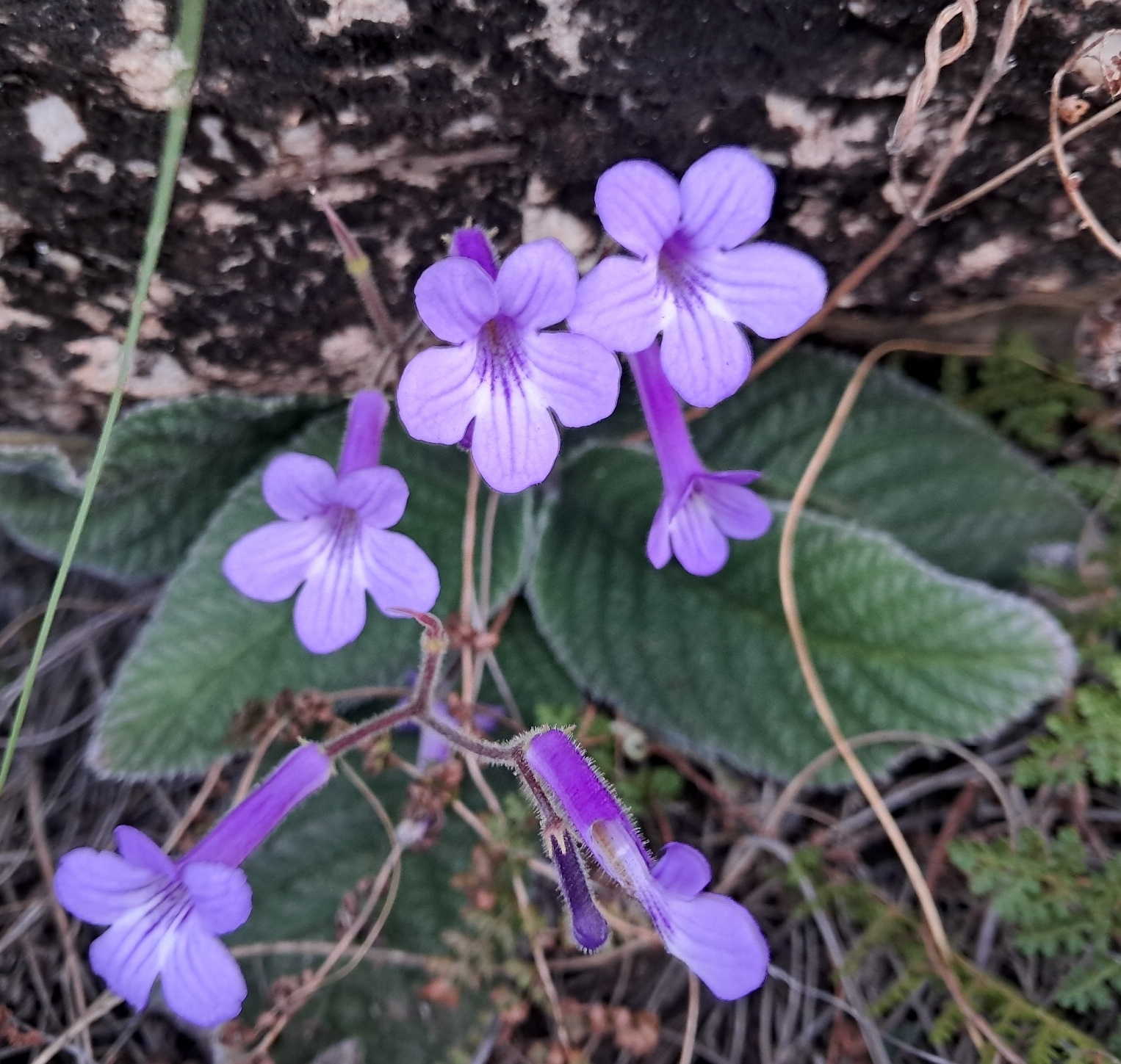
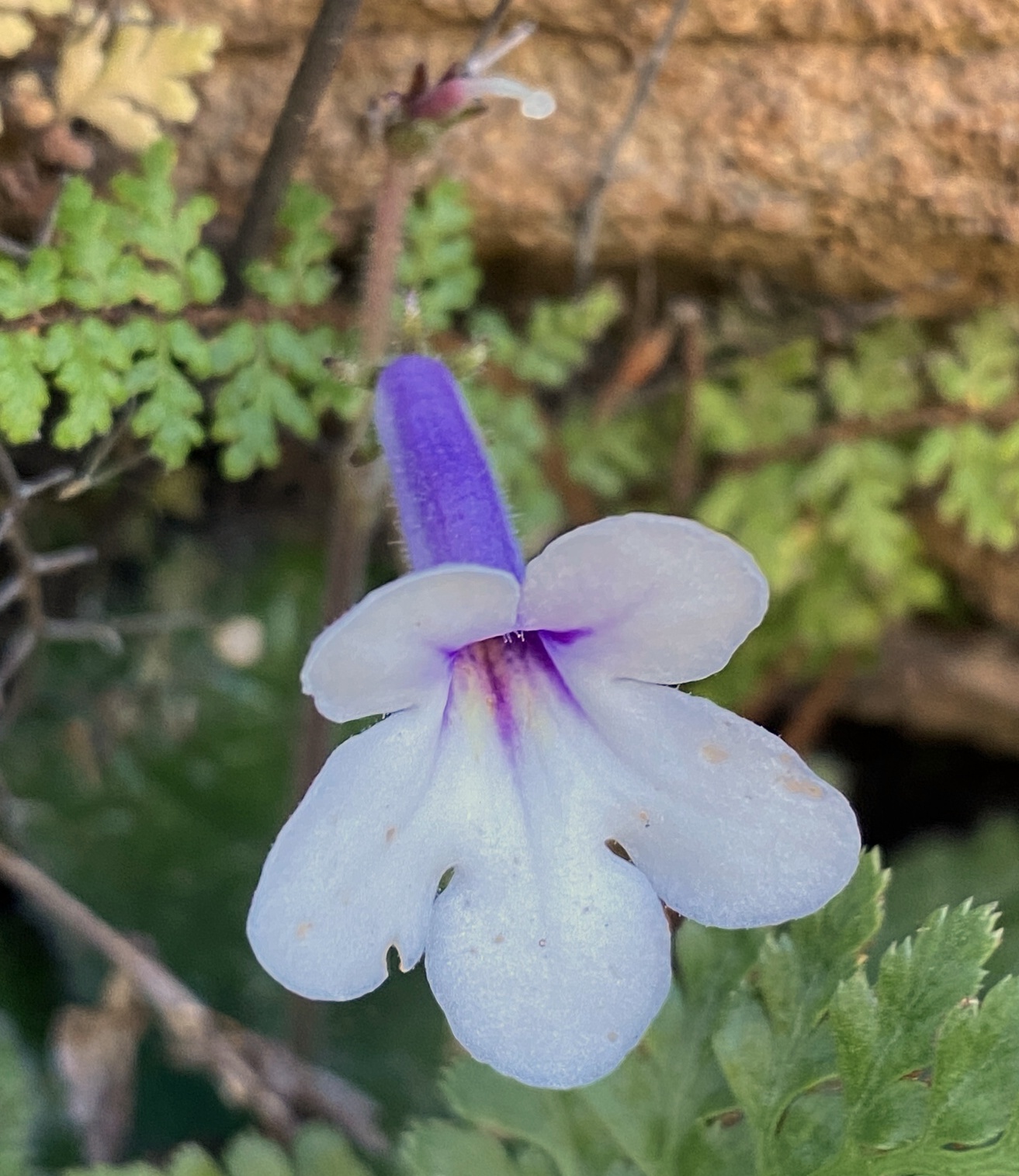
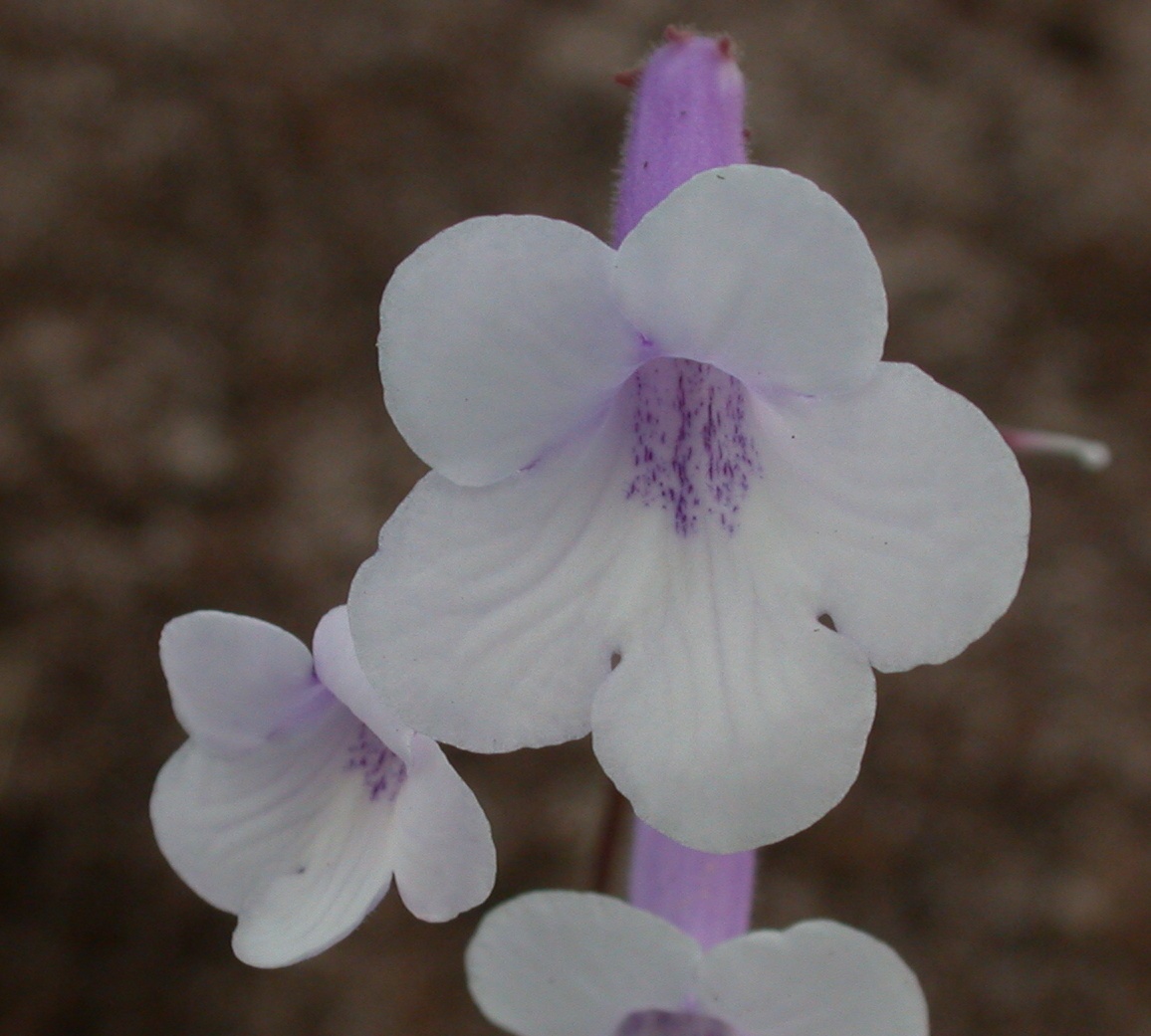
The northern populations are much more floriferous with many flowers opened simultaneously making a very attractive display. The flowers are tube-shaped and relatively short (20-30 mm long), the tube 14-20 mm long and 3–4.5 mm in diameter. In all northern and in most southern populations, the flower colour is pale violet to white on the outside but in some southern populations the outer corolla colour can be a deeper purple blue. The inside of the tube is deeper violet above and whitish below sometimes with violet stipples or streaks and a pale yellow stripe on the floor of the tube widening towards the mouth. The yellow stripe divides at the mouth with darker violet streaks. In some populations the yellow stripe can be completely absent.
Hilliard and Burtt (1971) commented on the morphological differences between the isolated northern population in comparison to the southern population. Margaret de Villiers, Michael Moeller and Dirk Bellstedt have conducted DNA analyses which further support the understanding of these populations as possibly separate species, and this may happen in the future.
The species is not commonly cultivated, but particularly the northern population has potential as an attractive species in its own right or for producing smaller hybrids.
- A view of the feature photo above, showing the habitat context for the plant
- A plant from the southern distribution of the species
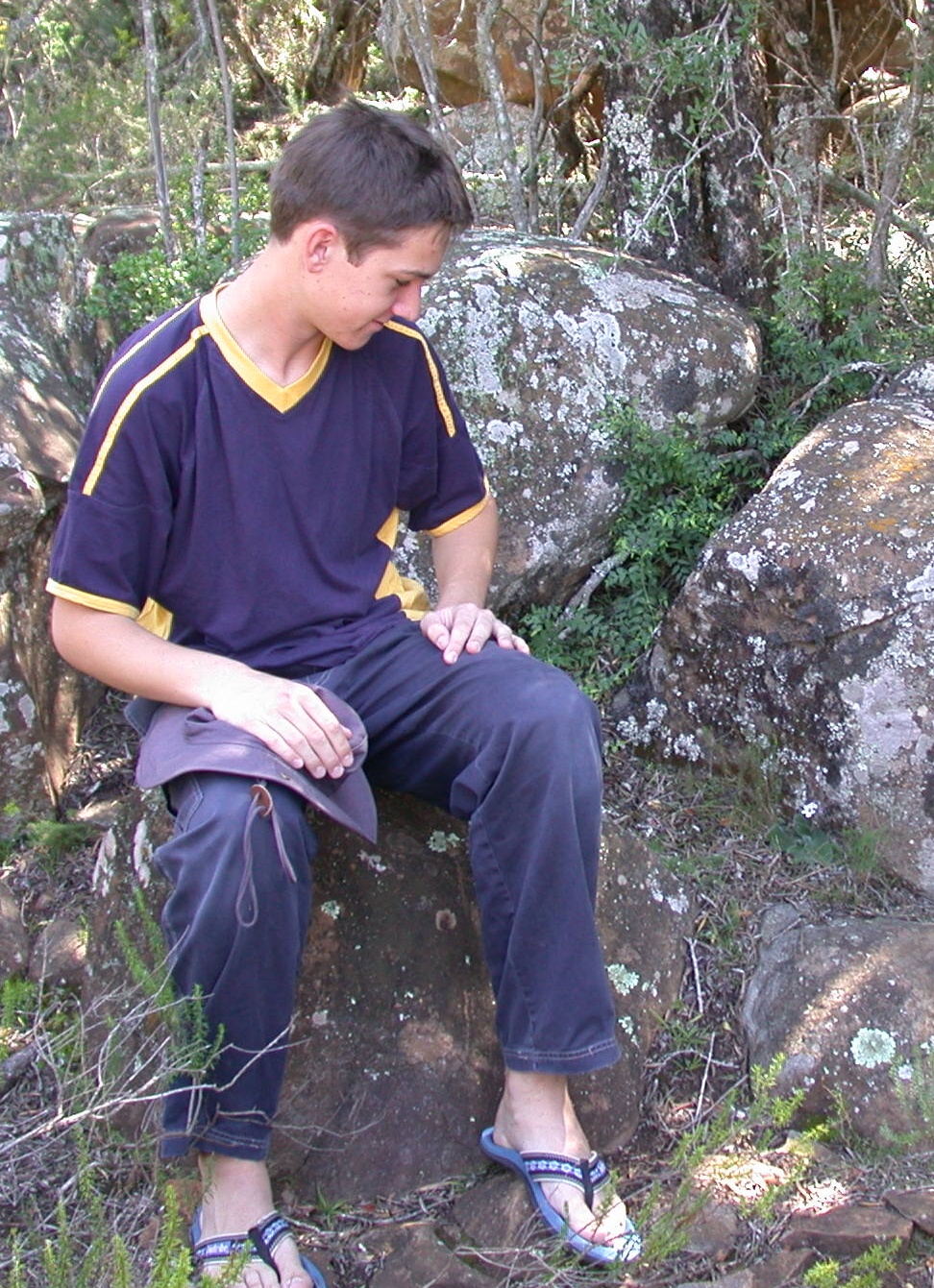
- The same plant with the photographer’s son beside it, for scale
- The same plant again, except almost completely desiccated in response to extreme seasonal drought; it regrew when rains came
- Another northern population plant
- Another southern population clump of plants
- A plant with atypically all-blue/purple flowers, in the southern population
- A close view of a flower with some yellow in the throat
- A close view of a flower with spotting in the throat rather than a pure dark purple