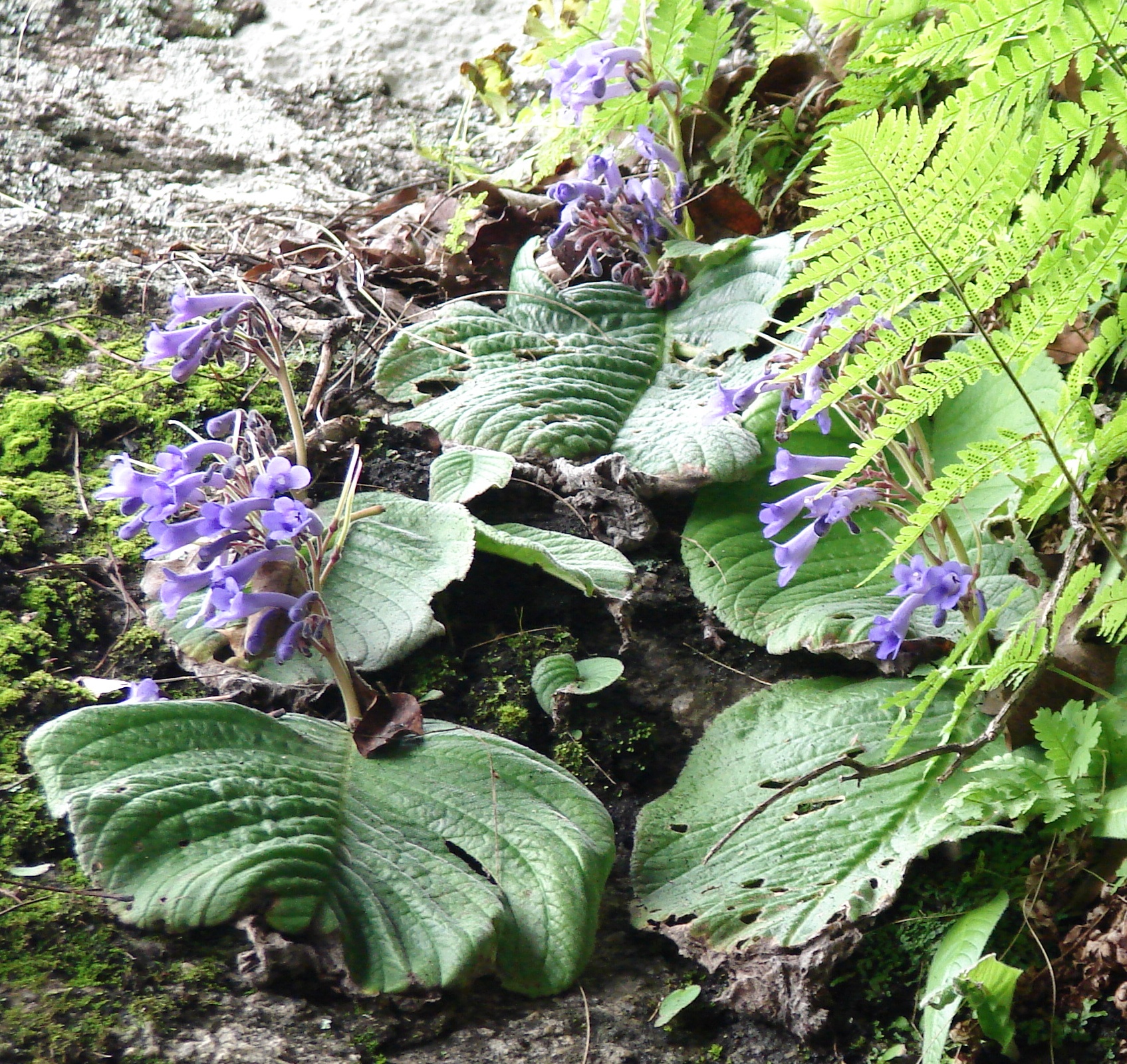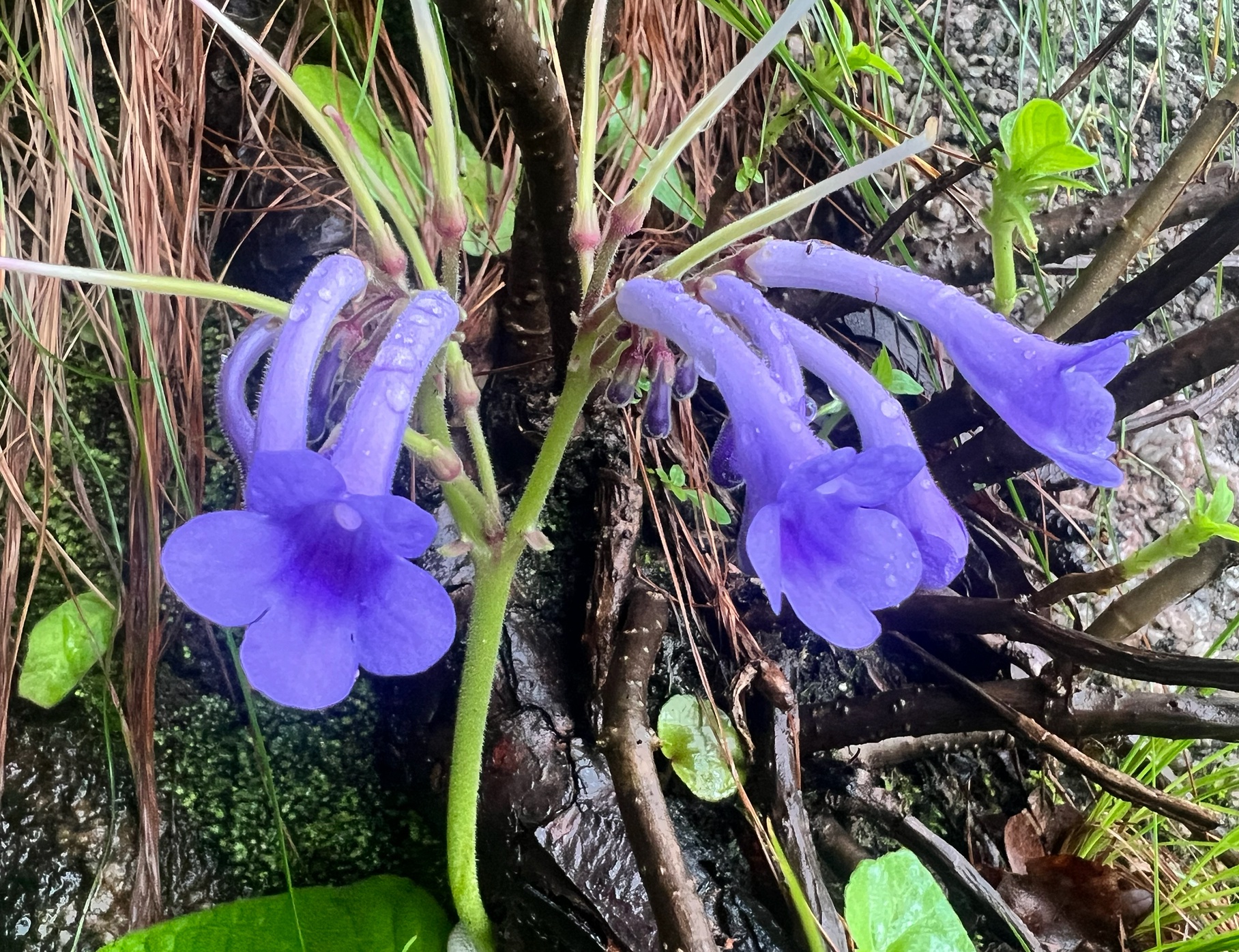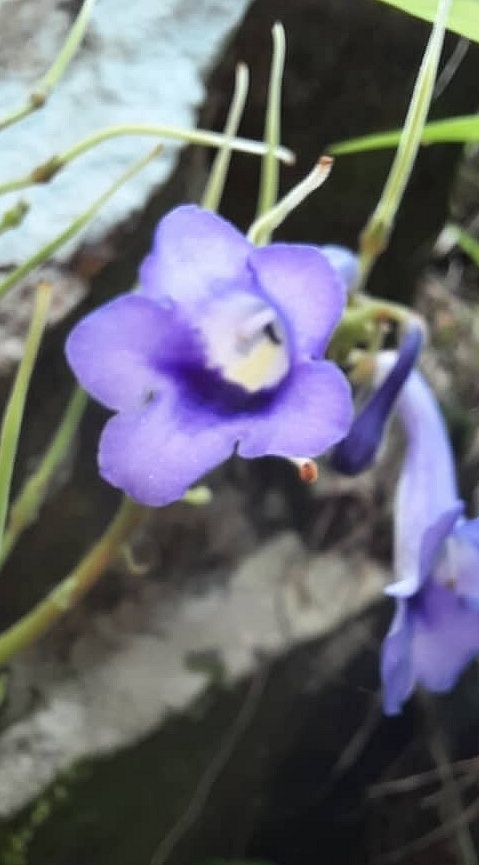
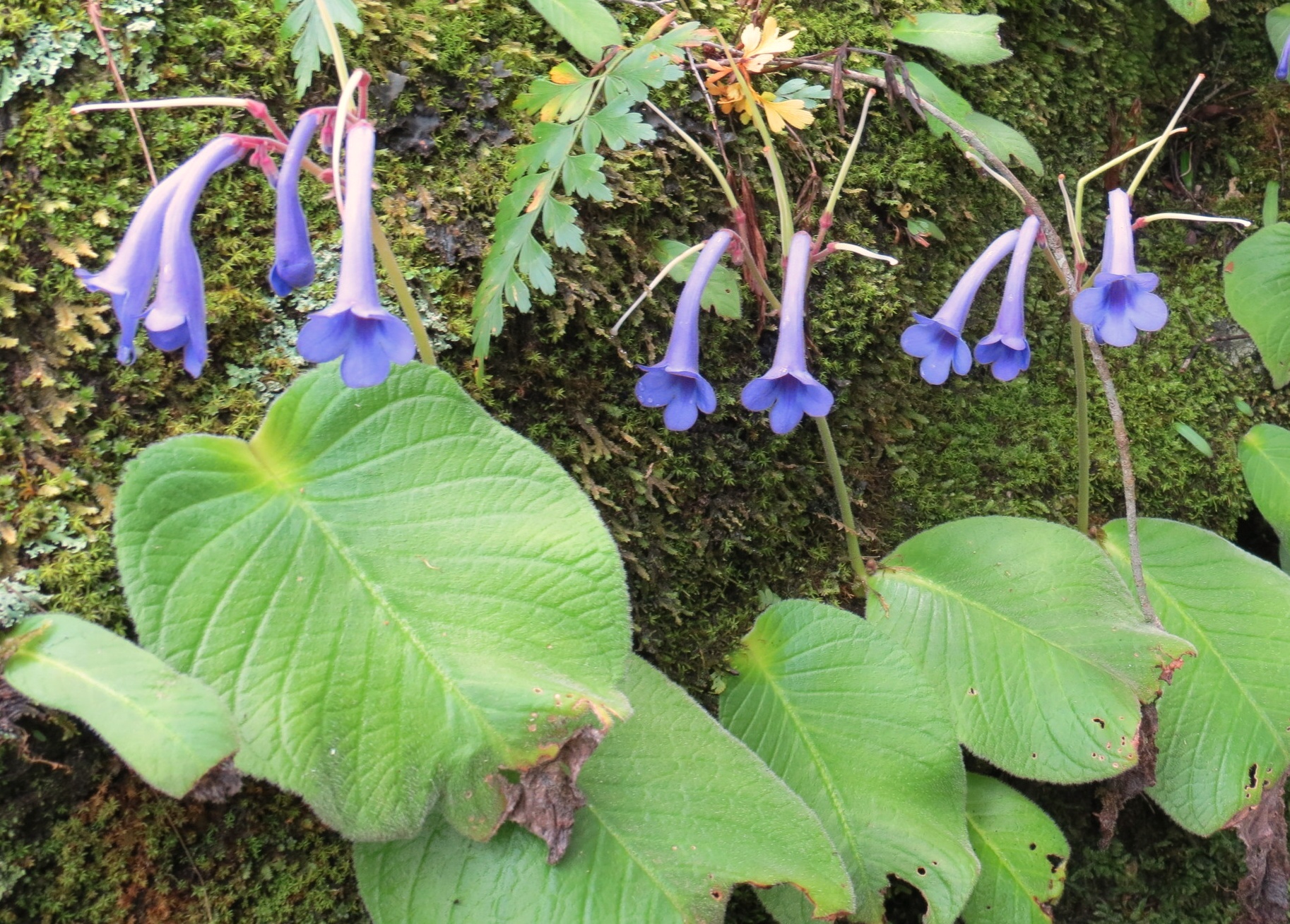
The Chimanimani and Inyanga highlands on the eastern border of Zimbabwe and the western border of Mozambique, known as the Manica highlands, have a moist high altitude habitat which favours the growth of a number of Streptocarpus species including Streptocarpus michaelmorei. It is a typical monocarpic unifoliate species that produces a large leaf (up to 350 x 300 mm) with an impressive series of inflorescences with many flowers. The corolla (30-50 mm long) is medium violet on the outside with a deep violet patch on the lower tube in most populations.
This species is one of the group of large unifoliate species that occurs from the east to the west of the African continent at this latitude. Three additional localities are known where variants of this species occur which may eventually be recognized as separate species. In their classic book on the genus, Hilliard and Burrt describe two variants as 7A Streptocarpus sp. michelmorei affinis from the Northern Vipya Mountains in Malawi and 7B Streptocarpus sp. michelmorei affinis from far to the west in Kabompo Gorge in Western Zambia (no pictures are of these are available unfortunately). In recent years a fourth variant has been found in Eastern Zambia on the high Muchinga plateau.
Due to its high altitude in nature, S. michelmorei typically abscises part of the leaf during the dry winter and regrows the leaf in spring after rainfall. In cultivation this dieback may not occur resulting in a massive leaf with many small flowers and seed pods.
- Plants growing near Muchinga, in Eastern Zambia
- A close view of flowers, also from near Muchinga in Zambia
- A single plant growing near Chimanimani, Zimbabwe
- A close view of a flower, from the population growing newar Chimanimani, Zimbabwe
- A cultivated plant, with a very large leaf and many flowers and pods
- Another floriferous cultivated plant
- A botanical print illustrating the potentially floriferous nature of the species in cultivation