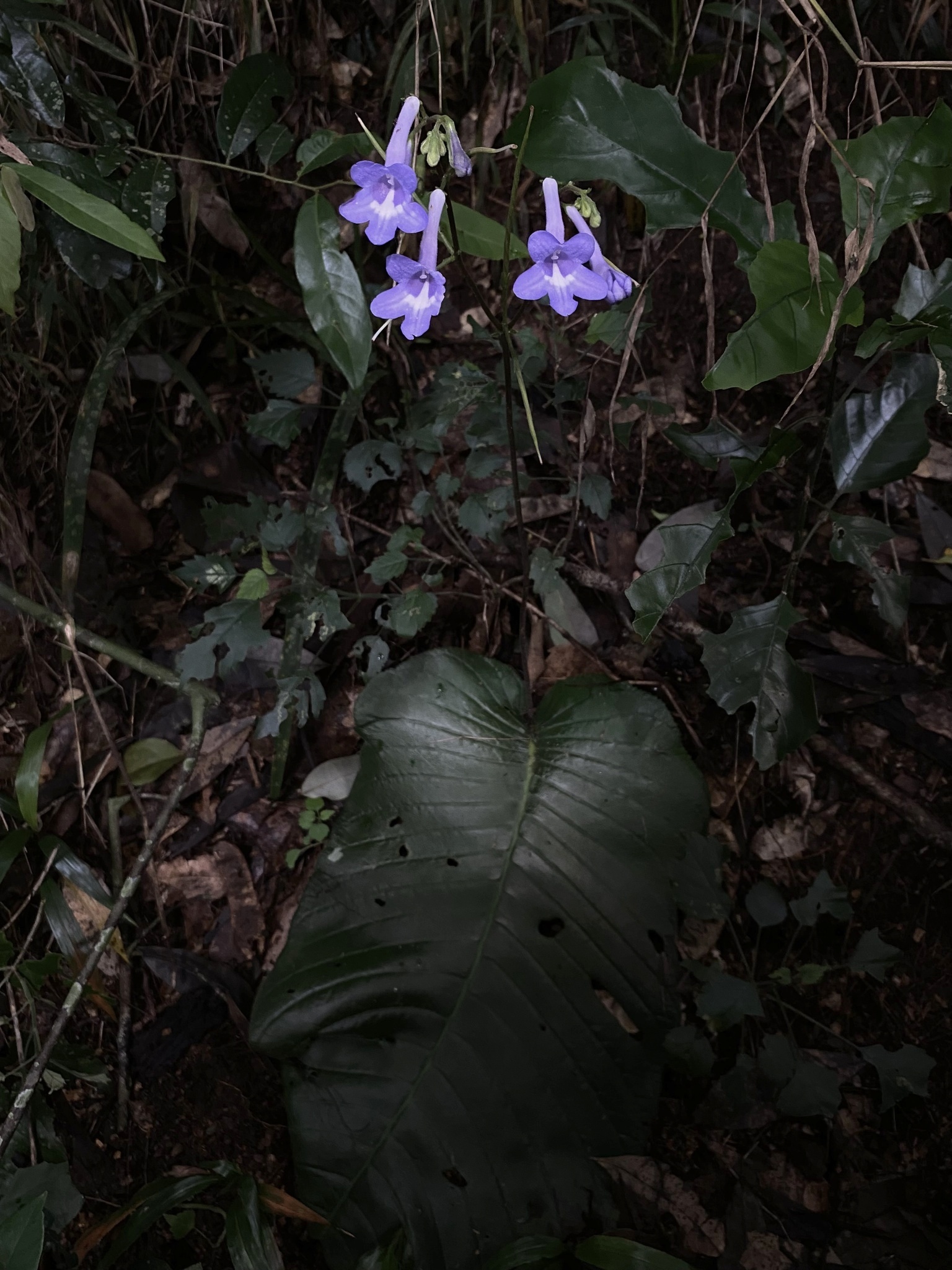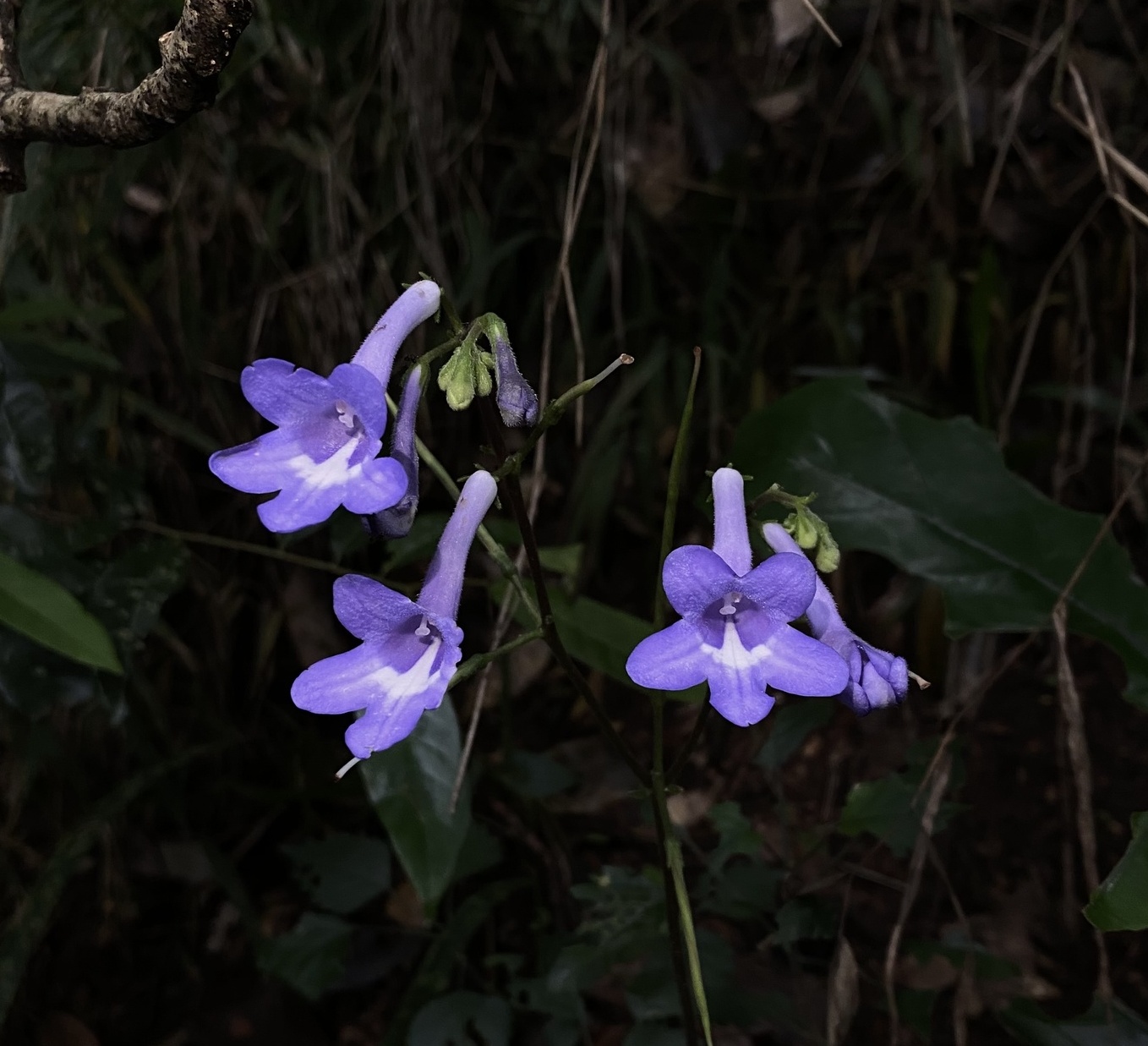
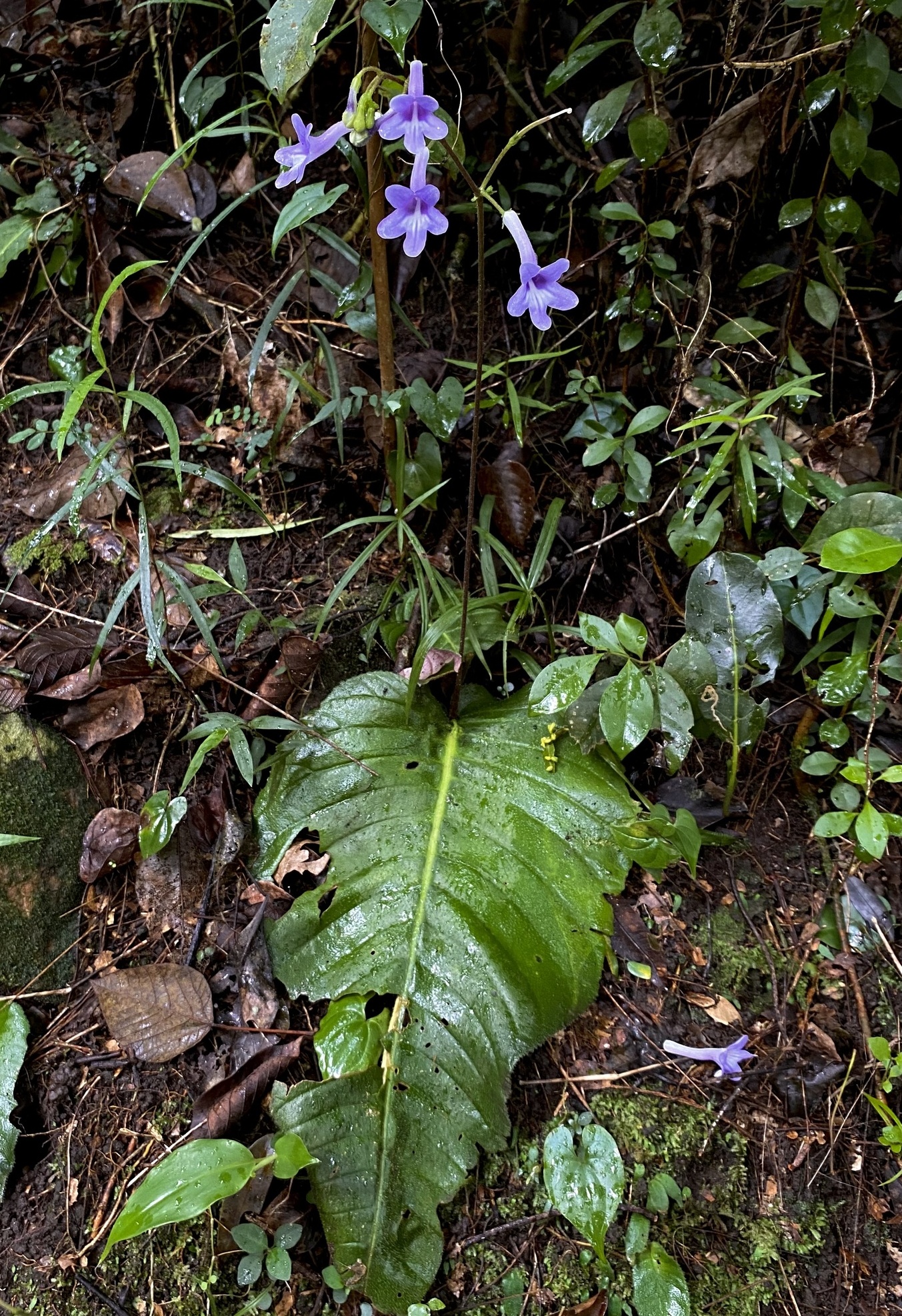
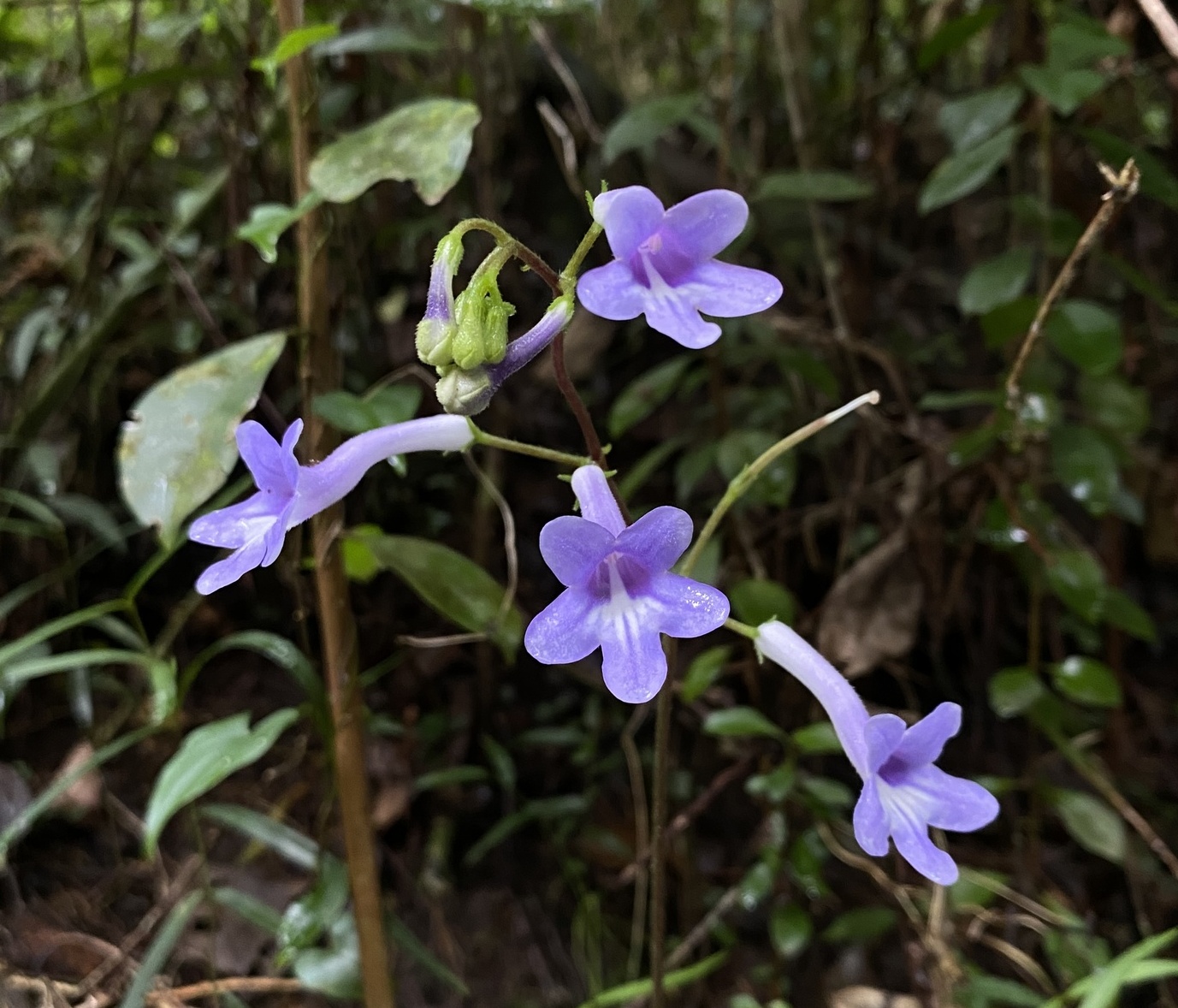
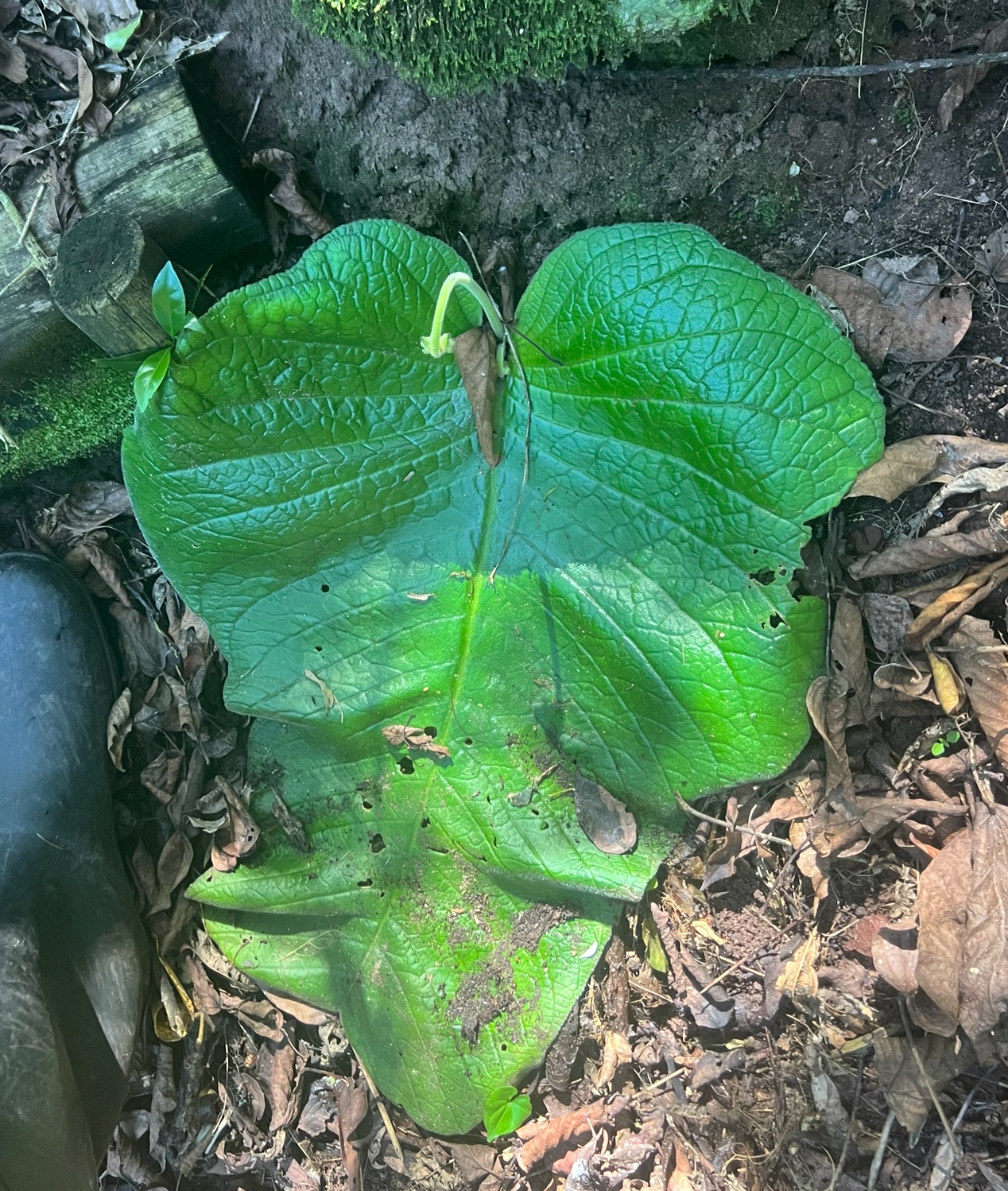
Streptocarpus molweniensis is a monocarpic, unifoliate species with a huge leaf (up to 640 x 400 mm). Flowers are produced on a long stalk and are tube shaped and generally light to medium violet with darker markings in the throat. The species can produce a significant leaf stalk. Its species name ‘molweniensis’ is derived from the Molweni River in Durban, where the ssp. molweniensis occurs.
Two subspecies are recognized that differ in terms of leaf color, flower size and the size of the leaf stalk.
Streptocarpus molweniensis ssp. molweniensis produces flowers that are typically 30-40 mm long, and its single leaf is primarily green with a short stalk, sometimes suffused red below. This sub-species occurs in the middle of the Durban suburbia which spread from the low level coastal plain to a plateau some 600 m above sea level. It is conserved in the Molweni and Umhlatatuzana river valleys in the Kloof Nature Reserve in Durban, South Africa, where suburban development is not allowed.
- A close view of the flowers on the feature plant above
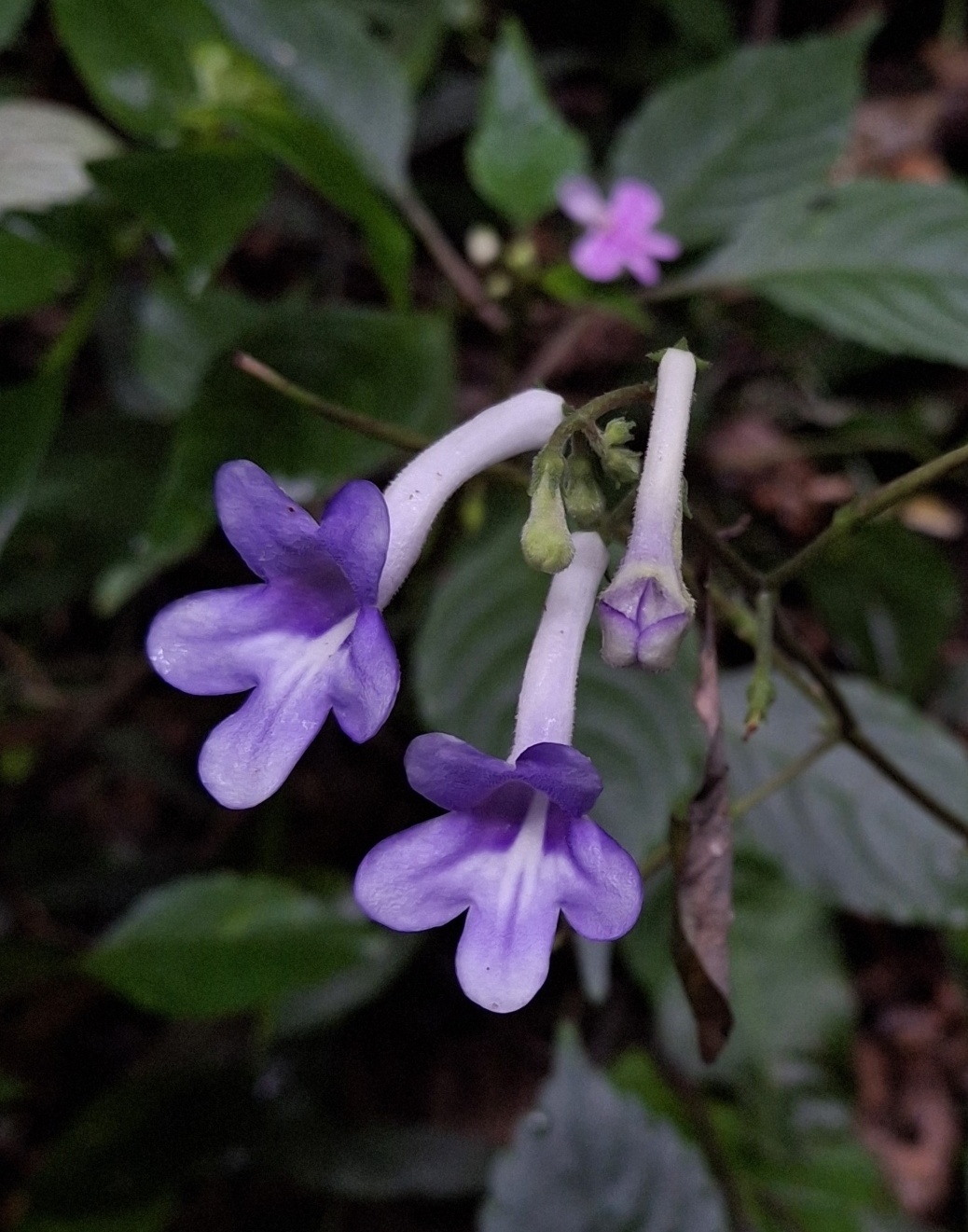
- A close view of the flowers on another plant
- The large leaf of the species, with a boot nearby for scale
- A cultivated plant, illustrating the particularly long flower stalk
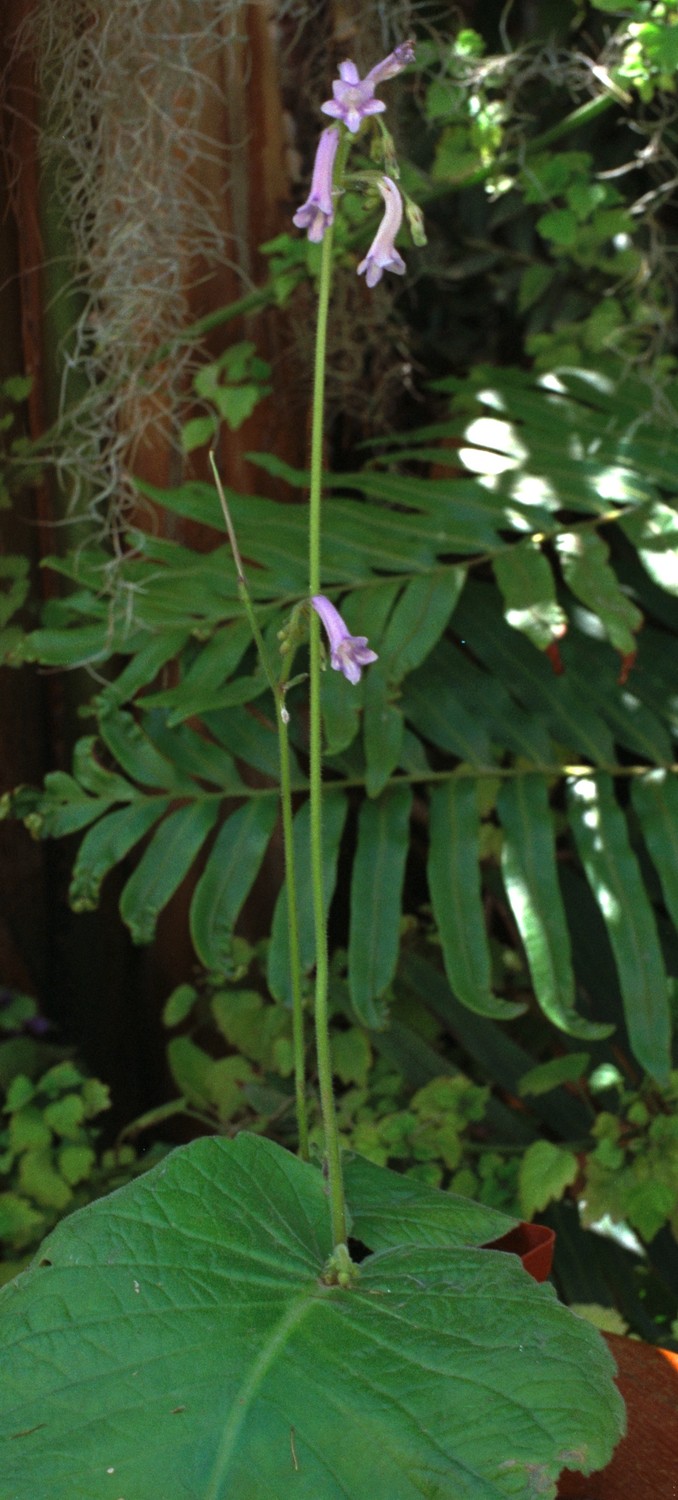
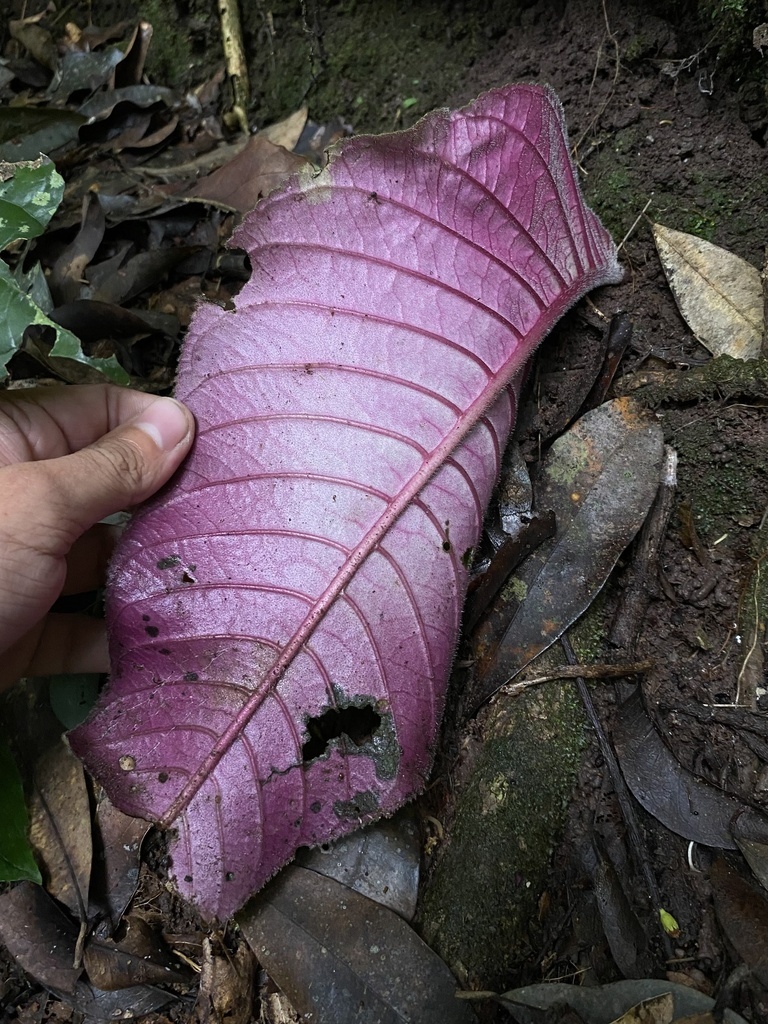
Streptocarpus molweniensis ssp. eshowicus has similar flowers, but these are significantly larger than those of ssp. molweniensies, at 45-55 mm long. The reverse of the leaf is reddish purple, and the leaf often has a well-developed stalk up to 40 mm long. It is named ‘eshowicus’ after the town of Eshowe some 100 km north of Durban, South Africa, which lies about 25 km from the Indian Ocean. Much of the town of Eshowe is situated in a forest patch which has a high elevation forest walkway from which this species can be observed.
- A plant with dark leaf and flowers
- A close view of the flowers on the feature plant above
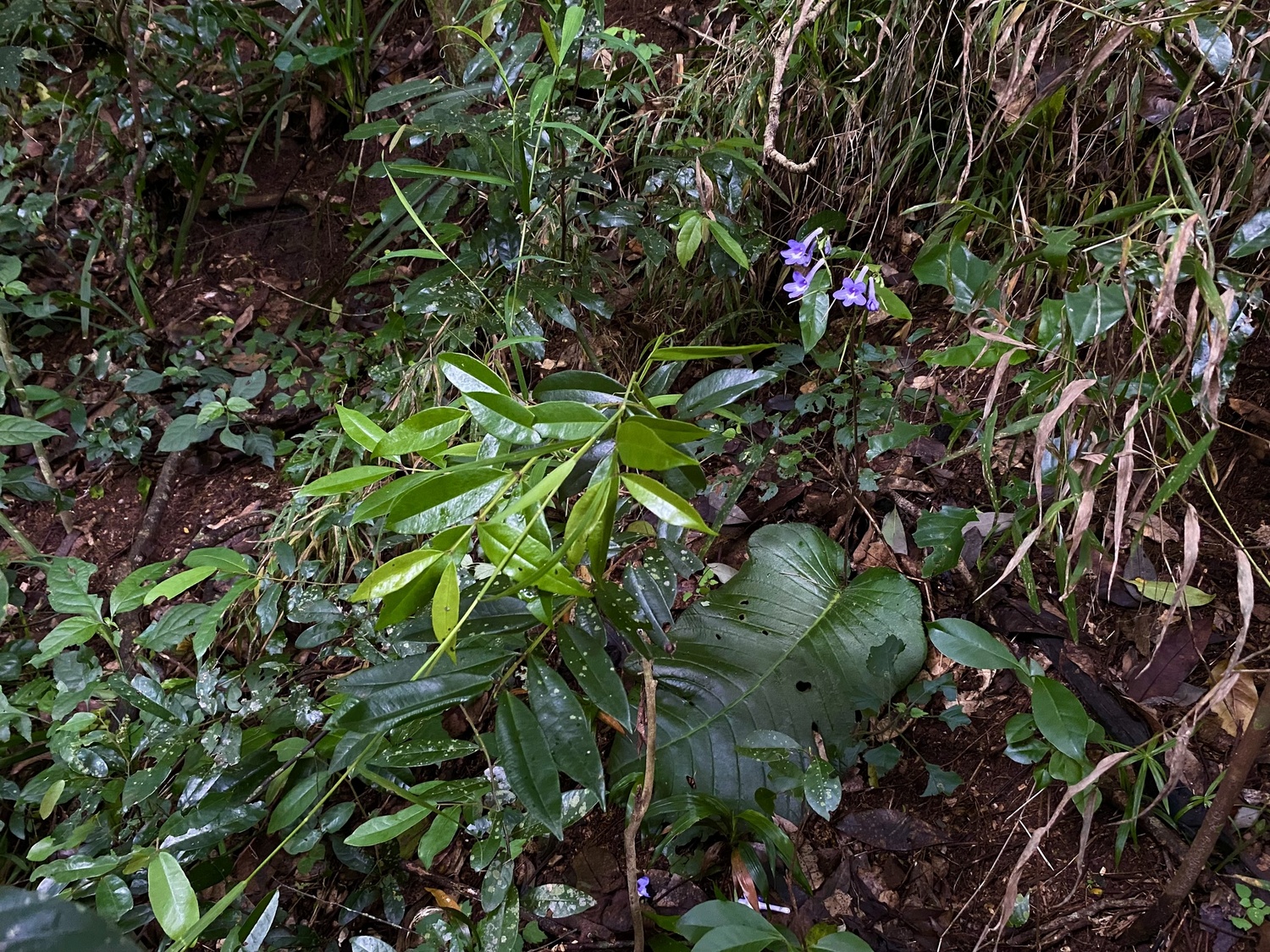
- The plant above, but showing the habitat and plant community within which it is growing
- The characteristic red/purple leaf reverse for this subspecies