In 1843, the Natal Colony on the south African east coast was established by Britain, with the coastal subtropical city of Durban as its capital. This soon led to the botanical exploration of its hinterland and the plants introduced from there made such a major impact on international horticulture that it became known as the ‘garden colony’.
Streptocarpus polyanthus was discovered in the forests and on cliffs when a road was built to the inland up the steep escarpment from the coastal plain past present day settlements such as Inchanga. When the species arrived in Kew as one of the first cultivated Streptocarpus in the early 1850’s, its many large beautiful pale blue keyhole shaped flowers caused a lot of excitement. It was subsequently published in Curtis’s Botanical Magazine, with a beautiful colored plate and a description of the original plant as a seedling emerging from the roots of ferns sent from South Africa.
Streptocarpus polyanthus was extensively studied by Hilliard and Burtt (1971) because of the variation in the species and its range. They recognized four subspecies; in evolutionary biology terms one might refer to this as “work in progress” possibly leading to the evolution of four separate species.
There is an overlap of range between the first two and the last two subspecies. Streptocarpus polyanthus subsp. polyanthus and Streptocarpus subsp. verecundus occur in central and southern KwaZulu Natal Province. Streptocarpus polyanthus subsp. dracomontanus and Streptocarpus polyanthus subsp. comptonii occur in the high altitude northern KwaZulu Natal Province and north into Eswatini (former Swaziland) and Mpumalanga Province of South Africa.
Thanks to extensive interest in the species on iNaturalist.org the ranges of the subspecies are now better delineated and some of the excellent images shown here were obtained with permission from that resource.
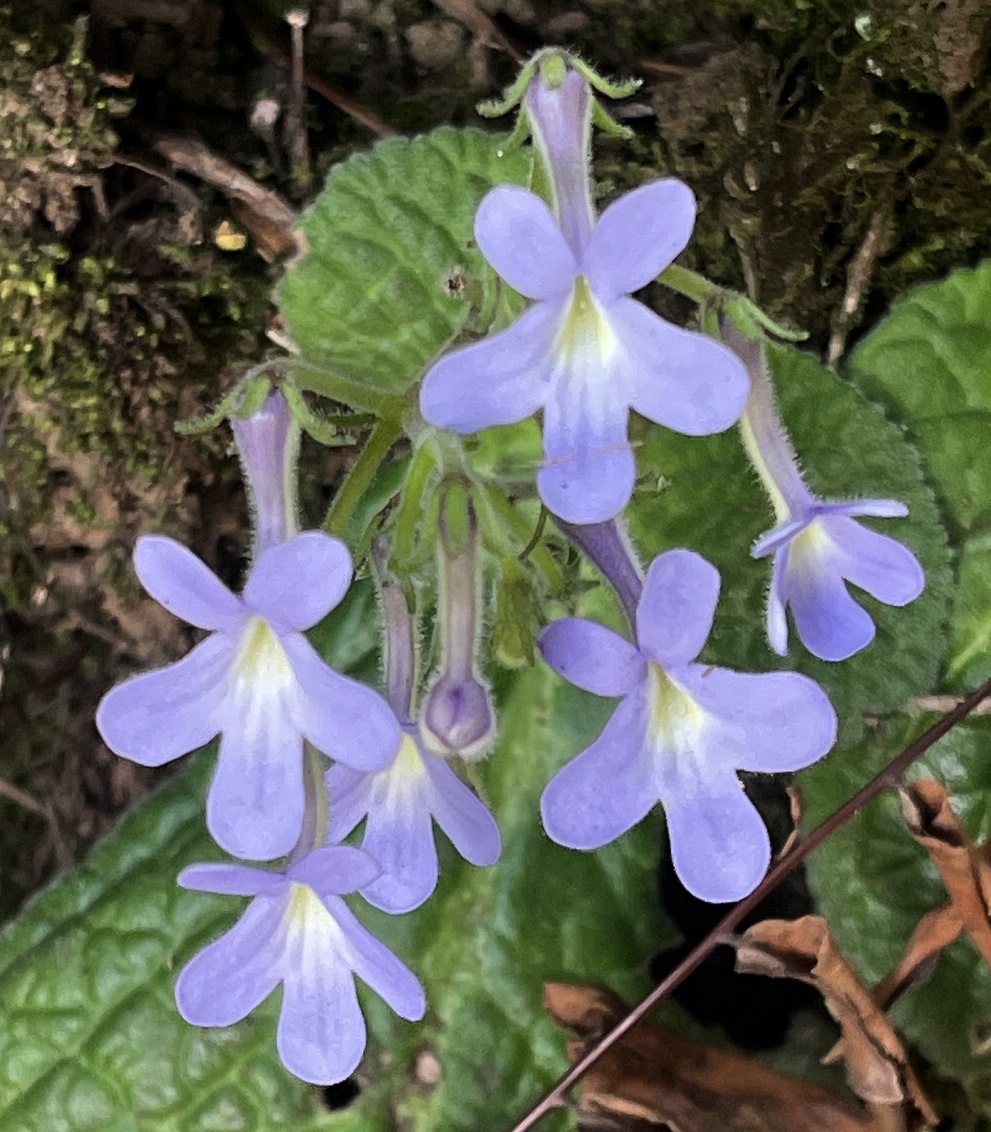
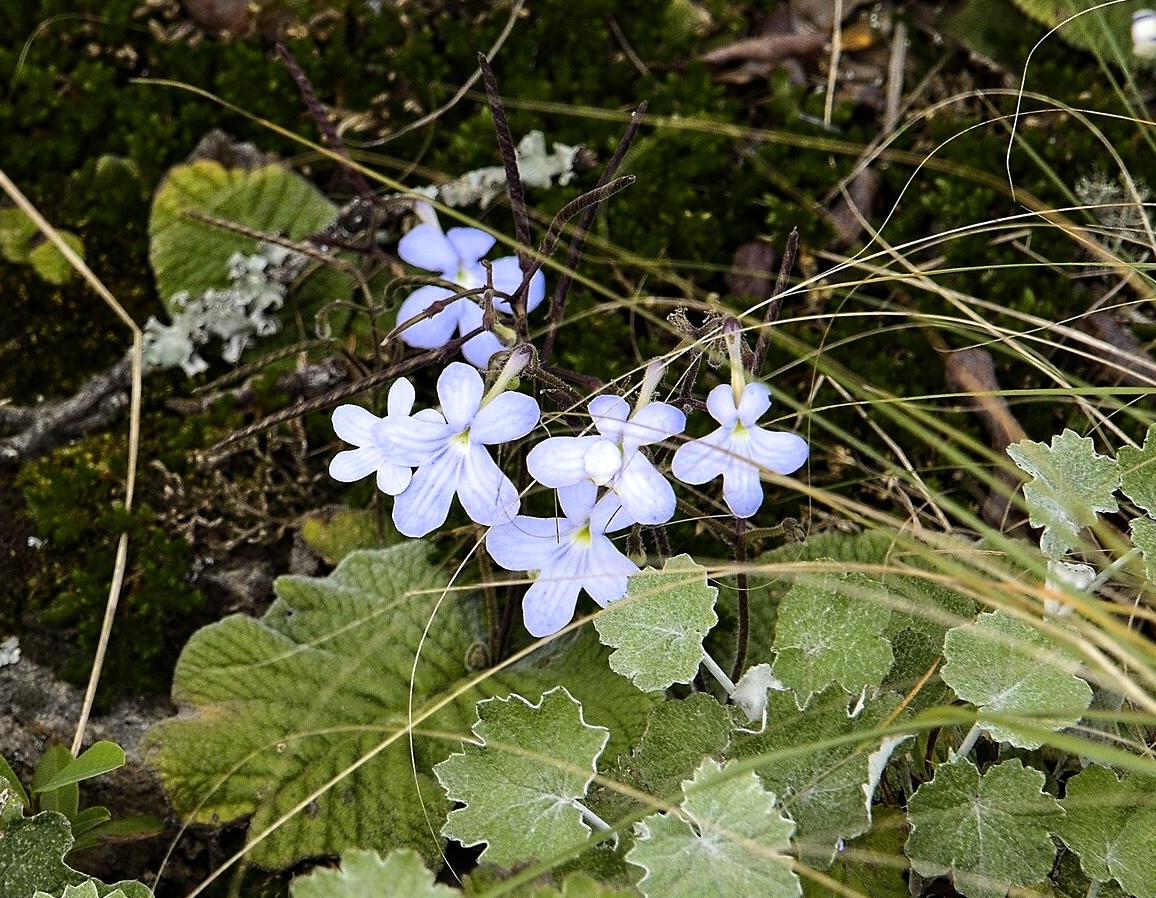
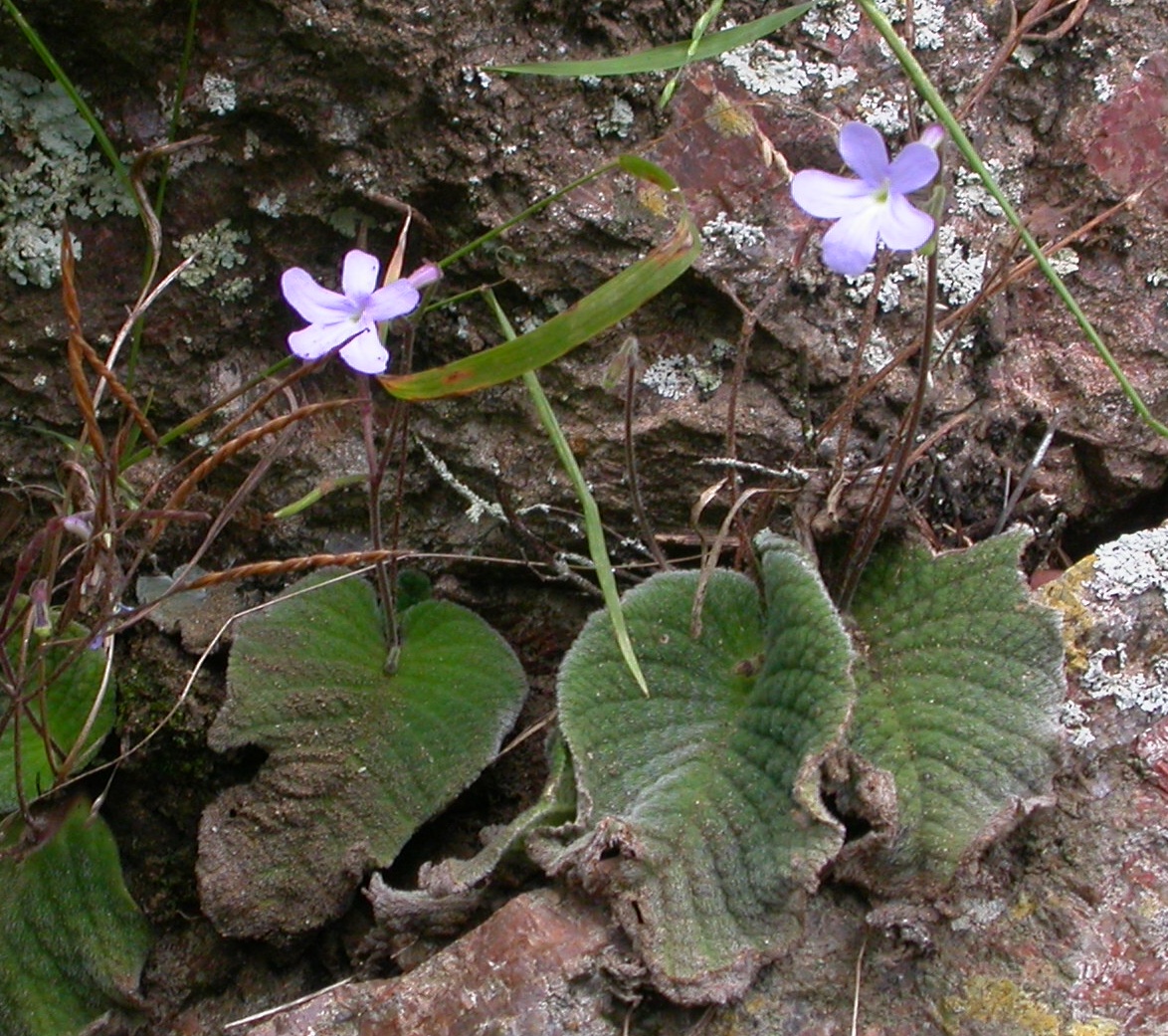
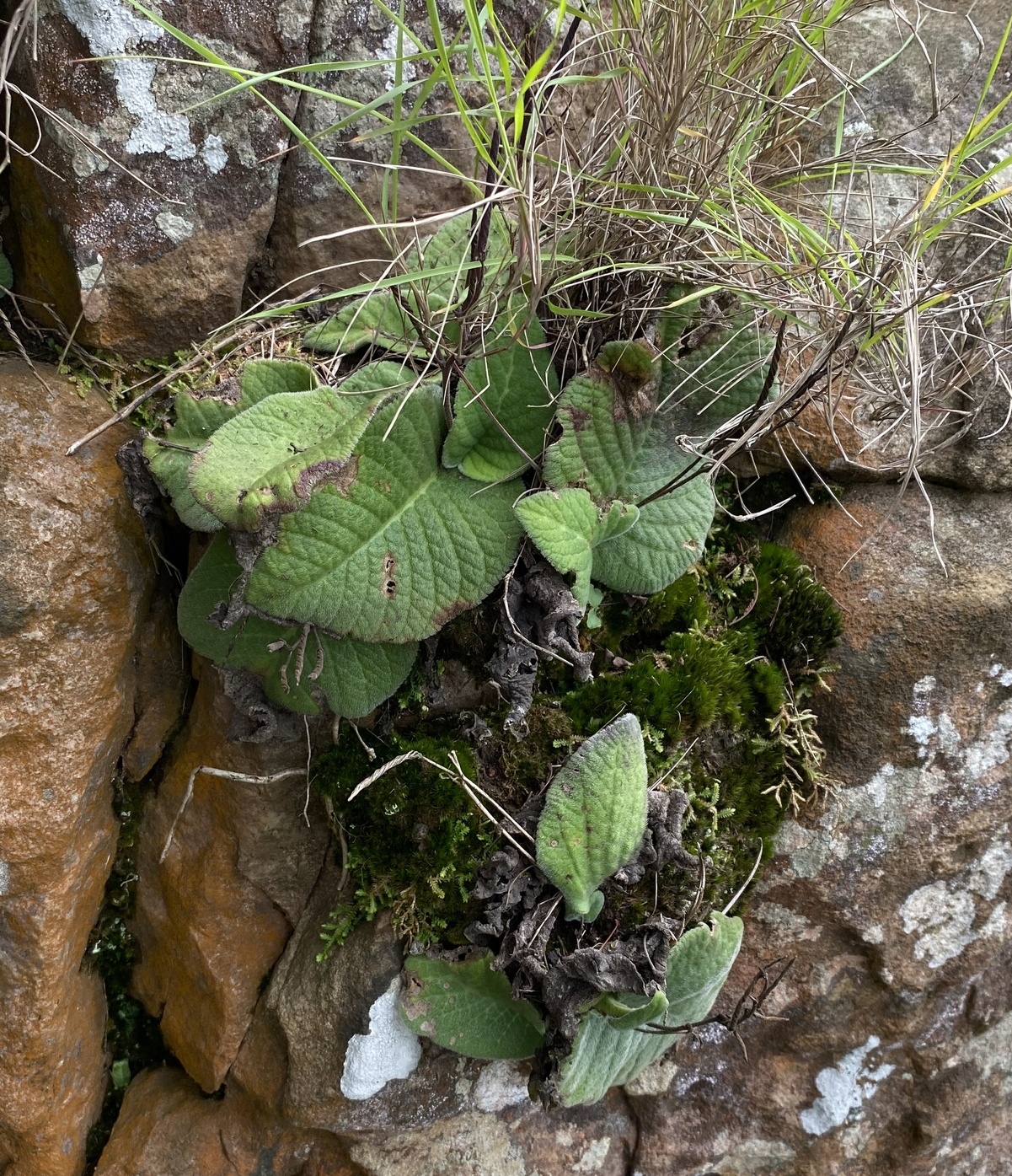
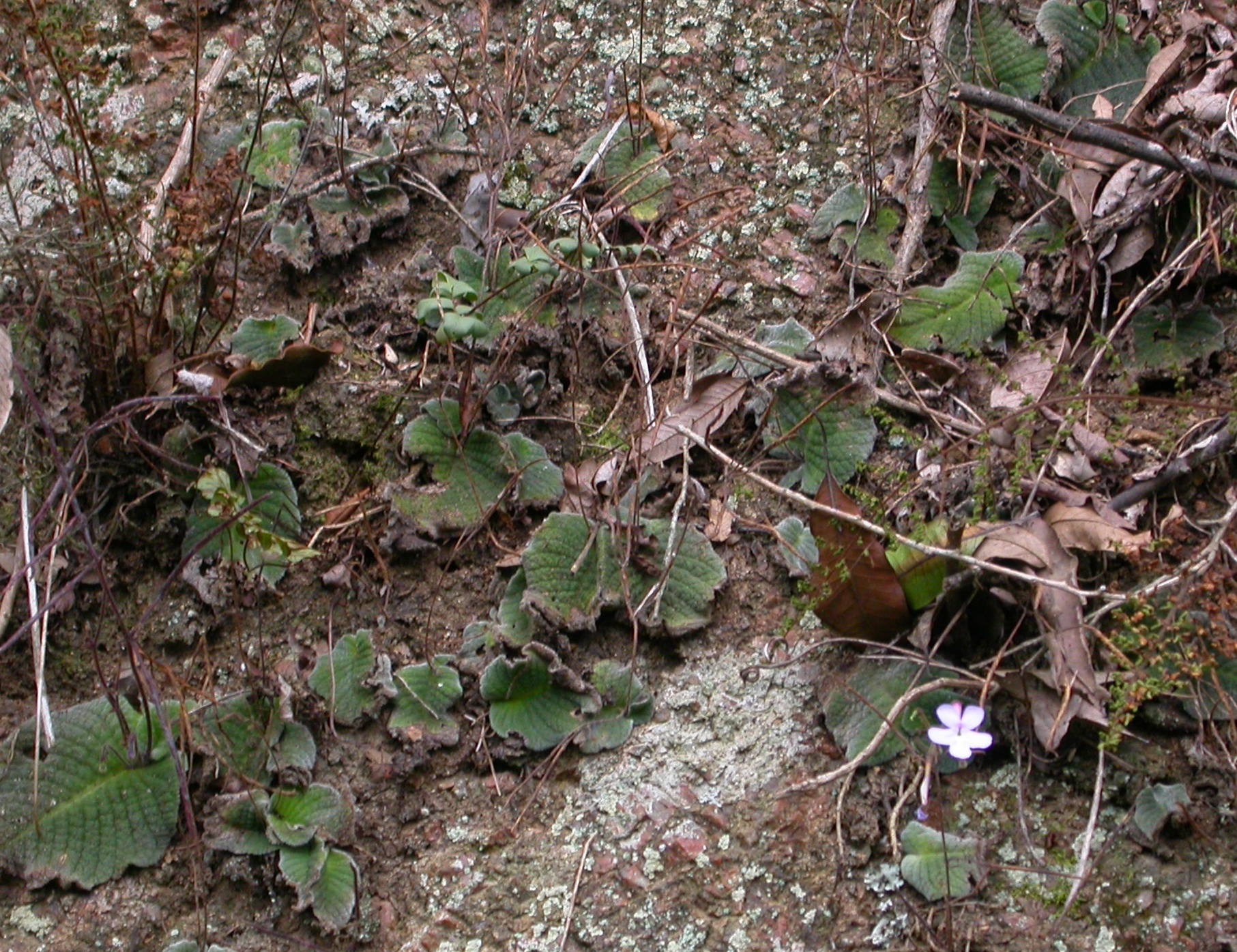
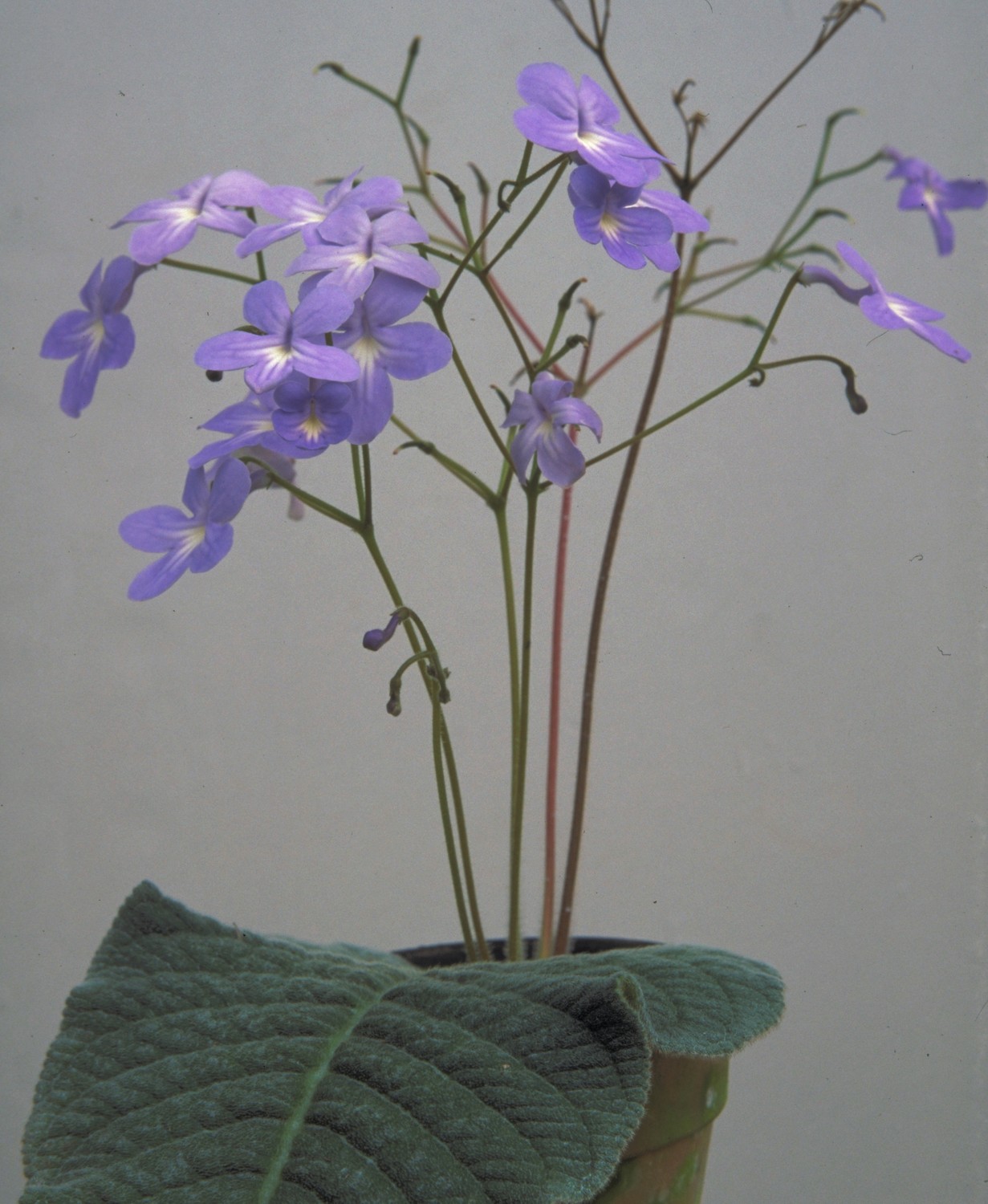
Streptocarpus polyanthus subsp. polyanthus was the subspecies first discovered inland of Durban. It is perennial with two to three thick, hairy, leathery leaves (240 x 170 mm). It is particularly floriferous (from which it got its name) with up to 36 pale blue, keyhole shaped flowers (corolla 15-45 mm), greenish or yellow in the throat, corolla limb or flower face 25 mm or more broad, overall a very attractive horticultural subject. Its range extends from the Mgeni River just north of Durban to the Mzimkulu River in the south in KwaZulu Natal Province, South Africa, at altitudes below 760 m always growing on steep rock embankments sometimes in even quite exposed and dry positions.
- A plant and flower cluster
- A group of flowering plants growing in a rock cleft
- Another cluster of plants growing in a small rock cleft
- A colony of plants growing in scant soil on a rock bank
- A beautiful cultivated plant
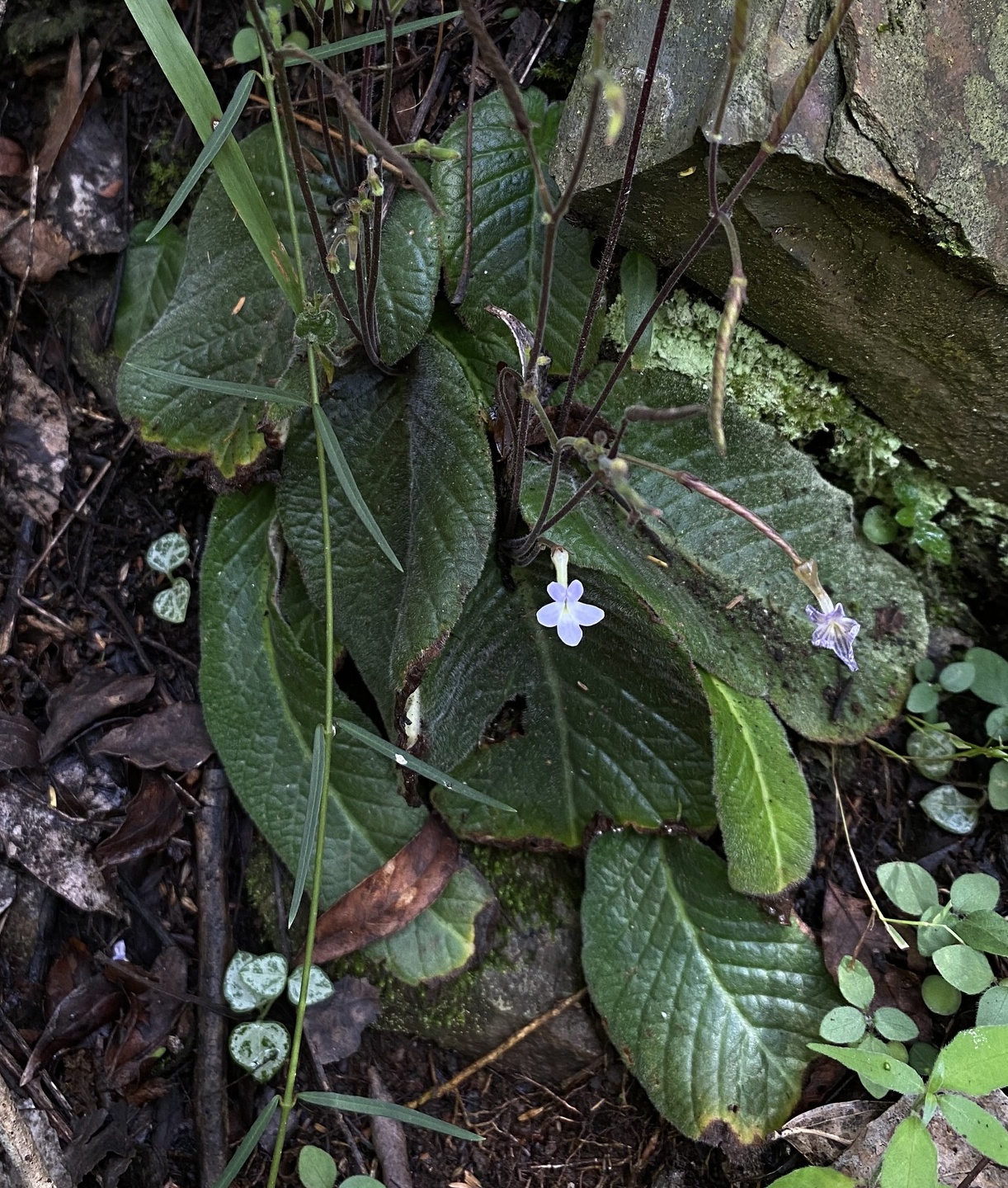
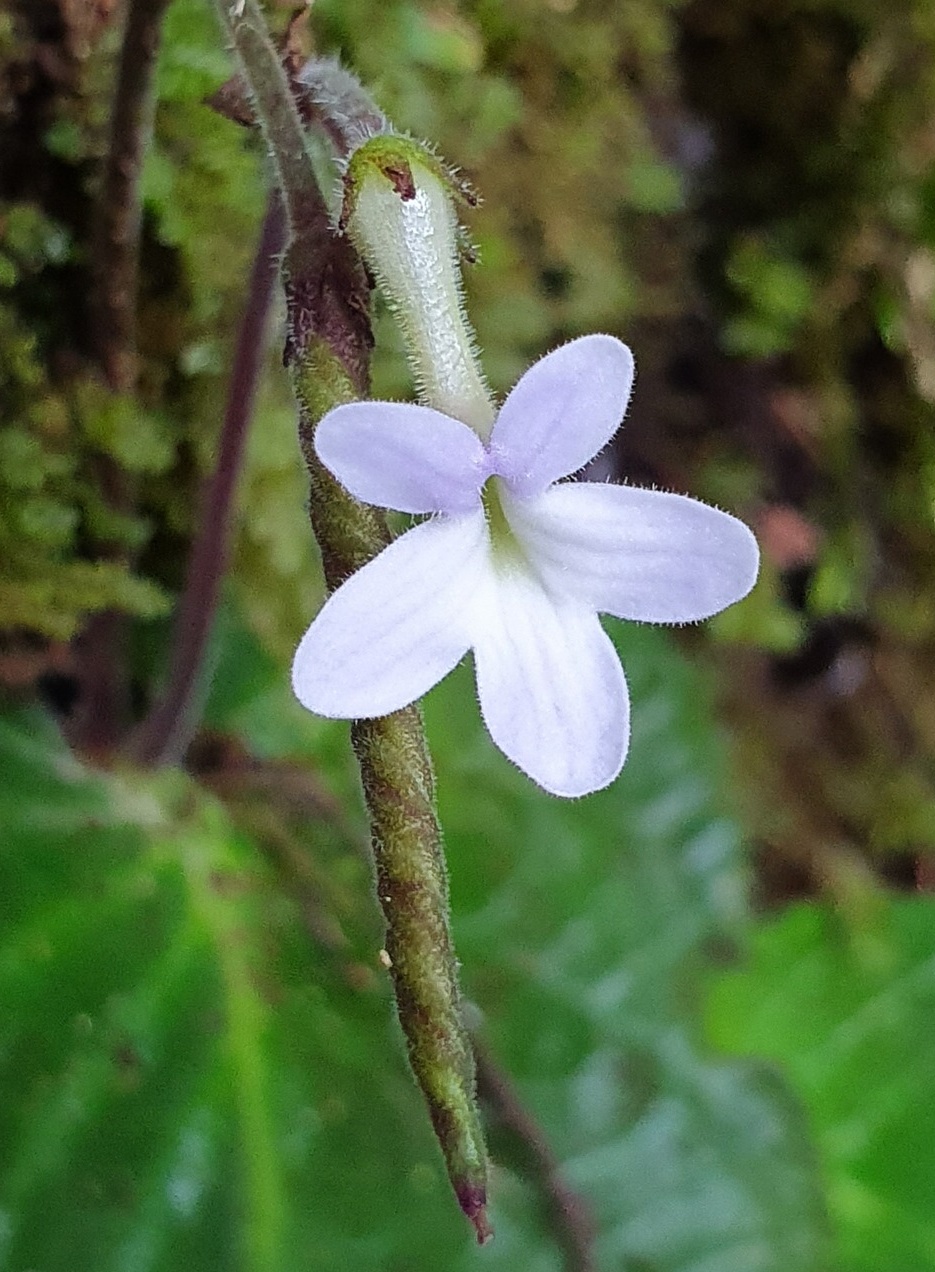
Streptocarpus polyanthus subsp. verecundus is the smaller cousin of the first subspecies, it is mostly monocarpic. only has a single smaller leaf and is not as floriferous (up to 12 flowers) with smaller flowers. It occurs in the so-called KwaZulu Natal Midlands at slightly higher altitudes, most above 900 m. The flower is smaller (corolla limb < 26 mm) but is also mauve with a yellow to greenish throat. Its range overlaps with the Streptocarpus polyanthus subsp. polyanthus and intermediates are often found complicating its identification.
- A flowering plant growing in a rocky cleft
- Another plant growing on a moist bank
- A close view of the beautiful small flowers
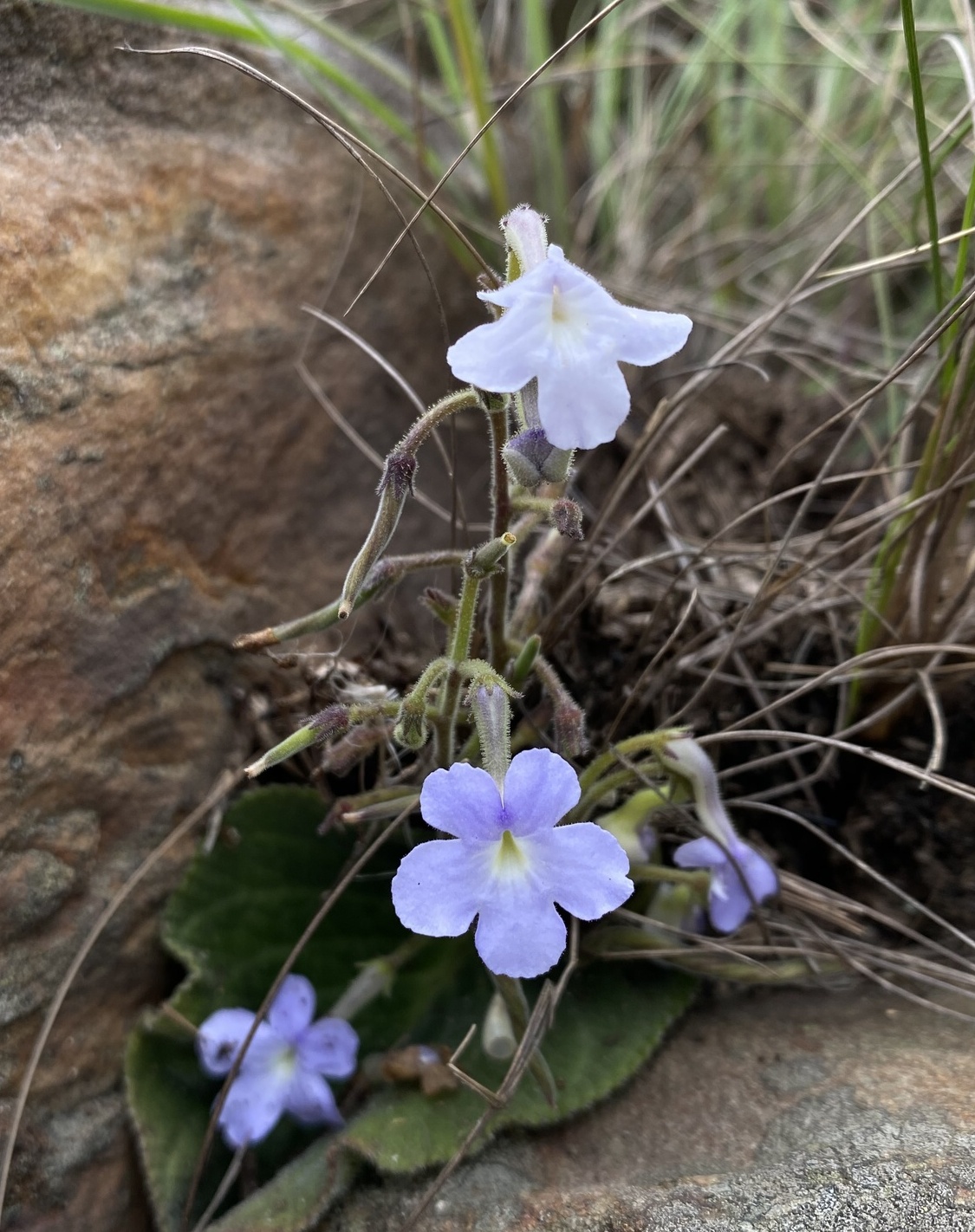
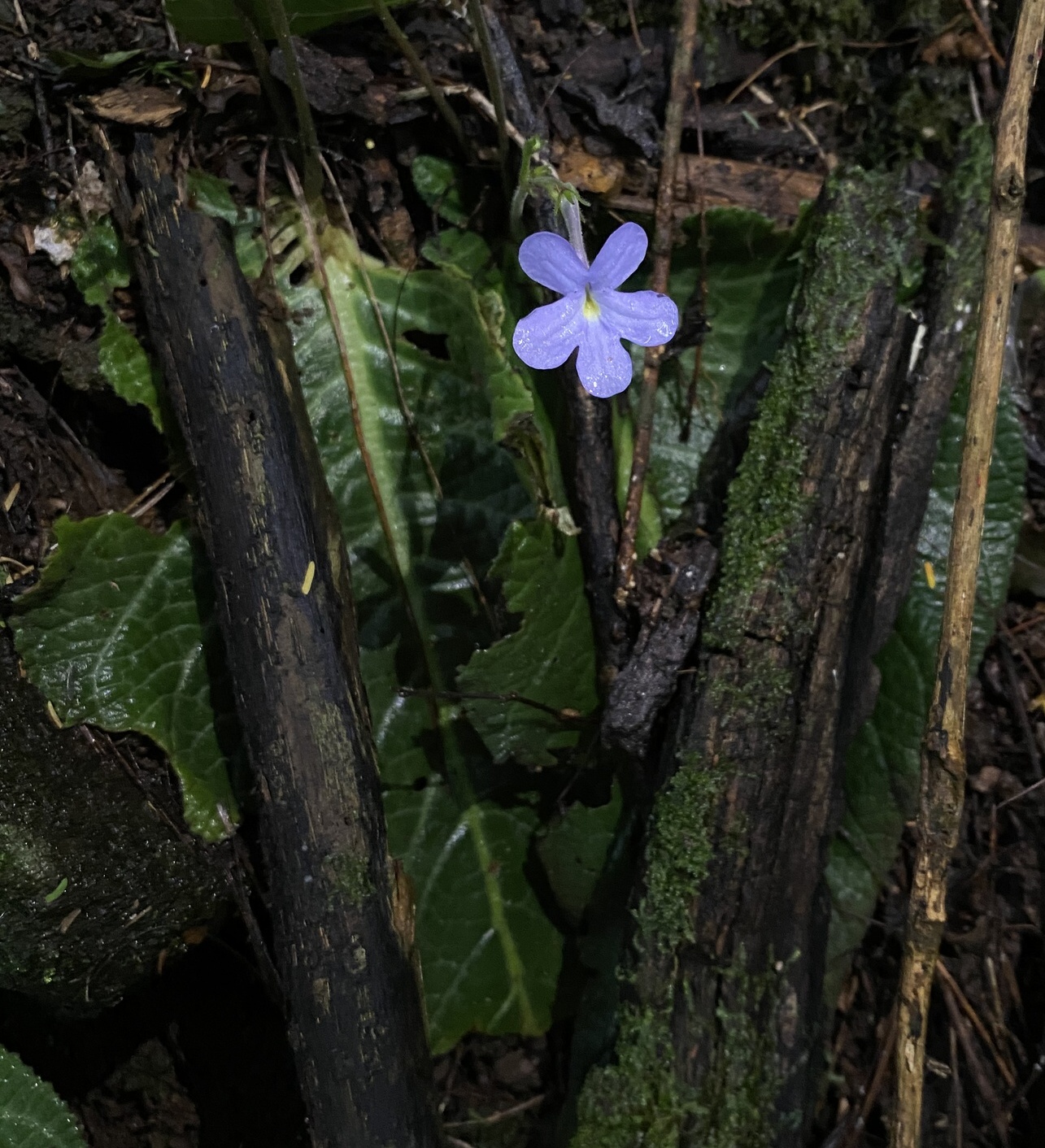
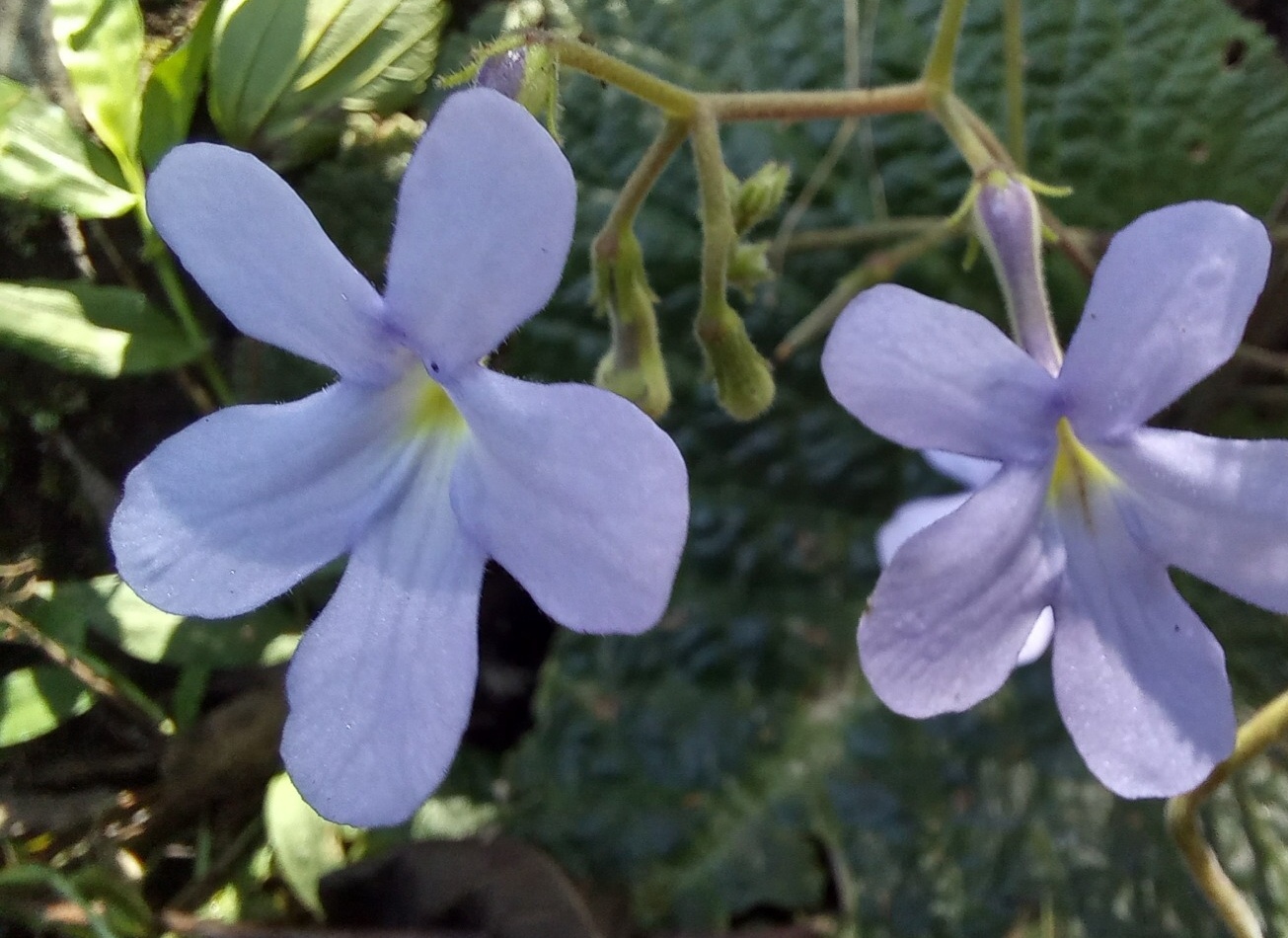
Streptocarpus polyanthus subsp. dracomontanus is a subspecies occupying the higher altitudes of the Drakensberg Mountains as its name indicates. It is also smaller, but perennial with two to three leaves, a few smaller flowers, limb <20 mm, upper flowers limbs not as reflexed as in the two first mentioned subspecies. It often inhabits steep rocks in caves and many plants grow together.
- A cluster of the beautiful flowers
- Small plants growing under a rock overhang
- A colony of plants growing on a mossy cliff
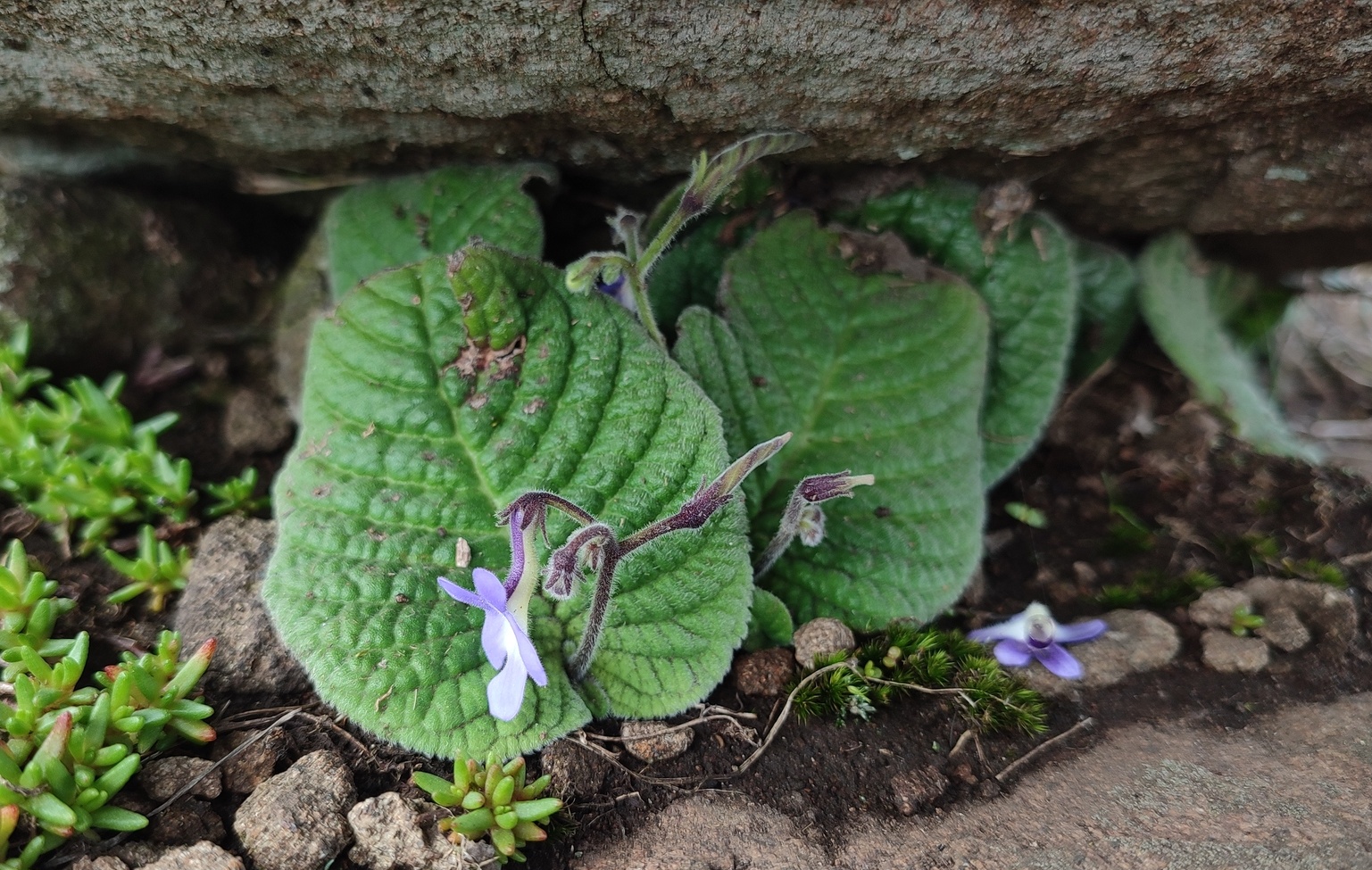
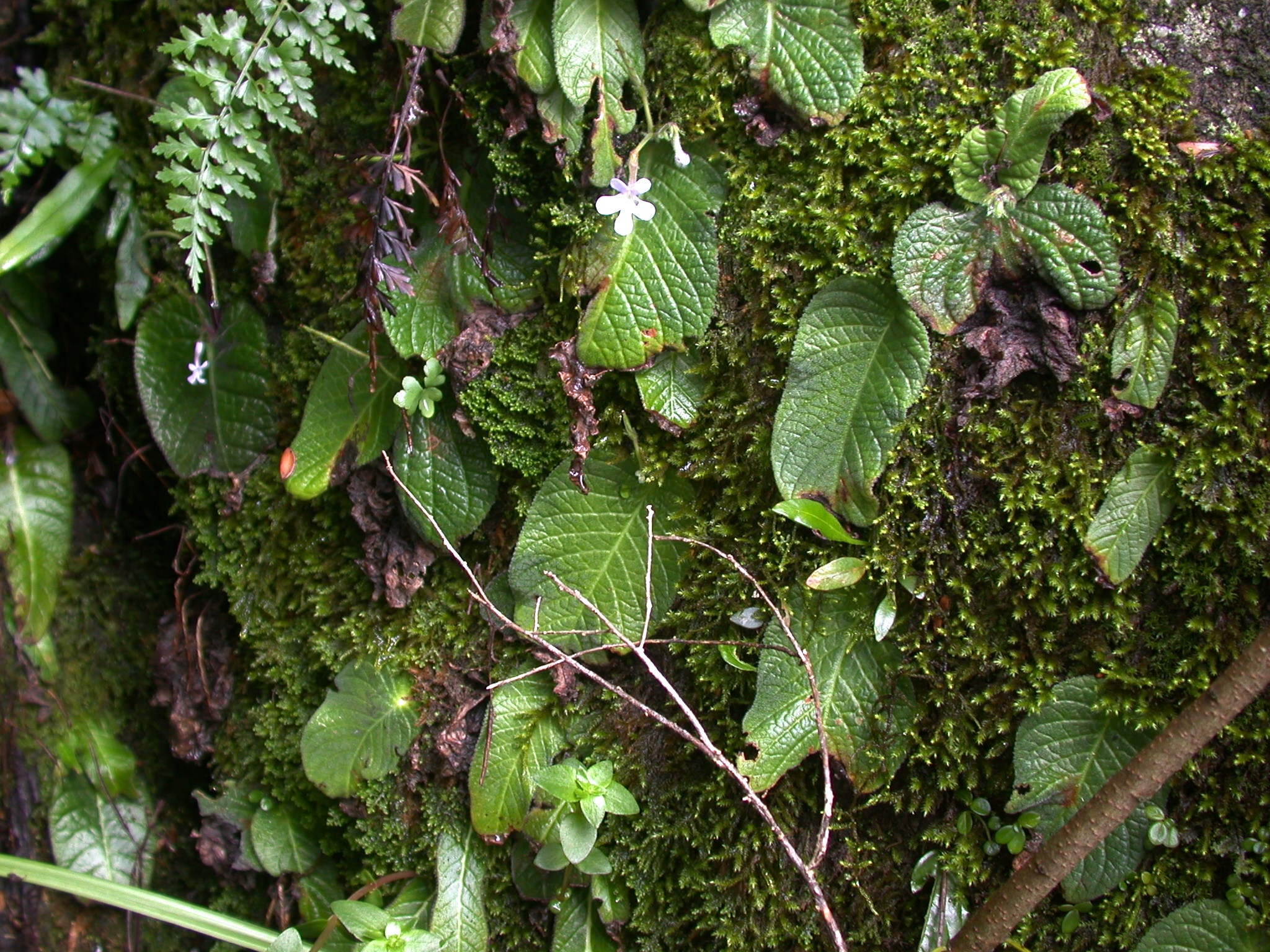
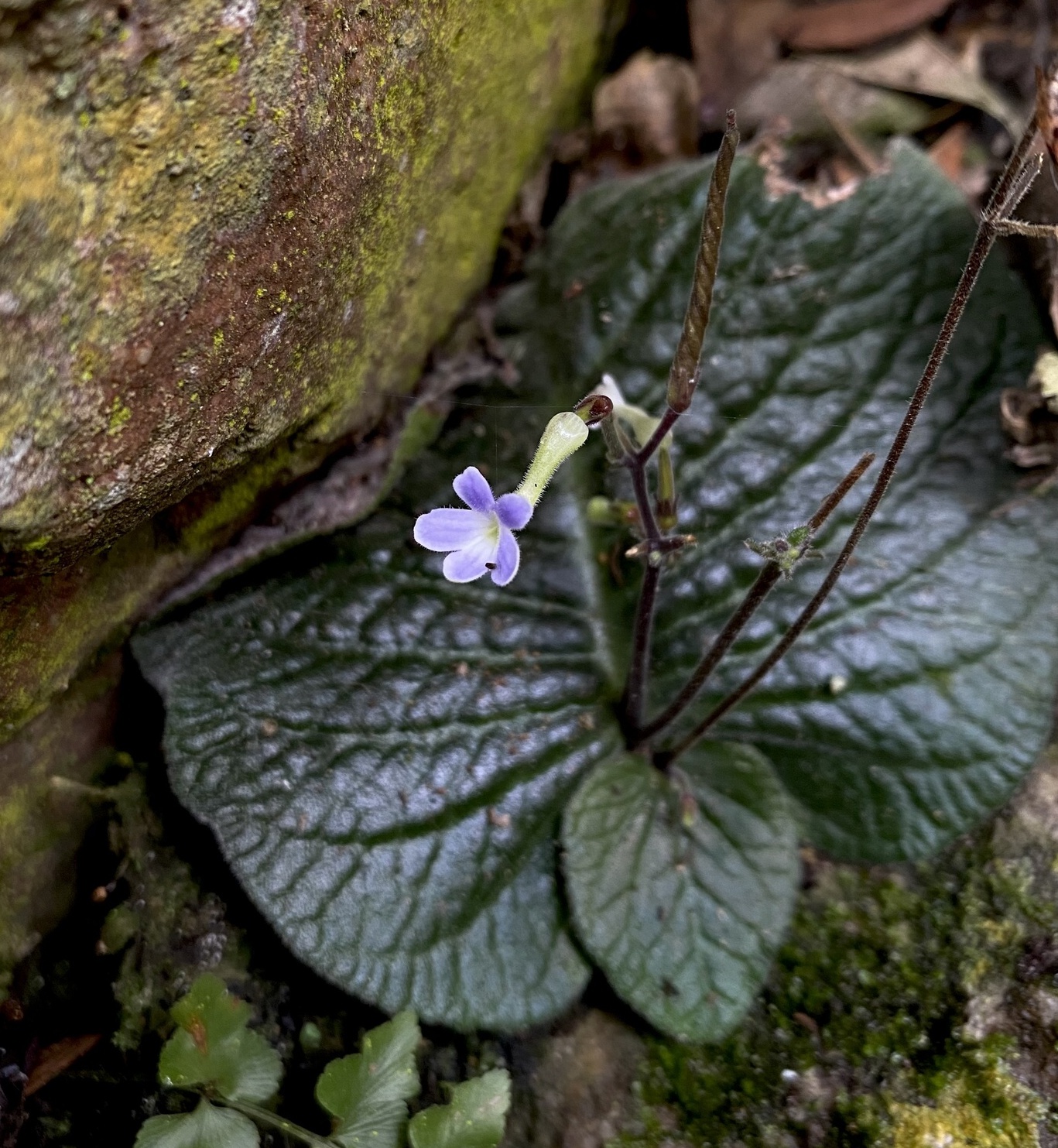
Streptocarpus polyanthus subsp. comptonii occurs even further north (see above), its range only overlapping with Streptocarpus polyanthus subsp. dracomontanus. It is monocarpic or perennial and has one or two leaves, with soft fragile inflorescences up to 16 flowered, much smaller flowers, corolla limb <10 mm, upper limbs not reflexed. Hilliard and Burtt thought that its smaller overall size may have been brought about by the harsher conditions under which it grows.
- A flowering plant growing at the base of a large rock; note the developing secondary leaf
- A cluster of plants growing on a near vertical slope
- A close view of the small flower and a large pod