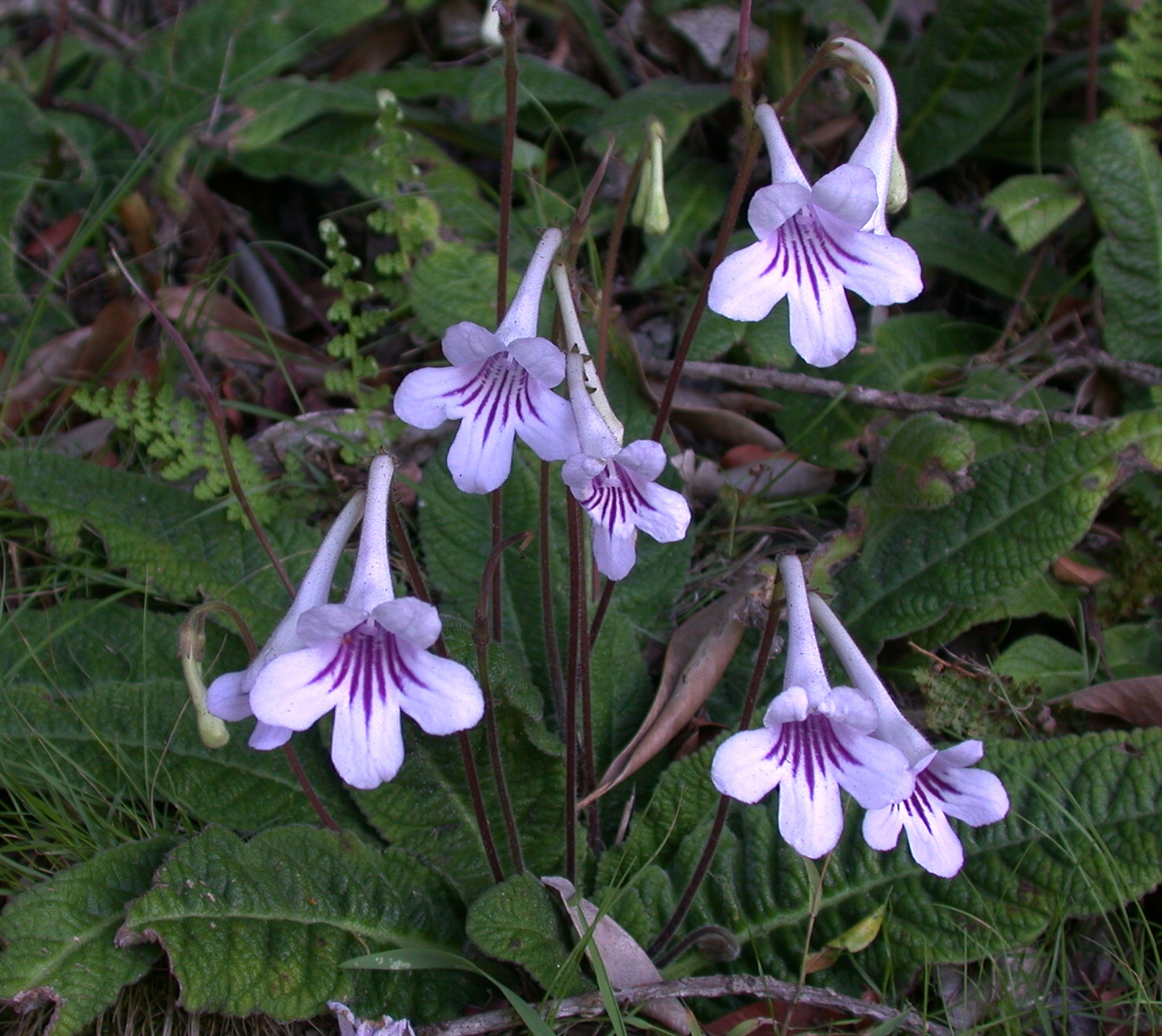
Streptocarpus rexii was the first species to be named in the genus (see “Early Botanical History” in Streptocarpus article). According to the botanical rules this means that this species becomes the so-called type of the genus. Every other species in the genus has subsequently been described relative to this species.
It was discovered in 1818 in the vicinity of Knysna (pronounced with a silent “k”) a town on the forested southern coast of South Africa. However, its distribution ranges from even further east and south in the Touws River gorge in the Garden Route National Park near the town of Wilderness. From there its range extends in the coastal forests up to the city of Gqeberha (formerly Port Elizabeth) and then swings inland to Machado (formerly Grahamstown) to forest patches on the inland mountain chain to Cedarville in southern KwaZulu Natal Province.
The southerly and the northerly forms of Streptocarpus rexii are smaller in relation to those that are found in the middle of its range. In their monograph on the genus Streptocarpus, Hilliard and Burtt (1971) speculated about how these larger forms of the species could have evolved. Their opinion was that Streptocarpus primulifolius, of which the southerly range extends to the vicinity of Kugompu City (formerly East London) had introgressed or hybridized with Streptocarpus rexii in the middle of its range to give these larger forms which occur a little to the north (up to the Kei River) and south (up to Machado). They hypothesized that Streptocarpus rexii had evolved in the north, in southern KwaZulu Natal possibly from Streptocarpus gardenii or Streptocarpus primulifolius and had then dispersed to the south. It is known that the genus Streptocarpus has its origins in the tropics, and then migrated further south, so this was a good hypothesis.
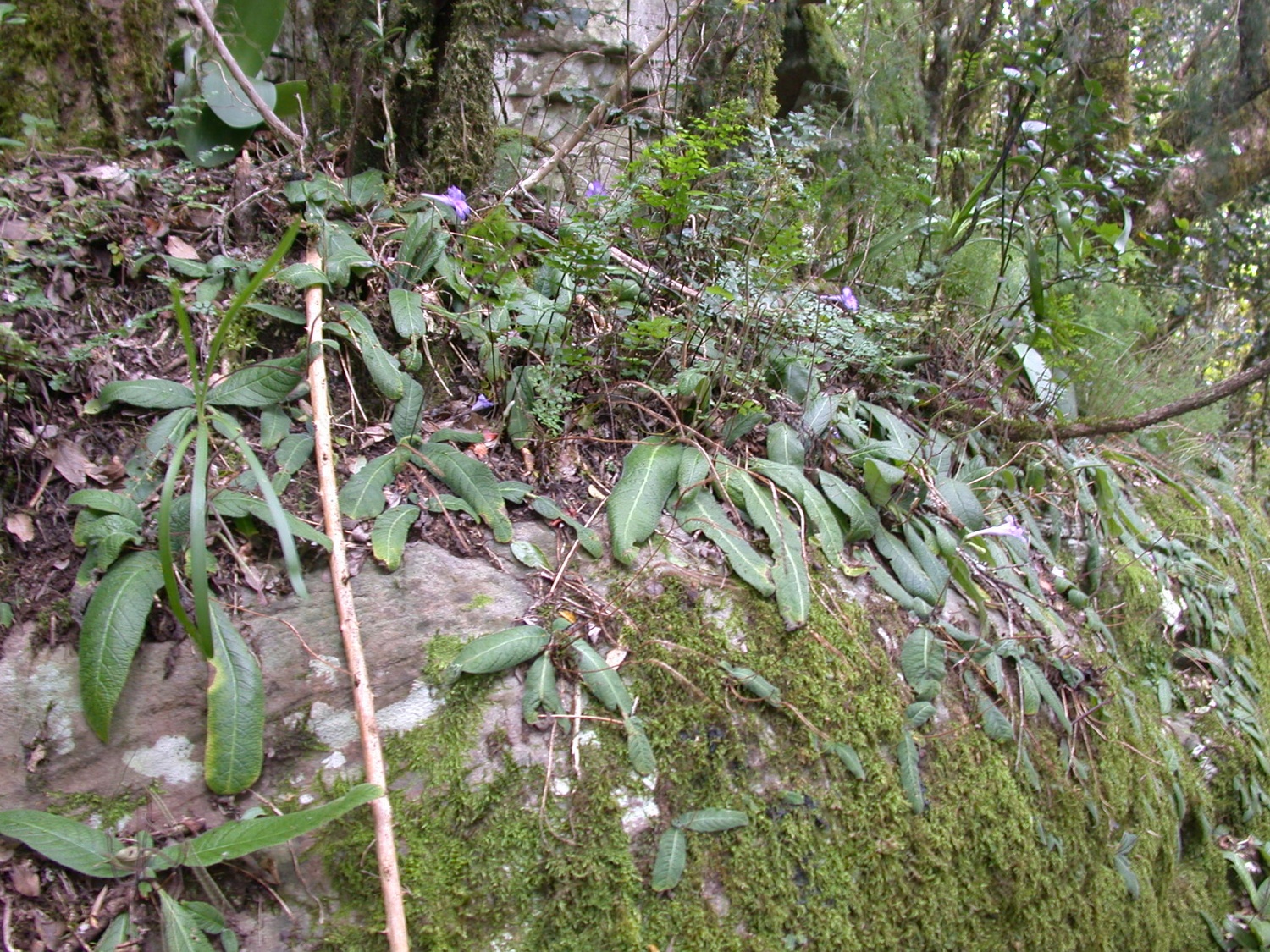
A breakthrough in our understanding of how Streptocarpus rexii evolved in this peculiar way with bigger forms in the middle of its range, came from the DNA sequencing and microsatellite research of Hughes and colleagues (Hughes et al., 2005). It was established that Streptocarpus primulifolius had evolved in the north and dispersed along the coast up to Kugompo City. Streptocarpus rexii then evolved from Streptocarpus primulifolius and dispersed inland and from there to the north and the south. Streptocarpus rexii had to adapt to cold tolerance at the high altitudes and to a lack of pollinators which it did through developing the ability to self-pollinate and to become autogamous in order to survive. Self-pollination leads to inbreeding and as it dispersed to the north and the south, it became more and more inbred which resulted in these smaller somewhat stunted forms of Streptocarpus rexii. This variation was illustrated by means of pictures taken over the full range.
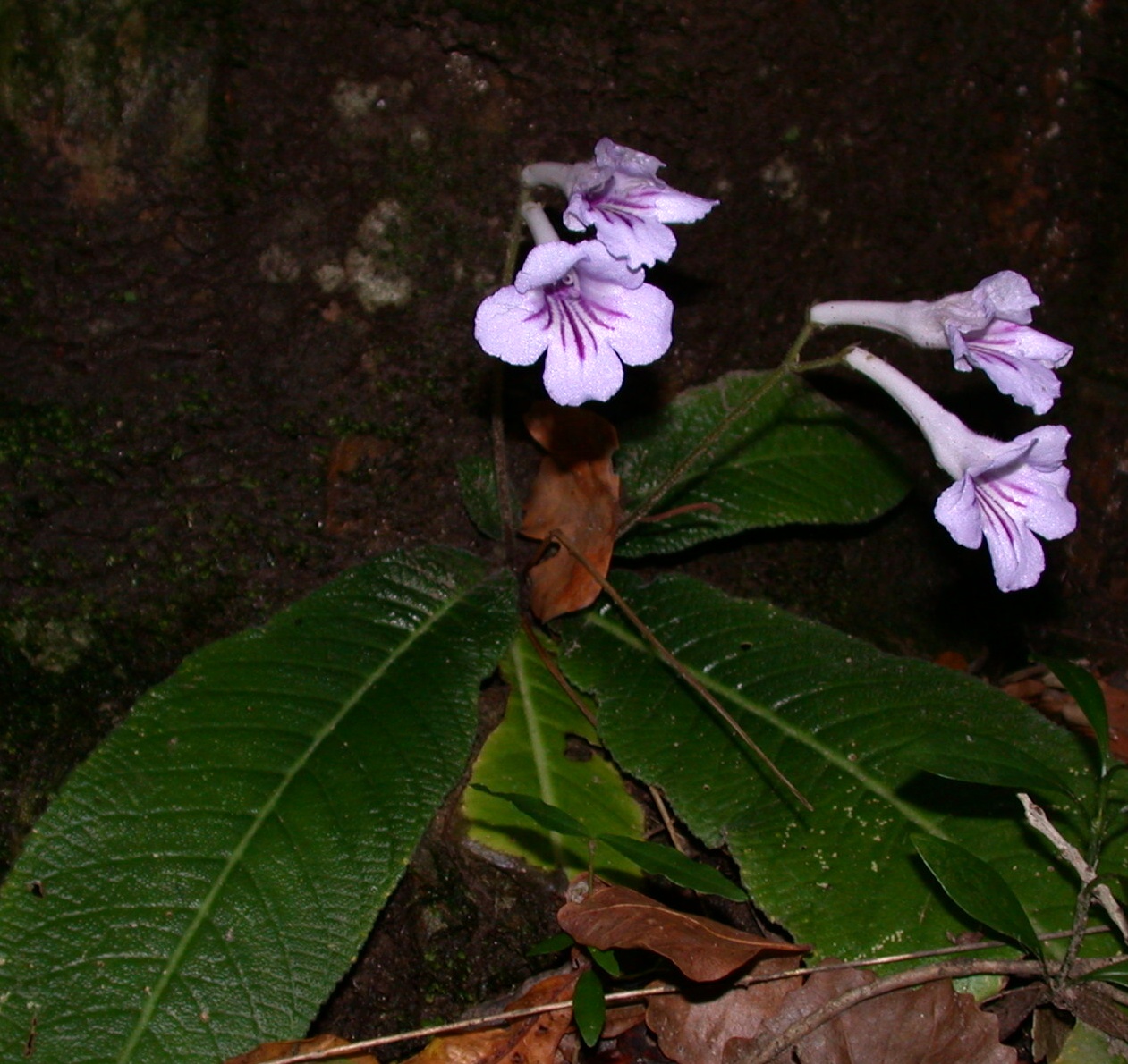
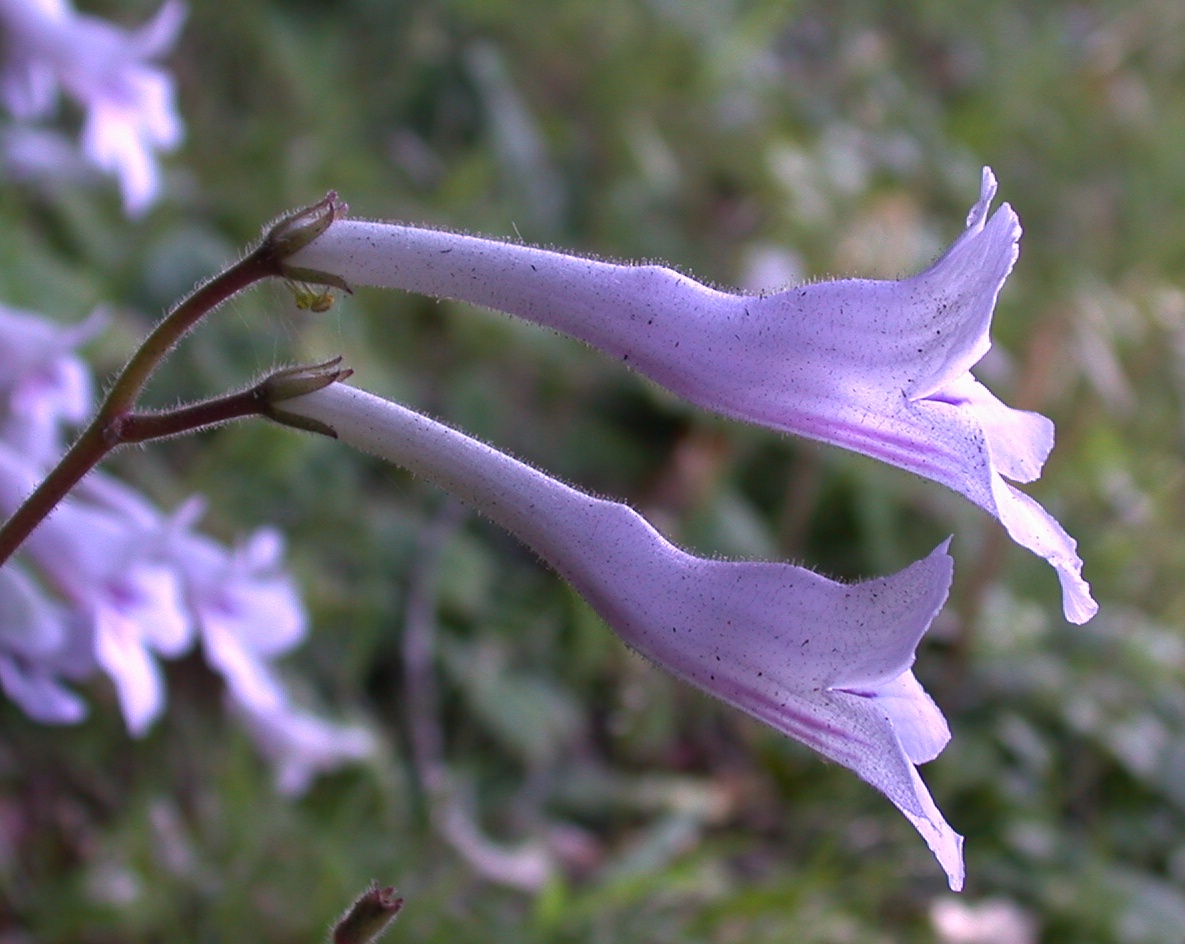
The sizes differences given here for the morphological characteristics and measurements reflect the differences in size in different populations of Streptocarpus rexii. It is a typical rosulate species of which the basal leaves mostly lie flat on the moss covered rocks or steep embankments that it grows on. In the middle of its range, the thick leathery leaves can be large (up to 350 -450 x 90 – 125 mm) but in the smaller forms to the north and the south, the leaves only grow to 300 x 65 mm or even smaller. In the middle of its range, the species can be quite floriferous with up to 6 flowers open at the same time, but the smaller forms only have 2-3 flowers per plant. The flowers are funnel-shaped, shorter (30 mm long) in the smaller forms, but significantly larger (up to 75 mm) in the larger forms. In proportion to the flower size the two upper corolla lobes are smaller (7-13 x 6-13 mm), the lower lip 13 to 20 mm long, and the three lower lobes larger (7-17 x 6-15 mm).
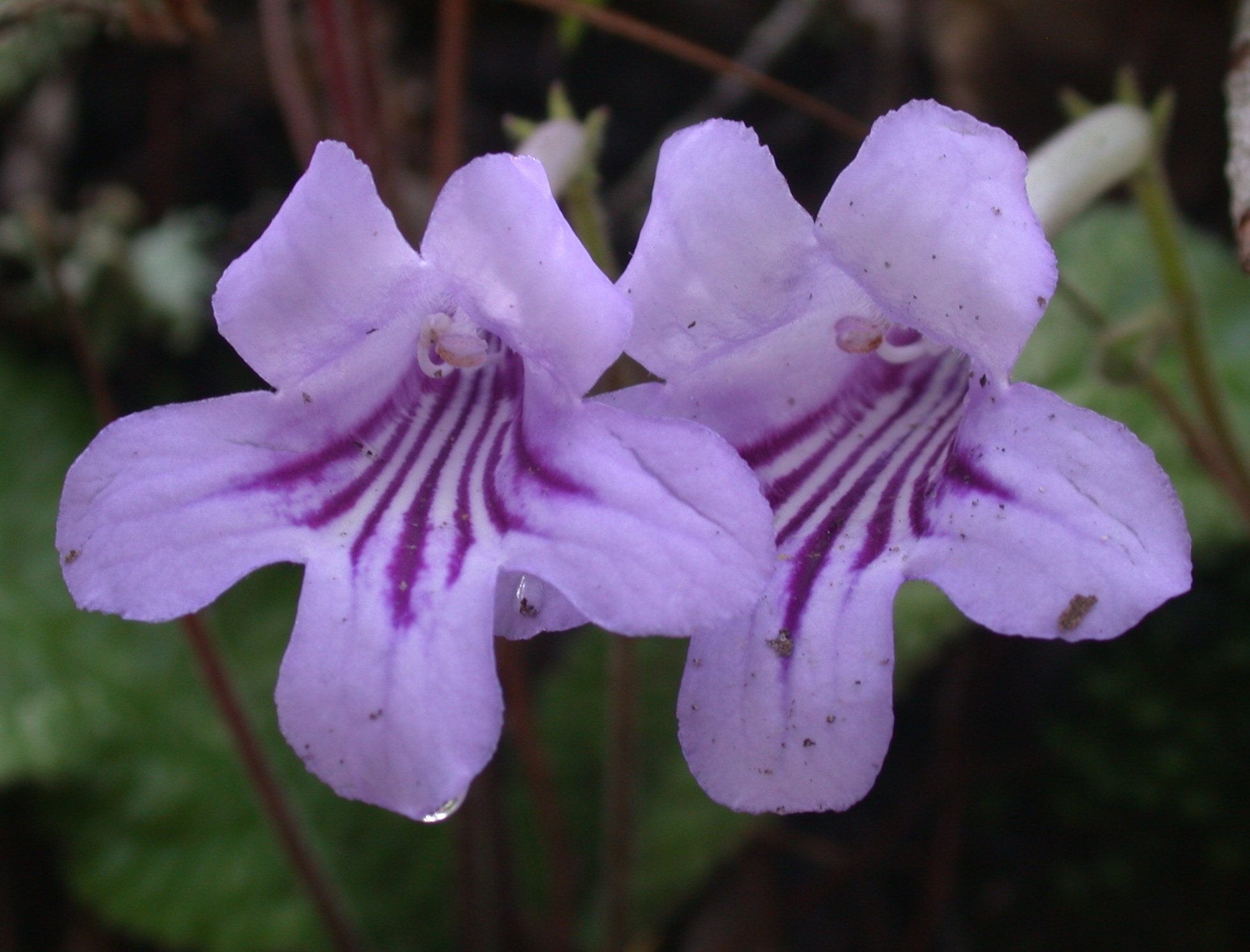
The flower colour of most flowers is pale violet, but white flowers are also found. The floor of the corolla is marked with 7 parallel violet lines which are present particularly in the large forms which occur in the middle of its range, but the smaller flowers of the southern and northern populations often do not show these lines. As the species is autogamous (self-pollinating) over its whole range, every flower gives rise to a long seed capsule producing thousands of seeds, which would ensure the survival of the species, even in very arid areas where plants may die from drought, but can regerminate from seed.
Through its ease of cultivation and small size, Streptocarpus rexii has contributed significantly to the horticultural popularity and success of the genus ever since its discovery in 1818. The first plants to be cultivated by Hooker in the Glasgow Botanic Gardens were of the smaller forms from Knysna, but thereafter the larger forms would also have been used in cultivation.