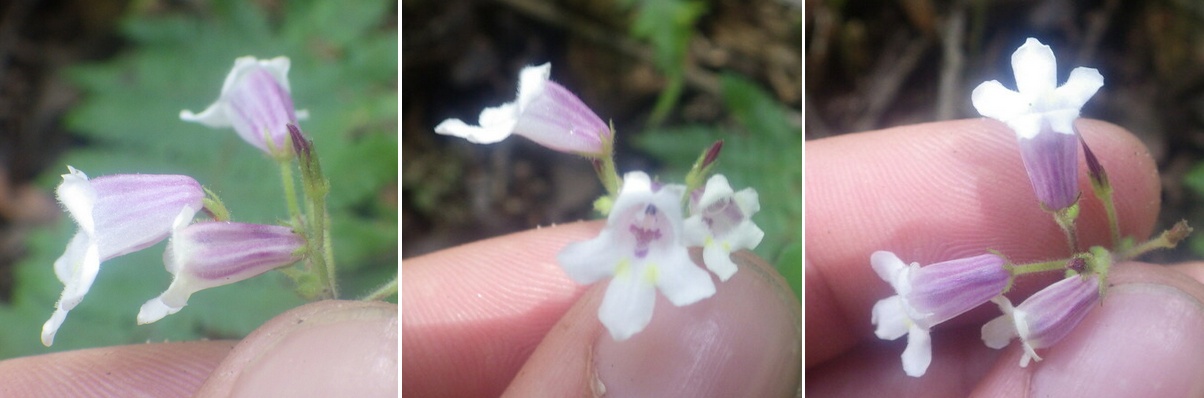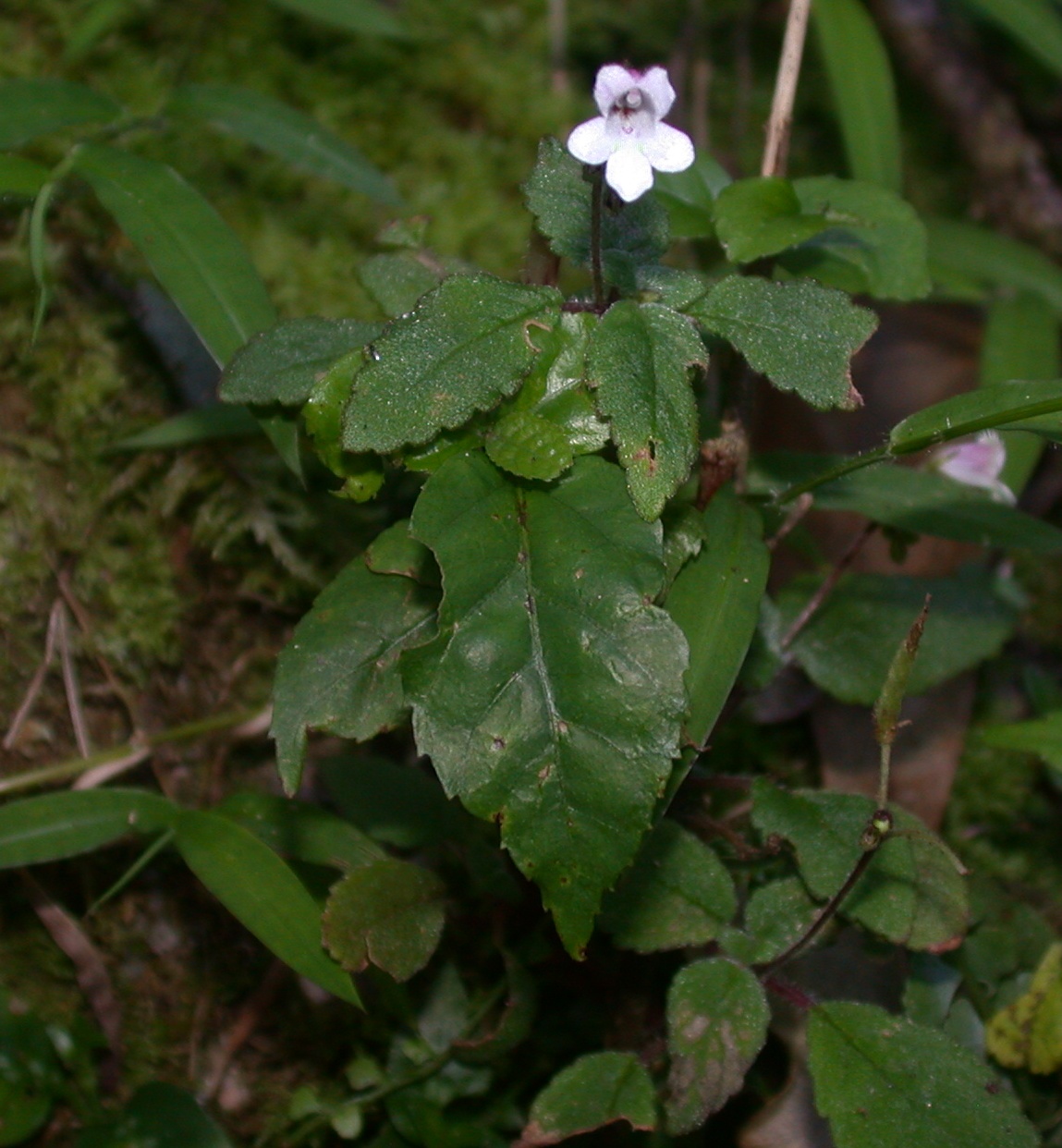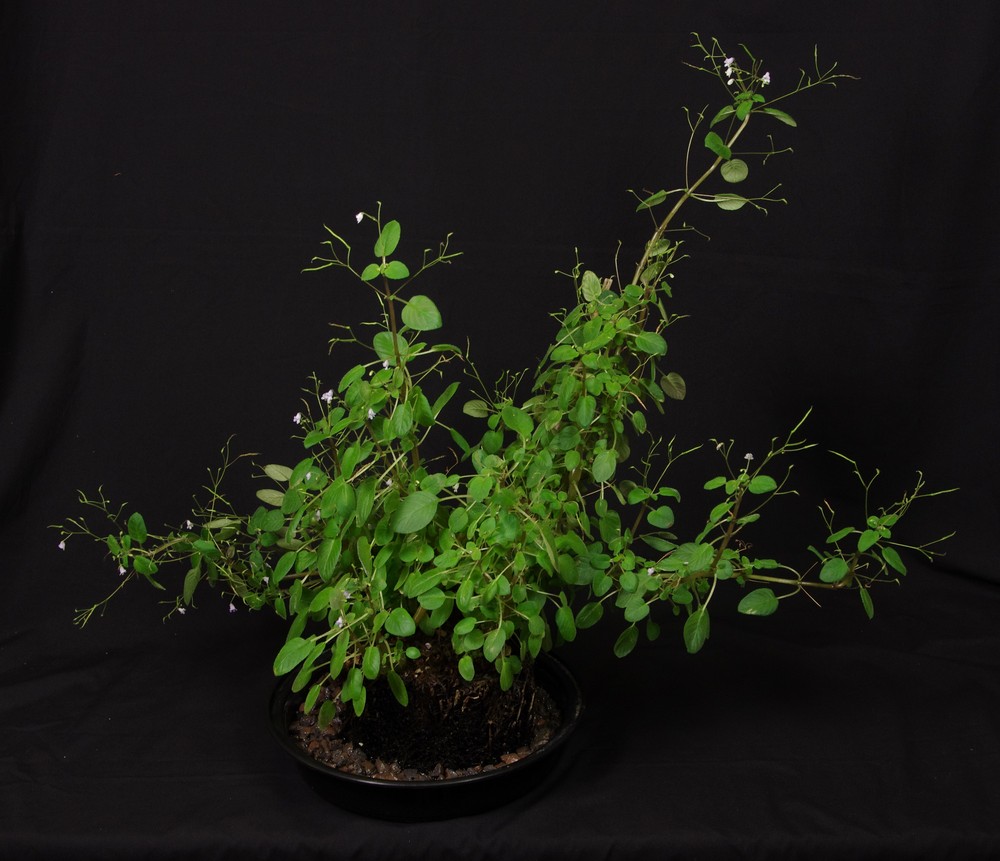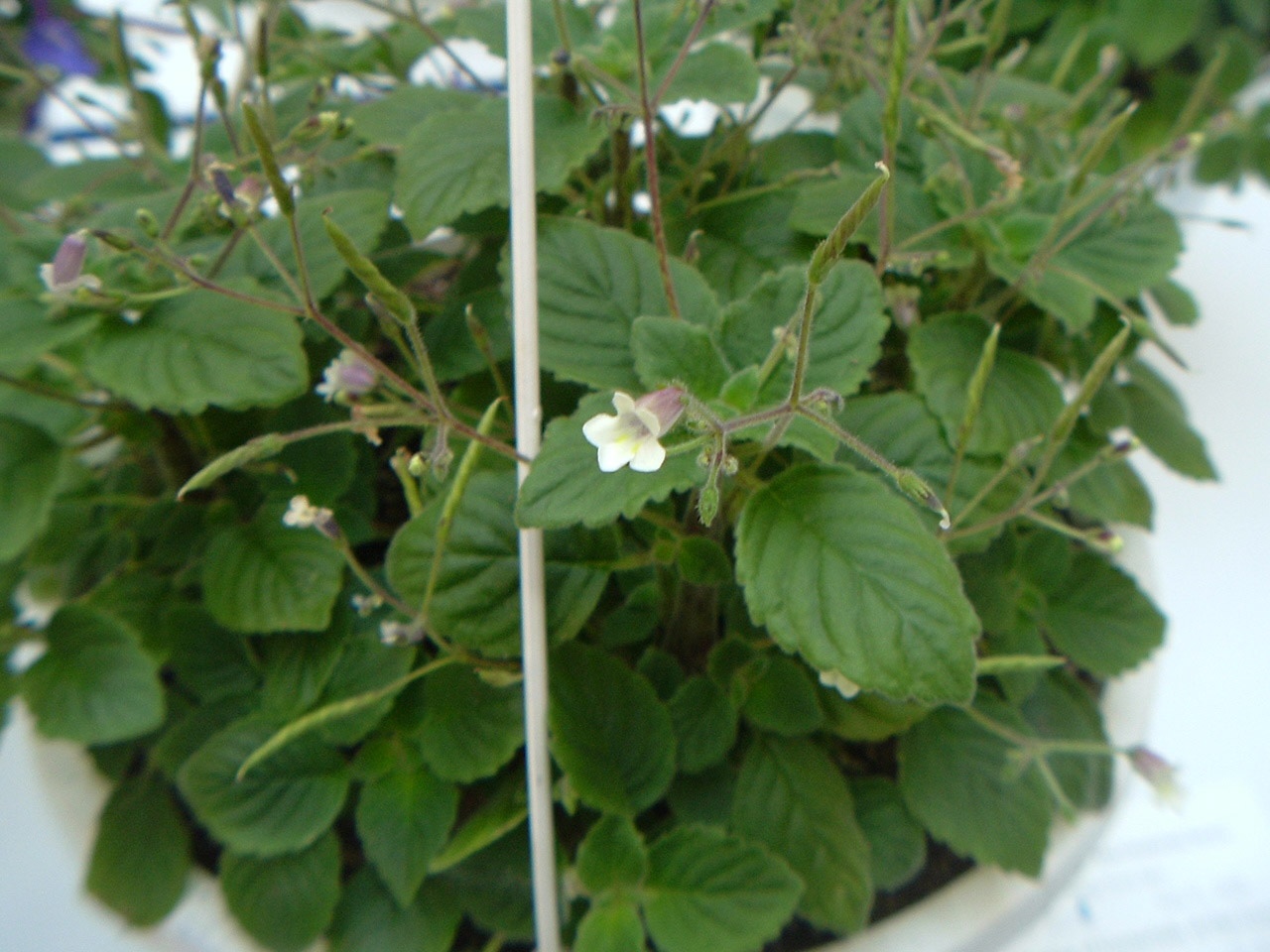
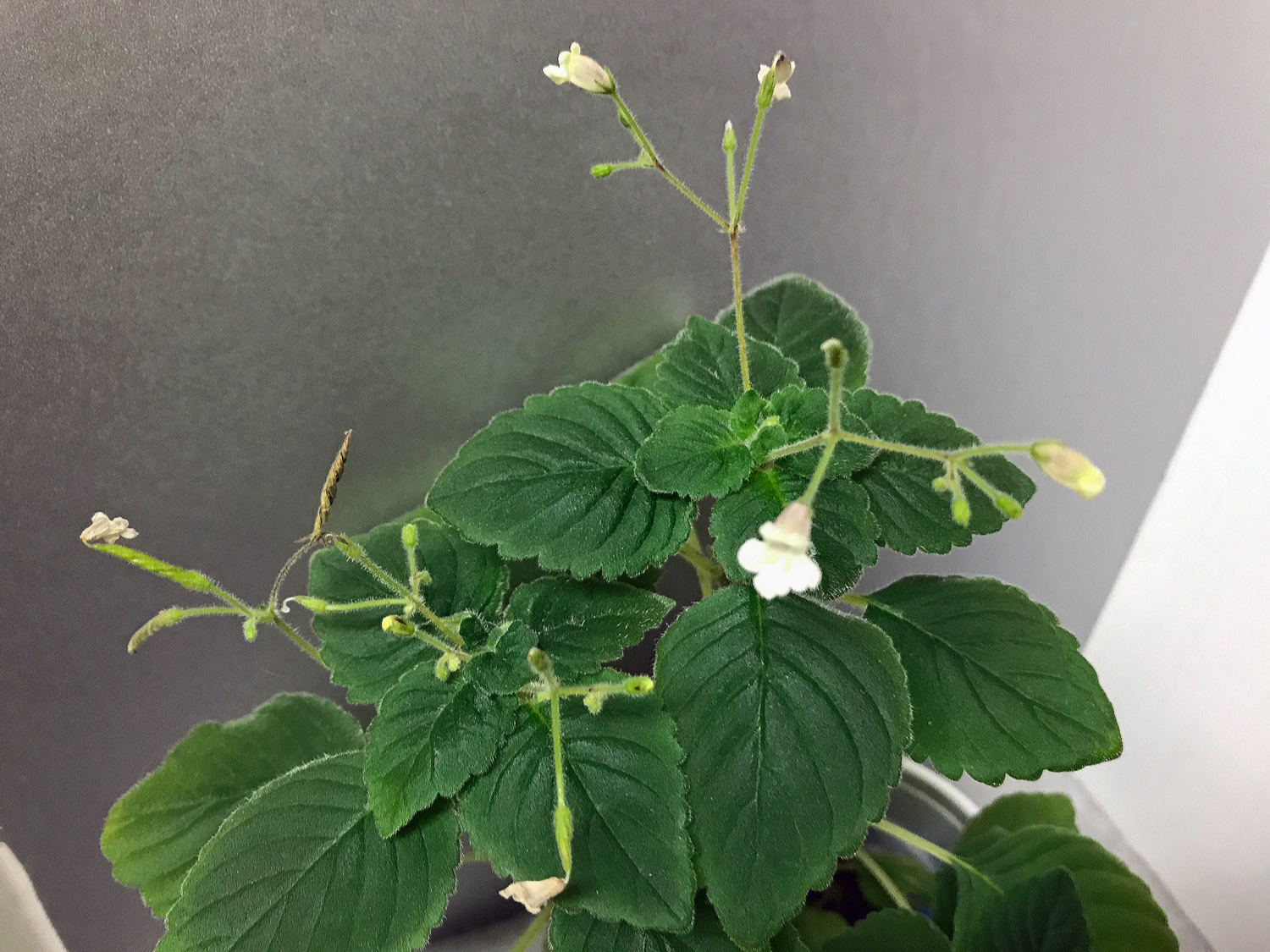
Streptocarpus thompsonii is an interesting species in subgenus Streptocarpella, Section Hova. Although it is highly variable, S. thompsonii typically grows as a caulescent small shrub, but in low-nutrient locations may be smaller and bloom as a more creeping plant. It typically grows on rock faces in moss, in collections of soil on rocky surfaces and on the forest floor, but always in relatively moist and warm locations. It is endemic to Madagascar.
A subspecies, S. thompsonii var. bojeri has been published, but it is not clear if it is a valid taxon. If it is, then the species illustrated here should be properly known as S. thompsonii var. thompsonii.
The species is in fairly wide cultivation, and the feature photo above was exhibited in the 2020 virtual show of The Gesneriad Society.
S. thompsonii can be easily confused with Streptocarpus muscosus, which is also endemic to Madagascar and whose range overlaps. Useful features for separating the species include the following:
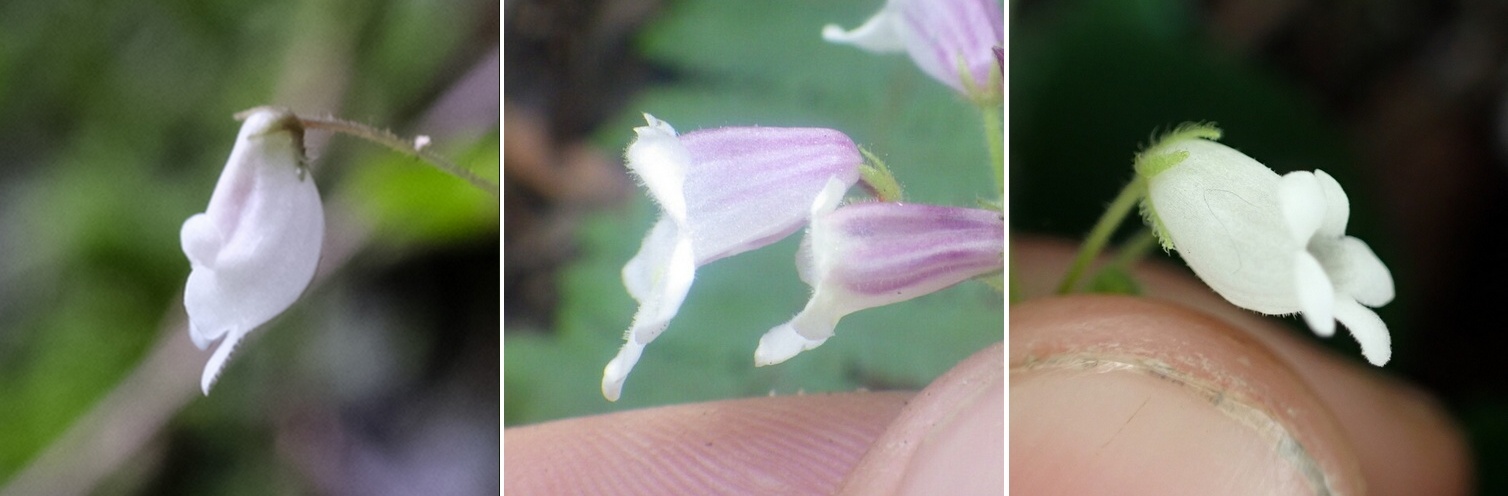
- The flowers of S. thompsonii are an open tube type, tapering to the calyx; those of S. muscosus have a distinct pouch shape on the lower corolla, creating a more rounded look below
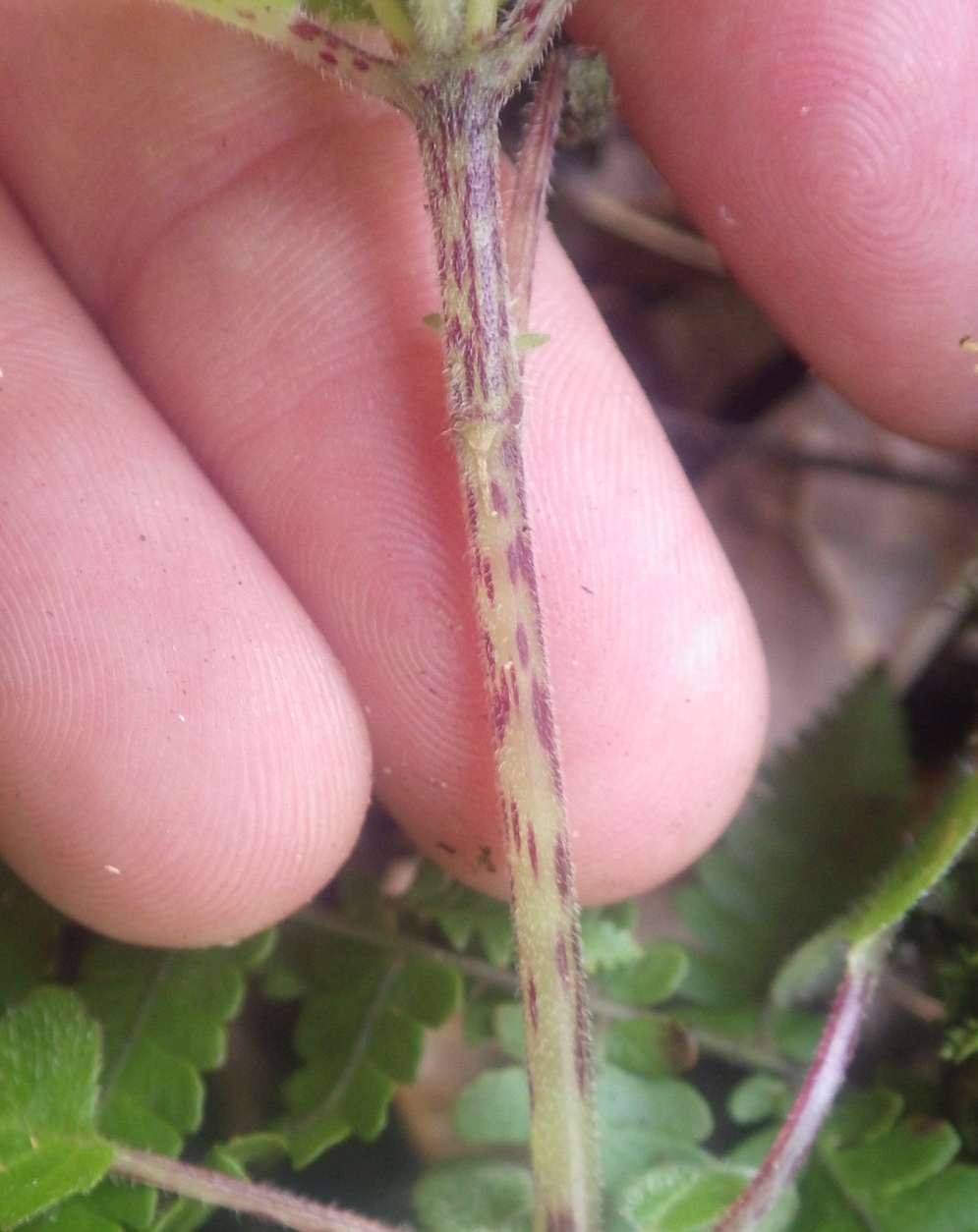
- The stems of S. thompsonii are usually mottled with maroon or purple spotting, while those of S. muscosus are unspotted
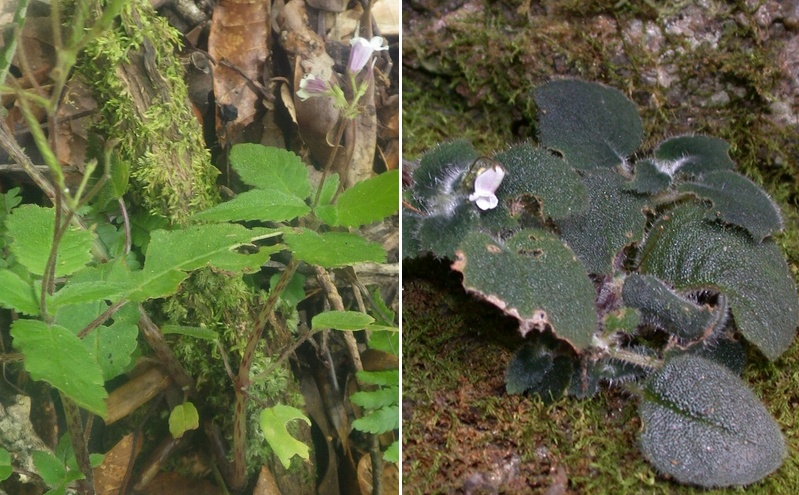
- S. thompsonii is, in general, relatively upright and shrubby, while S. muscosus tends to be more sprawling, with stems creeping along the soil or moss; as noted, thompsonii can be much smaller in some circumstances, and then more resembles the habit of muscosus
Additional photos may be seen by clicking the links below:
- Three views of a cluster of flowers of S. thompsonii
- A plant growing in Andringitra National Park, Madagascar
- A show plant, exhibited at the 2016 convention show of The Gesneriad Society
- Another nicely grown show plant