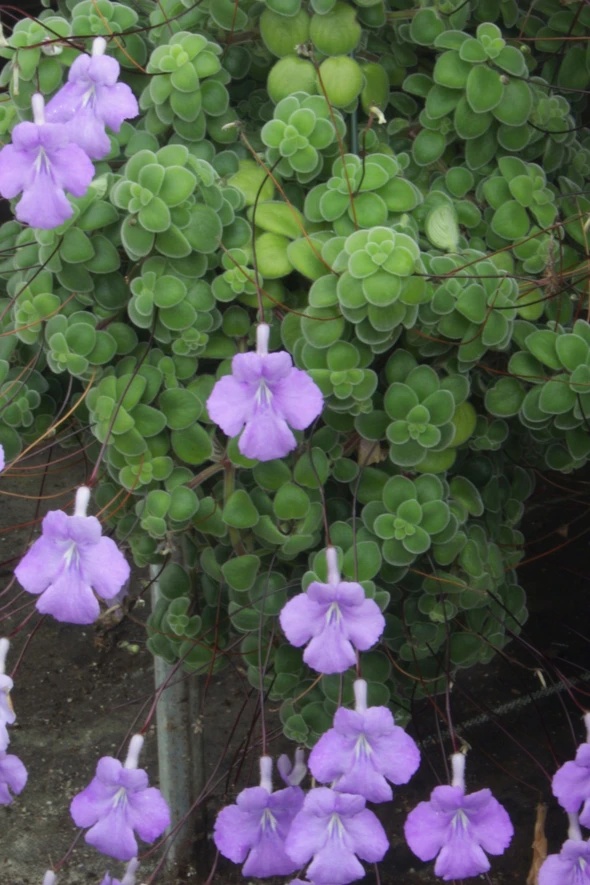

Streptocarpus saxorum is native to the hilly coastal regions of Kenya and Tanzania, where it can be found growing on mossy rocks in full sun or light shade, at heights between 500 and 2000 meters. While it grows on very thin layers of moss and soil, which dries quickly, there is significant rainfall and also frequent misty conditions. It is quite succulent and tolerates some drought, but does best with reasonable moisture in well-drained media.
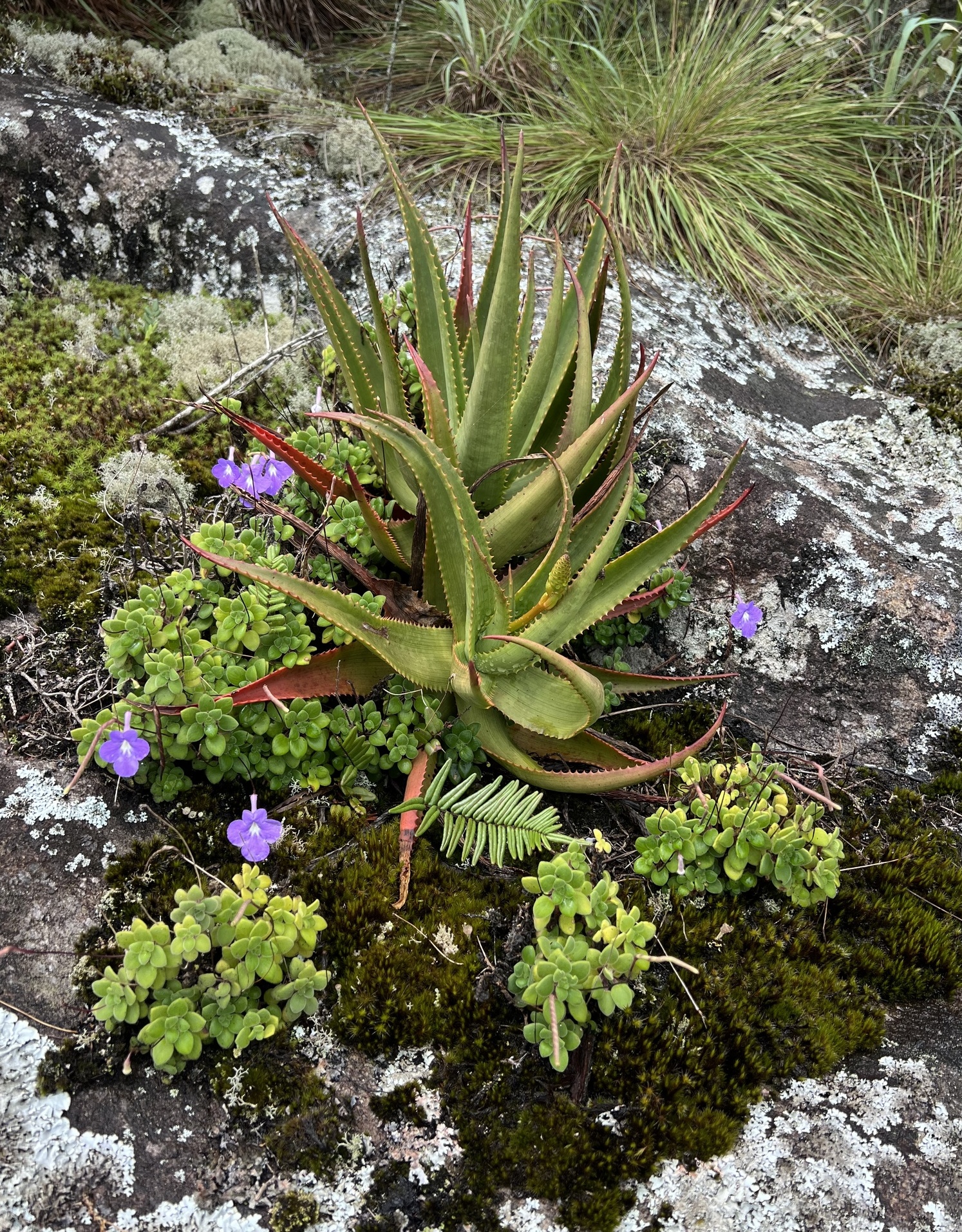
S. saxorum in the wild is often growing in the company of succulent plants.
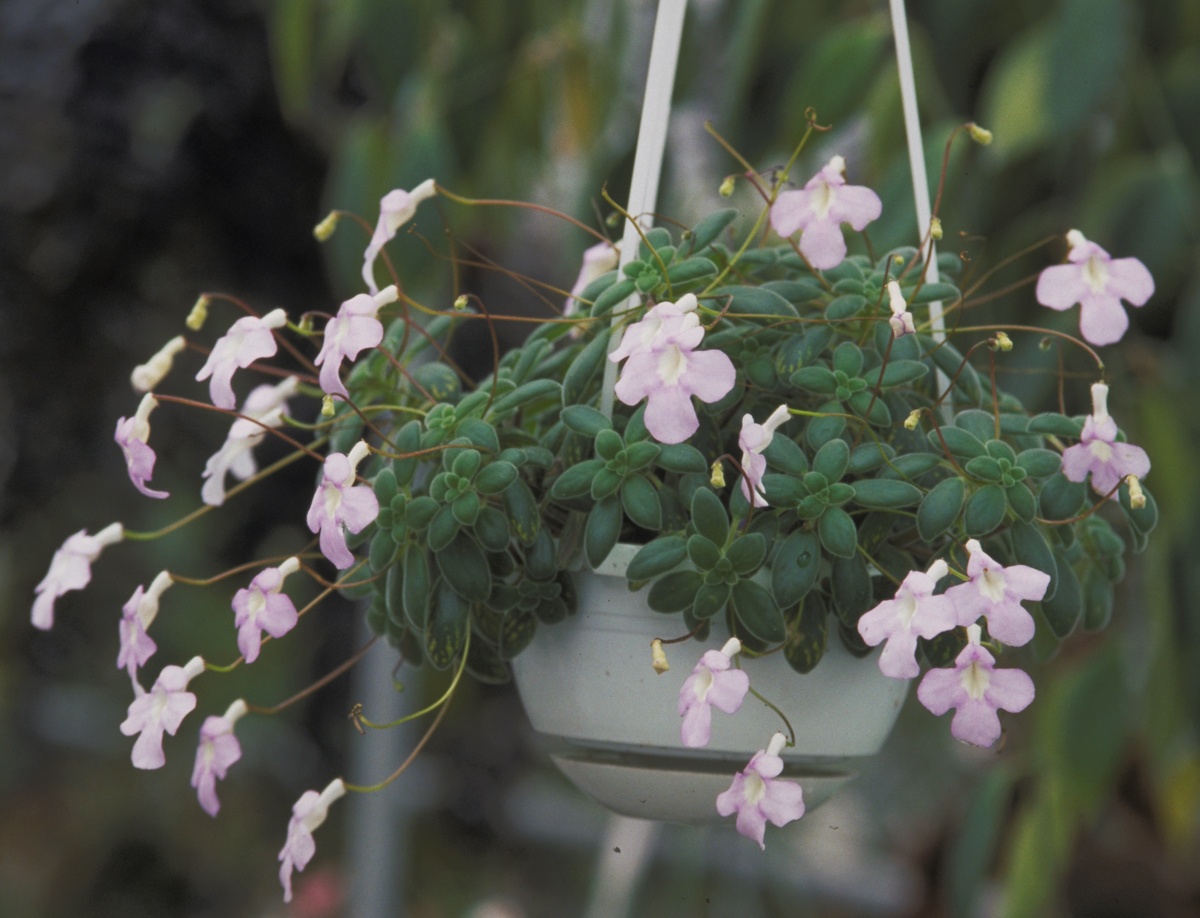
This species can work very well as both a feature plant in botanical gardens, and in a basket for home culture. Its semi-succulent leaves and pretty pale lavender flowers make it an attractive subject. The color of the flowers in photographs can vary, primarily because of the difficulty in properly capturing blues and purples with both film and digital cameras.
Material in cultivation as the true S. saxorum is notable for bearing leaves in whorls of three, rather than paired. This pattern is also frequently found in natural populations, although paired leaves can also occur.
This character is partly passed on to hybrids, where stems can have either leaf pairs or whorls. The flowers of the “true” saxorum are a nice pale lavender, with white throats and normally without throat or lobe markings. The form known as S. caulescens ‘Compact’ has the 3-leaf whorls, but has some pale markings on the lower lobe near the throat.
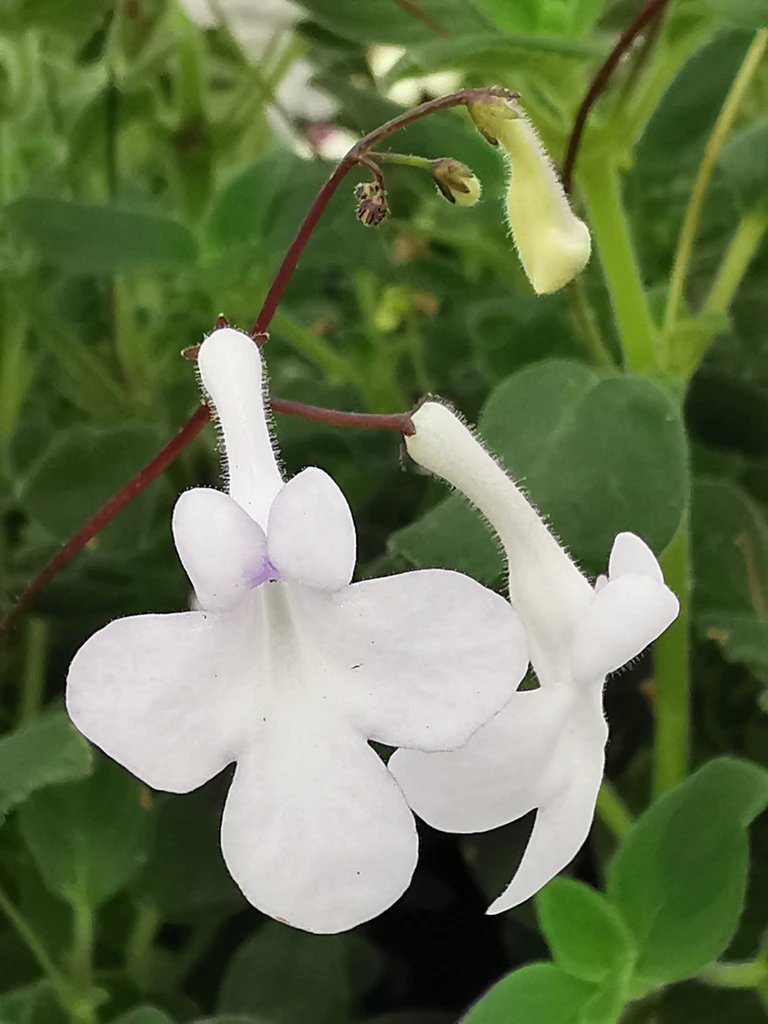
The true S. saxorum is not widely grown, although a hybrid created through a cross with S. stomandrus is. This hybrid known variously as S. ‘Good Hope’ and S. ‘Concord Blue’ (same cross by different hybridizers, indistinguishable) is a better horticultural subject than either parent. A white-flowered cultivar is likely a result of selfing and selection from this hybrid, although it is sometimes exhibited as a white form of S. saxorum and may be identical to the cultivar sold as S. ‘White Butterfly’ by Dibleys Nurseries in Wales.
Many online photographs published as S. saxorum are in fact the hybrid S. ‘Concord Blue’. Check the foliage and flowers, and if the leaves are not in whorls of three and the flowers have dark markings leading to the throat, it’s likely S.‘Concord Blue’ and not S. saxorum.
Other photos can be seen by clicking one of the links below:
- A small population growing on mossy rocks in the company of succulents
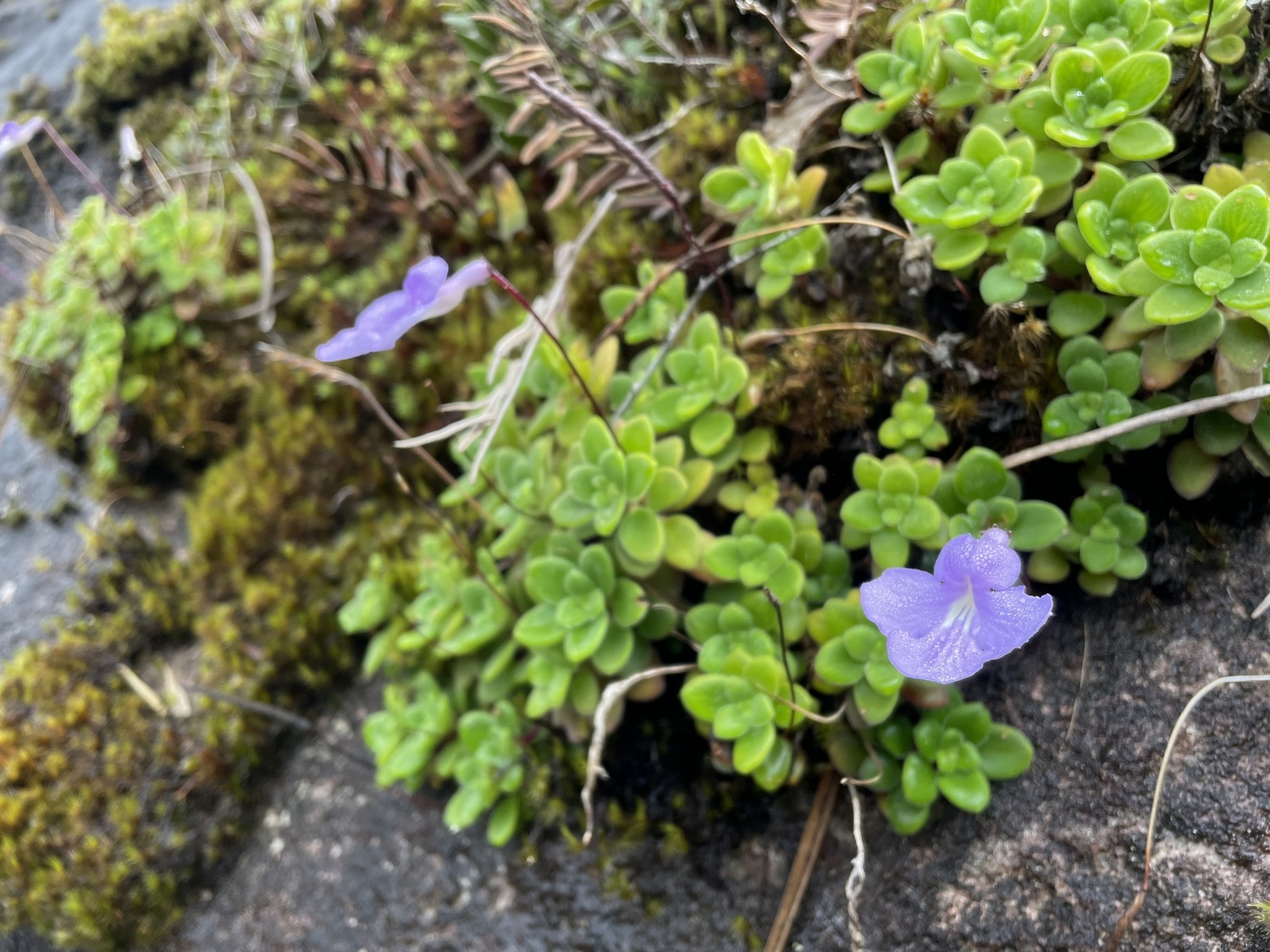
- A close view of a plant in this cluster
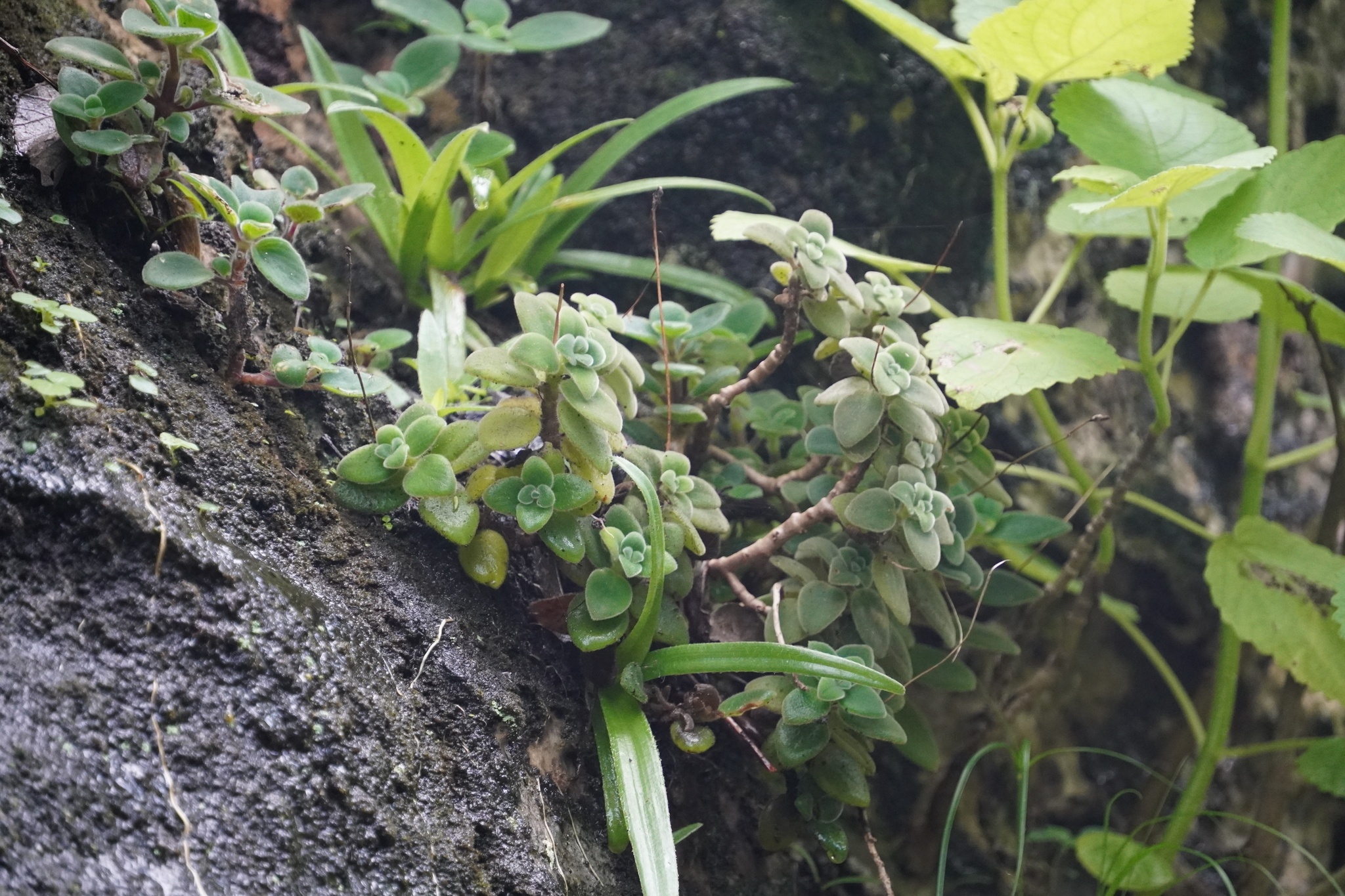
- Another group of plants also growing on mossy rocks, but exhibiting paired leaves
- A nice basket plant
- S. saxorum ‘Compact’, grown at Dibleys Nurseries – note the three-leaf whorls
- S. ‘White Butterfly’, a cultivar sold by Dibleys Nurseries
- A variegated form of the species (note the whorls of three leaves)