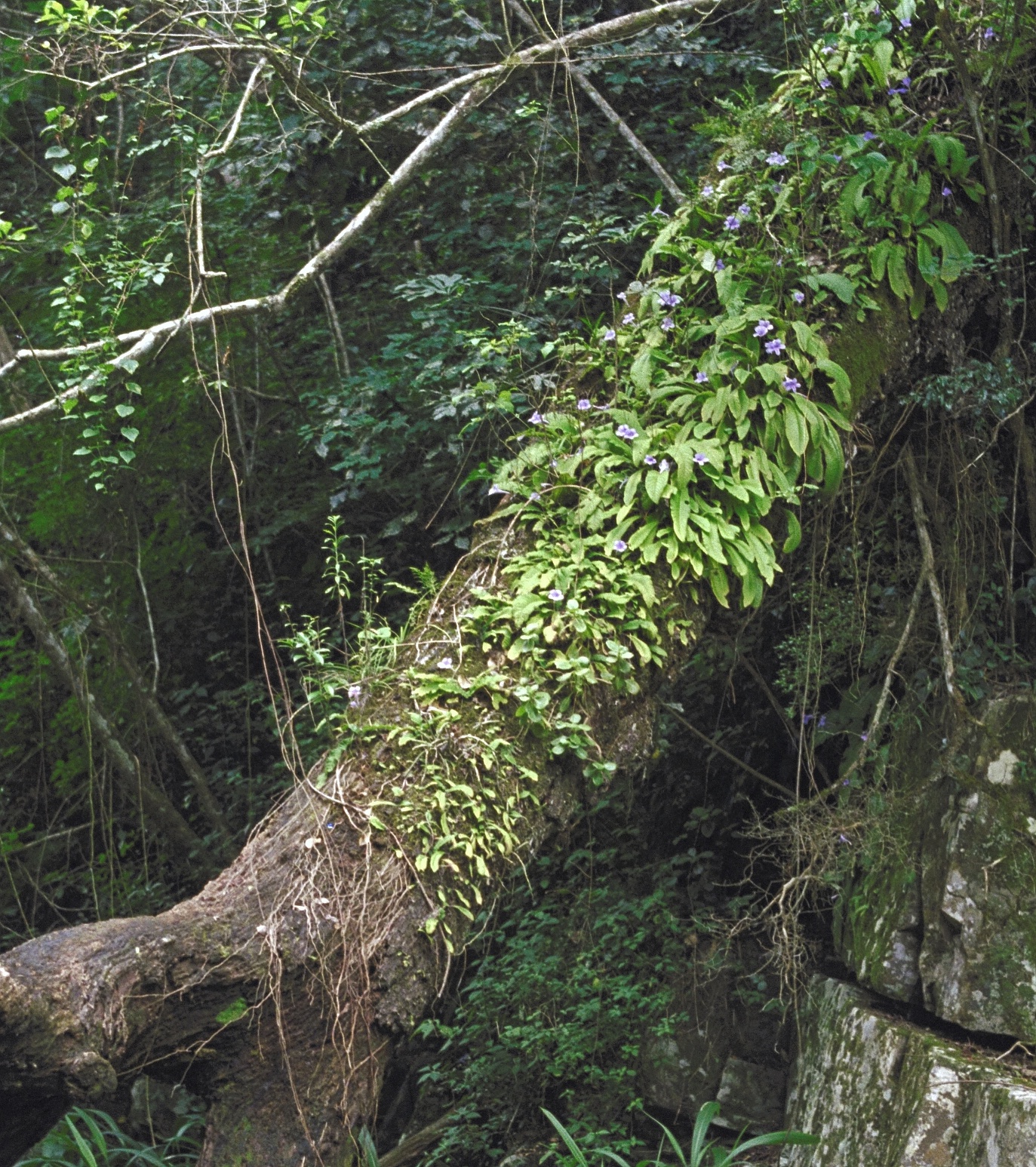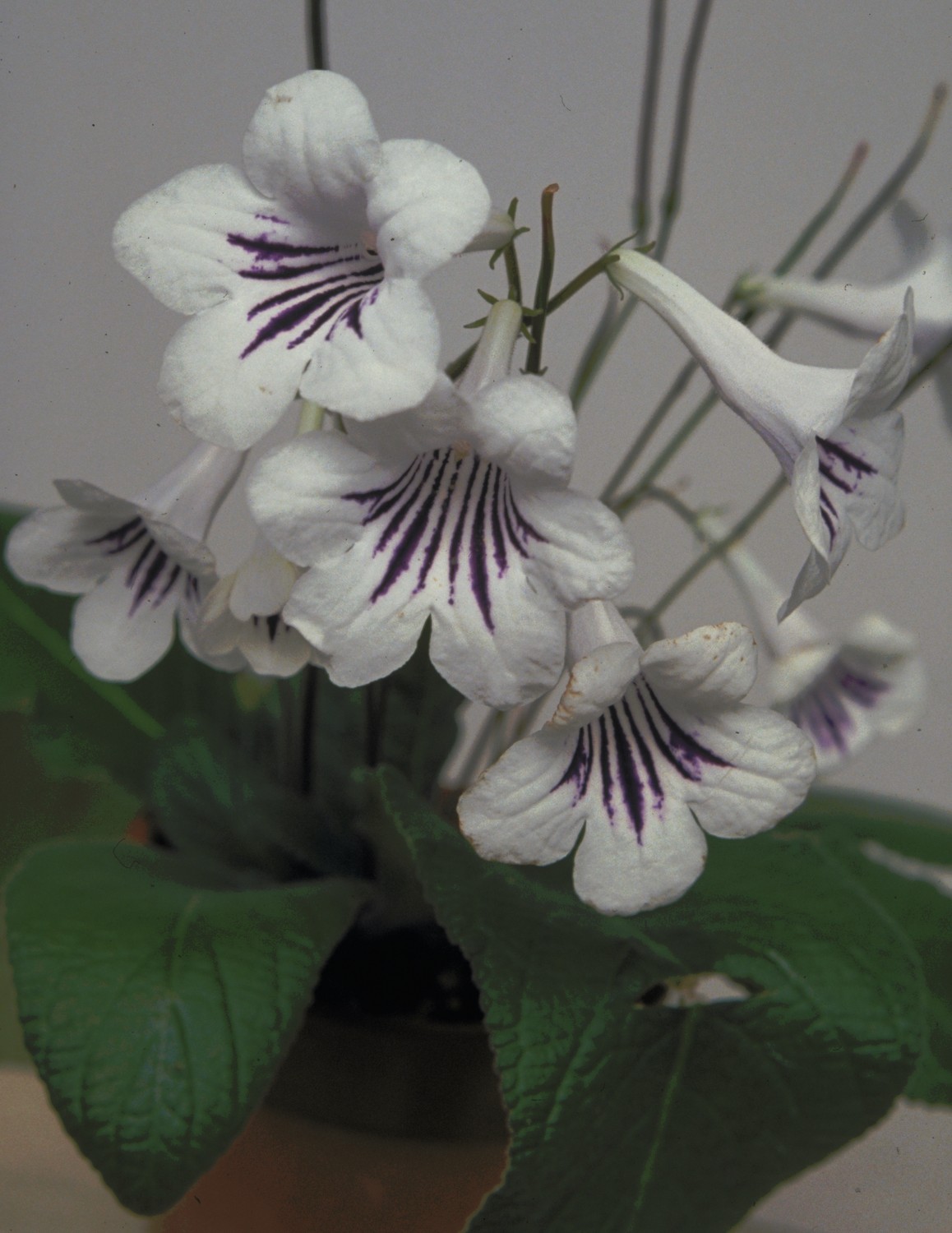
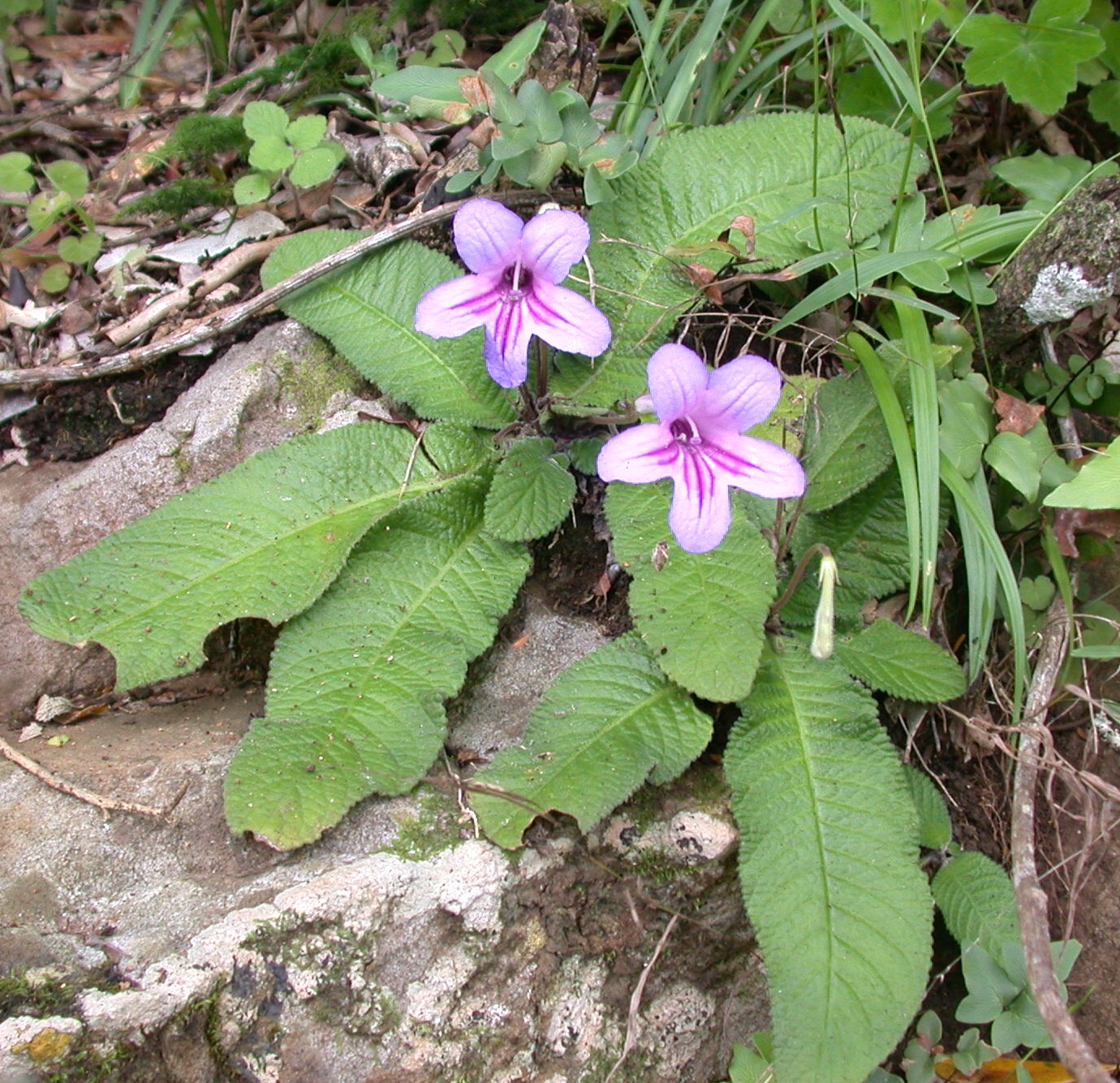
Streptocarpus primulifolius is one of the larger Streptocarpus species and has a range from the vicinity of the inland city of Pietermaritzburg, KwaZulu Natal Province, South Africa, southwards in inland forest patches and then to the deep coastal Pondoland gorges all the way to Kugompu City (formerly East London) in the Eastern Cape Province.
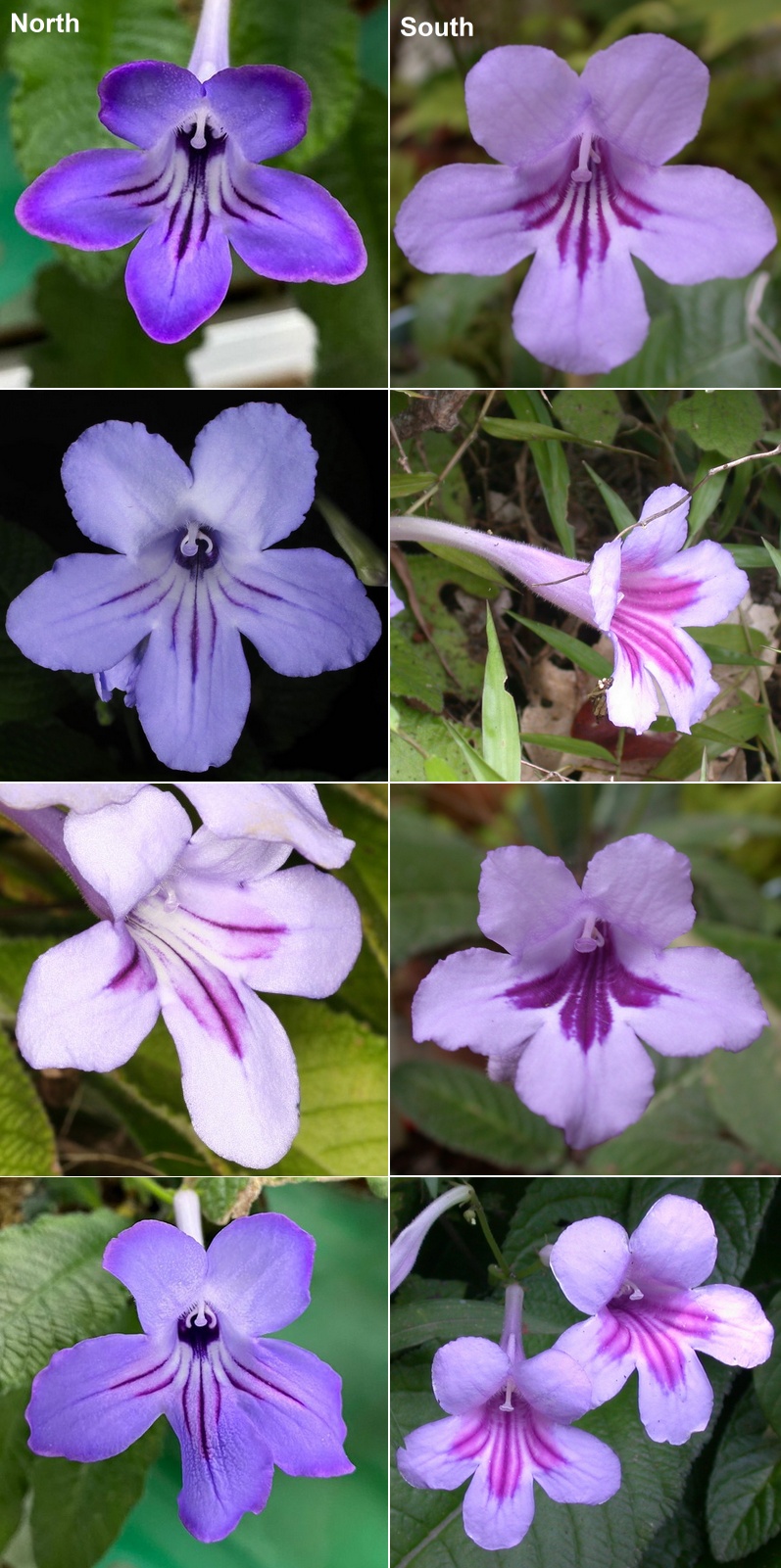
Streptocarpus formosus was previously viewed to be a subspecies of S. primulifolius until it was raised to full species rank in 1994. This meant that the distribution of the species was split into two because Streptocarpus formosus, which occurs in the Oribi, Mtamvuna and Mzamba gorges lies in the middle of its range. As the forms that grow in the north and those that grow in the south differ somewhat, we can refer to them as northern and southern forms. As described in the species description of Streptocarpus rexii, Streptocarpus primulifolius evolved in the north and dispersed along the coast up to Kugompo City where Streptocarpus rexii evolved from it.
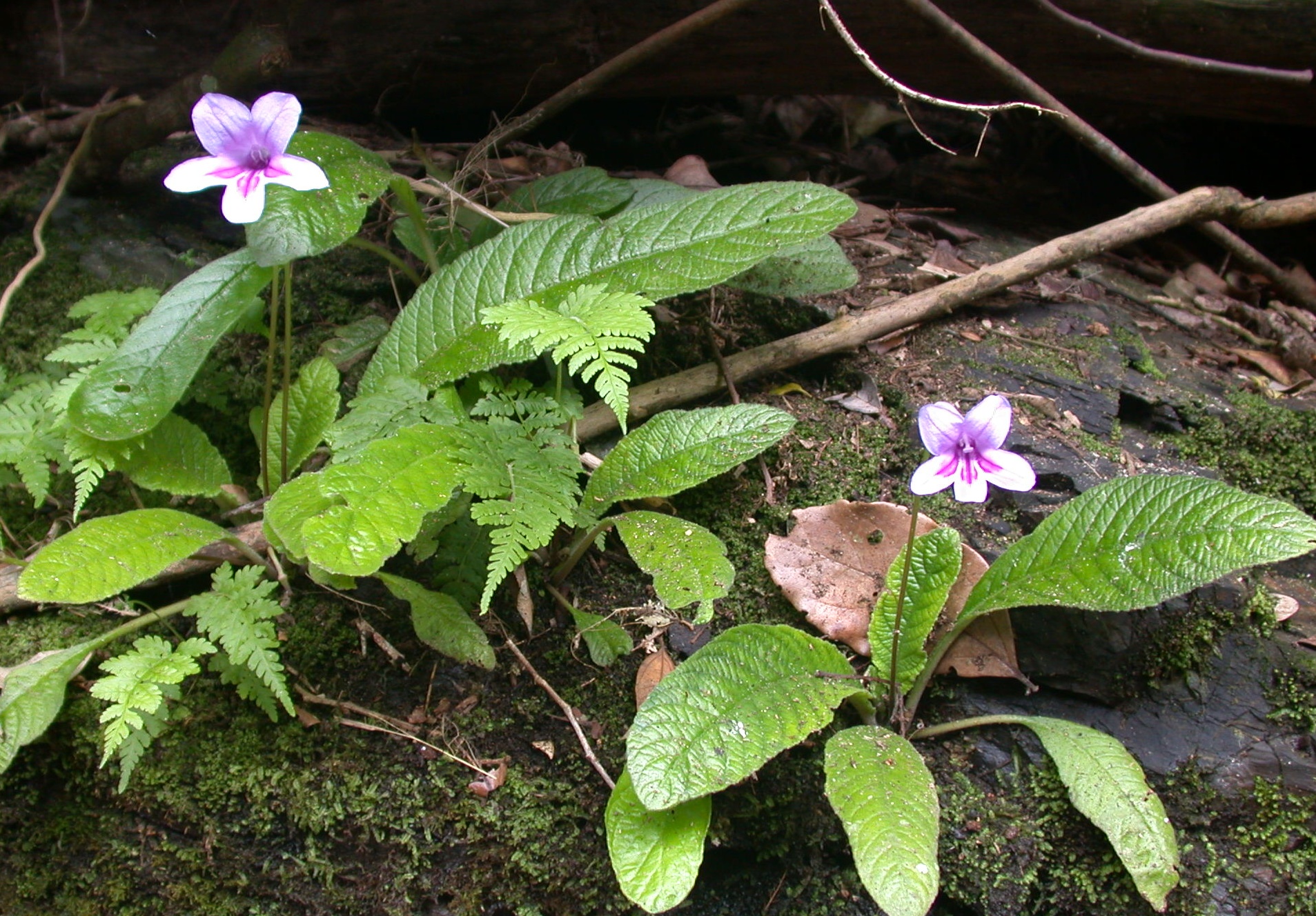
The northern forms of Streptocarpus primulifolius differ from southern forms mainly in flower colour and are slightly less robust. It is a typical rosulate species with semi-erect leaves growing on moss covered rocks, logs and steep embankments. The semi-erect leaves distinguish it from its close relative Streptocarpus rexii of which the basal leaves lie flat on the ground. The leaves are large (up to 450 x 110 mm).
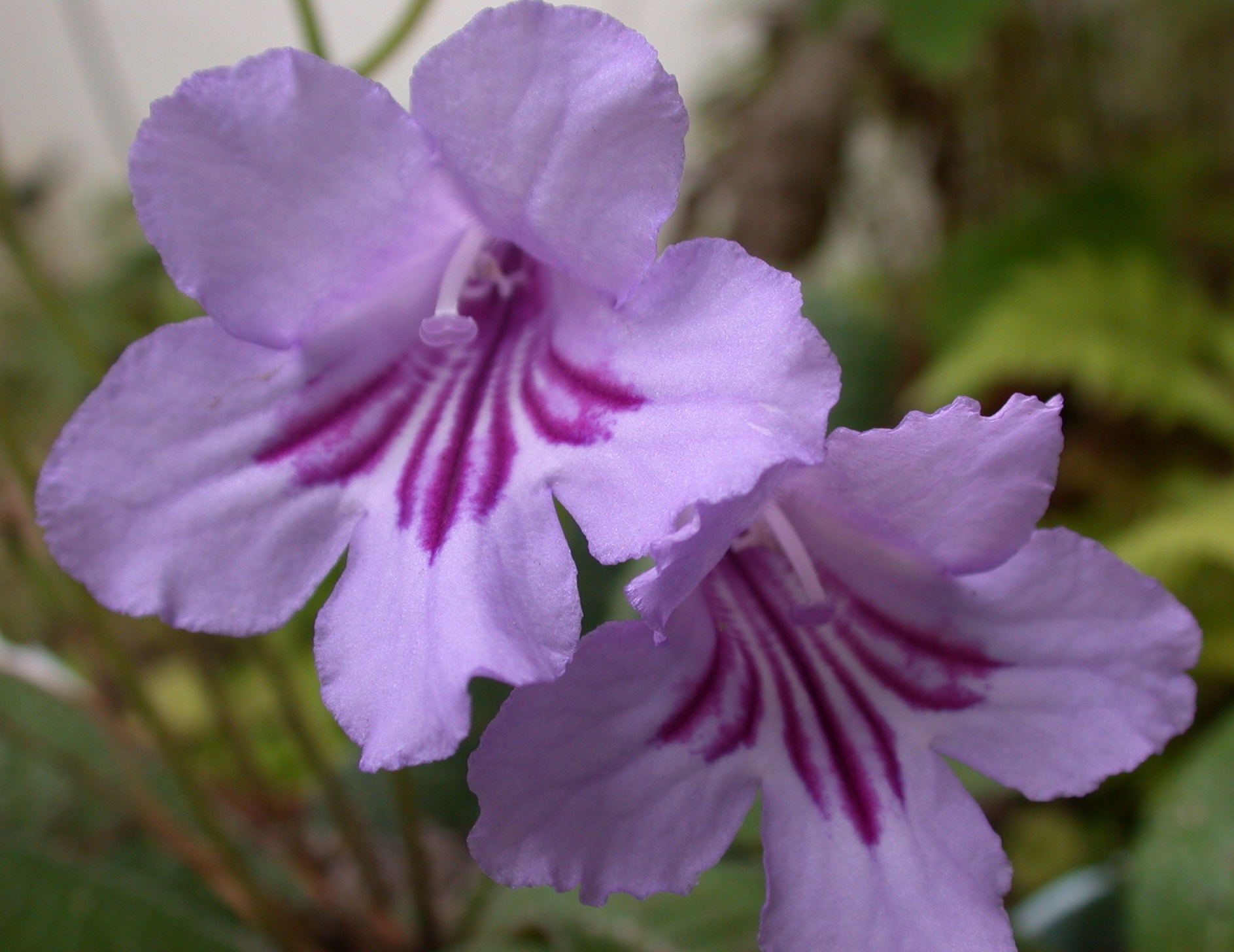
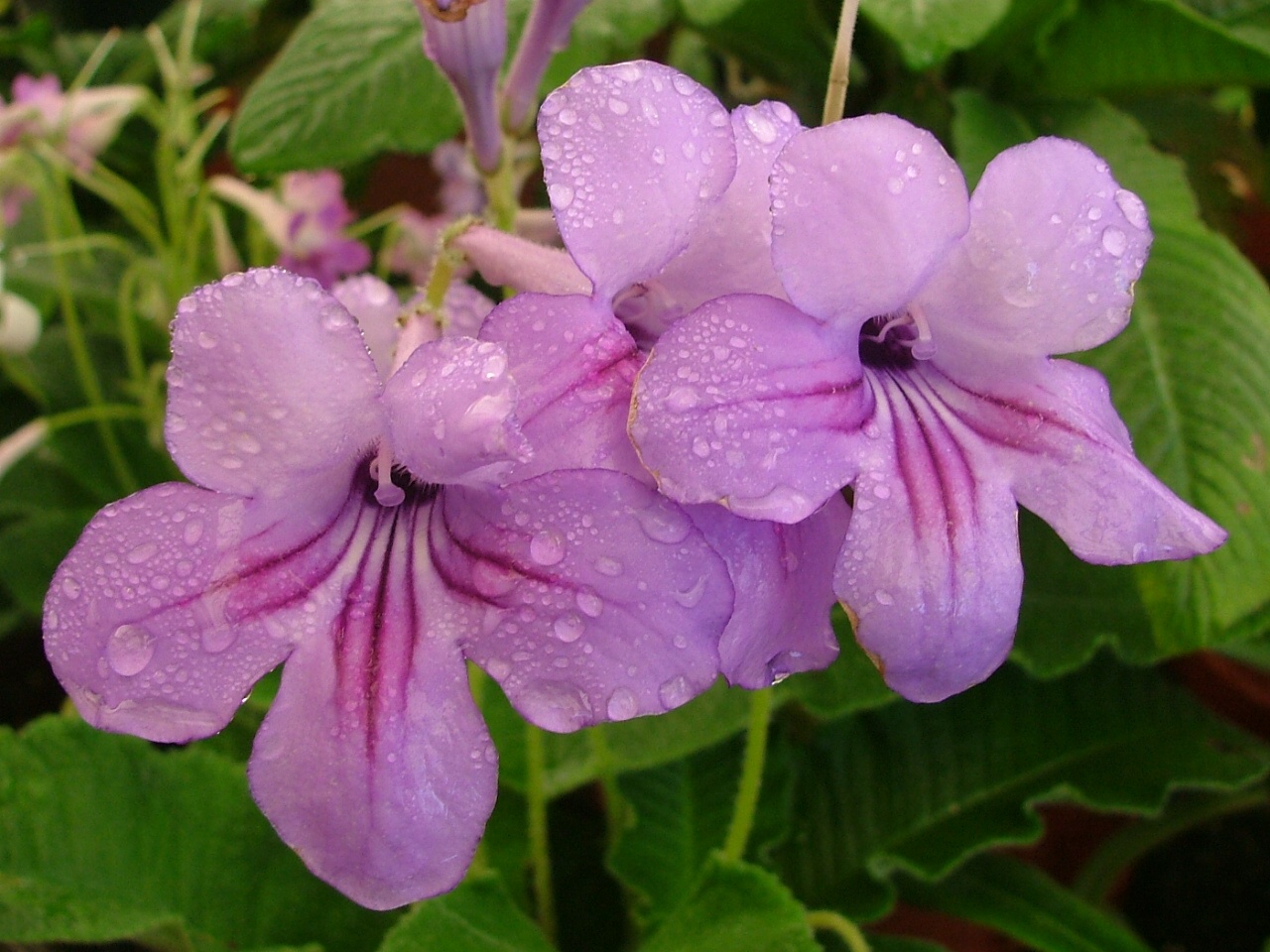
The species can be quite floriferous with up to 6 flowers open at the same time. The flowers are among the largest in the genus (65 – 105 mm), funnel-shaped and often possess a distinctive enlargement midway through the corolla tube. The corolla lobes vary in size (15 – 22 x 13 – 20 mm), and the lower lip is 20-35 mm long. The flower colour of most flowers is pale violet, but deeper mauve and white flowers are also found. In the northern forms, the floor of the corolla is marked with seven narrow deep violet lines which extend into the corolla lobes, but can also be very reduced or absent.
In the flowers of the southern populations the seven lines are more prominent and in many flowers the mauve lines expand into confluent dark mauve markings in the throat, as a result of which there is a strong contrast between the outer lobes and the throat of the corolla tube. This is likely to be a guide for the pollinator of this species, which are large tabanid or nemestrinid flies (Hughes, Moeller and Bellstedt, personal observation). The presence of pollinators ensures that this species consistently cross pollinates which protects it against inbreeding (as shown by the study of Hughes et al., 2005). It is furthermore self-infertile, which means it cannot be self-pollinated, which again means that seed can only be formed through cross pollination. This distinguishes it from Streptocarpus rexii which is self-pollinating.
Streptocarpus primulifolius is easily cultivated but is less tolerant to low temperatures than its sister species Streptocarpus rexii. The species has contributed to modern cultivars but its large size is a constraint to its horticultural popularity. The pictures presented here show that it is a striking species, well worth cultivating if space is not an issue.