
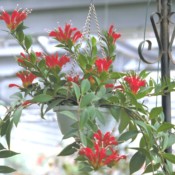
This is a hybrid by the late Bill Saylor, of Cape Cod, Massachusetts. Bill was an active hybridizer in several genera (and families other than the Gesneriaceae) in addition to Aeschynanthus, including Nematanthus and Codonanthe. Aeschynanthus
Search Results for: nematanthus
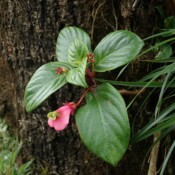
Columnea hypocyrtantha
This unusual species is a member of Section Pentadenia, and shares the pouched flower with some other species in that section, such as C . trollii. The pouched flower is rare in Columnea, and appears very much like some
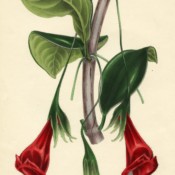
Columnea splendens
Not remotely a modern Columnea, this is an illustration of Nematanthus crassifolius. Photos of the species can be seen here. The species is considerably variable, and different specimens may have longer or shorter pedicels.
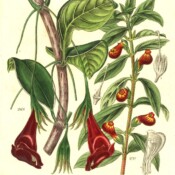
Columnea splendens and Hypocyrta strigillosa
David Dietrich published Zeitschrift für Gaertner, Botaniker und Blumenfreunde in the early 1840s, with many beautiful botanical illustrations — most copied from images contained in other publications. He was a sophisticated botanist, though, as is apparent from this print. He published together two apparently
Economic Uses
The main economic use of Gesneriaceae in the Western World is for ornamentals. The most important genera are Saintpaulia (now part of Streptocarpus), Streptocarpus, Aeschynanthus, Sinningia, Achimenes, Episcia, Columnea and Nematanthus. “African Violets” (species and hybrids
Fragrant Gesneriads by John Boggan
Gesneriads as a family are not known for fragrant flowers. This reputation is turning out to be undeserved. Admittedly, most gesneriads do not have highly fragrant flowers, including the vast majority of those that have been in cultivation since before the 1980’s. One reason for this
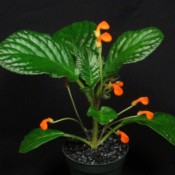
Gasteranthus anomalus
This beautiful species is best grown in an enclosed environment, to ensure adequate humidity. Otherwise it’s reported as not particularly difficult. The strongly pouched flower is similar to a number of other gesneriads, which are not necessarily closely related. Examples are in several genera, including (but
GLOXINIINAE – the New World Rhizomatous Gesneriads
Recent years have seen a great deal of upheaval in the naming conventions for the Gesneriaceae! The advent of tools allowing for DNA analysis and molecular systematics has led to much deeper insight into the relationships among and evolutionary history of gesneriad species, and the new
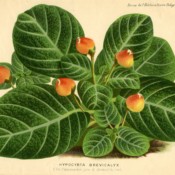
Hypocyrta brevicalyx
Now known as Pearcea hypocyrtiflora. Note that the flowers are shown with none of the lobes retracted — these open only under ideal conditions. The pouched form of the flower seemed to ally it in the minds of the botanists of
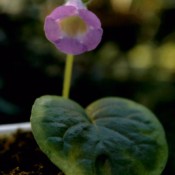
Lembocarpus amoenus
Lembocarpus amoenus is the sole representative of its genus. Although superficially similar to Sinningia, this tuberous species is properly located within the Episcieae, the large group that contains genera such as Columnea, Episcia and Nematanthus. Lembocarpus is
Life Forms and Growth Patterns II
Subshrubs and shrubs The terms woody herb, subshrub and shrub have been ambiguously used to characterize certain members of Gesneriaceae, but a clear categorization is not possible. Lignification may be so slight that the shoots remain soft and flexible. In such cases it is difficult to
Morphology: Flowers
Flowers in Columnea appear in the axils of the leaves and generally occur singly, but can occur in clusters of up to 10 flowers per leaf axil. In most species only a single, or perhaps two flowers will be fully open at each node