
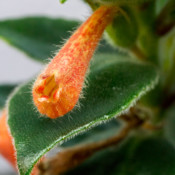
Nematanthus pycnophyllus is an interesting and potentially dramatic species. It has an unusual upright and spiky habit, with variable and interestingly marked flowers. Additional photos can be seen in a slideshow by clicking one of the links below: The whole plant carrying the
Search Results for: nematanthus
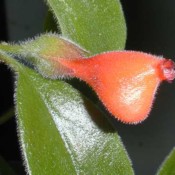
Nematanthus serpens
This species has a dangling growth habit, and appears to be a spare bloomer. As the foliage is neat but unremarkable, it doesn’t have a great deal to recommend it. The flowers are about the same size as N. wettsteinii, but
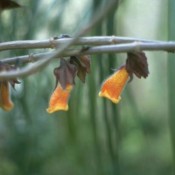
Nematanthus species (GRF)
I photographed this unusual Nematanthus species while being shown around the GRF facilities in Sarasota, FL, by Dr. Hans Wiehler. Flowers all seemed to be produced along the bare stems, with leaves present only towards the tips. Unfortunately, I have not been able to determine the
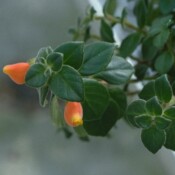
Nematanthus strigillosus
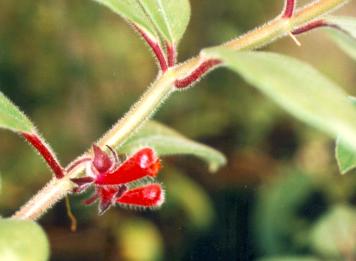
Nematantus strigillosus is one of those species to which the “common name” of Goldfish Plant is applied. In fact, you can see where the name comes from when you see the flower in close-up. Additional photos may be seen in a slideshow by clicking
Nematanthus tessmannii
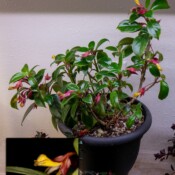
Exhibited at the 2020 virtual show of the Gesneriad Society. Additional photos can be seen in a slideshow by clicking one of the links below: A close view of the flowers on another plant A flowering stem
Nematanthus wettsteinii
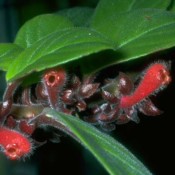
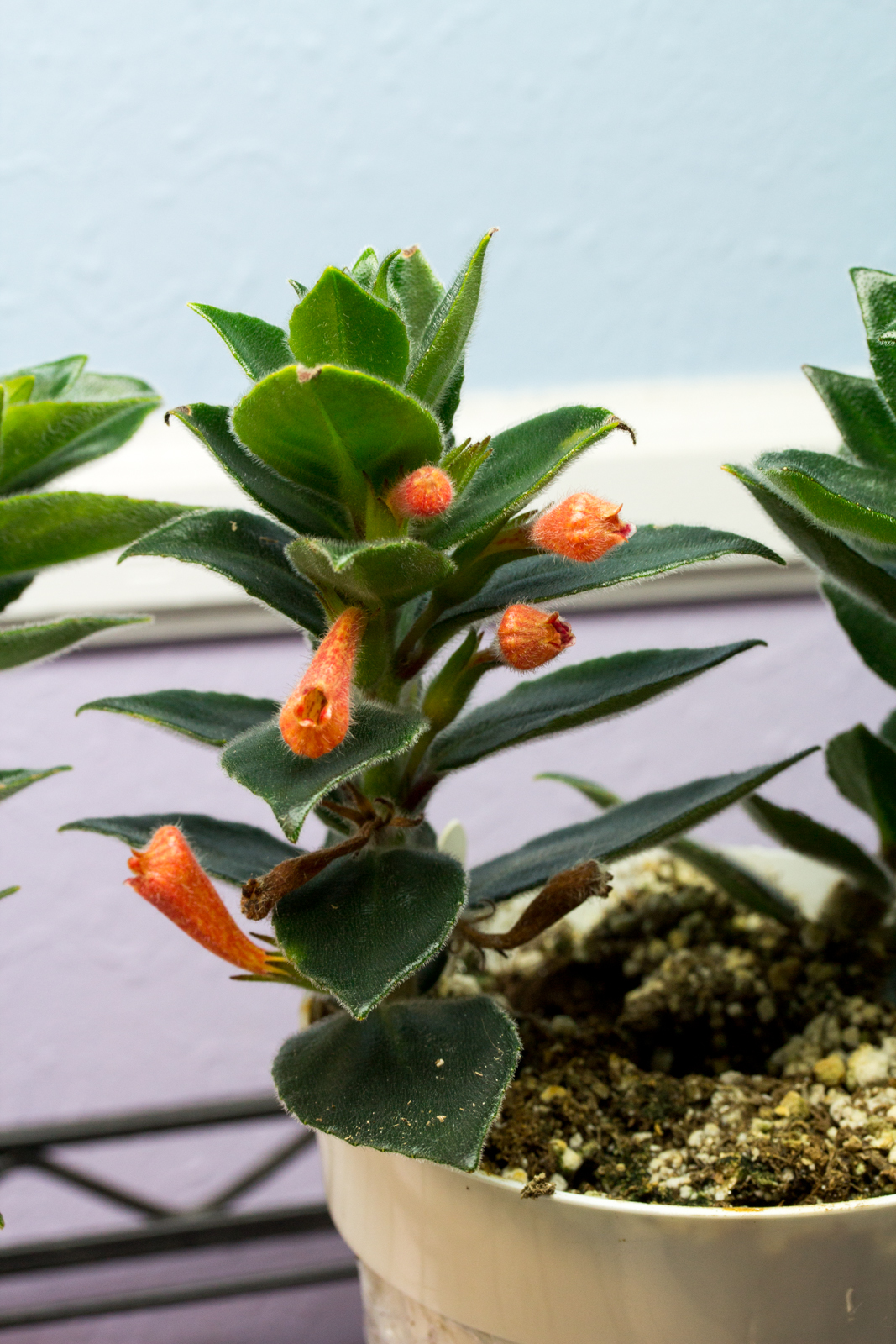
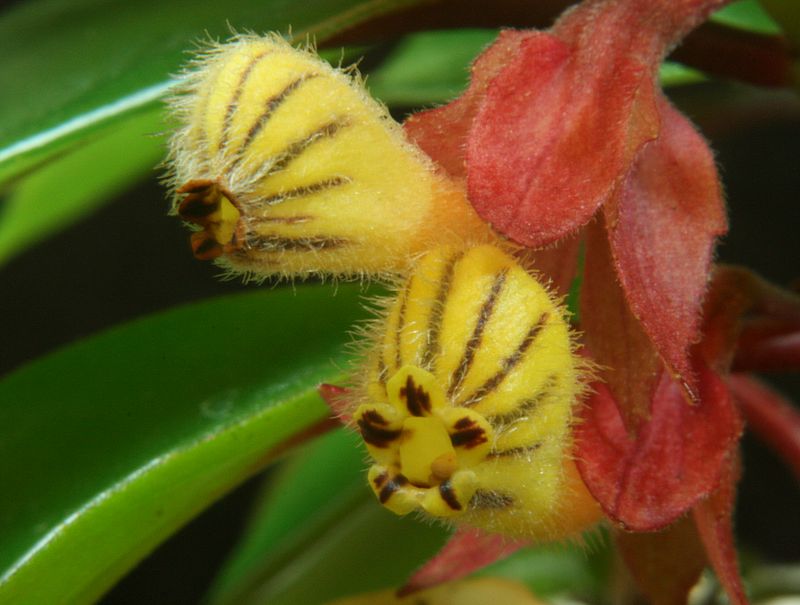
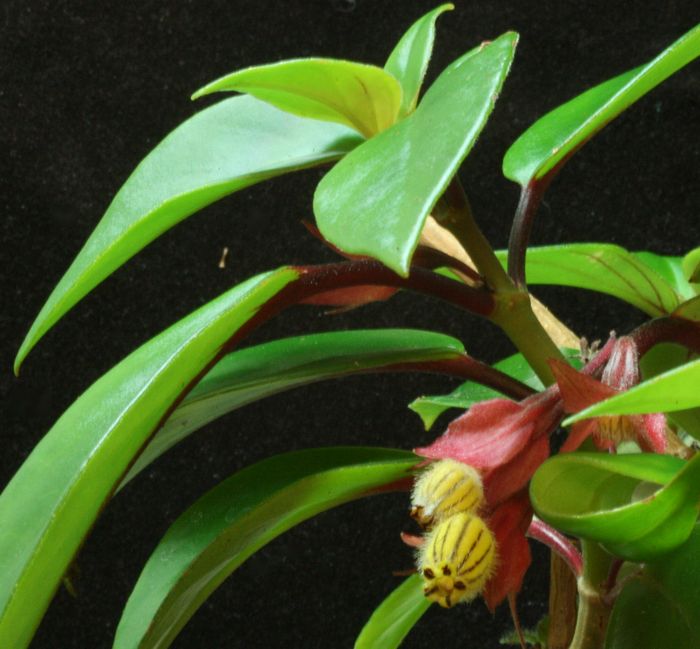
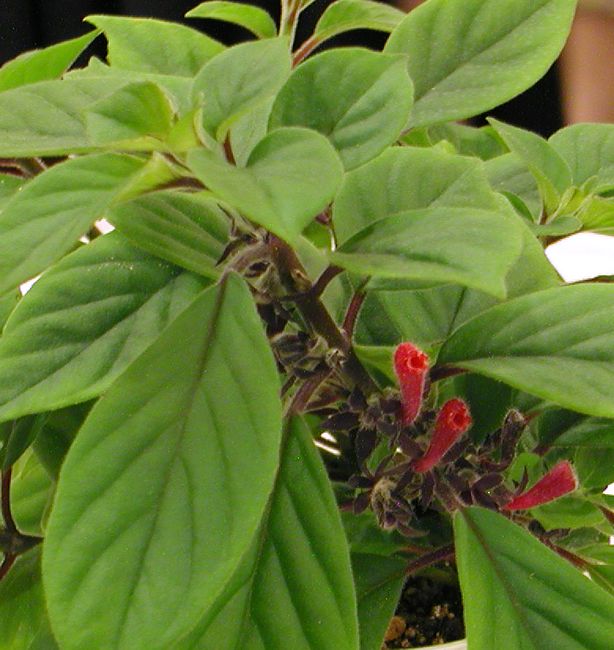
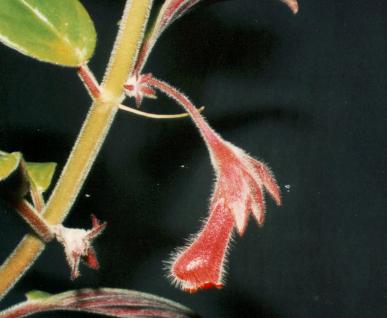
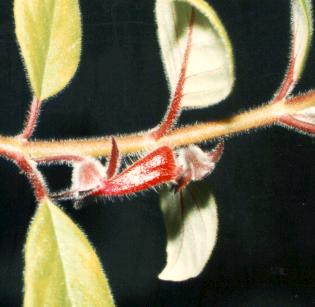
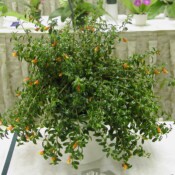
N. wettsteinii is most often grown as a basket plant. Its bushy habit with small shiny leaves and bright orange pouched flowers makes it a very decorative and relatively easy-to-grow specimen. It is sometimes available at generic commercial nurseries. The plant featured above was
Nematanthus wiehleri
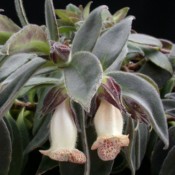
This is a member of an unusual group of white-flowered Nematanthus that at first glance seem like Codonanthe on steroids. Others include species N. albus and N. punctatus. Additional photos may be seen
Pollination III
Pollination by birds (ornithophily) occurs both in the paleotropical and neotropical Gesneriaceae, as well as in the Southern hemisphere Gesneriaceae (Rhabdothamnus, Mitraria, Sarmienta, Asteranthera). It is rather rare in the paleotropical Gesneriaceae, where only a few genera (Aeschynanthus, Agalmyla)
Trichodrymonia hypocyrta
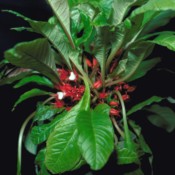
T. hypocyrta takes its name from the unusual white pouched flowers, which have the appearance of the flowers of the genus Nematanthus (some species of which were formerly classified in the genus Hypocyrta). Additional photos may be seen in
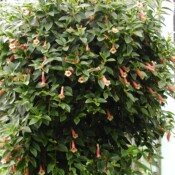
xCodonatanthus ‘Vista’
This spectacular basket of Patrick Worley’s intergeneric hybrid involving Nematanthus and Codonanthe was growing in the display greenhouses at the Royal Horticultural Society’s Wisley Gardens, outside of London. A large show plant, exhibited at the 2018 convention show of the Gesneriad
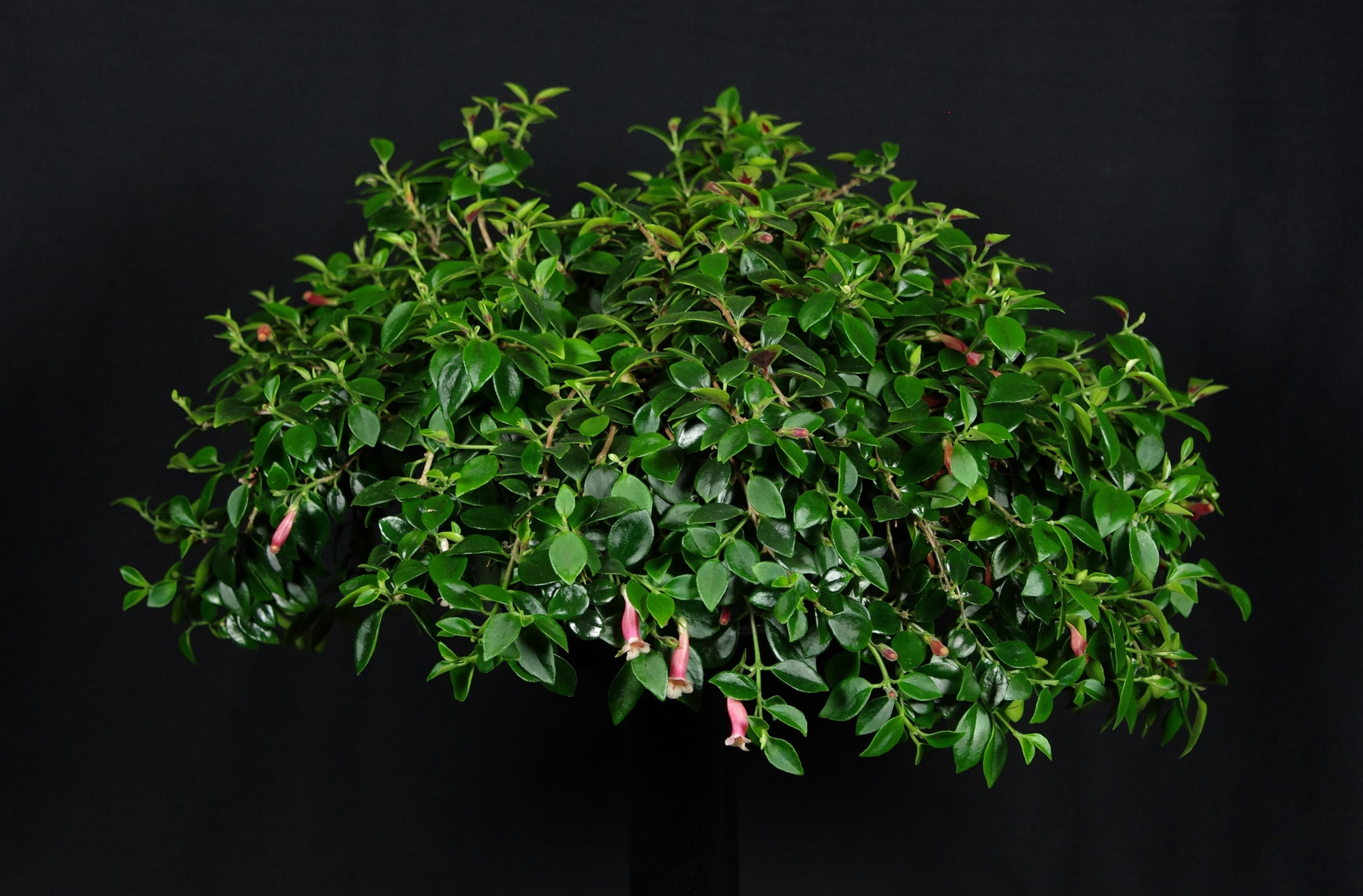
× Codonatanthus ‘Antique Gold’
xC. ‘Antique Gold’ is a hybrid produced by Bill Saylor. He crossed Nematanthus ‘Cheerio’ with Codonanthe gracilis to produce this attractive cultivar. ‘Cheerio’ is a hybrid of N. gregarius and N. wettsteinii. The